

State Grid’s $680M Embodied AI Equipment Procurement Launches
On April 28, 2026, State Grid Corporation of China initiated a framework procurement for embodied intelligent equipment with a budget of RMB 6.8 billion (approx. USD 940 million), marking a significant inflection point for industrial robotics, power infrastructure digitalization, and cross-border certification alignment. This move directly impacts manufacturers of power inspection robots, AI vision terminals, and autonomous navigation patrol vehicles — and signals growing convergence between domestic safety standards and key international frameworks used in EU, US, and global critical infrastructure sectors.
Event Overview
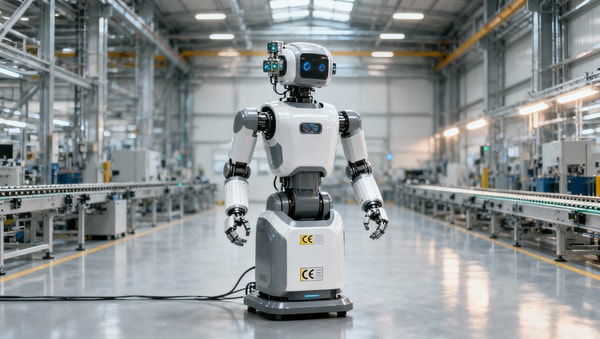
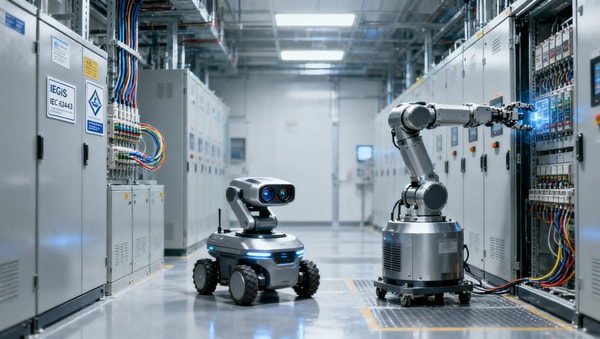
On April 28, 2026, State Grid publicly announced its 2026 Framework Procurement for Embodied Intelligent Equipment, with a total budget of RMB 6.8 billion. The procurement covers humanoid robots for power line inspection, AI-powered visual terminals for substations, and autonomously navigating patrol vehicles. Bidding documents explicitly require compliance with IEC 62443-3-3 (industrial cybersecurity) and GB/T 38925-2020 (safety requirements for intelligent service robots). The notice notes that GB/T 38925-2020 is highly compatible with EN ISO 13849 (EU functional safety) and ANSI/RIA R15.06 (US robotic safety standards).
Which Subsectors Are Affected
Industrial Robot Manufacturers (OEMs)
Manufacturers producing inspection-grade humanoid robots or mobile patrol platforms are directly affected: the tender mandates certifications that many domestic suppliers have not yet obtained at scale. Impact manifests in tightened time-to-market windows, increased pre-bid testing costs, and potential disqualification for non-compliant designs — especially those lacking built-in cybersecurity architecture aligned with IEC 62443-3-3.
Robotics Component Suppliers
Suppliers of certified motion controllers, secure edge AI modules, or safety-rated LiDAR/sensor fusion units face elevated demand — but only if their components are pre-integrated into system-level certifications. Impact centers on traceability: downstream integrators will increasingly require component-level evidence of conformity to GB/T 38925-2020 Annex A (mechanical safety) and IEC 62443-3-3 Security Level 2 (SL2) assurance.
Export-Oriented Certification & Testing Service Providers
Firms offering IEC 62443 or ISO 13849 conformity assessment services see expanded opportunity — particularly those accredited by CNAS (China National Accreditation Service) and recognized under mutual recognition arrangements (e.g., IECEE CB Scheme). Impact lies in accelerated client demand for dual-certification pathways: one for State Grid bidding, another for parallel EU/US market access.
Infrastructure System Integrators (Power, Water, Rail)
Integrators deploying robotic solutions in utility, water treatment, or metro environments may leverage GB/T 38925-2020 compliance as a de facto pre-qualification for overseas tenders. The standard’s stated compatibility with EN ISO 13849 and ANSI/RIA R15.06 means integrators can position domestically certified deployments as evidence of functional safety maturity — reducing re-certification effort abroad.
What Relevant Enterprises or Practitioners Should Focus On Now
Monitor official clarifications on certification scope and audit depth
State Grid’s tender references GB/T 38925-2020 and IEC 62443-3-3 but does not specify whether third-party test reports must be issued by CNAS-accredited labs, nor whether SL2 validation requires full penetration testing or documentation review only. Enterprises should track addenda and Q&A releases from State Grid’s E-commerce Platform.
Prioritize certification readiness for core safety-critical subsystems
Rather than pursuing full robot-level certification immediately, manufacturers should first validate mechanical safety (e.g., emergency stop response time, torque limiting), secure boot processes, and role-based access control — all explicitly covered in GB/T 38925-2020 Clauses 5–7 and IEC 62443-3-3 Sections 7–9. These elements form the minimal viable set for bid eligibility.
Distinguish between policy signal and near-term procurement volume
This is a framework agreement — not a firm order. Actual device deployment depends on individual provincial grid companies’ annual plans and technical acceptance criteria. Enterprises should treat this as a signal to align internal standards and documentation practices, not as an immediate revenue trigger.
Prepare technical documentation packages for cross-jurisdictional reuse
Documentation developed for GB/T 38925-2020 compliance — including risk assessments, safety requirement specifications, and cybersecurity architecture diagrams — should follow ISO/IEC 17065 and IEC 61508 conventions. This enables partial reuse when applying for EN ISO 13849 PLd or ANSI/RIA R15.06 Category 3 certification later.
Editorial Perspective / Industry Observation
Observably, this procurement is less about immediate hardware deployment and more about institutionalizing a certification pathway that bridges domestic regulatory expectations with internationally accepted safety and security baselines. Analysis shows GB/T 38925-2020 was drafted with explicit reference to ISO 13849 and IEC 62443, suggesting deliberate harmonization intent — not accidental overlap. From an industry perspective, it functions primarily as a ‘pre-vetted credential’: passing this tender does not guarantee export success, but failing it likely excludes vendors from future bids in regulated infrastructure markets globally. It is currently best understood as a structural signal — one that reshapes upstream design requirements and downstream compliance strategies across the robotics value chain.

Conclusion: This initiative reflects a strategic alignment of national grid modernization with global industrial safety norms. Its primary significance lies not in the RMB 6.8 billion budget alone, but in the precedent it sets for treating domestic certification as a foundational step toward international market access — especially in safety-sensitive infrastructure verticals. Currently, it is more accurately interpreted as an institutional calibration exercise than a commercial procurement milestone.
Source: State Grid Corporation of China E-commerce Platform (tender notice published April 28, 2026); GB/T 38925-2020 “Safety Requirements for Intelligent Service Robots”; IEC 62443-3-3:2021 “Security for Industrial Automation and Control Systems – System Security Requirements and Security Levels”.
Recommended News
 MIIT Launches Space-Based Computing & Power-Compute CoordinationMIIT launches space-based computing & power-compute coordination—boosting modular IDC exports, liquid-cooled servers, and solar-powered data centers for arid regions.
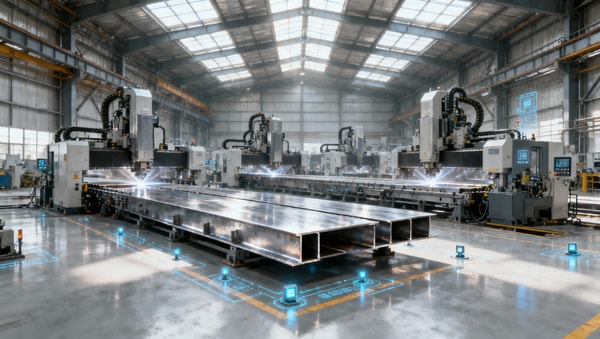
 Tangshan Iron Tower Smart Base Processes 600K Tons Steel AnnuallyTangshan Iron Tower Smart Base processes 600K tons steel annually—42× faster angle steel marking, API-enabled traceability for Belt and Road infrastructure projects.
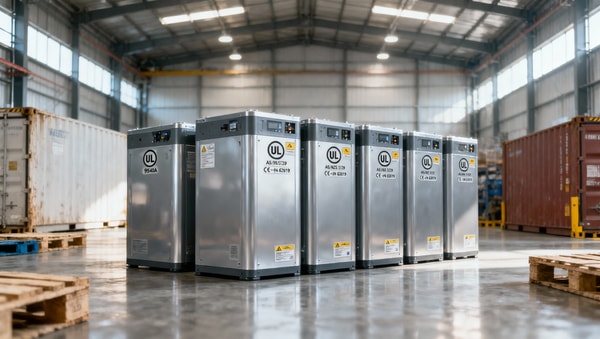
 Q1 2026 Lithium Battery Export Prices Rise 11.3% for ESSQ1 2026 Lithium Battery Export Prices Rise 11.3% for ESS — $128/kWh amid UL 9540A costs, freight normalization & surging demand in Vietnam, Germany, Australia.
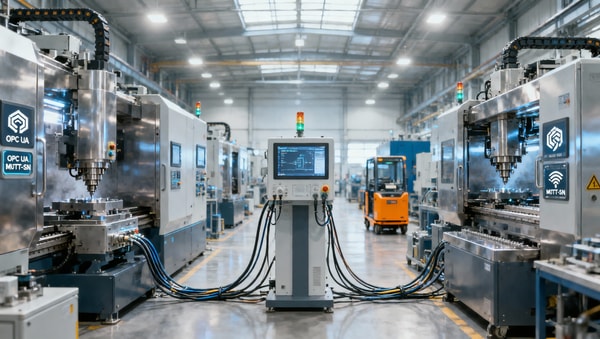
 China Launches 'Model-Data Resonance' Initiative for AI+Manufacturing InteroperabilityChina's 'Model-Data Resonance' initiative launches AI+Manufacturing interoperability standard—key for global buyers, OEMs & integrators seeking seamless smart factory integration.
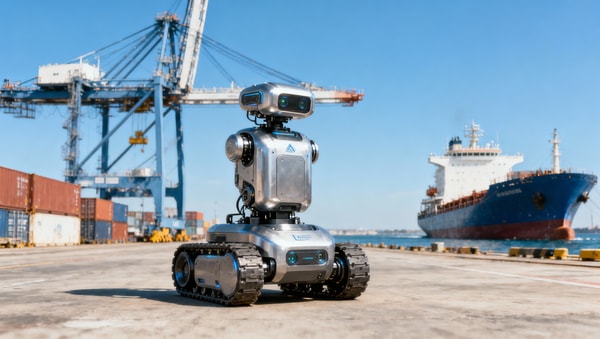
 China's First Embodied AI Robot Export Liability Insurance Launched in GuangxiChina's first Embodied AI Robot Export Liability Insurance launched in Guangxi—covers AI decision errors, data breaches & third-party harm for robotics, medtech & security exporters.
 State Grid’s $680M Embodied AI Equipment Procurement LaunchesState Grid’s $680M embodied AI equipment procurement demands IEC 62443 & GB/T 38925 compliance—unlock global infrastructure bids now.
 RCEP Green Packaging Mutual Recognition Extended to AU, NZ, JP, KRRCEP green packaging mutual recognition now extends to AU, NZ, JP, KR — unlock faster customs clearance & 22% lower inspection costs for GB/T 38727-2020-compliant sustainable food packaging exports from China.
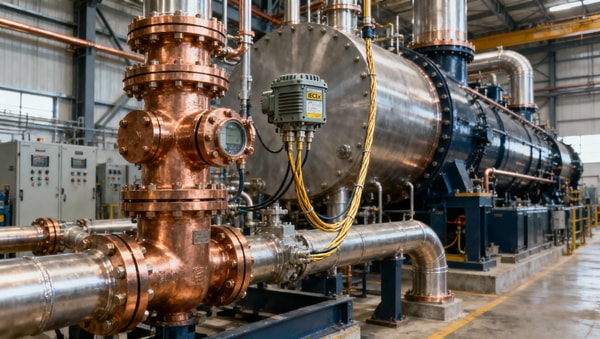
 Tangshan Beijiao Thermal Power Unit 1 A-Check StartsTangshan Beijiao Thermal Power Unit 1 A-Check starts Apr 2026 — urgent demand for domestic industrial valves, high-temp sensors & fire-resistant cables. Act now to secure Q3 2026 supply.
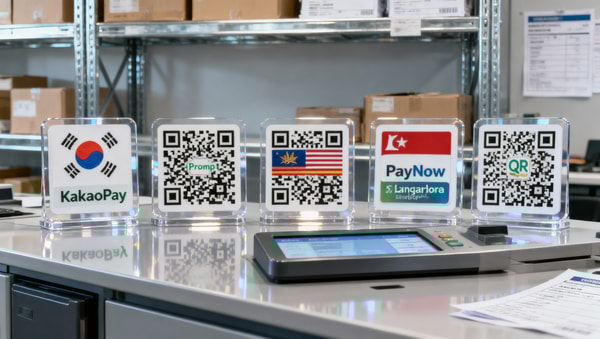
 WeChat Pay Integrates QR Codes from 5 Countries for Cross-Border B2B PaymentsWeChat Pay integrates QR codes from 5 countries for cross-border B2B payments—faster T+0 settlement, 35% lower fees, and seamless USD 50K transactions.
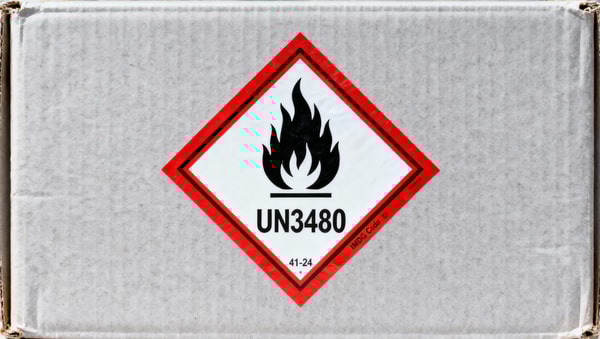
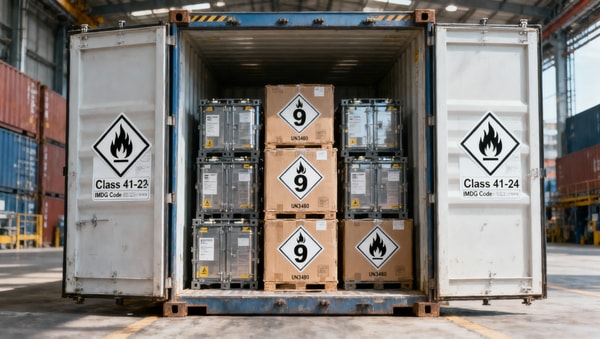
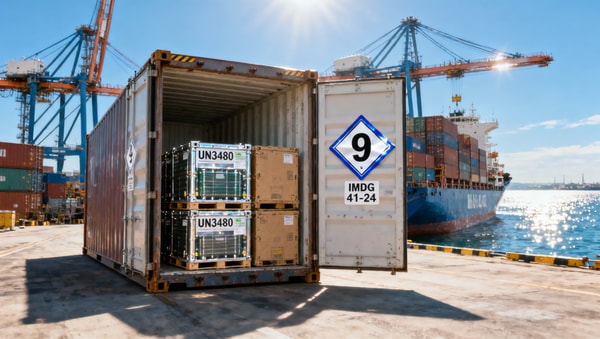
 IMDG Code 41-24 Enforces New UN3480 Labeling for Lithium BatteriesIMDG Code 41-24 mandates new UN3480 labeling for lithium batteries from 29 April 2026 — avoid shipment rejection. Act now to ensure compliance.
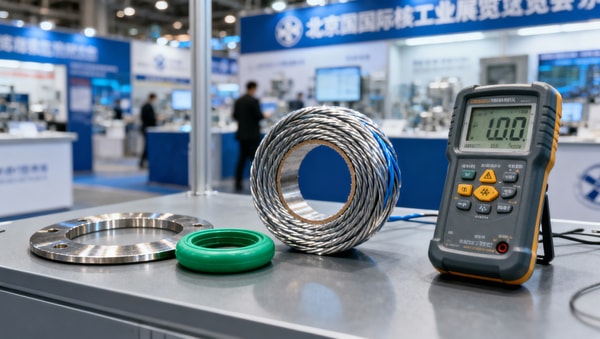
 China-France Nuclear Cooperation Advances at Beijing ExpoChina-France nuclear cooperation advances: mutual recognition for nuclear-grade seals, cables & radiation monitors boosts export readiness for suppliers targeting EU and BRI projects.
 Vietnam’s 4 Provinces Seek AI Tourism Tech in NanningAI tourism tech in demand: Vietnam’s 4 provinces seek AI-guided terminals, multilingual interpretation, AI-CCTV & smart ticketing in Nanning—key opportunity for B2G exporters.
 Q1 2026 China Power Market Trading Up 25.6%: Smart Meters, Storage Export Demand RisesSmart meters, energy storage exports surge as China’s Q1 2026 power market trading jumps 25.6% — key signal for global manufacturers & channel partners.
 China First Country with 5M+ Active Invention PatentsChina first country with 5M+ active invention patents—key for buyers in AI, solar, lithium battery & energy storage. Discover IP implications for sourcing, compliance & supplier vetting.
 Shenneng Etorkeqi Green Ammonia Project: Deionized Water Station OperationalShenneng Etorkeqi Green Ammonia Project’s deionized water station is now operational—ISO 8502-3 compliant, fully integrated, and a key milestone for global green hydrogen developers and exporters.
 China Launches 'Model-Data Resonance' Initiative for AI+Manufacturing InteroperabilityModel-Data Resonance initiative boosts AI+manufacturing interoperability—learn how GB/T XXXX–2026 aligns with VDI 2182 & ISA-95 for smoother global factory deployments.
 China’s First Embodied AI Robot Insurance Launched in GuangxiChina’s first embodied AI robot insurance launched in Guangxi—key for robotics exporters, AI hardware makers & global compliance teams. CE-recognized, EU/UK/AU-ready.
 IMDG Code 41-24 Enforced: UN3480 Lithium Battery Labeling Now MandatoryIMDG Code 41-24 is now mandatory: UN3480 lithium battery labeling, documentation & packaging rules are enforced globally as of 28 April 2026 — avoid port rejections!
 State Grid’s $680M Embodied AI Procurement Signals Export OpportunityEmbodied AI, IEC 61850 & IEC 62443: State Grid’s $680M procurement unlocks export opportunities for compliant industrial robots and smart vision systems in emerging markets.
 IMDG Code 41-24 Enforces UN3480 Class 9 Labeling for Lithium Battery Sea FreightIMDG Code 41-24 mandates UN3480 lithium battery sea freight to display durable Class 9 labels from April 27, 2026—avoid delays & port rejections.
 ESS Key Component Prices Drop ~80%: Quality & Compliance RiseESS key component prices dropped ~80%—but quality & compliance demands surged. Discover how UL 9540A, AS/NZS 5139, and certified BMS/inverters now define market access.



Popular Tags
Global Trade Insights & Industry
Our mission is to empower global exporters and importers with data-driven insights that foster strategic growth.
Search News
Popular Tags
Industry Overview
The global commercial kitchen equipment market is projected to reach $112 billion by 2027. Driven by urbanization, the rise of e-commerce food delivery, and strict hygiene regulations.