

IMDG Code 41-24 Enforces New UN3480 Labeling for Lithium Batteries
Effective 29 April 2026, the International Maritime Organization (IMO) will enforce the latest edition of the International Maritime Dangerous Goods Code (IMDG Code 41-24) globally. This update introduces mandatory new requirements for the packaging, marking, labeling, documentation, and stowage of lithium-ion batteries classified under UN3480. Exporters in China’s lithium battery manufacturing, energy storage system supply, and EV component sectors must act now — non-compliant shipments risk rejection, port detention, or confiscation at destination.
Event Overview
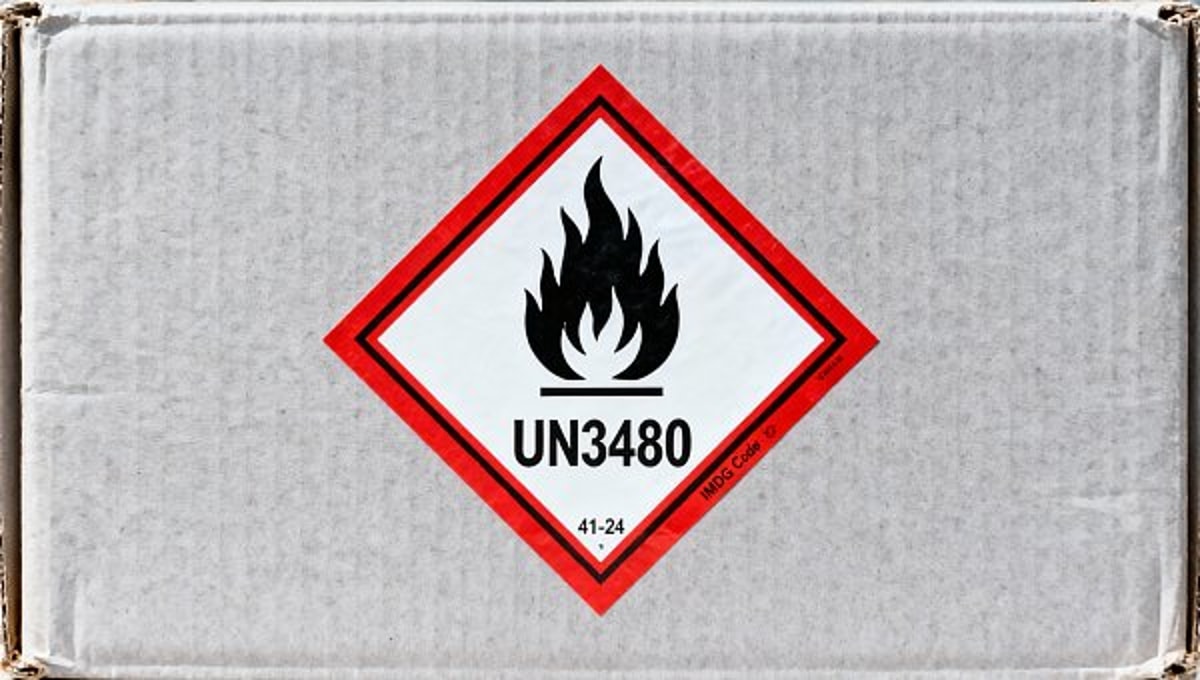
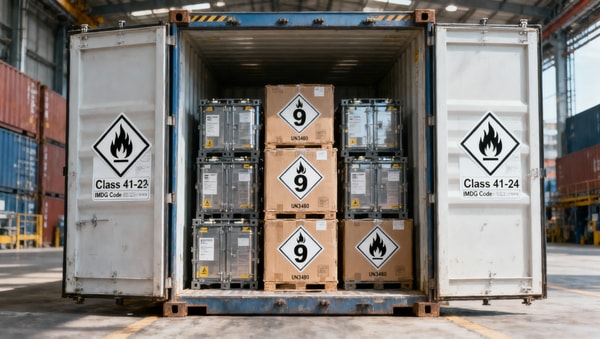
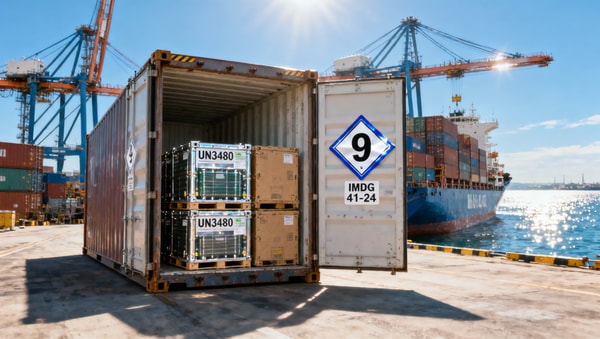
On 29 April 2026, the IMO’s IMDG Code 41-24 enters into mandatory global force. The revision includes updated provisions specifically for lithium-ion batteries assigned to UN3480, requiring new diamond-shaped hazard labels, revised transport documentation, and stricter stowage conditions. No transitional period is specified in publicly available information; enforcement applies uniformly across all signatory states.
Industries Affected by Segment
Direct Exporters (Lithium Battery Manufacturers)
These enterprises are directly responsible for applying correct labels and ensuring full UN certification alignment before shipment. Non-compliance results in cargo refusal at foreign ports — impacting delivery schedules, contractual obligations, and customs clearance timelines.
Energy Storage System (ESS) Suppliers
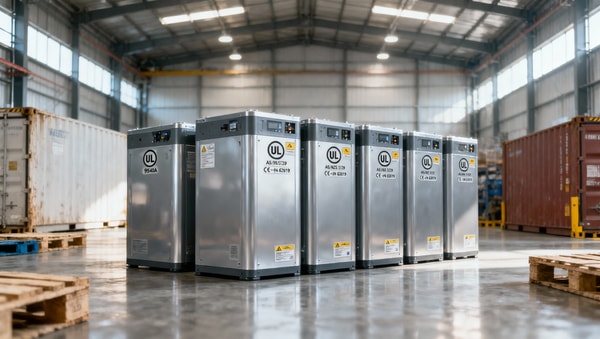
As ESS units often integrate UN3480 cells, their finished products fall under the same regulatory scope. Even if individual cells are certified, the assembled system must meet revised labeling and documentation standards — adding verification steps to final pre-shipment checks.
EV Component Exporters (e.g., battery packs, chargers with integrated Li-ion cells)
Products containing UN3480 batteries — whether as standalone items or embedded components — are subject to the new rules. This extends compliance responsibility beyond cell producers to OEMs and Tier-1 suppliers shipping functional units to overseas markets.
Freight Forwarders & Logistics Service Providers
These actors face heightened due diligence obligations. Carriers may reject bookings lacking verified IMDG 41-24–compliant labels or declarations. Documentation errors or missing UN certification updates could trigger liability under freight contracts or insurance terms.
What Relevant Enterprises or Practitioners Should Focus On — And How to Respond
Verify label design and print specifications against IMDG 41-24 Annexes
Confirm that new diamond-shaped labels for UN3480 meet exact size, color contrast, symbol placement, and language requirements outlined in Part 5 of the Code. Pre-printed stock using prior editions must be replaced or revalidated.
Review and update UN certification documentation with issuing authorities
UN3480 test reports and certificates issued under earlier versions (e.g., 40-22) may no longer satisfy evidentiary requirements. Contact accredited testing labs or national competent authorities to determine whether recertification or supplementary declarations are needed.
Align internal shipping workflows with revised documentation checkpoints
Introduce mandatory pre-booking validation steps: label image review, certificate version cross-check, and stowage plan confirmation per Chapter 7.3. Ensure freight forwarders receive complete, version-matched documentation packages — not just summaries or legacy forms.
Assess impact on high-volume export lanes (e.g., EU, US, ASEAN)
While IMDG Code enforcement is global, port authorities in key destinations (e.g., Rotterdam, Los Angeles, Singapore) have historically applied stricter scrutiny to lithium battery shipments. Prioritize readiness for these corridors to avoid cascading delays.
Editorial Perspective / Industry Observation
Observably, the enforcement of IMDG Code 41-24 represents a regulatory hardening — not merely a technical update. Analysis shows it shifts compliance from a documentation formality toward an end-to-end operational checkpoint, where label accuracy and certification currency directly determine cargo acceptability. From an industry perspective, this is less a one-time deadline and more a signal of escalating harmonization between maritime safety mandates and product-level traceability. Current enforcement language suggests limited flexibility; therefore, sector-wide readiness — rather than phased adoption — is the expected baseline.
It is more appropriate to understand this development as an operational inflection point: the point at which adherence to international transport codes transitions from optional best practice to non-negotiable trade condition for lithium-based goods.
Conclusion
The mandatory implementation of IMDG Code 41-24 marks a structural tightening in the global movement of lithium-ion batteries. It does not introduce novel hazard classifications but enforces stricter execution discipline across labeling, certification, and logistics coordination. For affected enterprises, this is not a policy shift to monitor — it is a compliance threshold to clear before 29 April 2026. The most rational interpretation is that this rule change formalizes existing expectations into binding operational requirements, elevating transport compliance to parity with product safety standards.
Information Source
Main source: International Maritime Organization (IMO), International Maritime Dangerous Goods Code, Amendment 41-24 (adopted 2024, entering into force 29 April 2026). Status of national adoption and port-level enforcement protocols remains subject to ongoing observation.
Recommended News
 MIIT Launches Space-Based Computing & Power-Compute CoordinationMIIT launches space-based computing & power-compute coordination—boosting modular IDC exports, liquid-cooled servers, and solar-powered data centers for arid regions.
 Tangshan Iron Tower Smart Base Processes 600K Tons Steel AnnuallyTangshan Iron Tower Smart Base processes 600K tons steel annually—42× faster angle steel marking, API-enabled traceability for Belt and Road infrastructure projects.
 Q1 2026 Lithium Battery Export Prices Rise 11.3% for ESSQ1 2026 Lithium Battery Export Prices Rise 11.3% for ESS — $128/kWh amid UL 9540A costs, freight normalization & surging demand in Vietnam, Germany, Australia.
 China Launches 'Model-Data Resonance' Initiative for AI+Manufacturing InteroperabilityChina's 'Model-Data Resonance' initiative launches AI+Manufacturing interoperability standard—key for global buyers, OEMs & integrators seeking seamless smart factory integration.
 China's First Embodied AI Robot Export Liability Insurance Launched in GuangxiChina's first Embodied AI Robot Export Liability Insurance launched in Guangxi—covers AI decision errors, data breaches & third-party harm for robotics, medtech & security exporters.
 State Grid’s $680M Embodied AI Equipment Procurement LaunchesState Grid’s $680M embodied AI equipment procurement demands IEC 62443 & GB/T 38925 compliance—unlock global infrastructure bids now.
 RCEP Green Packaging Mutual Recognition Extended to AU, NZ, JP, KRRCEP green packaging mutual recognition now extends to AU, NZ, JP, KR — unlock faster customs clearance & 22% lower inspection costs for GB/T 38727-2020-compliant sustainable food packaging exports from China.
 Tangshan Beijiao Thermal Power Unit 1 A-Check StartsTangshan Beijiao Thermal Power Unit 1 A-Check starts Apr 2026 — urgent demand for domestic industrial valves, high-temp sensors & fire-resistant cables. Act now to secure Q3 2026 supply.
 WeChat Pay Integrates QR Codes from 5 Countries for Cross-Border B2B PaymentsWeChat Pay integrates QR codes from 5 countries for cross-border B2B payments—faster T+0 settlement, 35% lower fees, and seamless USD 50K transactions.
 IMDG Code 41-24 Enforces New UN3480 Labeling for Lithium BatteriesIMDG Code 41-24 mandates new UN3480 labeling for lithium batteries from 29 April 2026 — avoid shipment rejection. Act now to ensure compliance.
 China-France Nuclear Cooperation Advances at Beijing ExpoChina-France nuclear cooperation advances: mutual recognition for nuclear-grade seals, cables & radiation monitors boosts export readiness for suppliers targeting EU and BRI projects.
 Vietnam’s 4 Provinces Seek AI Tourism Tech in NanningAI tourism tech in demand: Vietnam’s 4 provinces seek AI-guided terminals, multilingual interpretation, AI-CCTV & smart ticketing in Nanning—key opportunity for B2G exporters.
 Q1 2026 China Power Market Trading Up 25.6%: Smart Meters, Storage Export Demand RisesSmart meters, energy storage exports surge as China’s Q1 2026 power market trading jumps 25.6% — key signal for global manufacturers & channel partners.
 China First Country with 5M+ Active Invention PatentsChina first country with 5M+ active invention patents—key for buyers in AI, solar, lithium battery & energy storage. Discover IP implications for sourcing, compliance & supplier vetting.
 Shenneng Etorkeqi Green Ammonia Project: Deionized Water Station OperationalShenneng Etorkeqi Green Ammonia Project’s deionized water station is now operational—ISO 8502-3 compliant, fully integrated, and a key milestone for global green hydrogen developers and exporters.
 China Launches 'Model-Data Resonance' Initiative for AI+Manufacturing InteroperabilityModel-Data Resonance initiative boosts AI+manufacturing interoperability—learn how GB/T XXXX–2026 aligns with VDI 2182 & ISA-95 for smoother global factory deployments.
 China’s First Embodied AI Robot Insurance Launched in GuangxiChina’s first embodied AI robot insurance launched in Guangxi—key for robotics exporters, AI hardware makers & global compliance teams. CE-recognized, EU/UK/AU-ready.
 IMDG Code 41-24 Enforced: UN3480 Lithium Battery Labeling Now MandatoryIMDG Code 41-24 is now mandatory: UN3480 lithium battery labeling, documentation & packaging rules are enforced globally as of 28 April 2026 — avoid port rejections!
 State Grid’s $680M Embodied AI Procurement Signals Export OpportunityEmbodied AI, IEC 61850 & IEC 62443: State Grid’s $680M procurement unlocks export opportunities for compliant industrial robots and smart vision systems in emerging markets.
 IMDG Code 41-24 Enforces UN3480 Class 9 Labeling for Lithium Battery Sea FreightIMDG Code 41-24 mandates UN3480 lithium battery sea freight to display durable Class 9 labels from April 27, 2026—avoid delays & port rejections.
 ESS Key Component Prices Drop ~80%: Quality & Compliance RiseESS key component prices dropped ~80%—but quality & compliance demands surged. Discover how UL 9540A, AS/NZS 5139, and certified BMS/inverters now define market access.














Popular Tags
Global Trade Insights & Industry
Our mission is to empower global exporters and importers with data-driven insights that foster strategic growth.
Search News
Popular Tags
Industry Overview
The global commercial kitchen equipment market is projected to reach $112 billion by 2027. Driven by urbanization, the rise of e-commerce food delivery, and strict hygiene regulations.