

RCEP Green Packaging Mutual Recognition Extended to AU, NZ, JP, KR
On 29 April 2026, the RCEP Secretariat announced the extension of its green packaging mutual recognition mechanism to Australia, New Zealand, Japan, and South Korea — marking a significant development for exporters of certified sustainable food packaging from China. Food packaging manufacturers, export-oriented converters, and supply chain service providers in the sustainable packaging sector should monitor implications closely, as this change directly affects regulatory compliance, lead times, and cost structures across key Asia-Pacific markets.
Event Overview
On 29 April 2026, the RCEP Secretariat confirmed the expansion of the green packaging mutual recognition mechanism to Australia, New Zealand, Japan, and South Korea. The mechanism recognizes China’s GB/T 38727-2020 General Requirements for Reusable Express Packaging and biodegradation test reports issued by CNAS-accredited laboratories. Effective immediately, compliant Chinese products—including molded fiber food containers, PLA drinking straws, and water-based ink labels—are exempt from duplicate testing upon import into these four countries. Average customs clearance time is reduced by 48 hours, and inspection-related costs decline by approximately 22%.
Industries Affected by Segment
Direct Exporters (Food Packaging Manufacturers & Brand Owners)
These entities are directly impacted because their products now qualify for streamlined customs treatment in four major RCEP-plus markets. The exemption applies only to items verified against GB/T 38727-2020 and supported by valid CNAS lab reports — meaning eligibility hinges on documentation integrity and standard alignment, not just material composition.
Raw Material Suppliers (e.g., PLA resin, molded pulp producers)
Suppliers face upstream pressure to ensure traceability and conformity with downstream certification requirements. While the mutual recognition does not mandate upstream certification, export-ready finished goods rely on consistent input quality — especially for biodegradability claims tied to final product testing protocols.
Contract Packaging & Conversion Facilities
Facilities producing RCEP-eligible items (e.g., printing water-based ink labels onto pre-formed substrates) must verify that their processes do not invalidate the original certification — for instance, through thermal lamination or solvent-based overcoating that could interfere with degradation performance or test validity.
Logistics & Customs Compliance Service Providers
These firms must update documentation workflows to include verification of GB/T 38727-2020 conformance statements and CNAS report authenticity. Misclassification or incomplete submission may result in delayed clearance despite formal eligibility.
Key Considerations and Practical Responses
Monitor official implementation guidance from national customs and standards bodies
The RCEP Secretariat’s announcement is a framework-level decision; individual importing countries (AU, NZ, JP, KR) retain authority over enforcement details. Exporters should track updates from agencies such as Australia’s Department of Agriculture, Fisheries and Forestry (DAFF), Japan’s Ministry of Health, Labour and Welfare (MHLW), and Korea’s Ministry of Environment — particularly regarding document format, retention periods, and audit triggers.
Verify eligibility for priority product categories and target markets
Not all green packaging qualifies. Only items explicitly covered under GB/T 38727-2020 — primarily reusable or single-use items designed for food contact and verified for controlled degradation — are included. Companies should cross-check current product specifications against the standard’s scope and confirm CNAS lab capacity for required test parameters (e.g., ISO 14855-1 for aerobic biodegradability).
Distinguish between policy signal and operational readiness
While the mutual recognition is effective as of 29 April 2026, real-world adoption may vary. Some ports or customs offices may require transitional training or system updates. Exporters should treat early shipments as pilot cases — documenting clearance outcomes, feedback from local agents, and any ad hoc verification requests — to refine future submissions.
Prepare documentation and internal alignment ahead of shipment
Eligibility requires two core documents: (1) a declaration of conformity with GB/T 38727-2020, signed by the manufacturer or authorized representative; and (2) a valid biodegradation test report issued by a CNAS-accredited laboratory, referencing the exact product batch or formulation. Internal teams — including QA, regulatory affairs, and logistics — must align on version control, translation accuracy (where required), and digital archiving of supporting evidence.
Editorial Perspective / Industry Observation
Observably, this extension functions less as an immediate commercial catalyst and more as a procedural milestone — one that validates China’s domestic green packaging standardisation effort within the broader RCEP architecture. Analysis shows it reflects growing convergence on test methodology and reporting transparency, rather than harmonisation of underlying environmental criteria. From an industry perspective, it signals increasing institutional recognition of CNAS-accredited data, but does not imply automatic acceptance of other Chinese standards (e.g., GB/T 38082 for compostable plastics) in these markets. Continued attention is warranted as Australia and New Zealand begin integrating RCEP-aligned protocols into their biosecurity frameworks — a process likely to influence third-country recognition pathways.
Conclusion
This development represents a targeted, documentation-driven easing of technical barriers for a defined subset of Chinese food packaging exports. It is neither a blanket market access grant nor a sustainability endorsement — rather, it is a regulatory efficiency measure contingent on strict adherence to specified standards and verification practices. Current interpretation should focus on operational preparedness, not strategic repositioning.
Source Attribution
Main source: RCEP Secretariat official announcement, 29 April 2026.
Points requiring ongoing observation: Implementation guidelines issued separately by Australia’s DAFF, New Zealand’s MPI, Japan’s MHLW, and Korea’s MOE — none of which have been publicly released as of the announcement date.
Recommended News
 MIIT Launches Space-Based Computing & Power-Compute CoordinationMIIT launches space-based computing & power-compute coordination—boosting modular IDC exports, liquid-cooled servers, and solar-powered data centers for arid regions.
 Tangshan Iron Tower Smart Base Processes 600K Tons Steel AnnuallyTangshan Iron Tower Smart Base processes 600K tons steel annually—42× faster angle steel marking, API-enabled traceability for Belt and Road infrastructure projects.
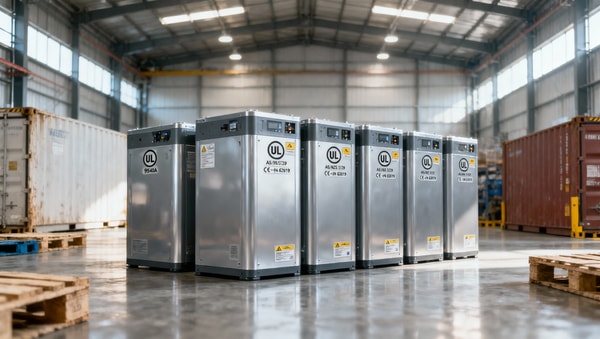
 Q1 2026 Lithium Battery Export Prices Rise 11.3% for ESSQ1 2026 Lithium Battery Export Prices Rise 11.3% for ESS — $128/kWh amid UL 9540A costs, freight normalization & surging demand in Vietnam, Germany, Australia.
 China Launches 'Model-Data Resonance' Initiative for AI+Manufacturing InteroperabilityChina's 'Model-Data Resonance' initiative launches AI+Manufacturing interoperability standard—key for global buyers, OEMs & integrators seeking seamless smart factory integration.
 China's First Embodied AI Robot Export Liability Insurance Launched in GuangxiChina's first Embodied AI Robot Export Liability Insurance launched in Guangxi—covers AI decision errors, data breaches & third-party harm for robotics, medtech & security exporters.
 State Grid’s $680M Embodied AI Equipment Procurement LaunchesState Grid’s $680M embodied AI equipment procurement demands IEC 62443 & GB/T 38925 compliance—unlock global infrastructure bids now.
 RCEP Green Packaging Mutual Recognition Extended to AU, NZ, JP, KRRCEP green packaging mutual recognition now extends to AU, NZ, JP, KR — unlock faster customs clearance & 22% lower inspection costs for GB/T 38727-2020-compliant sustainable food packaging exports from China.
 Tangshan Beijiao Thermal Power Unit 1 A-Check StartsTangshan Beijiao Thermal Power Unit 1 A-Check starts Apr 2026 — urgent demand for domestic industrial valves, high-temp sensors & fire-resistant cables. Act now to secure Q3 2026 supply.
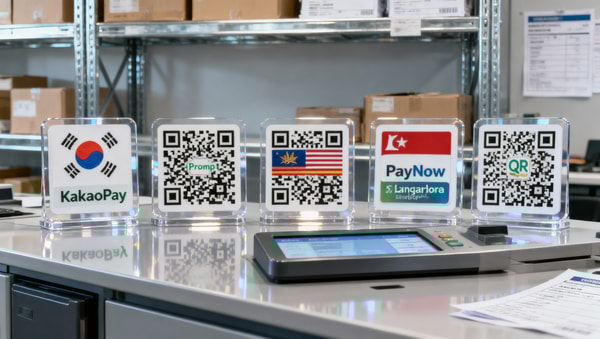
 WeChat Pay Integrates QR Codes from 5 Countries for Cross-Border B2B PaymentsWeChat Pay integrates QR codes from 5 countries for cross-border B2B payments—faster T+0 settlement, 35% lower fees, and seamless USD 50K transactions.
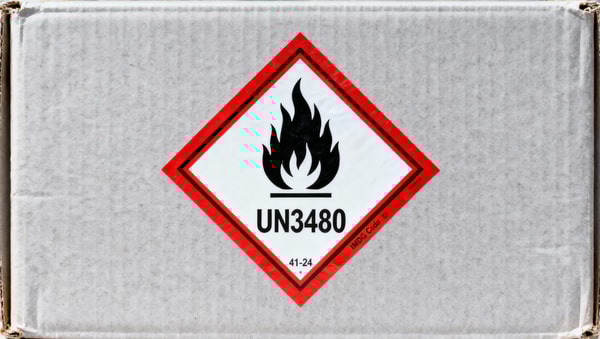
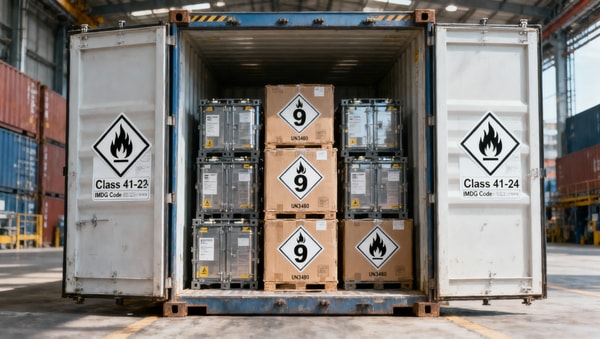
 IMDG Code 41-24 Enforces New UN3480 Labeling for Lithium BatteriesIMDG Code 41-24 mandates new UN3480 labeling for lithium batteries from 29 April 2026 — avoid shipment rejection. Act now to ensure compliance.
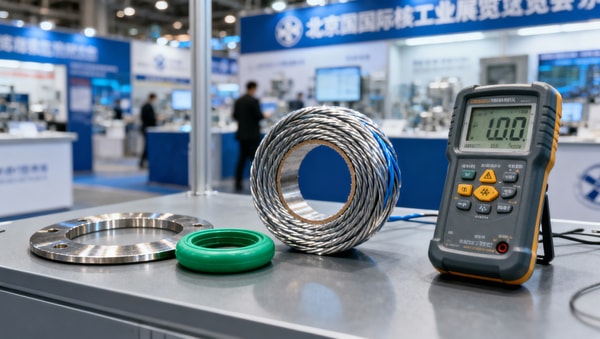
 China-France Nuclear Cooperation Advances at Beijing ExpoChina-France nuclear cooperation advances: mutual recognition for nuclear-grade seals, cables & radiation monitors boosts export readiness for suppliers targeting EU and BRI projects.
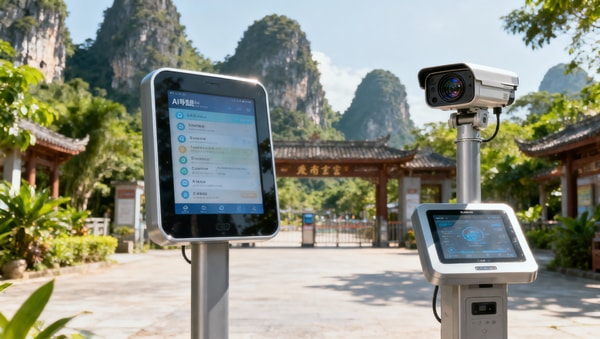
 Vietnam’s 4 Provinces Seek AI Tourism Tech in NanningAI tourism tech in demand: Vietnam’s 4 provinces seek AI-guided terminals, multilingual interpretation, AI-CCTV & smart ticketing in Nanning—key opportunity for B2G exporters.
 Q1 2026 China Power Market Trading Up 25.6%: Smart Meters, Storage Export Demand RisesSmart meters, energy storage exports surge as China’s Q1 2026 power market trading jumps 25.6% — key signal for global manufacturers & channel partners.
 China First Country with 5M+ Active Invention PatentsChina first country with 5M+ active invention patents—key for buyers in AI, solar, lithium battery & energy storage. Discover IP implications for sourcing, compliance & supplier vetting.
 Shenneng Etorkeqi Green Ammonia Project: Deionized Water Station OperationalShenneng Etorkeqi Green Ammonia Project’s deionized water station is now operational—ISO 8502-3 compliant, fully integrated, and a key milestone for global green hydrogen developers and exporters.
 China Launches 'Model-Data Resonance' Initiative for AI+Manufacturing InteroperabilityModel-Data Resonance initiative boosts AI+manufacturing interoperability—learn how GB/T XXXX–2026 aligns with VDI 2182 & ISA-95 for smoother global factory deployments.
 China’s First Embodied AI Robot Insurance Launched in GuangxiChina’s first embodied AI robot insurance launched in Guangxi—key for robotics exporters, AI hardware makers & global compliance teams. CE-recognized, EU/UK/AU-ready.
 IMDG Code 41-24 Enforced: UN3480 Lithium Battery Labeling Now MandatoryIMDG Code 41-24 is now mandatory: UN3480 lithium battery labeling, documentation & packaging rules are enforced globally as of 28 April 2026 — avoid port rejections!
 State Grid’s $680M Embodied AI Procurement Signals Export OpportunityEmbodied AI, IEC 61850 & IEC 62443: State Grid’s $680M procurement unlocks export opportunities for compliant industrial robots and smart vision systems in emerging markets.
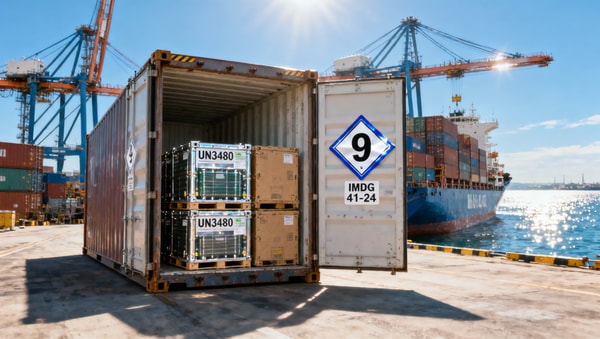
 IMDG Code 41-24 Enforces UN3480 Class 9 Labeling for Lithium Battery Sea FreightIMDG Code 41-24 mandates UN3480 lithium battery sea freight to display durable Class 9 labels from April 27, 2026—avoid delays & port rejections.
 ESS Key Component Prices Drop ~80%: Quality & Compliance RiseESS key component prices dropped ~80%—but quality & compliance demands surged. Discover how UL 9540A, AS/NZS 5139, and certified BMS/inverters now define market access.














Popular Tags
Global Trade Insights & Industry
Our mission is to empower global exporters and importers with data-driven insights that foster strategic growth.
Search News
Popular Tags
Industry Overview
The global commercial kitchen equipment market is projected to reach $112 billion by 2027. Driven by urbanization, the rise of e-commerce food delivery, and strict hygiene regulations.