

WeChat Pay Integrates QR Codes from 5 Countries for Cross-Border B2B Payments
On April 28, 2026, WeChat Pay announced the integration of local QR code payment systems from South Korea, Sri Lanka, Thailand, Malaysia, and Singapore into its cross-border collection infrastructure. This development directly impacts exporters of smart hardware, small appliances, gardening tools, and pet supplies — sectors characterized by high-frequency, low-value B2B transactions — by enabling faster, lower-cost settlement for orders up to USD 50,000.
Event Overview
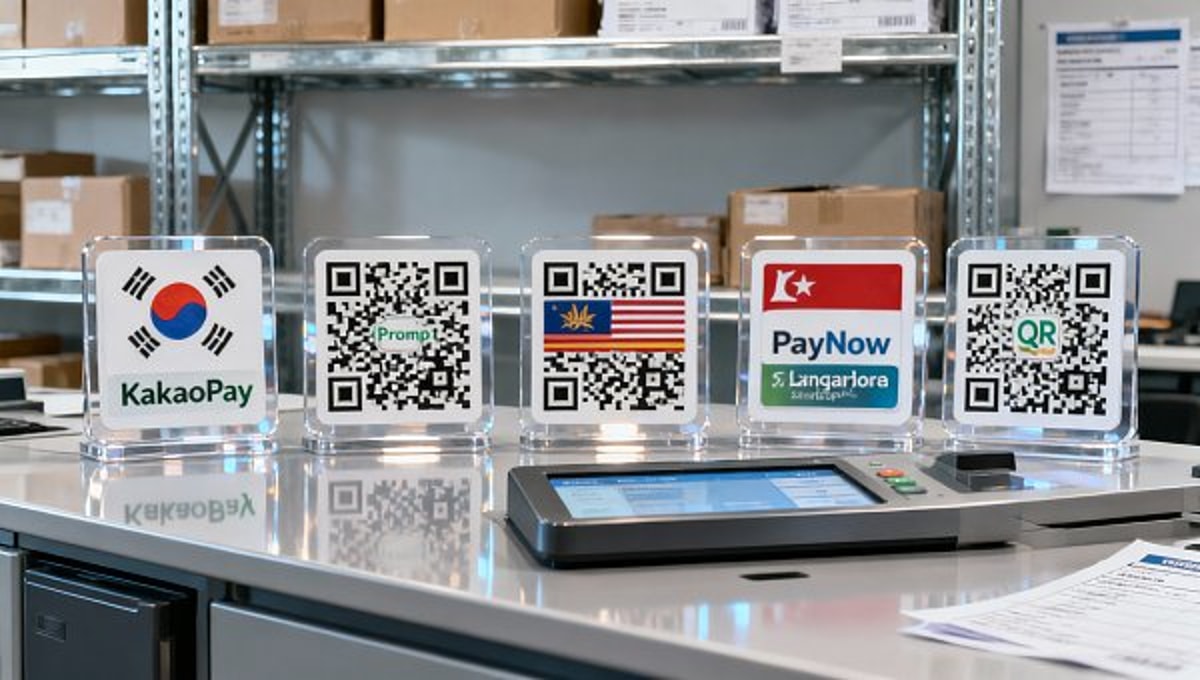
On April 28, 2026, WeChat Pay confirmed that domestic QR code payment schemes in South Korea (e.g., KakaoPay), Sri Lanka, Thailand (e.g., PromptPay), Malaysia (e.g., Boost), and Singapore are now connected to its cross-border merchant acquiring channel. Overseas SME buyers can now settle B2B orders with Chinese suppliers using their local e-wallets. Settlement time has been reduced from T+3 to T+0, and processing fees have decreased by approximately 35%. The service applies specifically to B2B transactions valued at USD 50,000 or less, and targets export categories including smart hardware, small household appliances, gardening tools, and pet products.
Industries Affected by Segment
Direct Exporters (B2B Sellers)
These are China-based manufacturers or trading companies selling directly to overseas SME buyers. They are affected because the new channel offers an additional, locally familiar payment option for buyers in five key markets — potentially increasing conversion rates and reducing payment abandonment. Impact is most visible in order fulfillment speed (T+0 settlement) and cost efficiency (35% lower fees), especially for sub-USD 50,000 transactions that previously relied on slower, more expensive bank transfers or third-party gateways.
Supply Chain Service Providers (Cross-Border Payment Facilitators & Platforms)
Providers offering integrated checkout, multi-currency invoicing, or embedded finance solutions for Chinese exporters must now assess compatibility with this WeChat Pay channel. Since the integration supports local QR codes rather than card networks or bank transfers, platform-level technical alignment (e.g., API readiness, reconciliation logic for T+0 flows) becomes operationally relevant. Delayed integration may result in missed opportunities in targeted markets.
Export-Oriented Contract Manufacturers & OEMs
Manufacturers fulfilling orders for foreign brands or distributors — particularly those serving mid-tier retail or e-commerce resellers in Southeast Asia and South Korea — may see increased inbound inquiries tied to simplified payment terms. Buyers may prioritize suppliers already enabled on this channel, as it lowers their working capital lock-up and improves procurement agility. However, impact remains contingent on whether the buyer initiates payment via the new route — not automatic upon supplier enrollment.
What Enterprises and Practitioners Should Focus On Now
Monitor official rollout scope and eligibility criteria
WeChat Pay’s announcement confirms integration but does not specify whether participation requires prior merchant onboarding, minimum transaction volume, or country-specific compliance steps (e.g., local licensing in Sri Lanka or Malaysia). Exporters should verify requirements through official WeChat Pay for Business channels before assuming immediate availability.
Assess exposure to priority categories and markets
Businesses exporting smart hardware, small appliances, gardening tools, or pet supplies to South Korea, Thailand, Malaysia, Singapore, or Sri Lanka should quantify current B2B order value distribution — particularly the share falling within the ≤USD 50,000 band. Orders currently settled via wire transfer or non-local gateways represent the highest-potential candidates for migration to this channel.
Distinguish policy signal from operational readiness
This integration signals WeChat Pay’s strategic expansion into cross-border B2B infrastructure — but does not equate to immediate, frictionless adoption. Local e-wallet support depends on bilateral agreements and technical interoperability. For example, PromptPay (Thailand) and Boost (Malaysia) operate under distinct regulatory frameworks; actual transaction success rates may vary initially. Early adopters should treat the first quarter post-launch as a validation period.
Prepare internal coordination for settlement and reconciliation
T+0 settlement introduces new cash flow predictability but also demands tighter reconciliation workflows. Finance teams should confirm whether WeChat Pay provides daily settlement reports aligned with local business days (e.g., Korean vs. Chinese time zones), and whether FX conversion occurs pre- or post-settlement. Proactive alignment between sales, finance, and IT departments is recommended ahead of pilot usage.
Editorial Perspective / Industry Observation
Observably, this move reflects a broader shift toward localized, QR-based infrastructure in cross-border B2B — moving beyond traditional card- or SWIFT-dependent models. Analysis shows it is best understood not as a standalone payment upgrade, but as an early-stage enabler for deeper regional trade digitization, particularly among SMEs with limited access to international banking services. From an industry perspective, it functions more as a market-access signal than an immediate revenue driver: adoption hinges on buyer-side awareness and wallet provider incentives, neither of which is yet publicly detailed. Continued observation is warranted on whether other Chinese payment platforms follow suit, and whether ASEAN or South Asian regulators begin aligning QR standards for cross-border use.
Conclusion
This integration marks a functional improvement in cross-border B2B settlement for specific geographies and product categories — not a systemic overhaul. Its primary value lies in reducing friction and cost for sub-USD 50,000 transactions, where speed and predictability matter most. It is more accurately interpreted as an incremental infrastructure enhancement than a transformative commercial shift. Current readiness should be assessed case-by-case, based on actual buyer demand and existing payment bottlenecks — not assumed from the announcement alone.
Source Attribution
Main source: Official WeChat Pay announcement dated April 28, 2026.
Points requiring ongoing observation: Actual merchant onboarding timelines per country, buyer-side adoption metrics, and any subsequent updates to fee structures or eligibility rules.
Recommended News
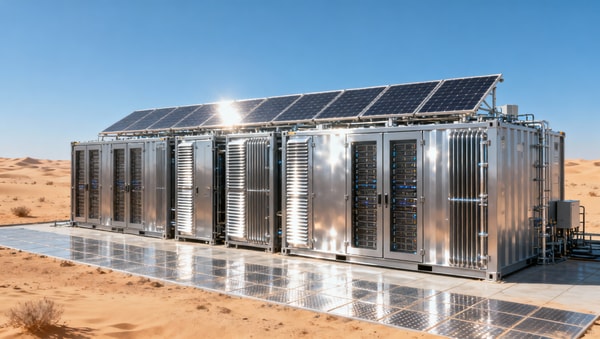
 MIIT Launches Space-Based Computing & Power-Compute CoordinationMIIT launches space-based computing & power-compute coordination—boosting modular IDC exports, liquid-cooled servers, and solar-powered data centers for arid regions.
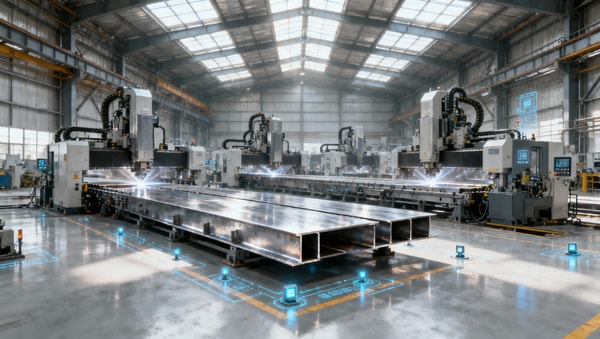
 Tangshan Iron Tower Smart Base Processes 600K Tons Steel AnnuallyTangshan Iron Tower Smart Base processes 600K tons steel annually—42× faster angle steel marking, API-enabled traceability for Belt and Road infrastructure projects.
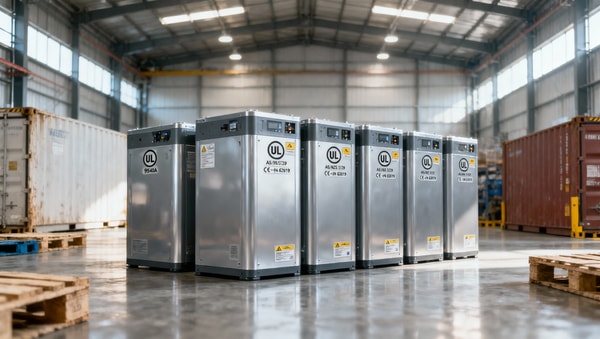
 Q1 2026 Lithium Battery Export Prices Rise 11.3% for ESSQ1 2026 Lithium Battery Export Prices Rise 11.3% for ESS — $128/kWh amid UL 9540A costs, freight normalization & surging demand in Vietnam, Germany, Australia.
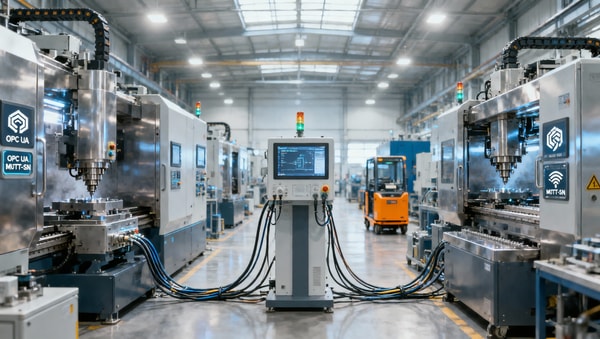
 China Launches 'Model-Data Resonance' Initiative for AI+Manufacturing InteroperabilityChina's 'Model-Data Resonance' initiative launches AI+Manufacturing interoperability standard—key for global buyers, OEMs & integrators seeking seamless smart factory integration.
 China's First Embodied AI Robot Export Liability Insurance Launched in GuangxiChina's first Embodied AI Robot Export Liability Insurance launched in Guangxi—covers AI decision errors, data breaches & third-party harm for robotics, medtech & security exporters.
 State Grid’s $680M Embodied AI Equipment Procurement LaunchesState Grid’s $680M embodied AI equipment procurement demands IEC 62443 & GB/T 38925 compliance—unlock global infrastructure bids now.
 RCEP Green Packaging Mutual Recognition Extended to AU, NZ, JP, KRRCEP green packaging mutual recognition now extends to AU, NZ, JP, KR — unlock faster customs clearance & 22% lower inspection costs for GB/T 38727-2020-compliant sustainable food packaging exports from China.
 Tangshan Beijiao Thermal Power Unit 1 A-Check StartsTangshan Beijiao Thermal Power Unit 1 A-Check starts Apr 2026 — urgent demand for domestic industrial valves, high-temp sensors & fire-resistant cables. Act now to secure Q3 2026 supply.
 WeChat Pay Integrates QR Codes from 5 Countries for Cross-Border B2B PaymentsWeChat Pay integrates QR codes from 5 countries for cross-border B2B payments—faster T+0 settlement, 35% lower fees, and seamless USD 50K transactions.
 IMDG Code 41-24 Enforces New UN3480 Labeling for Lithium BatteriesIMDG Code 41-24 mandates new UN3480 labeling for lithium batteries from 29 April 2026 — avoid shipment rejection. Act now to ensure compliance.
 China-France Nuclear Cooperation Advances at Beijing ExpoChina-France nuclear cooperation advances: mutual recognition for nuclear-grade seals, cables & radiation monitors boosts export readiness for suppliers targeting EU and BRI projects.
 Vietnam’s 4 Provinces Seek AI Tourism Tech in NanningAI tourism tech in demand: Vietnam’s 4 provinces seek AI-guided terminals, multilingual interpretation, AI-CCTV & smart ticketing in Nanning—key opportunity for B2G exporters.
 Q1 2026 China Power Market Trading Up 25.6%: Smart Meters, Storage Export Demand RisesSmart meters, energy storage exports surge as China’s Q1 2026 power market trading jumps 25.6% — key signal for global manufacturers & channel partners.
 China First Country with 5M+ Active Invention PatentsChina first country with 5M+ active invention patents—key for buyers in AI, solar, lithium battery & energy storage. Discover IP implications for sourcing, compliance & supplier vetting.
 Shenneng Etorkeqi Green Ammonia Project: Deionized Water Station OperationalShenneng Etorkeqi Green Ammonia Project’s deionized water station is now operational—ISO 8502-3 compliant, fully integrated, and a key milestone for global green hydrogen developers and exporters.
 China Launches 'Model-Data Resonance' Initiative for AI+Manufacturing InteroperabilityModel-Data Resonance initiative boosts AI+manufacturing interoperability—learn how GB/T XXXX–2026 aligns with VDI 2182 & ISA-95 for smoother global factory deployments.
 China’s First Embodied AI Robot Insurance Launched in GuangxiChina’s first embodied AI robot insurance launched in Guangxi—key for robotics exporters, AI hardware makers & global compliance teams. CE-recognized, EU/UK/AU-ready.
 IMDG Code 41-24 Enforced: UN3480 Lithium Battery Labeling Now MandatoryIMDG Code 41-24 is now mandatory: UN3480 lithium battery labeling, documentation & packaging rules are enforced globally as of 28 April 2026 — avoid port rejections!
 State Grid’s $680M Embodied AI Procurement Signals Export OpportunityEmbodied AI, IEC 61850 & IEC 62443: State Grid’s $680M procurement unlocks export opportunities for compliant industrial robots and smart vision systems in emerging markets.
 IMDG Code 41-24 Enforces UN3480 Class 9 Labeling for Lithium Battery Sea FreightIMDG Code 41-24 mandates UN3480 lithium battery sea freight to display durable Class 9 labels from April 27, 2026—avoid delays & port rejections.
 ESS Key Component Prices Drop ~80%: Quality & Compliance RiseESS key component prices dropped ~80%—but quality & compliance demands surged. Discover how UL 9540A, AS/NZS 5139, and certified BMS/inverters now define market access.





Popular Tags
Global Trade Insights & Industry
Our mission is to empower global exporters and importers with data-driven insights that foster strategic growth.
Search News
Popular Tags
Industry Overview
The global commercial kitchen equipment market is projected to reach $112 billion by 2027. Driven by urbanization, the rise of e-commerce food delivery, and strict hygiene regulations.