

Q1 2026 Lithium Battery Export Prices Rise 11.3% for ESS
On April 24, 2026, lithium battery industry data revealed that export prices for residential energy storage systems (ESS) rose 11.3% year-on-year in Q1 2026, reaching $128/kWh — a sign of sustained high industry activity. This development is particularly relevant for exporters, raw material procurers, cell and system manufacturers, logistics and compliance service providers, and overseas channel partners operating in the global energy storage value chain.
Event Overview
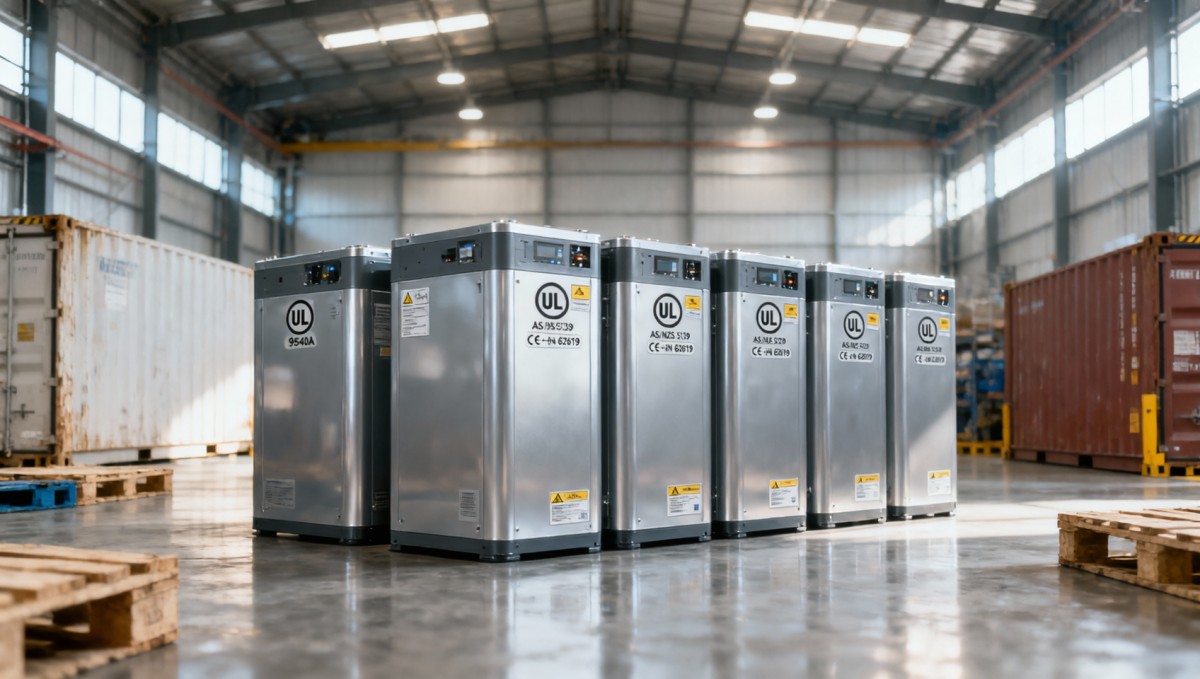
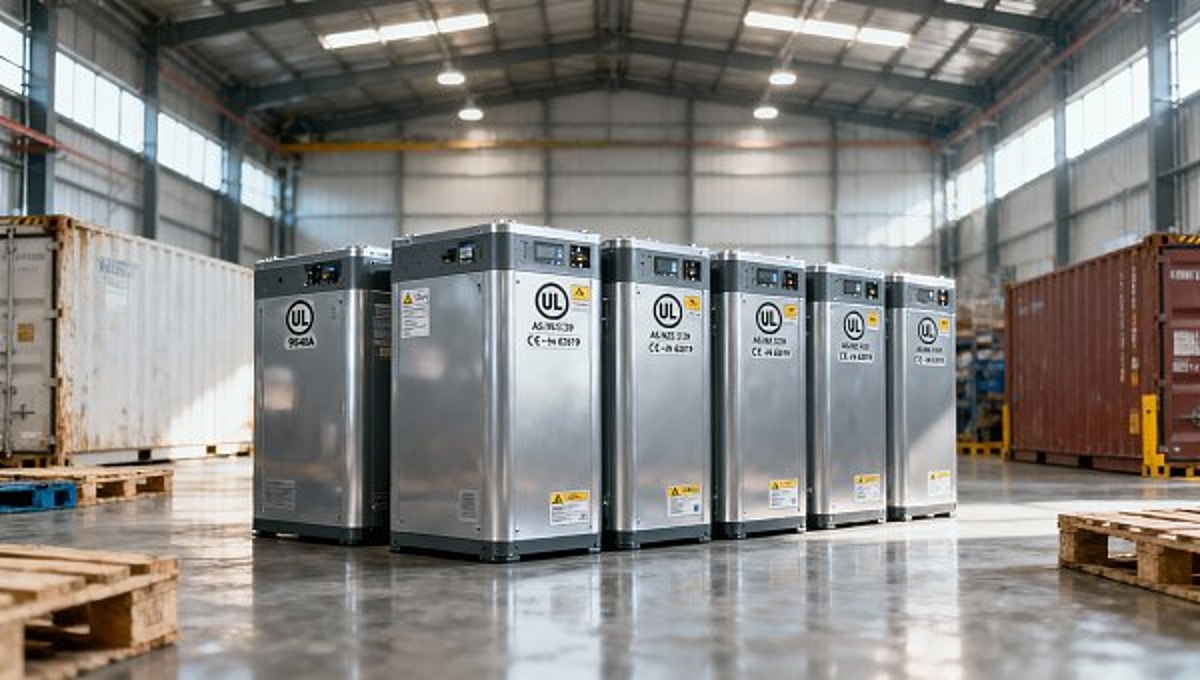
According to consolidated earnings previews from lithium battery–related listed companies released on April 24, 2026: China’s Q1 2026 export volume of energy storage lithium batteries increased by 28.6% year-on-year; the average export price for residential energy storage systems (ESS) reached $128/kWh, up 11.3% YoY. Key drivers cited include stabilization and recovery of lithium carbonate prices, higher costs associated with UL 9540A certification in overseas markets, and the normalization of ocean freight surcharges. Vietnam, Germany, and Australia emerged as the top three growth markets, collectively accounting for 54% of incremental exports.
Industries Affected
Direct Exporters & System Integrators
These enterprises face dual pressure: rising unit-level compliance and logistics costs, yet stronger pricing power in select markets. The 11.3% YoY price increase reflects not just cost pass-through but also improved market acceptance of premium-tier residential ESS products — especially where UL 9540A certification has become a de facto entry barrier.
Raw Material Procurement Teams
Stabilization and rebound of lithium carbonate prices directly impact margin planning for battery pack assemblers and OEMs. While upstream volatility has eased, procurement teams must now assess whether recent price stabilization is structural or cyclical — especially given the absence of new supply-side shocks reported in Q1.
Cell & Pack Manufacturing Firms
Manufacturers supplying to export-oriented ESS integrators are seeing tighter delivery windows and more frequent specification updates tied to evolving regional safety standards (e.g., UL 9540A revisions). The concentration of growth in Vietnam, Germany, and Australia implies divergent local requirements — not just in certification, but in packaging, labeling, and bilingual documentation.
Logistics & Regulatory Compliance Service Providers
With ocean freight surcharges now ‘normalized’ and UL 9540A certification costs rising, third-party compliance and freight management firms are experiencing increased demand for bundled services — particularly for multi-market rollouts. However, the lack of standardized certification pathways across target countries adds complexity to scalable support offerings.
What Relevant Enterprises or Practitioners Should Monitor and Do Now
Track certification timelines and fee adjustments in priority markets
UL 9540A-related cost increases were explicitly cited as a driver. Enterprises should verify current testing fees, lead times, and any pending revisions to UL 9540A Annexes — especially those affecting thermal runaway propagation testing for residential-scale systems.
Monitor lithium carbonate price trajectory beyond short-term stabilization
Analysis shows the price rebound may reflect seasonal restocking rather than fundamental supply-demand rebalancing. Procurement and finance teams should treat Q1’s stabilization as an interim signal — not a trend reversal — until Q2 spot pricing and inventory data from major Chinese producers are published.
Validate market-specific documentation and labeling requirements
Vietnam, Germany, and Australia collectively account for over half of Q1’s export growth — yet each imposes distinct regulatory frameworks. For example, Germany requires CE+EN 62619, Australia mandates AS/NZS 5139, and Vietnam recently introduced Decree 06/2024 on battery safety. Cross-market compliance cannot be assumed from one jurisdiction’s approval.
Assess freight surcharge structures in existing contracts
The ‘normalization’ of ocean freight surcharges implies these are no longer ad hoc but embedded in base rates or recurring add-ons. Logistics managers should audit active shipping agreements to identify which surcharges (e.g., BAF, CAF, EBS) are fixed vs. variable — and whether renegotiation windows open before Q3 2026.
Editorial Perspective / Industry Observation
Observably, this price increase is less a reflection of strong end-demand elasticity and more a consequence of layered cost pressures becoming institutionalized — particularly certification and freight. From an industry perspective, it signals a shift toward higher operational thresholds for market entry, rather than broad-based pricing power. It is currently better understood as a structural inflection point in export cost architecture than as evidence of accelerating global ESS adoption velocity. Continued monitoring is warranted because the sustainability of $128/kWh hinges on whether downstream buyers absorb further cost layers — or begin substituting certified alternatives from non-Chinese suppliers.
This update underscores how regulatory and logistical infrastructure — not just technology or scale — increasingly defines competitiveness in the global energy storage trade.
Conclusion
The Q1 2026 ESS export price increase reflects tightening cost conditions at multiple touchpoints — materials, compliance, and logistics — rather than pure demand-driven strength. It is best interpreted not as a bullish signal for margins across the board, but as a marker of rising minimum viable operational standards for exporters targeting developed and emerging energy storage markets alike.
Source Attribution
Main source: Consolidated Q1 2026 earnings previews from lithium battery–related listed companies, released April 24, 2026.
Points requiring ongoing observation: lithium carbonate price trend beyond Q1, evolution of UL 9540A implementation guidance in key export markets, and official confirmation of freight surcharge structures in major trade lanes.
Recommended News
 MIIT Launches Space-Based Computing & Power-Compute CoordinationMIIT launches space-based computing & power-compute coordination—boosting modular IDC exports, liquid-cooled servers, and solar-powered data centers for arid regions.
 Tangshan Iron Tower Smart Base Processes 600K Tons Steel AnnuallyTangshan Iron Tower Smart Base processes 600K tons steel annually—42× faster angle steel marking, API-enabled traceability for Belt and Road infrastructure projects.
 Q1 2026 Lithium Battery Export Prices Rise 11.3% for ESSQ1 2026 Lithium Battery Export Prices Rise 11.3% for ESS — $128/kWh amid UL 9540A costs, freight normalization & surging demand in Vietnam, Germany, Australia.
 China Launches 'Model-Data Resonance' Initiative for AI+Manufacturing InteroperabilityChina's 'Model-Data Resonance' initiative launches AI+Manufacturing interoperability standard—key for global buyers, OEMs & integrators seeking seamless smart factory integration.
 China's First Embodied AI Robot Export Liability Insurance Launched in GuangxiChina's first Embodied AI Robot Export Liability Insurance launched in Guangxi—covers AI decision errors, data breaches & third-party harm for robotics, medtech & security exporters.
 State Grid’s $680M Embodied AI Equipment Procurement LaunchesState Grid’s $680M embodied AI equipment procurement demands IEC 62443 & GB/T 38925 compliance—unlock global infrastructure bids now.
 RCEP Green Packaging Mutual Recognition Extended to AU, NZ, JP, KRRCEP green packaging mutual recognition now extends to AU, NZ, JP, KR — unlock faster customs clearance & 22% lower inspection costs for GB/T 38727-2020-compliant sustainable food packaging exports from China.
 Tangshan Beijiao Thermal Power Unit 1 A-Check StartsTangshan Beijiao Thermal Power Unit 1 A-Check starts Apr 2026 — urgent demand for domestic industrial valves, high-temp sensors & fire-resistant cables. Act now to secure Q3 2026 supply.
 WeChat Pay Integrates QR Codes from 5 Countries for Cross-Border B2B PaymentsWeChat Pay integrates QR codes from 5 countries for cross-border B2B payments—faster T+0 settlement, 35% lower fees, and seamless USD 50K transactions.
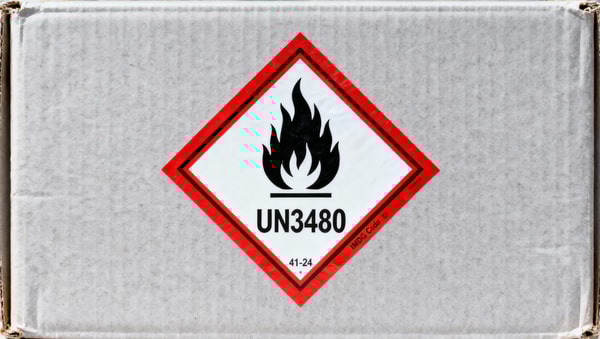
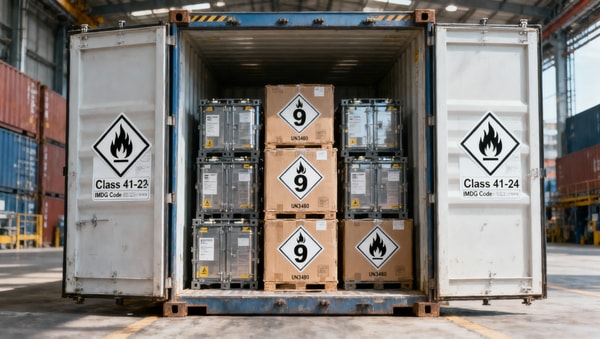
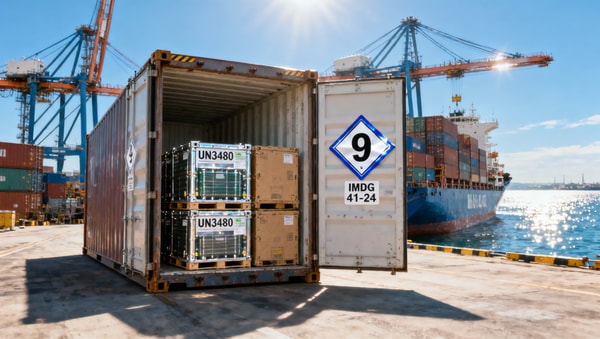
 IMDG Code 41-24 Enforces New UN3480 Labeling for Lithium BatteriesIMDG Code 41-24 mandates new UN3480 labeling for lithium batteries from 29 April 2026 — avoid shipment rejection. Act now to ensure compliance.
 China-France Nuclear Cooperation Advances at Beijing ExpoChina-France nuclear cooperation advances: mutual recognition for nuclear-grade seals, cables & radiation monitors boosts export readiness for suppliers targeting EU and BRI projects.
 Vietnam’s 4 Provinces Seek AI Tourism Tech in NanningAI tourism tech in demand: Vietnam’s 4 provinces seek AI-guided terminals, multilingual interpretation, AI-CCTV & smart ticketing in Nanning—key opportunity for B2G exporters.
 Q1 2026 China Power Market Trading Up 25.6%: Smart Meters, Storage Export Demand RisesSmart meters, energy storage exports surge as China’s Q1 2026 power market trading jumps 25.6% — key signal for global manufacturers & channel partners.
 China First Country with 5M+ Active Invention PatentsChina first country with 5M+ active invention patents—key for buyers in AI, solar, lithium battery & energy storage. Discover IP implications for sourcing, compliance & supplier vetting.
 Shenneng Etorkeqi Green Ammonia Project: Deionized Water Station OperationalShenneng Etorkeqi Green Ammonia Project’s deionized water station is now operational—ISO 8502-3 compliant, fully integrated, and a key milestone for global green hydrogen developers and exporters.
 China Launches 'Model-Data Resonance' Initiative for AI+Manufacturing InteroperabilityModel-Data Resonance initiative boosts AI+manufacturing interoperability—learn how GB/T XXXX–2026 aligns with VDI 2182 & ISA-95 for smoother global factory deployments.
 China’s First Embodied AI Robot Insurance Launched in GuangxiChina’s first embodied AI robot insurance launched in Guangxi—key for robotics exporters, AI hardware makers & global compliance teams. CE-recognized, EU/UK/AU-ready.
 IMDG Code 41-24 Enforced: UN3480 Lithium Battery Labeling Now MandatoryIMDG Code 41-24 is now mandatory: UN3480 lithium battery labeling, documentation & packaging rules are enforced globally as of 28 April 2026 — avoid port rejections!
 State Grid’s $680M Embodied AI Procurement Signals Export OpportunityEmbodied AI, IEC 61850 & IEC 62443: State Grid’s $680M procurement unlocks export opportunities for compliant industrial robots and smart vision systems in emerging markets.
 IMDG Code 41-24 Enforces UN3480 Class 9 Labeling for Lithium Battery Sea FreightIMDG Code 41-24 mandates UN3480 lithium battery sea freight to display durable Class 9 labels from April 27, 2026—avoid delays & port rejections.
 ESS Key Component Prices Drop ~80%: Quality & Compliance RiseESS key component prices dropped ~80%—but quality & compliance demands surged. Discover how UL 9540A, AS/NZS 5139, and certified BMS/inverters now define market access.





Popular Tags
Global Trade Insights & Industry
Our mission is to empower global exporters and importers with data-driven insights that foster strategic growth.
Search News
Popular Tags
Industry Overview
The global commercial kitchen equipment market is projected to reach $112 billion by 2027. Driven by urbanization, the rise of e-commerce food delivery, and strict hygiene regulations.