

Tangshan Iron Tower Smart Base Processes 600K Tons Steel Annually
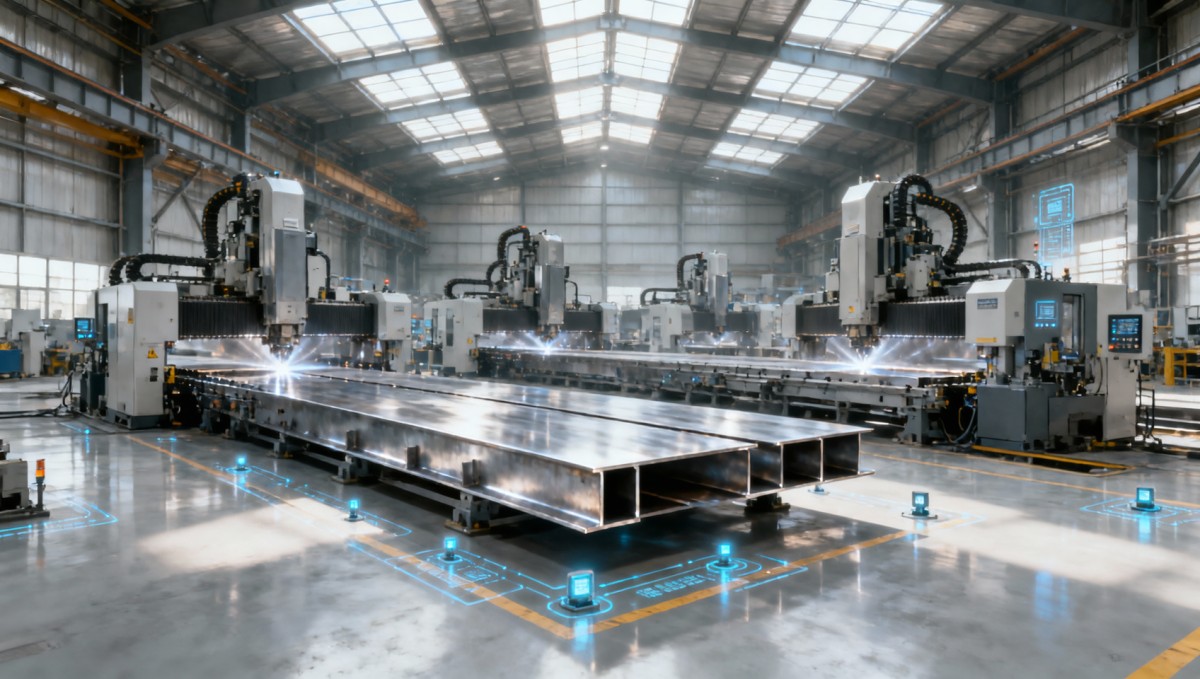
Tangshan Iron Tower Smart Manufacturing Base began full operation on April 27, 2026, achieving a 42-fold increase in angle steel processing efficiency and an annual steel throughput of 600,000 tons. This development is particularly relevant for stakeholders in infrastructure engineering, rail transit equipment supply, international EPC contracting, and precision metal fabrication — as it signals accelerating digital integration in structural steel manufacturing for global infrastructure projects.
Event Overview
On April 27, 2026, Hebei Daily reported the official commissioning of the intelligent production line at Hebei Kuojian Iron Tower Manufacturing Co., Ltd. in Tangshan. Key verified facts include: automatic angle steel marking time reduced from 4 minutes (manual) to 9 seconds; annual steel intake capacity reached 600,000 tons; the base serves as a designated supplier for Belt and Road Initiative projects including the China–Laos Railway, Jakarta–Bandung High-Speed Railway (Indonesia), and NEOM新城 (Saudi Arabia); and its digital process parameters are now accessible via open API for remote quality monitoring and traceability by overseas EPC general contractors.
Industries Affected by This Development
Direct Export & International Trade Enterprises
These enterprises may face tighter delivery expectations and higher digital interoperability requirements when sourcing tower structures for cross-border infrastructure tenders. The availability of real-time API-based quality data shifts competitive differentiation toward system integration capability — not just product compliance.
Raw Material Procurement Entities
With an annual steel throughput of 600,000 tons, the base’s scale implies increased demand stability for domestic large-section angle steel and galvanized steel suppliers. However, its lean processing cycle also compresses lead-time buffers — requiring upstream procurement planning to align with near-real-time production scheduling signals.
Metal Fabrication & Structural Component Manufacturers
Competitive pressure intensifies for non-digitized fabricators serving similar project segments (e.g., transmission towers, railway support structures). The 42× efficiency gain reflects integrated automation — not incremental tooling upgrades — suggesting that retrofitting legacy lines may no longer suffice to meet tier-1 contractor SLAs.
Supply Chain & Remote Monitoring Service Providers
The deployment of open APIs for remote监造 (supervision) and quality traceability creates new use cases for third-party digital supervision platforms, especially those certified for ISO/IEC 17020 or EN 15038. Demand may rise for middleware solutions bridging ERP/MES systems with standardized inspection data feeds.
What Relevant Enterprises or Practitioners Should Focus On
Monitor official technical interface documentation and API versioning policies
The base has opened its digital process parameters via API — but scope, authentication protocols, update frequency, and data retention terms remain unconfirmed. Enterprises planning integration should track official releases rather than assume current functionality will persist unchanged.
Assess exposure to key Belt and Road infrastructure corridors
Given its designation for China–Laos, Jakarta–Bandung, and NEOM projects, firms engaged in Southeast Asian or Gulf infrastructure supply chains should review whether their current quality assurance workflows can interoperate with this base’s traceability framework — especially where joint certification or shared audit trails are contractually required.
Distinguish between pilot implementation and scalable deployment
While the 9-second marking time and 600,000-ton throughput are confirmed, the extent to which these metrics apply across all product families (e.g., varying steel grades, dimensions, surface treatments) remains unspecified. Current performance should be interpreted as representative of optimized conditions — not guaranteed baseline across all SKUs.
Prepare for digital handover requirements in tender submissions
Increasing adoption of remote监造 models means EPC bidders may soon require demonstrable API-readiness or third-party verification of traceability compatibility. Firms should begin documenting internal data lineage practices and evaluating lightweight integration options — even if not yet mandatory.
Editorial Perspective / Industry Observation
Observably, this milestone is less about isolated productivity gains and more about institutionalizing digital quality infrastructure within China’s heavy industrial export ecosystem. Analysis shows the open API model represents a deliberate move toward interoperable, audit-ready manufacturing — shifting value from physical output volume to verifiable process integrity. From an industry perspective, this is currently best understood as an operational signal rather than a fully matured standard: it demonstrates technical feasibility and strategic intent, but widespread adoption hinges on cross-supplier protocol alignment and international recognition of its data governance framework. Continued observation is warranted on whether other state-backed infrastructure suppliers follow suit — and how multilateral lenders (e.g., AIIB, ADB) respond to such digital traceability capabilities in project evaluation criteria.
Conclusion
This development underscores a measurable shift toward digitally anchored quality assurance in structural steel manufacturing for global infrastructure. It does not replace traditional certification pathways, but adds a layer of real-time, machine-readable verification that complements — and may eventually influence — procurement benchmarks. For now, it is more accurately understood as an emerging benchmark in digital industrial readiness — one that invites pragmatic assessment, not immediate replication.
Information Sources
Main source: Hebei Daily, April 27, 2026 report.
Points under ongoing observation: API specification details, scalability across product variants, and adoption patterns among peer suppliers and international clients.
Recommended News
 MIIT Launches Space-Based Computing & Power-Compute CoordinationMIIT launches space-based computing & power-compute coordination—boosting modular IDC exports, liquid-cooled servers, and solar-powered data centers for arid regions.
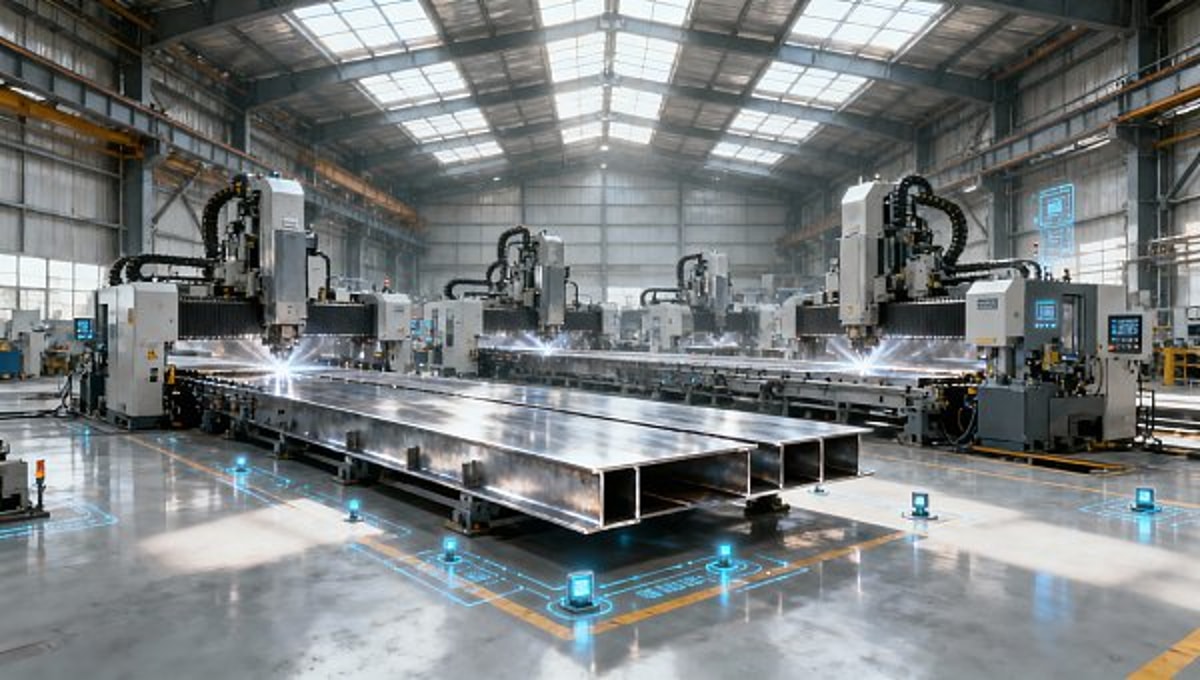
 Tangshan Iron Tower Smart Base Processes 600K Tons Steel AnnuallyTangshan Iron Tower Smart Base processes 600K tons steel annually—42× faster angle steel marking, API-enabled traceability for Belt and Road infrastructure projects.
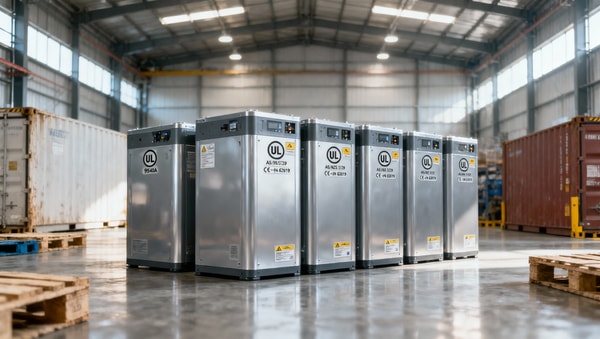
 Q1 2026 Lithium Battery Export Prices Rise 11.3% for ESSQ1 2026 Lithium Battery Export Prices Rise 11.3% for ESS — $128/kWh amid UL 9540A costs, freight normalization & surging demand in Vietnam, Germany, Australia.
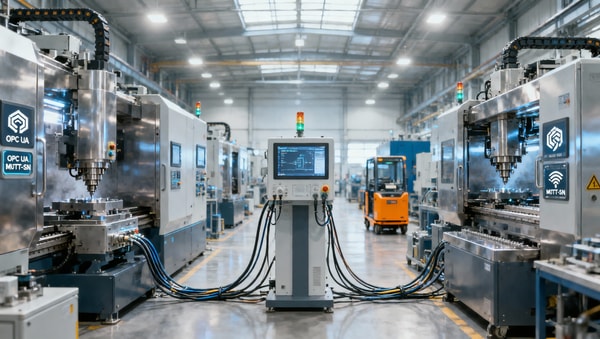
 China Launches 'Model-Data Resonance' Initiative for AI+Manufacturing InteroperabilityChina's 'Model-Data Resonance' initiative launches AI+Manufacturing interoperability standard—key for global buyers, OEMs & integrators seeking seamless smart factory integration.
 China's First Embodied AI Robot Export Liability Insurance Launched in GuangxiChina's first Embodied AI Robot Export Liability Insurance launched in Guangxi—covers AI decision errors, data breaches & third-party harm for robotics, medtech & security exporters.
 State Grid’s $680M Embodied AI Equipment Procurement LaunchesState Grid’s $680M embodied AI equipment procurement demands IEC 62443 & GB/T 38925 compliance—unlock global infrastructure bids now.
 RCEP Green Packaging Mutual Recognition Extended to AU, NZ, JP, KRRCEP green packaging mutual recognition now extends to AU, NZ, JP, KR — unlock faster customs clearance & 22% lower inspection costs for GB/T 38727-2020-compliant sustainable food packaging exports from China.
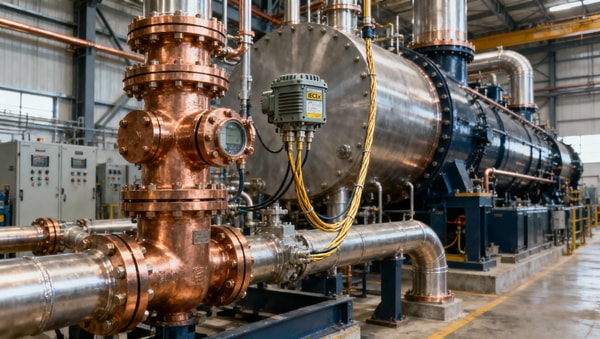
 Tangshan Beijiao Thermal Power Unit 1 A-Check StartsTangshan Beijiao Thermal Power Unit 1 A-Check starts Apr 2026 — urgent demand for domestic industrial valves, high-temp sensors & fire-resistant cables. Act now to secure Q3 2026 supply.
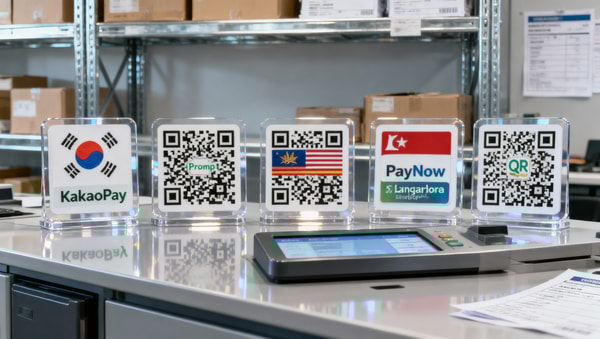
 WeChat Pay Integrates QR Codes from 5 Countries for Cross-Border B2B PaymentsWeChat Pay integrates QR codes from 5 countries for cross-border B2B payments—faster T+0 settlement, 35% lower fees, and seamless USD 50K transactions.
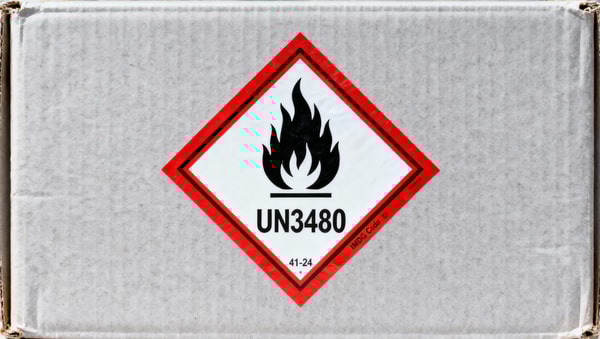
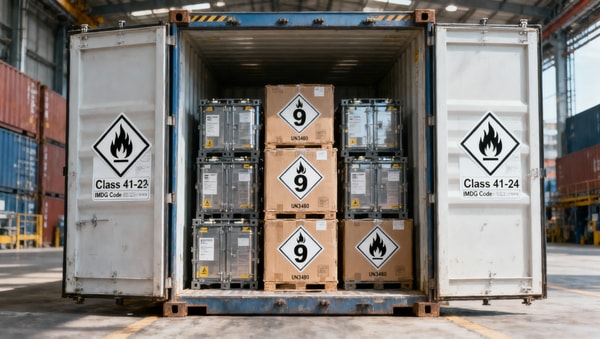
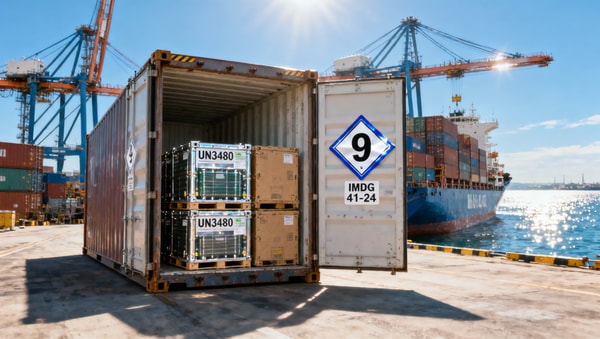
 IMDG Code 41-24 Enforces New UN3480 Labeling for Lithium BatteriesIMDG Code 41-24 mandates new UN3480 labeling for lithium batteries from 29 April 2026 — avoid shipment rejection. Act now to ensure compliance.
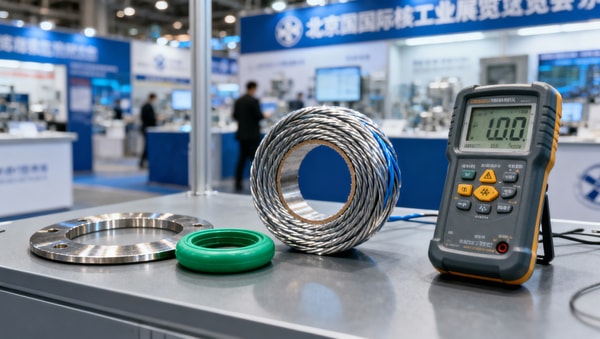
 China-France Nuclear Cooperation Advances at Beijing ExpoChina-France nuclear cooperation advances: mutual recognition for nuclear-grade seals, cables & radiation monitors boosts export readiness for suppliers targeting EU and BRI projects.
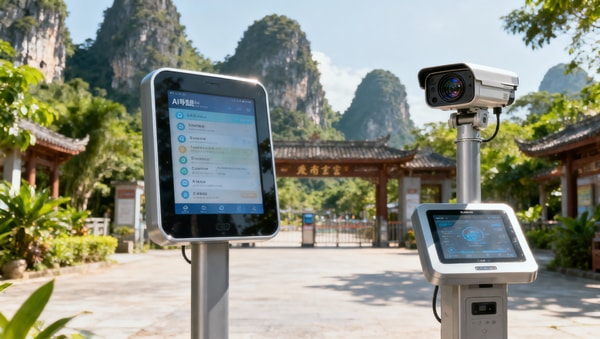
 Vietnam’s 4 Provinces Seek AI Tourism Tech in NanningAI tourism tech in demand: Vietnam’s 4 provinces seek AI-guided terminals, multilingual interpretation, AI-CCTV & smart ticketing in Nanning—key opportunity for B2G exporters.
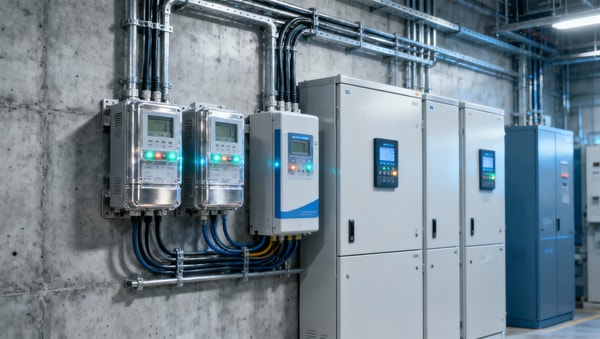
 Q1 2026 China Power Market Trading Up 25.6%: Smart Meters, Storage Export Demand RisesSmart meters, energy storage exports surge as China’s Q1 2026 power market trading jumps 25.6% — key signal for global manufacturers & channel partners.
 China First Country with 5M+ Active Invention PatentsChina first country with 5M+ active invention patents—key for buyers in AI, solar, lithium battery & energy storage. Discover IP implications for sourcing, compliance & supplier vetting.
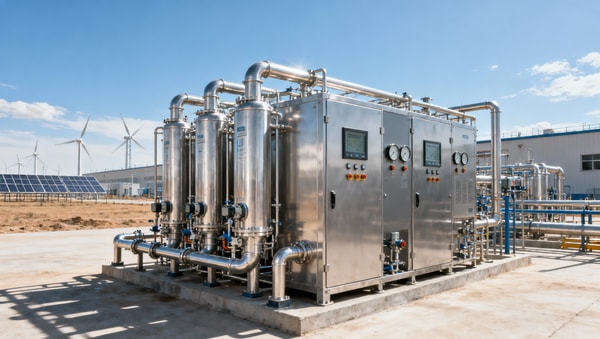
 Shenneng Etorkeqi Green Ammonia Project: Deionized Water Station OperationalShenneng Etorkeqi Green Ammonia Project’s deionized water station is now operational—ISO 8502-3 compliant, fully integrated, and a key milestone for global green hydrogen developers and exporters.
 China Launches 'Model-Data Resonance' Initiative for AI+Manufacturing InteroperabilityModel-Data Resonance initiative boosts AI+manufacturing interoperability—learn how GB/T XXXX–2026 aligns with VDI 2182 & ISA-95 for smoother global factory deployments.
 China’s First Embodied AI Robot Insurance Launched in GuangxiChina’s first embodied AI robot insurance launched in Guangxi—key for robotics exporters, AI hardware makers & global compliance teams. CE-recognized, EU/UK/AU-ready.
 IMDG Code 41-24 Enforced: UN3480 Lithium Battery Labeling Now MandatoryIMDG Code 41-24 is now mandatory: UN3480 lithium battery labeling, documentation & packaging rules are enforced globally as of 28 April 2026 — avoid port rejections!
 State Grid’s $680M Embodied AI Procurement Signals Export OpportunityEmbodied AI, IEC 61850 & IEC 62443: State Grid’s $680M procurement unlocks export opportunities for compliant industrial robots and smart vision systems in emerging markets.
 IMDG Code 41-24 Enforces UN3480 Class 9 Labeling for Lithium Battery Sea FreightIMDG Code 41-24 mandates UN3480 lithium battery sea freight to display durable Class 9 labels from April 27, 2026—avoid delays & port rejections.
 ESS Key Component Prices Drop ~80%: Quality & Compliance RiseESS key component prices dropped ~80%—but quality & compliance demands surged. Discover how UL 9540A, AS/NZS 5139, and certified BMS/inverters now define market access.








Popular Tags
Global Trade Insights & Industry
Our mission is to empower global exporters and importers with data-driven insights that foster strategic growth.
Search News
Popular Tags
Industry Overview
The global commercial kitchen equipment market is projected to reach $112 billion by 2027. Driven by urbanization, the rise of e-commerce food delivery, and strict hygiene regulations.