

Mexico NOM-019-SCFI-2026 Effective: EMC Certification Required for Auto Electronics Exports
Mexico’s NOM-019-SCFI-2026 regulation — mandating electromagnetic compatibility (EMC) certification for automotive electronic systems — entered into force on April 22, 2026. This update directly impacts Chinese exporters of rearview mirror modules, radar sensors, and T-Box units targeting the Mexican market, and signals a tightening of technical barriers for auto electronics trade between China and North America.
Event Overview
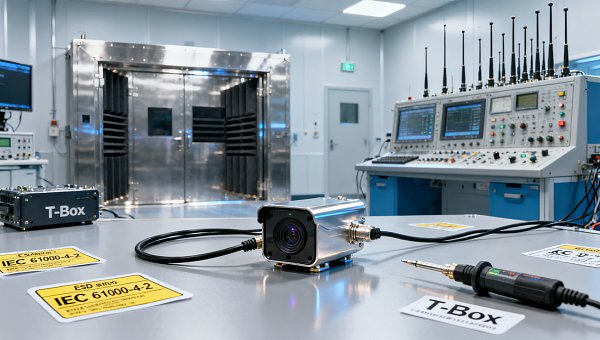
On April 22, 2026, Mexico’s Ministry of Economy officially published and implemented NOM-019-SCFI-2026, titled Requirements for Electromagnetic Compatibility of Vehicle Electronic Systems. The standard applies to all automotive electronic components, including backup radar systems, electronic exterior rearview mirrors, and embedded telematics control units (T-Box). It adopts CISPR 25:2021 Class 5 — the most stringent emission and immunity level defined in that international specification. As confirmed by public announcements, North American distributors have begun requiring NOM-019 certification as a mandatory condition for new procurement contracts, and several Chinese manufacturers reported order cancellations due to failure to complete testing and certification ahead of the effective date.
Industries Affected
Direct Exporters (OEM/ODM Suppliers)
Chinese manufacturers exporting rearview mirror assemblies, ultrasonic or radar-based parking assist modules, and vehicle connectivity units to Mexico are directly subject to compliance. Non-compliance results in customs rejection, shipment delays, or contract termination — as already observed in early cases following the April 22 enforcement date.
Supply Chain Integrators & Tier-2 Component Providers
Firms supplying sub-assemblies (e.g., PCBs with RF front-ends, MCU-based control boards) to final module integrators face upstream verification requirements. Since NOM-019 applies to the full electronic system, integration-level testing may expose design or layout deficiencies originating from component-level suppliers — increasing traceability and documentation expectations across tiers.
Distribution & Channel Partners in North America
U.S.- and Canada-based importers and distributors serving the Mexican aftermarket or OEM service channels now treat NOM-019 certification as a non-negotiable procurement prerequisite. This shifts technical due diligence earlier in the sourcing cycle and increases administrative burden for verifying test reports, lab accreditation (e.g., ISO/IEC 17025), and certificate validity.
Key Focus Areas and Immediate Actions for Stakeholders
Monitor official updates from Mexico’s SCFI and National Accreditation Entity (EMA)
The current version of NOM-019-SCFI-2026 is enforceable, but transitional provisions, recognized testing laboratories, and interpretation guidelines may still be issued. Stakeholders should track official bulletins via Mexico’s Official Journal of the Federation (DOF) and EMA’s updated list of accredited EMC labs.
Prioritize certification for high-volume export SKUs before Q3 2026
Given documented cases of order cancellations post-April 22, companies shipping rearview mirror modules or radar sensors to Mexico should prioritize formal CISPR 25:2021 Class 5 testing — especially for products already in active distribution or under negotiation. Lab lead times for full-system radiated/conducted emissions and bulk current injection (BCI) tests typically exceed 6–8 weeks.
Distinguish between regulatory requirement and commercial expectation
While NOM-019 is legally binding only for products placed on the Mexican market, its adoption as a de facto procurement gate by North American distributors means compliance is increasingly required even for shipments routed through U.S. or Canadian hubs destined for Mexico. Companies should assess logistics pathways and contractual terms to avoid unintended non-compliance.
Review technical documentation packages for alignment with NOM-019 Annexes
The regulation references specific test configurations (e.g., harness length, ground plane setup, battery simulation) outlined in its annexes. Manufacturers must ensure their existing test reports — even if based on CISPR 25:2021 — explicitly cover these Mexican-specified conditions; generic reports may not suffice for EMA or customs review.
Editorial Observation / Industry Perspective
From an industry perspective, NOM-019-SCFI-2026 is less a sudden policy shift and more a formalization of long-anticipated technical harmonization within the USMCA region. Its enforcement reflects Mexico’s broader move toward aligning automotive regulatory frameworks with international benchmarks — particularly CISPR standards widely adopted in Europe and increasingly referenced in U.S. OEM specifications. Analysis suggests this is not an isolated measure, but rather part of a coordinated effort to strengthen type-approval discipline across vehicle subsystems. Current evidence indicates it has already produced tangible commercial consequences — not merely signaling intent — making ongoing monitoring essential for any firm engaged in cross-border auto electronics trade involving Mexico.
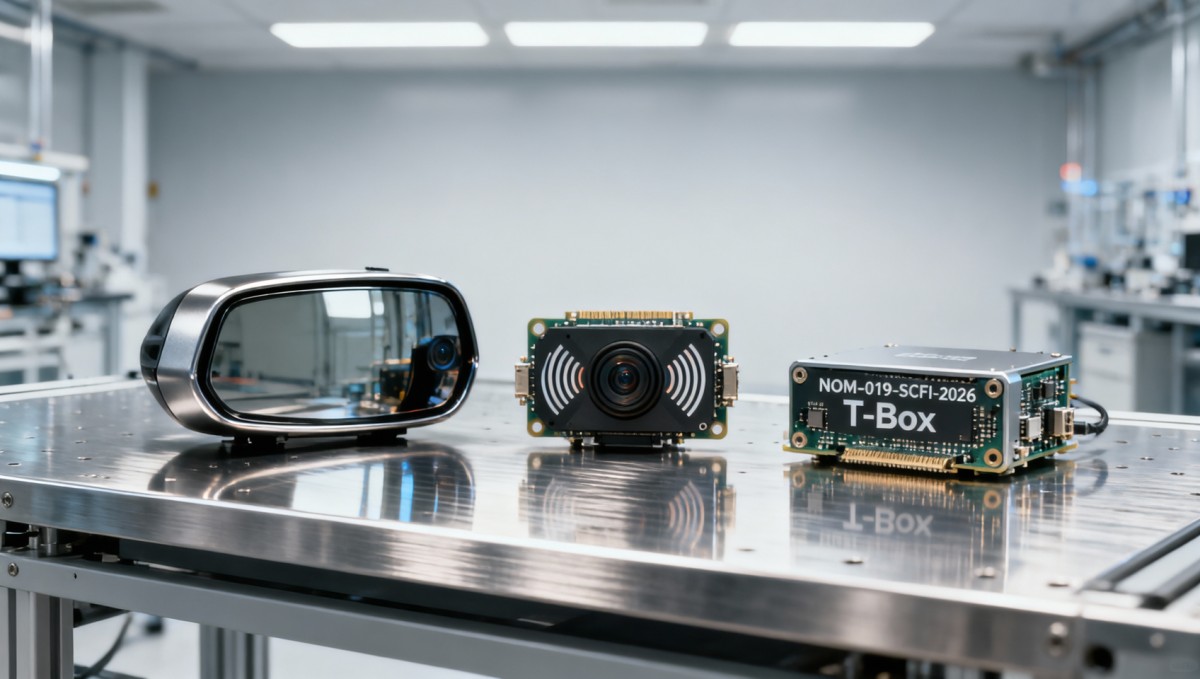
As such, the regulation is best understood not as a temporary hurdle, but as a structural recalibration of market access requirements — one that elevates EMC validation from a quality assurance step to a foundational compliance prerequisite.
Conclusion
NOM-019-SCFI-2026 marks a material change in technical market access conditions for automotive electronics entering Mexico. Its impact extends beyond regulatory formality: it has already triggered supply chain adjustments, procurement rejections, and revised commercial terms among North American intermediaries. For affected enterprises, proactive alignment with the standard’s CISPR 25:2021 Class 5 requirements — supported by verified test documentation and supply chain coordination — is now operationally necessary, not optional. The regulation is better interpreted as an established operational benchmark than as a pending or speculative requirement.
Source Attribution
Main source: Official publication in Mexico’s Diario Oficial de la Federación (DOF), April 22, 2026, NOM-019-SCFI-2026. Additional confirmation drawn from publicly reported statements by North American distribution partners and verified incident reports from Chinese export enterprises. Ongoing developments — including lab accreditation updates and potential transitional allowances — remain under observation.
Recommended News
 China’s 10-Dept AI Export Ethics Review Rule Takes EffectChina’s new 10-dept AI export ethics rule mandates algorithmic bias review for AI hardware bound for the EU, US, Canada, Japan & SK—key for smart cameras, voice assistants & industrial vision exporters.
 Red Sea Detour Now Standard: $1,850 TEU Premium on Asia-Europe RoutesRed Sea detour premium now standard: $1,850/TEU surcharge embedded in Asia-Europe freight rates — vital intel for exporters, importers & logistics teams.
 RCEP Green Packaging Mutual Recognition Takes EffectRCEP Green Packaging Mutual Recognition takes effect Apr 22, 2026—streamline exports to AU, NZ, JP, KR with GB/T 37629–2019 certified molded fiber & PLA packaging.
 Mexico NOM-019-SCFI-2026 Effective: EMC Certification Required for Auto Electronics ExportsEMC certification is now mandatory for auto electronics exports to Mexico under NOM-019-SCFI-2026. Ensure compliance for rearview mirrors, radar sensors & T-Box units—avoid shipment delays and order cancellations.
") TÜV Rheinland Updates CE Requirements for Servo Drives (PLd + EMC Joint Validation)TÜV Rheinland now mandates joint PLd + EMC validation for servo drives under CE marking—learn how this impacts certification timelines, lab selection, and EU market access.
TÜV Rheinland Updates CE Requirements for Servo Drives (PLd + EMC Joint Validation)TÜV Rheinland now mandates joint PLd + EMC validation for servo drives under CE marking—learn how this impacts certification timelines, lab selection, and EU market access. Vietnam Suspends SASO Mutual Recognition for Chinese Irrigation EquipmentVietnam suspends SASO mutual recognition for Chinese irrigation equipment—urgent compliance updates for drip tapes & PE pipes (HS 8424.89/3917.39). Act now to avoid delays.
 FDA Finalizes AI Diagnostic Device Rules for ImportersFDA finalizes AI diagnostic device rules for importers: New bias assessment mandate impacts ultrasound, glucose analyzers & dermatoscopes. Act now to ensure U.S. market access.
 SABER Phase II Live: Saudi Building Hardware Requires Digital Type Test Reports & PIDSABER Phase II is live: Building hardware exports to Saudi Arabia now require digital type test reports & a mandatory, immutable Product ID (PID). Act now to avoid customs delays!
 IMDG Code 41-24 Enforced: UN3480 Lithium Battery Labeling Mandatory from Apr 2026IMDG Code 41-24 enforcement starts Apr 2026: UN3480 lithium battery labeling & ISO 17363 docs are now mandatory—avoid port rejections!
 CBAM Carbon Tax Launch: Low CBAM Reporting Rate Among Chinese ExportersCBAM Carbon Tax is live—only 36.8% of Chinese exporters reported. Discover why, which industries are at risk, and how to secure EU market access now.
 China’s 10 Agencies Issue AI Export Ethics Review RulesChina’s 10 agencies launch AI export ethics rules—mandating bias reviews for visual inspection, warehouse AI & defect detection systems. Stay compliant & competitive.
 RCEP Green Packaging Mutual Recognition Takes EffectRCEP Green Packaging Mutual Recognition is now in effect—unlock faster customs clearance in Australia, NZ, Japan & Korea for GB/T 37659–2019-certified eco-packaging.
 Mexico NOM-019-SCFI-2026 Effective Apr 10, 2026: EMC Certification Required for Automotive ElectronicsNOM-019-SCFI-2026 EMC certification is now mandatory for automotive electronics entering Mexico — act before the July 1, 2026 customs ban.
 Red Sea Rerouting Normalized, EBA at $1,850/TEURed Sea rerouting normalized with EBA fixed at $1,850/TEU—learn how this structural shift impacts Asia-Europe freight costs, lead times & supply chain strategy.
 FDA AI Diagnostic Device Draft Rules: Bias Assessment for ImportsFDA AI diagnostic device draft rules require bias assessment for imports—learn how portable ultrasound, glucose, and dermatoscopic AI devices are affected & what to do next.
") TÜV Rheinland Updates CE Requirements for Servo Drives (PLd + EMC)TÜV Rheinland updates CE requirements for servo drives: PLd (ISO 13849-1) + EMC immunity (IEC 61000-6-2 Ed.4) now mandatory together — act now to avoid EU market delays!
TÜV Rheinland Updates CE Requirements for Servo Drives (PLd + EMC)TÜV Rheinland updates CE requirements for servo drives: PLd (ISO 13849-1) + EMC immunity (IEC 61000-6-2 Ed.4) now mandatory together — act now to avoid EU market delays! SABER Phase II Launch: Building Hardware Must Submit Digital Type Test Reports & Unique Product IDSABER Phase II now mandates digital type test reports & unique product IDs for building hardware—fasteners, scaffolding, door/window components. Ensure compliance to avoid customs rejection & SCOC delays.
 Vietnam Suspends SASO Mutual Recognition for Chinese Irrigation EquipmentVietnam suspends SASO mutual recognition for Chinese irrigation equipment—TCVN testing now mandatory. Act now to avoid 8–12 week delays and customs holdups.
 IMDG Code 41-24 Enforced: UN3480 Lithium Battery Labeling UpdateIMDG Code 41-24 enforcement starts April 2026: UN3480 lithium battery labeling updates are mandatory for global maritime shipments — avoid port delays, detention & penalties.
 EU CBAM Enters Full Enforcement on Jan 1, 2026EU CBAM full enforcement starts Jan 1, 2026 — mandatory quarterly reporting & certificate purchases for batteries, steel, cement, aluminum, fertilizers & chemicals. Act now to ensure EU market access.
 EU CBAM Carbon Tariff Starts Oct 2026 for Chinese Battery, Cement, Chemical ExportsEU CBAM carbon tariff hits Chinese battery, cement & chemical exports from Oct 2026 — mandatory emissions reporting starts now. Avoid €98/t default fees.

















Popular Tags
Global Trade Insights & Industry
Our mission is to empower global exporters and importers with data-driven insights that foster strategic growth.
Search News
Popular Tags
Industry Overview
The global commercial kitchen equipment market is projected to reach $112 billion by 2027. Driven by urbanization, the rise of e-commerce food delivery, and strict hygiene regulations.