

TÜV Rheinland Updates CE Requirements for Servo Drives (PLd + EMC Joint Validation)
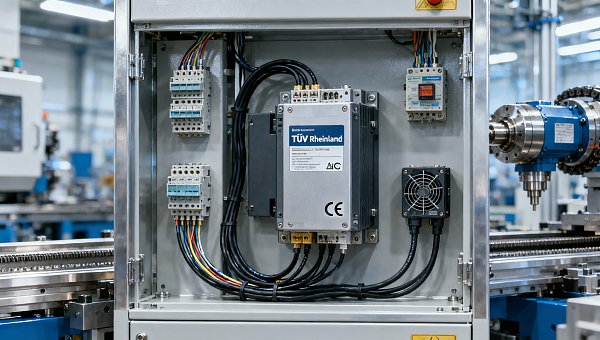
On April 22, 2026, TÜV Rheinland issued an updated technical notice mandating joint validation of functional safety (PLd per IEC 61800-5-2) and EMC immunity (IEC 61800-3 Ed.3) for servo drives under CE marking. Industrial automation equipment manufacturers—especially those supplying to European OEMs—and certification service providers must now reassess testing timelines, compliance workflows, and supply chain coordination.
Event Overview
On April 22, 2026, German certification body TÜV Rheinland published a new technical notice for CE certification of servo drives covered by IEC 61800-5-2. The notice requires that functional safety (at Performance Level d, PLd) and electromagnetic compatibility (EMC) immunity testing per IEC 61800-3 Edition 3 be conducted within the same test cycle. Previously accepted standalone certifications no longer satisfy the requirement. Affected manufacturers—including many based in China who previously completed only single-scope tests—must now undergo retesting. The combined verification extends average certification duration by 14 days. This delay has already caused several European OEMs to pause new project sourcing decisions.
Which Subsectors Are Affected
Industrial Automation Equipment Manufacturers (OEM Suppliers)
Manufacturers supplying servo drives directly to European machine builders face immediate compliance pressure. Since PLd and EMC were historically tested separately—often by different labs or at different times—the new joint requirement necessitates revised test planning, lab coordination, and documentation alignment. Delays in certification directly impact product launch schedules and contractual delivery commitments.
CE Certification Service Providers & Test Laboratories
Labs offering IEC 61800-5-2 or IEC 61800-3 testing must now ensure integrated capability: simultaneous functional safety and EMC immunity assessment under one audit scope. Providers lacking cross-domain expertise—or infrastructure supporting concurrent fault injection and disturbance application—may face capacity constraints or need to form new partnerships.
European Machine Builders (OEMs)
OEMs integrating servo drives into industrial machinery are impacted indirectly but critically. Their procurement timelines now depend on suppliers’ ability to deliver jointly validated CE documentation. The reported project delays indicate tightening scrutiny during design-in phases; pre-certified components without joint validation may no longer be accepted for new platform development.
What Relevant Companies or Practitioners Should Monitor and Do Now
Track official updates from TÜV Rheinland and EU Notified Body communications
The technical notice is effective as of April 22, 2026—but implementation guidance (e.g., grace periods, grandfathering clauses for existing certificates, or transitional arrangements) remains unconfirmed. Stakeholders should subscribe to TÜV Rheinland’s regulatory alerts and monitor notifications from other EU Notified Bodies for alignment or divergence.
Review current and upcoming servo drive models against the joint validation requirement
Manufacturers should identify which products are in active CE renewal cycles or scheduled for new certification before Q3 2026. Prioritize models destined for European OEMs with strict compliance gates. Reassess whether legacy test reports can be leveraged—or if full retesting is unavoidable—based on lab records and evidence of synchronized test conditions.
Engage early with accredited labs capable of integrated PLd + EMC testing
Joint validation demands coordinated test setups: e.g., applying EMC disturbances while monitoring safety-related control functions under fault conditions. Not all labs possess both IEC 61800-5-2 functional safety accreditation and IEC 61800-3 Ed.3 EMC immunity accreditation under the same Notified Body designation. Confirm lab scope validity and book capacity well in advance—current lead times may exceed standard estimates due to increased demand.
Update internal compliance checklists and supplier evaluation criteria
Purchasing and engineering teams should revise component qualification protocols to explicitly require proof of joint PLd/EMC validation—not just separate certificates. For Tier 2 and Tier 3 suppliers, clarify responsibility for test coordination and documentation traceability to avoid gaps in the conformity assessment dossier.
Editor Perspective / Industry Observation
From industry perspective, this update signals a broader shift toward integrated risk assessment in industrial automation—not just additive compliance. It reflects growing recognition that safety function integrity cannot be assured in isolation from electromagnetic stressors. Analysis来看, the requirement is less about tightening thresholds and more about enforcing test realism: verifying that safety mechanisms remain operational *while* subjected to real-world EMC disturbances. Current更值得关注的是 whether other Notified Bodies (e.g., DEKRA, SGS, UL Solutions) will adopt similar joint validation expectations—making this a potential de facto benchmark beyond TÜV Rheinland’s scope. Observation来看, it also underscores how regional regulatory interpretations increasingly influence global supply chain practices, especially for exporters reliant on single-point certification strategies.
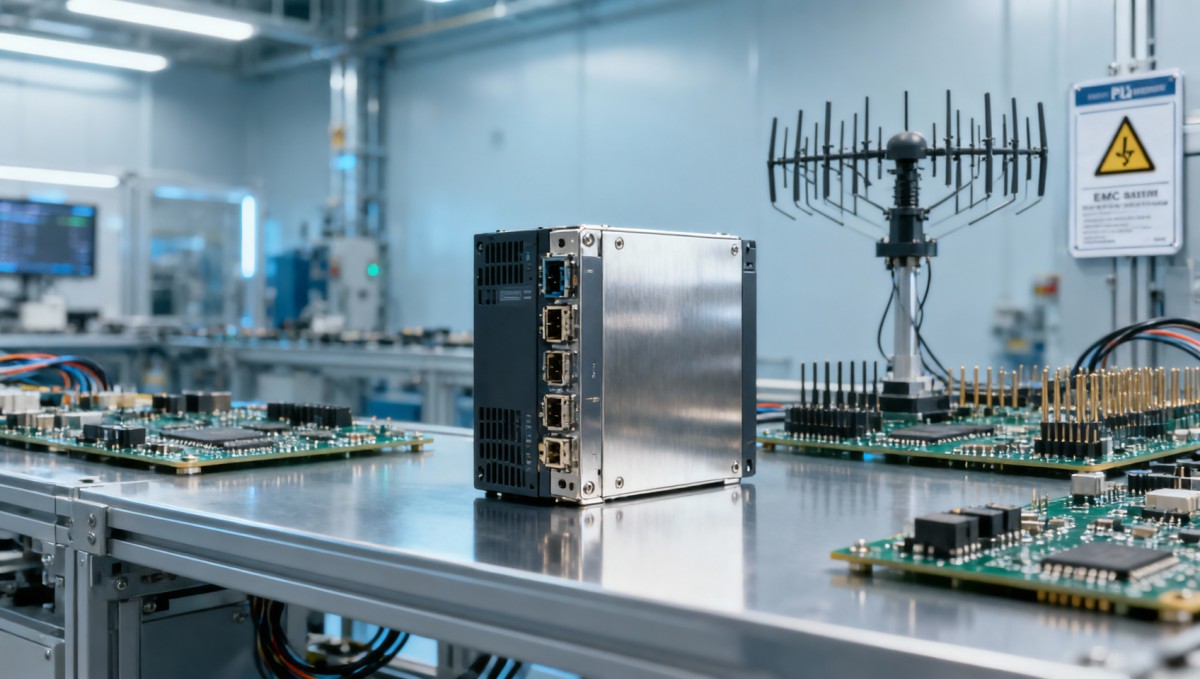
In summary, this change does not introduce new safety or EMC limits—but reshapes how compliance must be demonstrated. It elevates process rigor over modular certification and favors suppliers with mature functional safety and EMC engineering integration. Rather than representing a sudden disruption, it is better understood as a formalization of converging technical expectations already emerging in high-reliability industrial applications.
Source: TÜV Rheinland Technical Notice (issued April 22, 2026); public statements regarding CE certification for servo drives under IEC 61800 series standards. Note: Transitional provisions, enforcement timelines, and harmonization status across other EU Notified Bodies remain under observation.
Recommended News
 China’s 10-Dept AI Export Ethics Review Rule Takes EffectChina’s new 10-dept AI export ethics rule mandates algorithmic bias review for AI hardware bound for the EU, US, Canada, Japan & SK—key for smart cameras, voice assistants & industrial vision exporters.
 Red Sea Detour Now Standard: $1,850 TEU Premium on Asia-Europe RoutesRed Sea detour premium now standard: $1,850/TEU surcharge embedded in Asia-Europe freight rates — vital intel for exporters, importers & logistics teams.
 RCEP Green Packaging Mutual Recognition Takes EffectRCEP Green Packaging Mutual Recognition takes effect Apr 22, 2026—streamline exports to AU, NZ, JP, KR with GB/T 37629–2019 certified molded fiber & PLA packaging.
 Mexico NOM-019-SCFI-2026 Effective: EMC Certification Required for Auto Electronics ExportsEMC certification is now mandatory for auto electronics exports to Mexico under NOM-019-SCFI-2026. Ensure compliance for rearview mirrors, radar sensors & T-Box units—avoid shipment delays and order cancellations.
") TÜV Rheinland Updates CE Requirements for Servo Drives (PLd + EMC Joint Validation)TÜV Rheinland now mandates joint PLd + EMC validation for servo drives under CE marking—learn how this impacts certification timelines, lab selection, and EU market access.
TÜV Rheinland Updates CE Requirements for Servo Drives (PLd + EMC Joint Validation)TÜV Rheinland now mandates joint PLd + EMC validation for servo drives under CE marking—learn how this impacts certification timelines, lab selection, and EU market access. Vietnam Suspends SASO Mutual Recognition for Chinese Irrigation EquipmentVietnam suspends SASO mutual recognition for Chinese irrigation equipment—urgent compliance updates for drip tapes & PE pipes (HS 8424.89/3917.39). Act now to avoid delays.
 FDA Finalizes AI Diagnostic Device Rules for ImportersFDA finalizes AI diagnostic device rules for importers: New bias assessment mandate impacts ultrasound, glucose analyzers & dermatoscopes. Act now to ensure U.S. market access.
 SABER Phase II Live: Saudi Building Hardware Requires Digital Type Test Reports & PIDSABER Phase II is live: Building hardware exports to Saudi Arabia now require digital type test reports & a mandatory, immutable Product ID (PID). Act now to avoid customs delays!
 IMDG Code 41-24 Enforced: UN3480 Lithium Battery Labeling Mandatory from Apr 2026IMDG Code 41-24 enforcement starts Apr 2026: UN3480 lithium battery labeling & ISO 17363 docs are now mandatory—avoid port rejections!
 CBAM Carbon Tax Launch: Low CBAM Reporting Rate Among Chinese ExportersCBAM Carbon Tax is live—only 36.8% of Chinese exporters reported. Discover why, which industries are at risk, and how to secure EU market access now.
 China’s 10 Agencies Issue AI Export Ethics Review RulesChina’s 10 agencies launch AI export ethics rules—mandating bias reviews for visual inspection, warehouse AI & defect detection systems. Stay compliant & competitive.
 RCEP Green Packaging Mutual Recognition Takes EffectRCEP Green Packaging Mutual Recognition is now in effect—unlock faster customs clearance in Australia, NZ, Japan & Korea for GB/T 37659–2019-certified eco-packaging.
 Mexico NOM-019-SCFI-2026 Effective Apr 10, 2026: EMC Certification Required for Automotive ElectronicsNOM-019-SCFI-2026 EMC certification is now mandatory for automotive electronics entering Mexico — act before the July 1, 2026 customs ban.
 Red Sea Rerouting Normalized, EBA at $1,850/TEURed Sea rerouting normalized with EBA fixed at $1,850/TEU—learn how this structural shift impacts Asia-Europe freight costs, lead times & supply chain strategy.
 FDA AI Diagnostic Device Draft Rules: Bias Assessment for ImportsFDA AI diagnostic device draft rules require bias assessment for imports—learn how portable ultrasound, glucose, and dermatoscopic AI devices are affected & what to do next.
") TÜV Rheinland Updates CE Requirements for Servo Drives (PLd + EMC)TÜV Rheinland updates CE requirements for servo drives: PLd (ISO 13849-1) + EMC immunity (IEC 61000-6-2 Ed.4) now mandatory together — act now to avoid EU market delays!
TÜV Rheinland Updates CE Requirements for Servo Drives (PLd + EMC)TÜV Rheinland updates CE requirements for servo drives: PLd (ISO 13849-1) + EMC immunity (IEC 61000-6-2 Ed.4) now mandatory together — act now to avoid EU market delays! SABER Phase II Launch: Building Hardware Must Submit Digital Type Test Reports & Unique Product IDSABER Phase II now mandates digital type test reports & unique product IDs for building hardware—fasteners, scaffolding, door/window components. Ensure compliance to avoid customs rejection & SCOC delays.
 Vietnam Suspends SASO Mutual Recognition for Chinese Irrigation EquipmentVietnam suspends SASO mutual recognition for Chinese irrigation equipment—TCVN testing now mandatory. Act now to avoid 8–12 week delays and customs holdups.
 IMDG Code 41-24 Enforced: UN3480 Lithium Battery Labeling UpdateIMDG Code 41-24 enforcement starts April 2026: UN3480 lithium battery labeling updates are mandatory for global maritime shipments — avoid port delays, detention & penalties.
 EU CBAM Enters Full Enforcement on Jan 1, 2026EU CBAM full enforcement starts Jan 1, 2026 — mandatory quarterly reporting & certificate purchases for batteries, steel, cement, aluminum, fertilizers & chemicals. Act now to ensure EU market access.
 EU CBAM Carbon Tariff Starts Oct 2026 for Chinese Battery, Cement, Chemical ExportsEU CBAM carbon tariff hits Chinese battery, cement & chemical exports from Oct 2026 — mandatory emissions reporting starts now. Avoid €98/t default fees.















Popular Tags
Global Trade Insights & Industry
Our mission is to empower global exporters and importers with data-driven insights that foster strategic growth.
Search News
Popular Tags
Industry Overview
The global commercial kitchen equipment market is projected to reach $112 billion by 2027. Driven by urbanization, the rise of e-commerce food delivery, and strict hygiene regulations.