

Red Sea Detour Now Standard: $1,850 TEU Premium on Asia-Europe Routes
Global port congestion has eased, but the Red Sea detour has become a常态化 operational reality for Asia–Europe container shipping — with a dedicated $1,850/TEU surcharge now embedded in freight rates. Per Shanghai Shipping Exchange data released on April 23, 2026, the Shanghai–Rotterdam route stands at $5,280/TEU, up 36.7% year-on-year; this reflects persistent insurance cost increases and mandatory safety-related routing redundancies despite Suez Canal reopening. Importers in Europe and North America are now renegotiating procurement contracts with Chinese suppliers to allocate portions of the ‘Red Sea Surcharge’ — making this development highly relevant for export-oriented manufacturers, global sourcing teams, logistics service providers, and cross-border supply chain planners.
Event Overview
According to publicly available data from the Shanghai Shipping Exchange dated April 23, 2026, the Asia–Europe container shipping route remains subject to a structural Red Sea detour — even though the Suez Canal has resumed operations. The Shanghai–Rotterdam freight rate is reported at $5,280/TEU, representing a 36.7% increase over the 2025 annual average. Of this, $1,850/TEU is explicitly identified as the ‘Red Sea detour premium’. This cost component is now being formally introduced into commercial terms between Western importers and Chinese exporters, triggering renewed negotiations on cost allocation.
Which Sub-Sectors Are Affected
Direct Exporting Enterprises
Chinese manufacturers and trading companies exporting finished goods to Europe face direct margin pressure: the $1,850/TEU surcharge may be contractually shifted to them under revised Incoterms (e.g., FOB or EXW clauses), reducing net revenue unless pricing is adjusted. Impact manifests in lower gross margins, delayed order confirmations, and increased administrative effort tied to surcharge validation and documentation.
Raw Material & Component Procurement Teams
Importers of European or Middle Eastern raw materials (e.g., specialty chemicals, machinery parts) face higher landed costs due to elevated inbound freight. Since the Red Sea surcharge applies equally to eastbound and westbound legs, procurement budgets for imported inputs are under upward revision — affecting cost-of-goods-sold calculations and quarterly forecasting accuracy.
Contract Manufacturing & OEM Providers
Firms operating under consignment or toll-manufacturing models — where clients own materials and control logistics — may see reduced order volumes if buyers defer shipments to avoid surcharges, or shift production to regional nearshoring hubs. The $1,850/TEU cost also raises the breakeven threshold for low-margin, high-volume orders, prompting reevaluation of product mix and client portfolio.
Logistics & Freight Forwarding Service Providers
Forwarders and NVOCCs must now separately itemize, invoice, and justify the Red Sea surcharge to clients — requiring system updates, contractual amendments, and enhanced transparency in rate breakdowns. Disputes over surcharge applicability (e.g., for transshipment via non-Red Sea ports) are emerging, increasing operational complexity and compliance review workload.
What Relevant Businesses Should Monitor & Do Now
Track official carrier announcements and BIMCO guidance on surcharge definitions
Carriers have not yet standardized the scope, duration, or calculation methodology for the Red Sea surcharge. Companies should monitor weekly updates from major lines (e.g., Maersk, MSC, Hapag-Lloyd) and BIMCO’s advisory notes to distinguish temporary volatility from structural cost embedding — especially regarding whether the surcharge applies to all Asia–Europe sailings or only specific vessel rotations.
Review active contracts with EU/US buyers for Incoterm exposure and surcharge pass-through clauses
Parties using FOB, CFR, or CIF terms should verify whether their agreements include force majeure language covering geopolitical routing changes — or whether new ‘geopolitical risk addendums’ are being circulated. Immediate action includes flagging contracts expiring before Q3 2026 for renegotiation, particularly those lacking explicit freight cost adjustment mechanisms.
Assess exposure by product category and destination port — not just country-level trade flows
The $1,850/TEU premium is not uniformly applied across all cargo types or discharge ports. For example, refrigerated or hazardous cargo may incur additional layers of insurance loading; Rotterdam-bound containers face full surcharge application, while those routed via Hamburg or Bremerhaven may reflect partial or alternative cost structures. Companies should map current shipment lanes at the port-of-discharge level before committing to volume-based rate agreements.
Update internal costing models and customer quotations to isolate the surcharge line item
Rather than absorbing or averaging the $1,850/TEU into overall freight cost, businesses should treat it as a discrete, auditable cost component — both for internal P&L tracking and external transparency. This supports clearer margin analysis, strengthens negotiation positions, and aligns with growing buyer expectations for granular cost visibility.
Editorial Perspective / Industry Observation
This development is better understood as an institutionalization of geopolitical risk into routine freight pricing — not a transient disruption. Analysis来看, the $1,850/TEU figure reflects recalibrated marine insurance premiums, longer voyage durations (adding bunker and crew cost components), and mandated navigational buffers — all now treated as baseline operational parameters by carriers. From industry角度看, the shift signals that ‘normal’ for Asia–Europe container logistics has structurally changed: the Red Sea route is no longer the default, and its bypass is no longer exceptional. Current more值得关注的是 how long this surcharge remains itemized (vs. absorbed into base rates) and whether multilateral frameworks emerge to standardize its application — both of which will shape contract governance and cost predictability through 2026 and beyond.
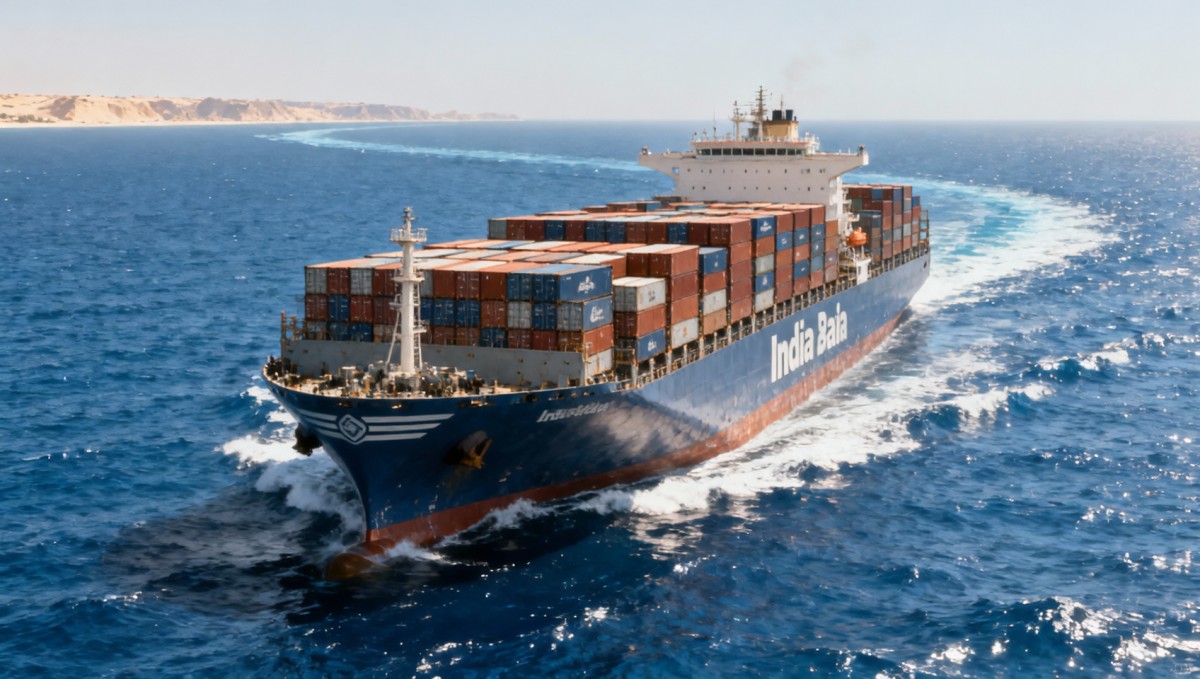
In summary, the Red Sea detour premium is no longer a contingency cost but a defined, negotiable, and increasingly contractual element of Asia–Europe trade logistics. Its significance lies less in short-term rate spikes and more in its role as a catalyst for revising long-standing assumptions about route economics, cost allocation responsibility, and supply chain resilience planning. It is more accurately interpreted as a durable feature of the current maritime trade environment — one requiring systematic integration into commercial, financial, and operational decision-making — rather than a passing anomaly to be monitored and then dismissed.
Source: Shanghai Shipping Exchange (data release dated April 23, 2026). Note: Carrier-specific surcharge implementation timelines, coverage scope, and contractual enforcement mechanisms remain subject to ongoing observation and are not yet standardized across the liner industry.
Recommended News
 China’s 10-Dept AI Export Ethics Review Rule Takes EffectChina’s new 10-dept AI export ethics rule mandates algorithmic bias review for AI hardware bound for the EU, US, Canada, Japan & SK—key for smart cameras, voice assistants & industrial vision exporters.
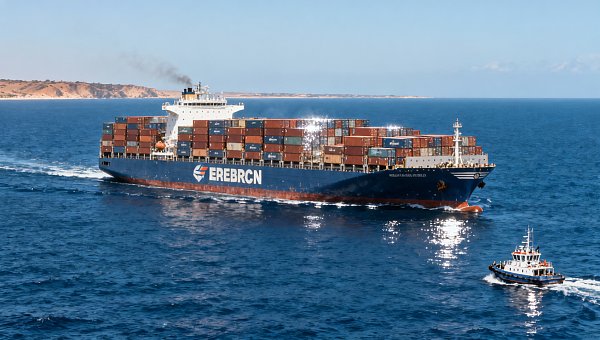
 Red Sea Detour Now Standard: $1,850 TEU Premium on Asia-Europe RoutesRed Sea detour premium now standard: $1,850/TEU surcharge embedded in Asia-Europe freight rates — vital intel for exporters, importers & logistics teams.
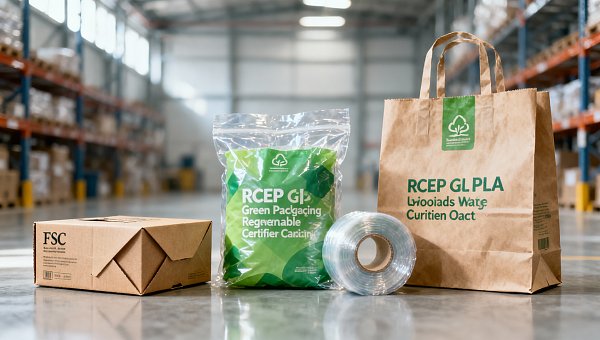
 RCEP Green Packaging Mutual Recognition Takes EffectRCEP Green Packaging Mutual Recognition takes effect Apr 22, 2026—streamline exports to AU, NZ, JP, KR with GB/T 37629–2019 certified molded fiber & PLA packaging.
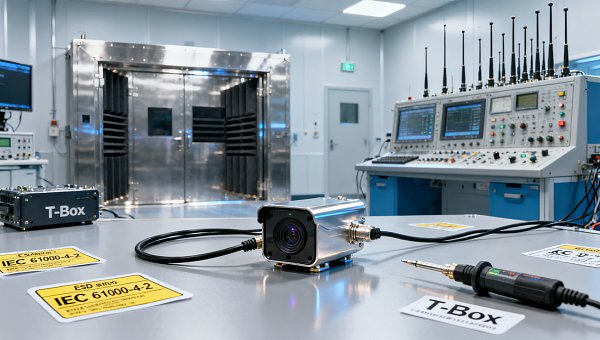
 Mexico NOM-019-SCFI-2026 Effective: EMC Certification Required for Auto Electronics ExportsEMC certification is now mandatory for auto electronics exports to Mexico under NOM-019-SCFI-2026. Ensure compliance for rearview mirrors, radar sensors & T-Box units—avoid shipment delays and order cancellations.
") TÜV Rheinland Updates CE Requirements for Servo Drives (PLd + EMC Joint Validation)TÜV Rheinland now mandates joint PLd + EMC validation for servo drives under CE marking—learn how this impacts certification timelines, lab selection, and EU market access.
TÜV Rheinland Updates CE Requirements for Servo Drives (PLd + EMC Joint Validation)TÜV Rheinland now mandates joint PLd + EMC validation for servo drives under CE marking—learn how this impacts certification timelines, lab selection, and EU market access. Vietnam Suspends SASO Mutual Recognition for Chinese Irrigation EquipmentVietnam suspends SASO mutual recognition for Chinese irrigation equipment—urgent compliance updates for drip tapes & PE pipes (HS 8424.89/3917.39). Act now to avoid delays.
 FDA Finalizes AI Diagnostic Device Rules for ImportersFDA finalizes AI diagnostic device rules for importers: New bias assessment mandate impacts ultrasound, glucose analyzers & dermatoscopes. Act now to ensure U.S. market access.
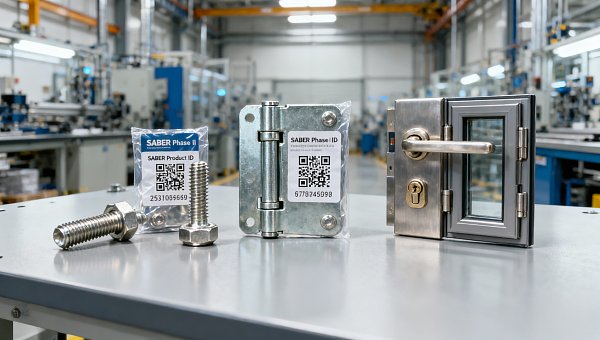
 SABER Phase II Live: Saudi Building Hardware Requires Digital Type Test Reports & PIDSABER Phase II is live: Building hardware exports to Saudi Arabia now require digital type test reports & a mandatory, immutable Product ID (PID). Act now to avoid customs delays!
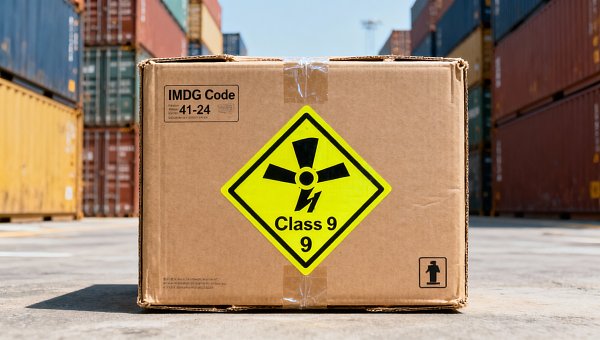
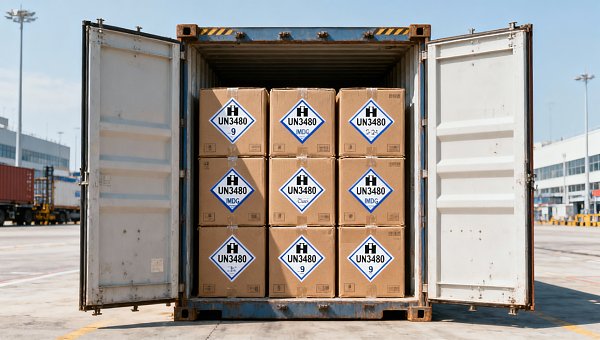
 IMDG Code 41-24 Enforced: UN3480 Lithium Battery Labeling Mandatory from Apr 2026IMDG Code 41-24 enforcement starts Apr 2026: UN3480 lithium battery labeling & ISO 17363 docs are now mandatory—avoid port rejections!
 CBAM Carbon Tax Launch: Low CBAM Reporting Rate Among Chinese ExportersCBAM Carbon Tax is live—only 36.8% of Chinese exporters reported. Discover why, which industries are at risk, and how to secure EU market access now.
 China’s 10 Agencies Issue AI Export Ethics Review RulesChina’s 10 agencies launch AI export ethics rules—mandating bias reviews for visual inspection, warehouse AI & defect detection systems. Stay compliant & competitive.
 RCEP Green Packaging Mutual Recognition Takes EffectRCEP Green Packaging Mutual Recognition is now in effect—unlock faster customs clearance in Australia, NZ, Japan & Korea for GB/T 37659–2019-certified eco-packaging.
 Mexico NOM-019-SCFI-2026 Effective Apr 10, 2026: EMC Certification Required for Automotive ElectronicsNOM-019-SCFI-2026 EMC certification is now mandatory for automotive electronics entering Mexico — act before the July 1, 2026 customs ban.
 Red Sea Rerouting Normalized, EBA at $1,850/TEURed Sea rerouting normalized with EBA fixed at $1,850/TEU—learn how this structural shift impacts Asia-Europe freight costs, lead times & supply chain strategy.
 FDA AI Diagnostic Device Draft Rules: Bias Assessment for ImportsFDA AI diagnostic device draft rules require bias assessment for imports—learn how portable ultrasound, glucose, and dermatoscopic AI devices are affected & what to do next.
") TÜV Rheinland Updates CE Requirements for Servo Drives (PLd + EMC)TÜV Rheinland updates CE requirements for servo drives: PLd (ISO 13849-1) + EMC immunity (IEC 61000-6-2 Ed.4) now mandatory together — act now to avoid EU market delays!
TÜV Rheinland Updates CE Requirements for Servo Drives (PLd + EMC)TÜV Rheinland updates CE requirements for servo drives: PLd (ISO 13849-1) + EMC immunity (IEC 61000-6-2 Ed.4) now mandatory together — act now to avoid EU market delays! SABER Phase II Launch: Building Hardware Must Submit Digital Type Test Reports & Unique Product IDSABER Phase II now mandates digital type test reports & unique product IDs for building hardware—fasteners, scaffolding, door/window components. Ensure compliance to avoid customs rejection & SCOC delays.
 Vietnam Suspends SASO Mutual Recognition for Chinese Irrigation EquipmentVietnam suspends SASO mutual recognition for Chinese irrigation equipment—TCVN testing now mandatory. Act now to avoid 8–12 week delays and customs holdups.
 IMDG Code 41-24 Enforced: UN3480 Lithium Battery Labeling UpdateIMDG Code 41-24 enforcement starts April 2026: UN3480 lithium battery labeling updates are mandatory for global maritime shipments — avoid port delays, detention & penalties.
 EU CBAM Enters Full Enforcement on Jan 1, 2026EU CBAM full enforcement starts Jan 1, 2026 — mandatory quarterly reporting & certificate purchases for batteries, steel, cement, aluminum, fertilizers & chemicals. Act now to ensure EU market access.
 EU CBAM Carbon Tariff Starts Oct 2026 for Chinese Battery, Cement, Chemical ExportsEU CBAM carbon tariff hits Chinese battery, cement & chemical exports from Oct 2026 — mandatory emissions reporting starts now. Avoid €98/t default fees.












Popular Tags
Global Trade Insights & Industry
Our mission is to empower global exporters and importers with data-driven insights that foster strategic growth.
Search News
Popular Tags
Industry Overview
The global commercial kitchen equipment market is projected to reach $112 billion by 2027. Driven by urbanization, the rise of e-commerce food delivery, and strict hygiene regulations.