

CBAM Carbon Tax Launch: Low CBAM Reporting Rate Among Chinese Exporters
On April 1, 2026, the EU’s Carbon Border Adjustment Mechanism (CBAM) entered its first week of mandatory financial enforcement. Early data shows that reporting rates for Chinese exporters in key sectors—including building materials, lithium batteries, and basic chemicals—stood at just 36.8%. This development directly affects trade execution, supply chain timing, and procurement decisions by EU importers.
Event Overview
Effective April 1, 2026, the EU CBAM transitioned from the transitional reporting phase to full regulatory enforcement, requiring importers to submit verified carbon emission data and pay corresponding levies. Within the first week, official monitoring indicated that only 36.8% of Chinese exporters in the designated high-priority categories—specifically those supplying cement, aluminum-intensive construction products, lithium-ion batteries, and bulk inorganic chemicals—had completed CBAM registration and submitted required MRV (Monitoring, Reporting, Verification) documentation. Some shipments were temporarily held at EU ports due to incomplete or missing CBAM declarations.
Industries Affected
Direct Exporters (Manufacturers & Trading Companies)
These entities face immediate operational impact: unregistered suppliers risk customs delays, shipment rejection, or mandatory cost absorption if EU importers impose contractual penalties. The 36.8% reporting rate reflects a gap in MRV capacity—not just registration inertia—meaning many lack internal systems to quantify embedded emissions across production processes.
Raw Material Suppliers (Upstream Input Providers)
While not directly liable under CBAM, upstream suppliers—such as graphite anode producers for battery makers or clinker suppliers for cement exporters—are increasingly asked to provide primary emission data. Their inability to deliver auditable scope 1 and scope 2 emission figures may block downstream CBAM compliance, effectively sidelining them from EU-bound supply chains.
Contract Manufacturers & OEMs
Firms producing under private label or toll-manufacturing arrangements are now being requested by EU brand partners to assume CBAM-related data responsibilities—even where legal liability rests with the EU importer. This shifts verification burden onto facilities without dedicated sustainability teams or MRV-aligned ERP systems.
Logistics & Customs Service Providers
Freight forwarders and customs brokers report rising client queries on CBAM declaration readiness, but most lack tools to validate MRV submissions. A growing number now require clients to pre-certify CBAM status before booking EU-bound shipments—adding a new layer of pre-clearance screening.
What Relevant Enterprises or Practitioners Should Focus On — And How to Respond
Monitor Official CBAM Guidance Updates from the European Commission
The European Commission has confirmed it will publish weekly aggregated reporting statistics through its CBAM Transitional Registry portal. Enterprises should track these releases—not for benchmarking alone, but to identify emerging patterns (e.g., disproportionate non-compliance in specific subcategories like electrolytic manganese dioxide or calcium carbide), which may signal upcoming audit priorities.
Prioritize Verification Readiness for High-Volume, High-Risk Product Lines
Rather than attempting full-scope CBAM alignment across all SKUs, companies should map export volumes by HS code against CBAM Annex I coverage. Focus verification efforts first on top three exported items per category—for example, lithium iron phosphate (LFP) cathodes, Portland cement type I/II, and sodium hydroxide—where both volume and CBAM levy exposure are highest.
Distinguish Between Regulatory Signals and Enforceable Requirements
The current 36.8% figure reflects voluntary early engagement during the first enforcement week—not formal non-compliance penalties. No fines or sanctions have been issued yet. Enterprises should treat this period as a de facto grace window to finalize MRV documentation workflows, not as evidence of imminent enforcement escalation.
Initiate Cross-Functional Coordination Between Export, Production, and Finance Teams
CBAM reporting requires granular energy consumption, fuel use, and electricity sourcing data—often siloed across departments. Companies should convene joint working sessions to align metering points, reconcile utility invoices with production logs, and assign accountability for quarterly data reconciliation—not wait for external auditor requests.
Editorial Perspective / Industry Observation
Observation shows this low initial reporting rate is less an indicator of systemic noncompliance and more a reflection of procedural unfamiliarity and infrastructure lag—notably in MRV system integration and third-party verifier availability within China’s industrial zones. From an industry perspective, the April 1–7 data functions primarily as a diagnostic signal: it reveals where technical capacity gaps reside (e.g., in calculating process emissions for wet-process phosphoric acid or electrodeposition-based copper foil), rather than confirming widespread strategic resistance. Current more appropriate interpretation is that CBAM enforcement has begun operationally—but its material commercial impact remains contingent on importer behavior, not just exporter registration status.
Conclusion: This early CBAM enforcement data does not represent a sudden market barrier, but rather the first observable stress test of existing carbon data infrastructure among Chinese exporters. Its principal significance lies in exposing operational dependencies—particularly between manufacturing facilities and their ability to generate auditable, product-level emission records. At present, it is more accurately understood as a capacity-maturity checkpoint than a compliance inflection point.
Information Source: European Commission CBAM Transitional Registry Weekly Summary (Week 1, April 1–7, 2026); Verified by CBAM Helpdesk public dashboard release dated April 8, 2026. Note: Aggregate reporting rate (36.8%) is provisional and subject to revision as late filings are processed; ongoing observation is recommended through Q2 2026.
Recommended News
 China’s 10-Dept AI Export Ethics Review Rule Takes EffectChina’s new 10-dept AI export ethics rule mandates algorithmic bias review for AI hardware bound for the EU, US, Canada, Japan & SK—key for smart cameras, voice assistants & industrial vision exporters.
 Red Sea Detour Now Standard: $1,850 TEU Premium on Asia-Europe RoutesRed Sea detour premium now standard: $1,850/TEU surcharge embedded in Asia-Europe freight rates — vital intel for exporters, importers & logistics teams.
 RCEP Green Packaging Mutual Recognition Takes EffectRCEP Green Packaging Mutual Recognition takes effect Apr 22, 2026—streamline exports to AU, NZ, JP, KR with GB/T 37629–2019 certified molded fiber & PLA packaging.
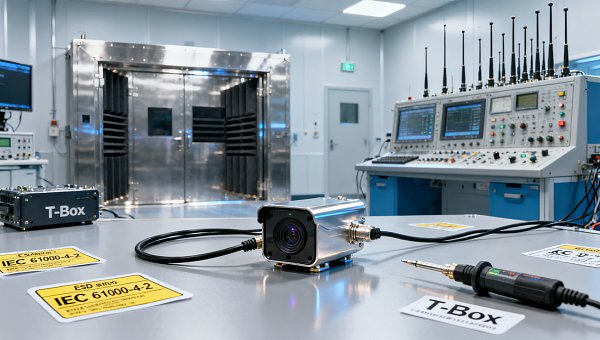
 Mexico NOM-019-SCFI-2026 Effective: EMC Certification Required for Auto Electronics ExportsEMC certification is now mandatory for auto electronics exports to Mexico under NOM-019-SCFI-2026. Ensure compliance for rearview mirrors, radar sensors & T-Box units—avoid shipment delays and order cancellations.
") TÜV Rheinland Updates CE Requirements for Servo Drives (PLd + EMC Joint Validation)TÜV Rheinland now mandates joint PLd + EMC validation for servo drives under CE marking—learn how this impacts certification timelines, lab selection, and EU market access.
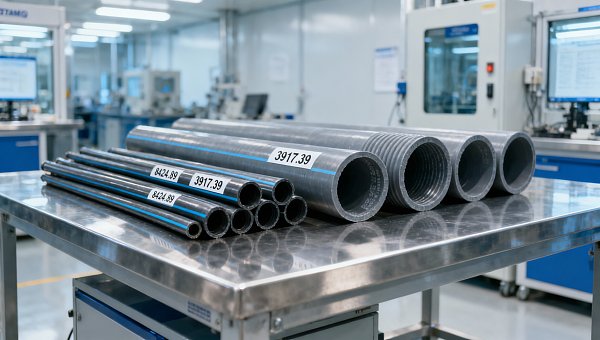
TÜV Rheinland Updates CE Requirements for Servo Drives (PLd + EMC Joint Validation)TÜV Rheinland now mandates joint PLd + EMC validation for servo drives under CE marking—learn how this impacts certification timelines, lab selection, and EU market access. Vietnam Suspends SASO Mutual Recognition for Chinese Irrigation EquipmentVietnam suspends SASO mutual recognition for Chinese irrigation equipment—urgent compliance updates for drip tapes & PE pipes (HS 8424.89/3917.39). Act now to avoid delays.
 FDA Finalizes AI Diagnostic Device Rules for ImportersFDA finalizes AI diagnostic device rules for importers: New bias assessment mandate impacts ultrasound, glucose analyzers & dermatoscopes. Act now to ensure U.S. market access.
 SABER Phase II Live: Saudi Building Hardware Requires Digital Type Test Reports & PIDSABER Phase II is live: Building hardware exports to Saudi Arabia now require digital type test reports & a mandatory, immutable Product ID (PID). Act now to avoid customs delays!
 IMDG Code 41-24 Enforced: UN3480 Lithium Battery Labeling Mandatory from Apr 2026IMDG Code 41-24 enforcement starts Apr 2026: UN3480 lithium battery labeling & ISO 17363 docs are now mandatory—avoid port rejections!
 CBAM Carbon Tax Launch: Low CBAM Reporting Rate Among Chinese ExportersCBAM Carbon Tax is live—only 36.8% of Chinese exporters reported. Discover why, which industries are at risk, and how to secure EU market access now.
 China’s 10 Agencies Issue AI Export Ethics Review RulesChina’s 10 agencies launch AI export ethics rules—mandating bias reviews for visual inspection, warehouse AI & defect detection systems. Stay compliant & competitive.
 RCEP Green Packaging Mutual Recognition Takes EffectRCEP Green Packaging Mutual Recognition is now in effect—unlock faster customs clearance in Australia, NZ, Japan & Korea for GB/T 37659–2019-certified eco-packaging.
 Mexico NOM-019-SCFI-2026 Effective Apr 10, 2026: EMC Certification Required for Automotive ElectronicsNOM-019-SCFI-2026 EMC certification is now mandatory for automotive electronics entering Mexico — act before the July 1, 2026 customs ban.
 Red Sea Rerouting Normalized, EBA at $1,850/TEURed Sea rerouting normalized with EBA fixed at $1,850/TEU—learn how this structural shift impacts Asia-Europe freight costs, lead times & supply chain strategy.
 FDA AI Diagnostic Device Draft Rules: Bias Assessment for ImportsFDA AI diagnostic device draft rules require bias assessment for imports—learn how portable ultrasound, glucose, and dermatoscopic AI devices are affected & what to do next.
") TÜV Rheinland Updates CE Requirements for Servo Drives (PLd + EMC)TÜV Rheinland updates CE requirements for servo drives: PLd (ISO 13849-1) + EMC immunity (IEC 61000-6-2 Ed.4) now mandatory together — act now to avoid EU market delays!
TÜV Rheinland Updates CE Requirements for Servo Drives (PLd + EMC)TÜV Rheinland updates CE requirements for servo drives: PLd (ISO 13849-1) + EMC immunity (IEC 61000-6-2 Ed.4) now mandatory together — act now to avoid EU market delays! SABER Phase II Launch: Building Hardware Must Submit Digital Type Test Reports & Unique Product IDSABER Phase II now mandates digital type test reports & unique product IDs for building hardware—fasteners, scaffolding, door/window components. Ensure compliance to avoid customs rejection & SCOC delays.
 Vietnam Suspends SASO Mutual Recognition for Chinese Irrigation EquipmentVietnam suspends SASO mutual recognition for Chinese irrigation equipment—TCVN testing now mandatory. Act now to avoid 8–12 week delays and customs holdups.
 IMDG Code 41-24 Enforced: UN3480 Lithium Battery Labeling UpdateIMDG Code 41-24 enforcement starts April 2026: UN3480 lithium battery labeling updates are mandatory for global maritime shipments — avoid port delays, detention & penalties.
 EU CBAM Enters Full Enforcement on Jan 1, 2026EU CBAM full enforcement starts Jan 1, 2026 — mandatory quarterly reporting & certificate purchases for batteries, steel, cement, aluminum, fertilizers & chemicals. Act now to ensure EU market access.
 EU CBAM Carbon Tariff Starts Oct 2026 for Chinese Battery, Cement, Chemical ExportsEU CBAM carbon tariff hits Chinese battery, cement & chemical exports from Oct 2026 — mandatory emissions reporting starts now. Avoid €98/t default fees.



















Popular Tags
Global Trade Insights & Industry
Our mission is to empower global exporters and importers with data-driven insights that foster strategic growth.
Search News
Popular Tags
Industry Overview
The global commercial kitchen equipment market is projected to reach $112 billion by 2027. Driven by urbanization, the rise of e-commerce food delivery, and strict hygiene regulations.