

IMDG Code 41-24 Enforced: UN3480 Lithium Battery Labeling Mandatory from Apr 2026
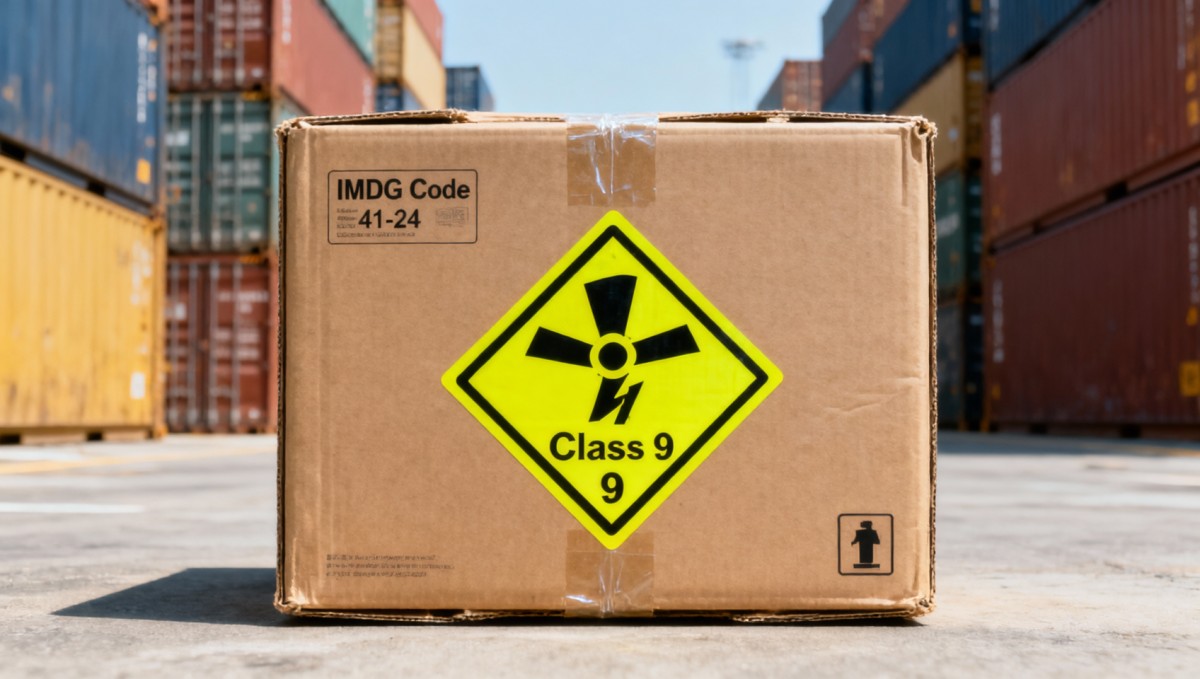
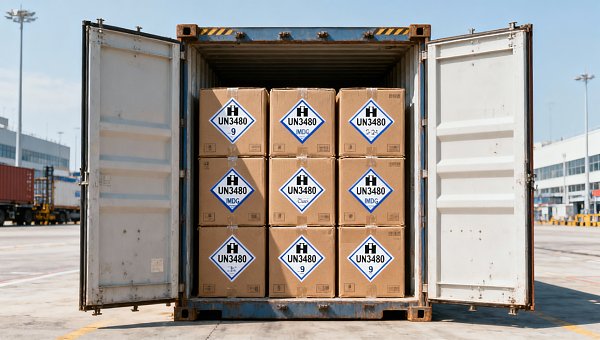
As of April 1, 2026, the International Maritime Dangerous Goods (IMDG) Code 41-24 enters full mandatory force, requiring all lithium-ion batteries (UN3480) exported by sea to bear the updated Class 9 diamond-shaped hazard label and be accompanied by transport documentation compliant with ISO 17363. Shippers in battery manufacturing, export trading, and freight forwarding—particularly those operating through Shenzhen and Ningbo ports—must now treat labeling compliance as a non-negotiable operational checkpoint.
Event Overview
Effective April 1, 2026, the IMDG Code 41-24 revision becomes fully enforceable worldwide for maritime transport of dangerous goods. Under this update, all lithium-ion batteries classified as UN3480 must display the standardized Class 9 hazard label in the prescribed diamond shape, size, and color specifications. In addition, consignments must include transport documents meeting ISO 17363 requirements. Public reports confirm multiple container rejections at Shenzhen and Ningbo ports due to missing or incorrectly formatted labels. Overseas distributors have begun requesting pre-shipment compliance confirmation letters from Chinese battery manufacturers.
Which Subsectors Are Affected
Direct Trading Enterprises
Exporters handling UN3480 shipments face immediate customs clearance risk if labels are omitted or misapplied. Non-compliant consignments are subject to port detention, rework delays, and potential refusal by carriers—directly impacting shipment schedules and contractual delivery terms.
Manufacturing Enterprises (Battery Producers)
Lithium battery manufacturers must now integrate label design, verification, and documentation generation into their final packaging workflow. The requirement for a pre-shipment compliance confirmation letter—increasingly demanded by overseas distributors—adds a formalized quality gate before goods leave the factory.
Supply Chain Service Providers (Freight Forwarders & NVOCCs)
Multiple forwarders in China have publicly stated they will decline acceptance of UN3480 cargo lacking the Class 9 label. This shifts liability upstream: service providers now require documented proof of label application and ISO 17363–compliant paperwork prior to booking, altering standard intake protocols.
Channel Distribution Enterprises (Overseas Distributors & Brand Owners)
Importers and regional distributors are proactively enforcing compliance at origin. Their request for a signed compliance confirmation letter signals a shift toward supplier accountability—making label adherence a prerequisite for order placement and vendor qualification, not just a regulatory formality.
What Relevant Enterprises or Practitioners Should Focus On Now
Verify label specifications against IMDG Code 41-24 Annexes—not prior editions
The Class 9 label dimensions, font height, border thickness, and color tolerance (e.g., fluorescent yellow background per IMDG 5.2.2.2.1) differ from earlier versions. Relying on legacy templates risks rejection; current production must reference the official 41-24 text.
Treat ISO 17363 documentation as a distinct, auditable requirement—not an extension of standard shipping instructions
ISO 17363 defines specific data fields, formatting rules, and retention obligations for dangerous goods transport records. It is not satisfied by generic commercial invoices or packing lists. Pre-shipment checks must confirm alignment with clause 4.2 and Annex A of the standard.
Initiate internal cross-functional alignment between packaging, QA, logistics, and export documentation teams before Q1 2026
Label application timing (e.g., post-packing vs. pre-palletizing), label durability testing under humidity/temperature stress, and document handover workflows require coordinated SOP updates. Delays in internal process alignment—not regulatory ambiguity—are the most common root cause of port-side failures observed to date.
Editorial Perspective / Industry Observation
From an industry perspective, the April 2026 enforcement marks the transition from advisory guidance to hard operational constraint. Analysis来看, this is less a sudden policy shift and more the culmination of a multi-cycle harmonization effort across IMO, ICAO, and national maritime authorities—meaning further revisions are unlikely before the 42-26 edition. Observation来看, the rise in distributor-led compliance demands (e.g., the confirmation letter requirement) suggests that commercial enforcement is now outpacing regulatory inspection—making buyer expectations a de facto compliance driver. Current更值得关注的是 how forwarders’ internal acceptance policies (e.g., blanket refusal of unlabeled UN3480) are effectively creating a private layer of enforcement ahead of port authority audits.
Conclusion
This mandate does not introduce new hazard classifications—but it does elevate labeling and documentation from procedural items to critical path dependencies in lithium battery export operations. Its significance lies not in novelty, but in enforceability: port rejections and carrier refusals are already occurring, and commercial partners are institutionalizing verification. It is更适合理解为 a supply chain synchronization checkpoint—one that tests readiness across labeling execution, document integrity, and inter-company communication—not merely a regulatory checkbox.
Source Attribution
Main sources: International Maritime Organization (IMO) IMDG Code 41-24 official publication; public advisories issued by Shenzhen and Ningbo Port Authorities (Q4 2025); statements from three unnamed freight forwarding firms operating in South China (reported via industry trade briefings). Ongoing observation required for: implementation guidance from national maritime safety administrations (e.g., China MSA) regarding transitional arrangements or enforcement thresholds.
Recommended News
 China’s 10-Dept AI Export Ethics Review Rule Takes EffectChina’s new 10-dept AI export ethics rule mandates algorithmic bias review for AI hardware bound for the EU, US, Canada, Japan & SK—key for smart cameras, voice assistants & industrial vision exporters.
 Red Sea Detour Now Standard: $1,850 TEU Premium on Asia-Europe RoutesRed Sea detour premium now standard: $1,850/TEU surcharge embedded in Asia-Europe freight rates — vital intel for exporters, importers & logistics teams.
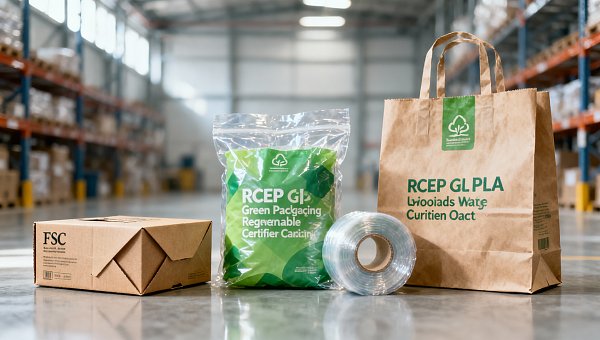
 RCEP Green Packaging Mutual Recognition Takes EffectRCEP Green Packaging Mutual Recognition takes effect Apr 22, 2026—streamline exports to AU, NZ, JP, KR with GB/T 37629–2019 certified molded fiber & PLA packaging.
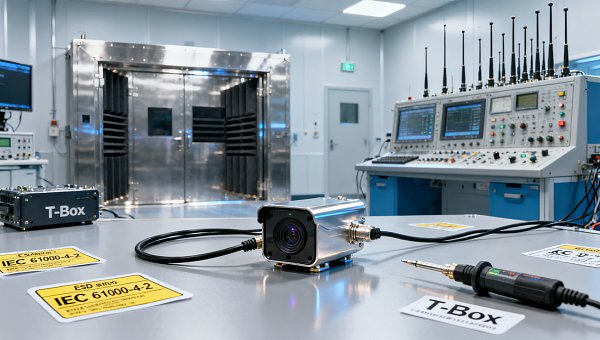
 Mexico NOM-019-SCFI-2026 Effective: EMC Certification Required for Auto Electronics ExportsEMC certification is now mandatory for auto electronics exports to Mexico under NOM-019-SCFI-2026. Ensure compliance for rearview mirrors, radar sensors & T-Box units—avoid shipment delays and order cancellations.
") TÜV Rheinland Updates CE Requirements for Servo Drives (PLd + EMC Joint Validation)TÜV Rheinland now mandates joint PLd + EMC validation for servo drives under CE marking—learn how this impacts certification timelines, lab selection, and EU market access.
TÜV Rheinland Updates CE Requirements for Servo Drives (PLd + EMC Joint Validation)TÜV Rheinland now mandates joint PLd + EMC validation for servo drives under CE marking—learn how this impacts certification timelines, lab selection, and EU market access. Vietnam Suspends SASO Mutual Recognition for Chinese Irrigation EquipmentVietnam suspends SASO mutual recognition for Chinese irrigation equipment—urgent compliance updates for drip tapes & PE pipes (HS 8424.89/3917.39). Act now to avoid delays.
 FDA Finalizes AI Diagnostic Device Rules for ImportersFDA finalizes AI diagnostic device rules for importers: New bias assessment mandate impacts ultrasound, glucose analyzers & dermatoscopes. Act now to ensure U.S. market access.
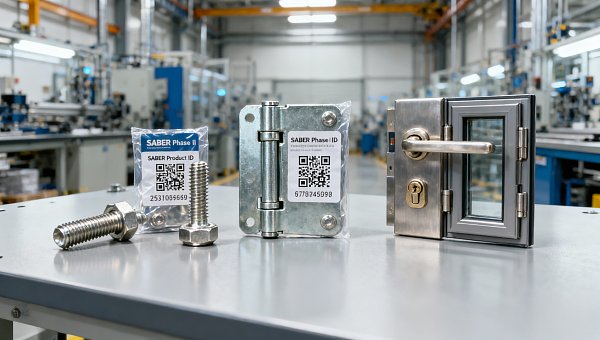
 SABER Phase II Live: Saudi Building Hardware Requires Digital Type Test Reports & PIDSABER Phase II is live: Building hardware exports to Saudi Arabia now require digital type test reports & a mandatory, immutable Product ID (PID). Act now to avoid customs delays!
 IMDG Code 41-24 Enforced: UN3480 Lithium Battery Labeling Mandatory from Apr 2026IMDG Code 41-24 enforcement starts Apr 2026: UN3480 lithium battery labeling & ISO 17363 docs are now mandatory—avoid port rejections!
 CBAM Carbon Tax Launch: Low CBAM Reporting Rate Among Chinese ExportersCBAM Carbon Tax is live—only 36.8% of Chinese exporters reported. Discover why, which industries are at risk, and how to secure EU market access now.
 China’s 10 Agencies Issue AI Export Ethics Review RulesChina’s 10 agencies launch AI export ethics rules—mandating bias reviews for visual inspection, warehouse AI & defect detection systems. Stay compliant & competitive.
 RCEP Green Packaging Mutual Recognition Takes EffectRCEP Green Packaging Mutual Recognition is now in effect—unlock faster customs clearance in Australia, NZ, Japan & Korea for GB/T 37659–2019-certified eco-packaging.
 Mexico NOM-019-SCFI-2026 Effective Apr 10, 2026: EMC Certification Required for Automotive ElectronicsNOM-019-SCFI-2026 EMC certification is now mandatory for automotive electronics entering Mexico — act before the July 1, 2026 customs ban.
 Red Sea Rerouting Normalized, EBA at $1,850/TEURed Sea rerouting normalized with EBA fixed at $1,850/TEU—learn how this structural shift impacts Asia-Europe freight costs, lead times & supply chain strategy.
 FDA AI Diagnostic Device Draft Rules: Bias Assessment for ImportsFDA AI diagnostic device draft rules require bias assessment for imports—learn how portable ultrasound, glucose, and dermatoscopic AI devices are affected & what to do next.
") TÜV Rheinland Updates CE Requirements for Servo Drives (PLd + EMC)TÜV Rheinland updates CE requirements for servo drives: PLd (ISO 13849-1) + EMC immunity (IEC 61000-6-2 Ed.4) now mandatory together — act now to avoid EU market delays!
TÜV Rheinland Updates CE Requirements for Servo Drives (PLd + EMC)TÜV Rheinland updates CE requirements for servo drives: PLd (ISO 13849-1) + EMC immunity (IEC 61000-6-2 Ed.4) now mandatory together — act now to avoid EU market delays! SABER Phase II Launch: Building Hardware Must Submit Digital Type Test Reports & Unique Product IDSABER Phase II now mandates digital type test reports & unique product IDs for building hardware—fasteners, scaffolding, door/window components. Ensure compliance to avoid customs rejection & SCOC delays.
 Vietnam Suspends SASO Mutual Recognition for Chinese Irrigation EquipmentVietnam suspends SASO mutual recognition for Chinese irrigation equipment—TCVN testing now mandatory. Act now to avoid 8–12 week delays and customs holdups.
 IMDG Code 41-24 Enforced: UN3480 Lithium Battery Labeling UpdateIMDG Code 41-24 enforcement starts April 2026: UN3480 lithium battery labeling updates are mandatory for global maritime shipments — avoid port delays, detention & penalties.
 EU CBAM Enters Full Enforcement on Jan 1, 2026EU CBAM full enforcement starts Jan 1, 2026 — mandatory quarterly reporting & certificate purchases for batteries, steel, cement, aluminum, fertilizers & chemicals. Act now to ensure EU market access.
 EU CBAM Carbon Tariff Starts Oct 2026 for Chinese Battery, Cement, Chemical ExportsEU CBAM carbon tariff hits Chinese battery, cement & chemical exports from Oct 2026 — mandatory emissions reporting starts now. Avoid €98/t default fees.














Popular Tags
Global Trade Insights & Industry
Our mission is to empower global exporters and importers with data-driven insights that foster strategic growth.
Search News
Popular Tags
Industry Overview
The global commercial kitchen equipment market is projected to reach $112 billion by 2027. Driven by urbanization, the rise of e-commerce food delivery, and strict hygiene regulations.