

China’s 10-Dept AI Export Ethics Review Rule Takes Effect
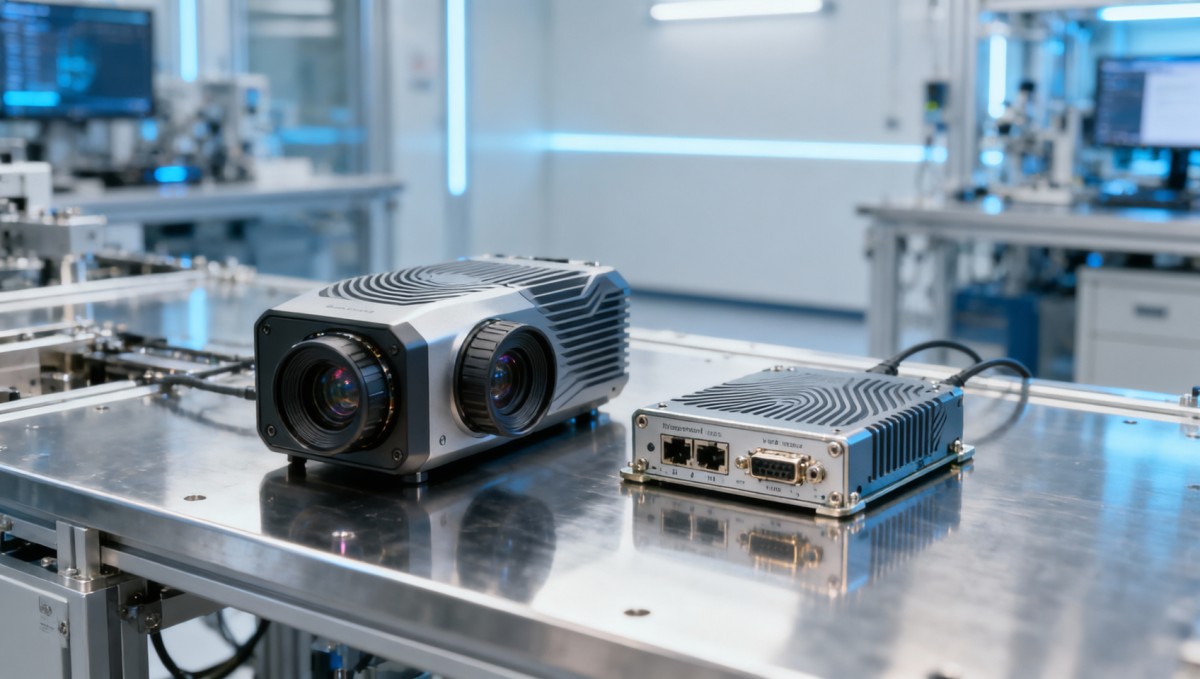
On April 22, 2026, ten Chinese government departments—including the Ministry of Industry and Information Technology—jointly issued the Guidance on Ethical Review for Artificial Intelligence Products Export (Trial). The rule mandates algorithmic bias assessment for AI hardware devices destined for the EU, US, Canada, Japan, and South Korea. Affected sectors include smart camera manufacturers, AI voice assistant developers, and industrial vision system suppliers—making this a critical development for exporters in AI-enabled hardware.
Event Overview
On April 22, 2026, China’s Ministry of Industry and Information Technology and nine other departments jointly released the Guidance on Ethical Review for Artificial Intelligence Products Export (Trial). Under the guidance, AI hardware products—including smart cameras, AI voice assistants, and industrial vision systems—intended for export to the European Union, United States, Canada, Japan, and South Korea must undergo algorithmic bias evaluation by the National AI Ethics Review Center prior to export. The evaluation focuses on training data diversity, decision interpretability, and cross-cultural applicability. Products failing to obtain an official review code will be ineligible for export license applications.
Industries Affected
AI Hardware Exporters (Direct Trade Enterprises)
These firms face direct compliance obligations: export licensing now hinges on successful completion of the ethics review. Impact manifests as extended lead times, added documentation requirements, and potential delays or rejections if bias assessments reveal deficiencies in data sourcing or model transparency.
AI System Integrators & OEM Manufacturers
Firms embedding third-party AI modules into end devices (e.g., security cameras with on-device inference engines) may inherit upstream accountability. If their integrated AI components lack verified bias assessment outcomes, final product certification—and thus market access—may be blocked.
Industrial Automation Equipment Suppliers
Providers of AI-powered visual inspection, robotic guidance, or predictive maintenance systems targeting overseas industrial clients must now validate not only functional performance but also ethical alignment per jurisdiction-specific expectations—particularly regarding fairness across demographic or regional subgroups in training data.
Export Compliance & Certification Service Providers
Third-party labs, testing agencies, and regulatory consultants supporting AI exporters will see increased demand for audit-readiness support, documentation preparation, and cross-cultural validation services—but only those accredited or recognized by the National AI Ethics Review Center will be positioned to assist formally.
What Enterprises and Practitioners Should Monitor and Do Now
Track official implementation details and pilot timelines
The Guidance is labeled “trial,” indicating phased rollout. Enterprises should monitor announcements from the National AI Ethics Review Center—including published assessment protocols, accepted evidence formats, and any designated pilot regions or product categories—before committing to full-scale review preparations.
Identify high-priority export destinations and product lines
Not all markets are covered equally: the rule explicitly names the EU, US, Canada, Japan, and South Korea. Firms exporting to these jurisdictions—especially those shipping AI hardware with autonomous decision-making capabilities—should prioritize review readiness for top-selling SKUs first, rather than applying blanket assessments across portfolios.
Distinguish policy signal from operational requirement
While the Guidance establishes a formal requirement, actual enforcement depends on integration with existing export control workflows (e.g., customs declaration systems and license issuance platforms). Companies should verify whether current export license applications already trigger automatic ethics review flags—or whether manual submission and verification remain interim steps.
Prepare documentation and internal alignment early
Required evidence includes training dataset inventories (with origin, demographics, language coverage), model explanation reports (e.g., SHAP or LIME outputs), and localization validation records. Engineering, data governance, and compliance teams should begin cross-functional mapping of existing assets against likely assessment criteria—not waiting for official checklists.
Editorial Perspective / Industry Observation
From an industry perspective, this Guidance is best understood not as an immediate operational bottleneck, but as a formalized signal of China’s institutional alignment with emerging global AI governance norms—particularly those advanced by the EU AI Act and US NIST AI RMF. Analysis来看, it reflects growing recognition that technical performance alone no longer suffices for international AI market access; societal trust metrics are becoming embedded in trade infrastructure. Observation来看, the emphasis on cross-cultural applicability suggests regulators anticipate friction points where models trained predominantly on domestic data underperform—or produce biased outcomes—in linguistically or demographically distinct environments. Current更值得关注的是 how quickly accredited review capacity scales, and whether parallel domestic AI ethics frameworks (e.g., for domestic deployment) will converge with this export-oriented standard.
Conclusion
This Guidance marks a structural shift: AI hardware export is no longer evaluated solely on safety, interoperability, or cybersecurity grounds—it now includes algorithmic fairness as a licensable attribute. For industry stakeholders, it signals the normalization of ethics-by-design as a trade-enabling capability. It is more accurately interpreted as an evolving procedural checkpoint than a finalized regulatory barrier—and one that rewards proactive alignment over reactive compliance.
Information Sources
Main source: Official notice issued jointly by China’s Ministry of Industry and Information Technology and nine other departments on April 22, 2026, titled Guidance on Ethical Review for Artificial Intelligence Products Export (Trial).
Note: Implementation timelines, accreditation procedures for review bodies, and detailed assessment methodology remain pending official publication and are subject to ongoing observation.
Recommended News
 China’s 10-Dept AI Export Ethics Review Rule Takes EffectChina’s new 10-dept AI export ethics rule mandates algorithmic bias review for AI hardware bound for the EU, US, Canada, Japan & SK—key for smart cameras, voice assistants & industrial vision exporters.
 Red Sea Detour Now Standard: $1,850 TEU Premium on Asia-Europe RoutesRed Sea detour premium now standard: $1,850/TEU surcharge embedded in Asia-Europe freight rates — vital intel for exporters, importers & logistics teams.
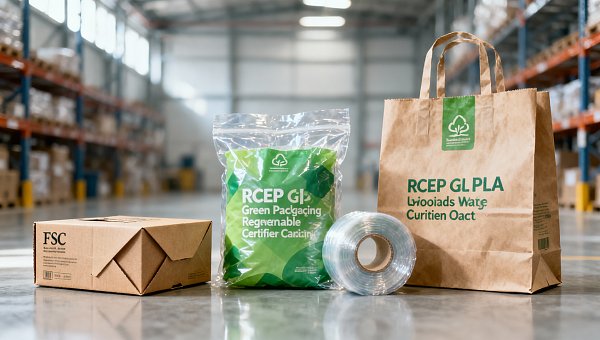
 RCEP Green Packaging Mutual Recognition Takes EffectRCEP Green Packaging Mutual Recognition takes effect Apr 22, 2026—streamline exports to AU, NZ, JP, KR with GB/T 37629–2019 certified molded fiber & PLA packaging.
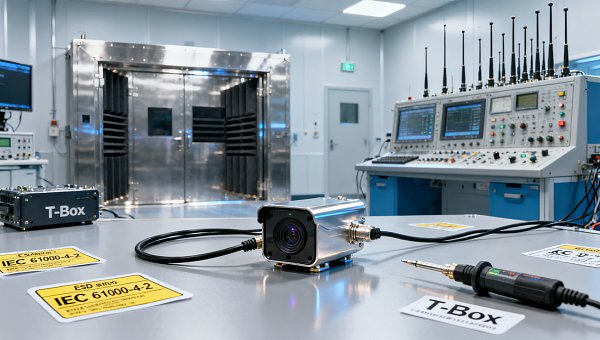
 Mexico NOM-019-SCFI-2026 Effective: EMC Certification Required for Auto Electronics ExportsEMC certification is now mandatory for auto electronics exports to Mexico under NOM-019-SCFI-2026. Ensure compliance for rearview mirrors, radar sensors & T-Box units—avoid shipment delays and order cancellations.
") TÜV Rheinland Updates CE Requirements for Servo Drives (PLd + EMC Joint Validation)TÜV Rheinland now mandates joint PLd + EMC validation for servo drives under CE marking—learn how this impacts certification timelines, lab selection, and EU market access.
TÜV Rheinland Updates CE Requirements for Servo Drives (PLd + EMC Joint Validation)TÜV Rheinland now mandates joint PLd + EMC validation for servo drives under CE marking—learn how this impacts certification timelines, lab selection, and EU market access. Vietnam Suspends SASO Mutual Recognition for Chinese Irrigation EquipmentVietnam suspends SASO mutual recognition for Chinese irrigation equipment—urgent compliance updates for drip tapes & PE pipes (HS 8424.89/3917.39). Act now to avoid delays.
 FDA Finalizes AI Diagnostic Device Rules for ImportersFDA finalizes AI diagnostic device rules for importers: New bias assessment mandate impacts ultrasound, glucose analyzers & dermatoscopes. Act now to ensure U.S. market access.
 SABER Phase II Live: Saudi Building Hardware Requires Digital Type Test Reports & PIDSABER Phase II is live: Building hardware exports to Saudi Arabia now require digital type test reports & a mandatory, immutable Product ID (PID). Act now to avoid customs delays!
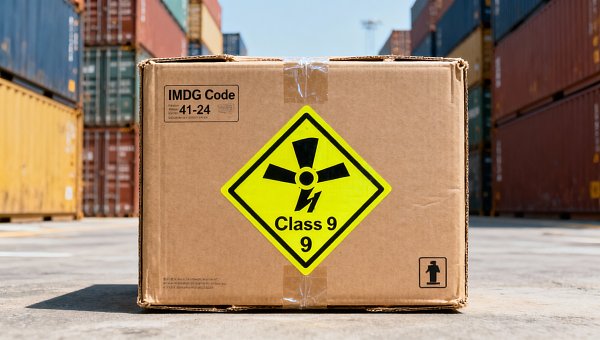
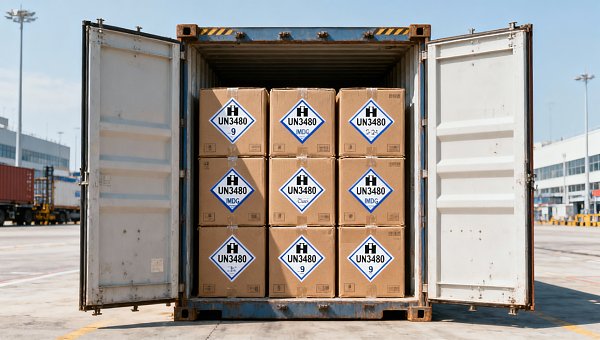
 IMDG Code 41-24 Enforced: UN3480 Lithium Battery Labeling Mandatory from Apr 2026IMDG Code 41-24 enforcement starts Apr 2026: UN3480 lithium battery labeling & ISO 17363 docs are now mandatory—avoid port rejections!
 CBAM Carbon Tax Launch: Low CBAM Reporting Rate Among Chinese ExportersCBAM Carbon Tax is live—only 36.8% of Chinese exporters reported. Discover why, which industries are at risk, and how to secure EU market access now.
 China’s 10 Agencies Issue AI Export Ethics Review RulesChina’s 10 agencies launch AI export ethics rules—mandating bias reviews for visual inspection, warehouse AI & defect detection systems. Stay compliant & competitive.
 RCEP Green Packaging Mutual Recognition Takes EffectRCEP Green Packaging Mutual Recognition is now in effect—unlock faster customs clearance in Australia, NZ, Japan & Korea for GB/T 37659–2019-certified eco-packaging.
 Mexico NOM-019-SCFI-2026 Effective Apr 10, 2026: EMC Certification Required for Automotive ElectronicsNOM-019-SCFI-2026 EMC certification is now mandatory for automotive electronics entering Mexico — act before the July 1, 2026 customs ban.
 Red Sea Rerouting Normalized, EBA at $1,850/TEURed Sea rerouting normalized with EBA fixed at $1,850/TEU—learn how this structural shift impacts Asia-Europe freight costs, lead times & supply chain strategy.
 FDA AI Diagnostic Device Draft Rules: Bias Assessment for ImportsFDA AI diagnostic device draft rules require bias assessment for imports—learn how portable ultrasound, glucose, and dermatoscopic AI devices are affected & what to do next.
") TÜV Rheinland Updates CE Requirements for Servo Drives (PLd + EMC)TÜV Rheinland updates CE requirements for servo drives: PLd (ISO 13849-1) + EMC immunity (IEC 61000-6-2 Ed.4) now mandatory together — act now to avoid EU market delays!
TÜV Rheinland Updates CE Requirements for Servo Drives (PLd + EMC)TÜV Rheinland updates CE requirements for servo drives: PLd (ISO 13849-1) + EMC immunity (IEC 61000-6-2 Ed.4) now mandatory together — act now to avoid EU market delays! SABER Phase II Launch: Building Hardware Must Submit Digital Type Test Reports & Unique Product IDSABER Phase II now mandates digital type test reports & unique product IDs for building hardware—fasteners, scaffolding, door/window components. Ensure compliance to avoid customs rejection & SCOC delays.
 Vietnam Suspends SASO Mutual Recognition for Chinese Irrigation EquipmentVietnam suspends SASO mutual recognition for Chinese irrigation equipment—TCVN testing now mandatory. Act now to avoid 8–12 week delays and customs holdups.
 IMDG Code 41-24 Enforced: UN3480 Lithium Battery Labeling UpdateIMDG Code 41-24 enforcement starts April 2026: UN3480 lithium battery labeling updates are mandatory for global maritime shipments — avoid port delays, detention & penalties.
 EU CBAM Enters Full Enforcement on Jan 1, 2026EU CBAM full enforcement starts Jan 1, 2026 — mandatory quarterly reporting & certificate purchases for batteries, steel, cement, aluminum, fertilizers & chemicals. Act now to ensure EU market access.
 EU CBAM Carbon Tariff Starts Oct 2026 for Chinese Battery, Cement, Chemical ExportsEU CBAM carbon tariff hits Chinese battery, cement & chemical exports from Oct 2026 — mandatory emissions reporting starts now. Avoid €98/t default fees.














Popular Tags
Global Trade Insights & Industry
Our mission is to empower global exporters and importers with data-driven insights that foster strategic growth.
Search News
Popular Tags
Industry Overview
The global commercial kitchen equipment market is projected to reach $112 billion by 2027. Driven by urbanization, the rise of e-commerce food delivery, and strict hygiene regulations.