

SABER Phase II Live: Saudi Building Hardware Requires Digital Type Test Reports & PID
Saudi Arabia’s SABER platform Phase II went live on April 22, 2026, mandating digital type test reports issued by SASO-recognized laboratories and binding of an immutable Product ID (PID) for all building hardware exports—including fasteners, door/window hardware, and sanitary fittings. This change directly affects Chinese manufacturers and exporters supplying to the Saudi market, with early feedback indicating tangible operational impacts on clearance timelines and supply chain planning.
Event Overview
On April 22, 2026, the second phase of Saudi Arabia’s SABER (Saudi Product Safety Program) system became fully operational. As confirmed in official SABER guidance and verified by exporter reports from Guangzhou and Foshan, all building hardware products destined for Saudi import must now be registered on SABER with two mandatory elements: (1) a digital type test report issued by a laboratory listed on the SASO-approved laboratory whitelist; and (2) assignment and binding of a unique, non-modifiable Product ID (PID) within the report itself. Failure to meet either requirement results in registration rejection or customs hold.
Which Subsectors Are Affected
Direct Exporters (China-based)
Chinese manufacturers and trading companies exporting building hardware to Saudi Arabia are directly responsible for SABER registration. Because the new requirement ties report validity to both lab accreditation status and embedded PID, exporters face immediate compliance checks—not just at registration but during customs verification. Reports without PID or issued by unlisted labs trigger re-submission and delay.
Contract Manufacturers & OEMs
Factories producing under private labels or for foreign brand owners must now coordinate PID assignment upstream—before testing—and ensure test reports reflect that exact PID. Any mismatch between product labeling, packaging, and the PID in the report breaks traceability, risking rejection even if physical goods comply.
Distributors & Regional Wholesalers (Middle East)
Middle Eastern distributors receiving shipments from China have reported extended lead time uncertainty. With average clearance delays of 5.2 days observed across multiple Guangdong-based cases, distributors are revising safety stock levels and reorder triggers—particularly for fast-moving items like hinges, shower fittings, and structural anchors.
Testing & Certification Service Providers
Laboratories not yet on the SASO whitelist—or those still issuing PDF-only (non-digital, non-PID-enabled) reports—face reduced demand from export-focused clients. The shift requires technical upgrades to reporting systems and alignment with SASO’s digital infrastructure, not just accreditation renewal.
What Relevant Businesses Should Watch and Do Now
Verify Lab Whitelist Status and PID Integration Capability
Before commissioning any new type test, confirm in writing that the chosen laboratory is currently active on the official SASO-recognized lab list and can embed a client-assigned PID into the digital report file (e.g., as a machine-readable field in the XML or signed PDF metadata). Do not rely on verbal assurances or prior approvals.
Map PID Assignment to Production Batches — Not Just SKUs
PID is product-specific, not model-generic. For variants differing in material grade, surface finish, or dimensional tolerance—even within the same catalog number—separate PIDs and separate test reports may be required. Update internal product data management to treat PID as a core production attribute, linked to batch records.
Review Existing SABER Registrations Ahead of Re-Certification Cycles
Many building hardware registrations were created under Phase I rules and lack PID binding. When renewals or modifications occur post-April 22, 2026, these will be subject to Phase II requirements. Proactively audit active registrations and flag those needing PID retrofitting or re-testing before expiry.
Align Documentation Across Supply Chain Tiers
Ensure PID appears consistently on commercial invoices, packing lists, test reports, and product labels (where applicable). Discrepancies—even typographical—between PID on documents and what’s entered in SABER have already caused holds in Jeddah and Dammam ports, per exporter feedback.
Editorial Observation / Industry Perspective
From industry perspective, this is not merely a procedural update but a structural shift toward product-level digital traceability in Saudi market access. Analysis来看, the 5.2-day average delay reflects systemic friction—not isolated errors—suggesting widespread gaps in PID implementation readiness among Chinese suppliers. Observation来看, SASO is using SABER Phase II to consolidate control over conformity assessment data flows, moving beyond paper-based verification toward real-time, lab-to-platform interoperability. Current more appropriate understanding is that this requirement signals the beginning of a broader PID mandate across other regulated product categories in GCC markets—not just a one-off for building hardware.
It is better understood as an enforcement milestone rather than a policy announcement: the rule is live, penalties are operational, and impact is measurable. Continued attention is warranted because SASO has indicated future phases will link PID to post-market surveillance, including recall coordination and incident reporting.
Conclusion
This SABER Phase II rollout marks a concrete step in Saudi Arabia’s transition to digitally enforced product compliance. Its significance lies less in novelty and more in enforceability: it introduces verifiable, non-transferable product identification as a gatekeeping condition—not a recommendation. For affected businesses, the current priority is not speculation about future expansions, but ensuring PID assignment, lab alignment, and document consistency are embedded in routine export workflows—starting with the next shipment.
Source Attribution
Main source: Official SABER platform notices effective April 22, 2026; corroborated by documented clearance delay reports from six Guangdong-based exporting firms (Guangzhou and Foshan), shared via industry working group channels on April 25–28, 2026. Ongoing monitoring is advised for SASO’s planned updates to the laboratory whitelist and potential PID format specifications, which remain pending formal publication as of May 2026.

Recommended News
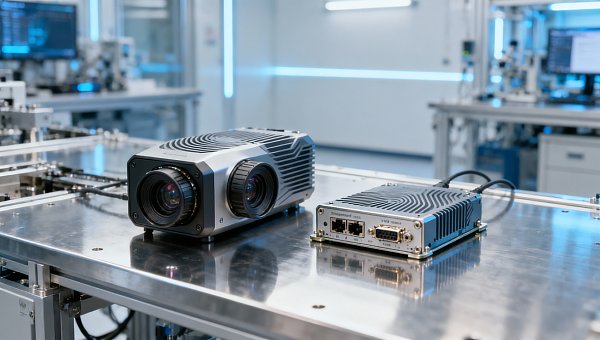
 China’s 10-Dept AI Export Ethics Review Rule Takes EffectChina’s new 10-dept AI export ethics rule mandates algorithmic bias review for AI hardware bound for the EU, US, Canada, Japan & SK—key for smart cameras, voice assistants & industrial vision exporters.
 Red Sea Detour Now Standard: $1,850 TEU Premium on Asia-Europe RoutesRed Sea detour premium now standard: $1,850/TEU surcharge embedded in Asia-Europe freight rates — vital intel for exporters, importers & logistics teams.
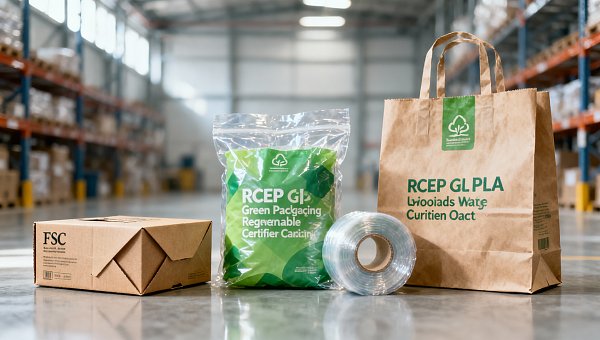
 RCEP Green Packaging Mutual Recognition Takes EffectRCEP Green Packaging Mutual Recognition takes effect Apr 22, 2026—streamline exports to AU, NZ, JP, KR with GB/T 37629–2019 certified molded fiber & PLA packaging.
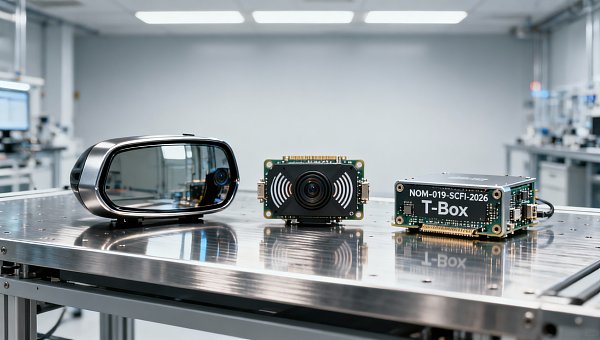
 Mexico NOM-019-SCFI-2026 Effective: EMC Certification Required for Auto Electronics ExportsEMC certification is now mandatory for auto electronics exports to Mexico under NOM-019-SCFI-2026. Ensure compliance for rearview mirrors, radar sensors & T-Box units—avoid shipment delays and order cancellations.
") TÜV Rheinland Updates CE Requirements for Servo Drives (PLd + EMC Joint Validation)TÜV Rheinland now mandates joint PLd + EMC validation for servo drives under CE marking—learn how this impacts certification timelines, lab selection, and EU market access.
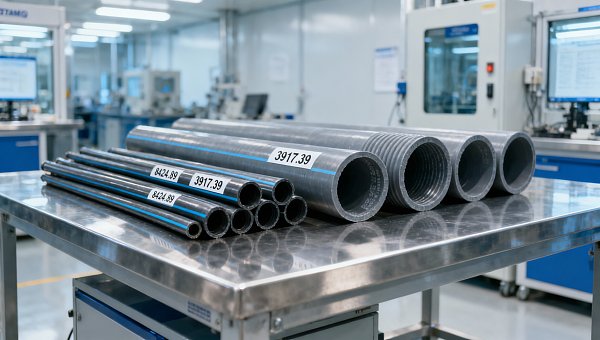
TÜV Rheinland Updates CE Requirements for Servo Drives (PLd + EMC Joint Validation)TÜV Rheinland now mandates joint PLd + EMC validation for servo drives under CE marking—learn how this impacts certification timelines, lab selection, and EU market access. Vietnam Suspends SASO Mutual Recognition for Chinese Irrigation EquipmentVietnam suspends SASO mutual recognition for Chinese irrigation equipment—urgent compliance updates for drip tapes & PE pipes (HS 8424.89/3917.39). Act now to avoid delays.
 FDA Finalizes AI Diagnostic Device Rules for ImportersFDA finalizes AI diagnostic device rules for importers: New bias assessment mandate impacts ultrasound, glucose analyzers & dermatoscopes. Act now to ensure U.S. market access.
 SABER Phase II Live: Saudi Building Hardware Requires Digital Type Test Reports & PIDSABER Phase II is live: Building hardware exports to Saudi Arabia now require digital type test reports & a mandatory, immutable Product ID (PID). Act now to avoid customs delays!
 IMDG Code 41-24 Enforced: UN3480 Lithium Battery Labeling Mandatory from Apr 2026IMDG Code 41-24 enforcement starts Apr 2026: UN3480 lithium battery labeling & ISO 17363 docs are now mandatory—avoid port rejections!
 CBAM Carbon Tax Launch: Low CBAM Reporting Rate Among Chinese ExportersCBAM Carbon Tax is live—only 36.8% of Chinese exporters reported. Discover why, which industries are at risk, and how to secure EU market access now.
 China’s 10 Agencies Issue AI Export Ethics Review RulesChina’s 10 agencies launch AI export ethics rules—mandating bias reviews for visual inspection, warehouse AI & defect detection systems. Stay compliant & competitive.
 RCEP Green Packaging Mutual Recognition Takes EffectRCEP Green Packaging Mutual Recognition is now in effect—unlock faster customs clearance in Australia, NZ, Japan & Korea for GB/T 37659–2019-certified eco-packaging.
 Mexico NOM-019-SCFI-2026 Effective Apr 10, 2026: EMC Certification Required for Automotive ElectronicsNOM-019-SCFI-2026 EMC certification is now mandatory for automotive electronics entering Mexico — act before the July 1, 2026 customs ban.
 Red Sea Rerouting Normalized, EBA at $1,850/TEURed Sea rerouting normalized with EBA fixed at $1,850/TEU—learn how this structural shift impacts Asia-Europe freight costs, lead times & supply chain strategy.
 FDA AI Diagnostic Device Draft Rules: Bias Assessment for ImportsFDA AI diagnostic device draft rules require bias assessment for imports—learn how portable ultrasound, glucose, and dermatoscopic AI devices are affected & what to do next.
") TÜV Rheinland Updates CE Requirements for Servo Drives (PLd + EMC)TÜV Rheinland updates CE requirements for servo drives: PLd (ISO 13849-1) + EMC immunity (IEC 61000-6-2 Ed.4) now mandatory together — act now to avoid EU market delays!
TÜV Rheinland Updates CE Requirements for Servo Drives (PLd + EMC)TÜV Rheinland updates CE requirements for servo drives: PLd (ISO 13849-1) + EMC immunity (IEC 61000-6-2 Ed.4) now mandatory together — act now to avoid EU market delays! SABER Phase II Launch: Building Hardware Must Submit Digital Type Test Reports & Unique Product IDSABER Phase II now mandates digital type test reports & unique product IDs for building hardware—fasteners, scaffolding, door/window components. Ensure compliance to avoid customs rejection & SCOC delays.
 Vietnam Suspends SASO Mutual Recognition for Chinese Irrigation EquipmentVietnam suspends SASO mutual recognition for Chinese irrigation equipment—TCVN testing now mandatory. Act now to avoid 8–12 week delays and customs holdups.
 IMDG Code 41-24 Enforced: UN3480 Lithium Battery Labeling UpdateIMDG Code 41-24 enforcement starts April 2026: UN3480 lithium battery labeling updates are mandatory for global maritime shipments — avoid port delays, detention & penalties.
 EU CBAM Enters Full Enforcement on Jan 1, 2026EU CBAM full enforcement starts Jan 1, 2026 — mandatory quarterly reporting & certificate purchases for batteries, steel, cement, aluminum, fertilizers & chemicals. Act now to ensure EU market access.
 EU CBAM Carbon Tariff Starts Oct 2026 for Chinese Battery, Cement, Chemical ExportsEU CBAM carbon tariff hits Chinese battery, cement & chemical exports from Oct 2026 — mandatory emissions reporting starts now. Avoid €98/t default fees.
















Popular Tags
Global Trade Insights & Industry
Our mission is to empower global exporters and importers with data-driven insights that foster strategic growth.
Search News
Popular Tags
Industry Overview
The global commercial kitchen equipment market is projected to reach $112 billion by 2027. Driven by urbanization, the rise of e-commerce food delivery, and strict hygiene regulations.