

RCEP Green Packaging Mutual Recognition Takes Effect
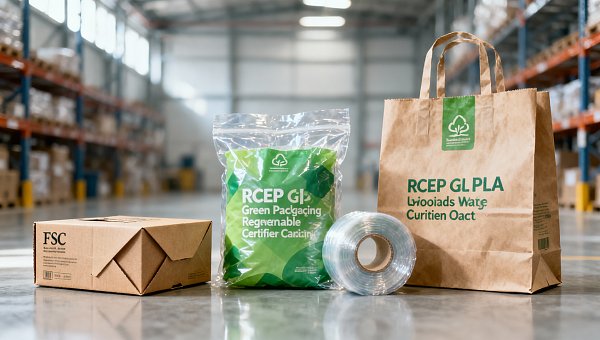
On April 22, 2026, the RCEP Secretariat officially implemented the Regional Green Packaging Mutual Recognition Framework, enabling Chinese eco-friendly packaging products certified under GB/T 37629–2019 — including molded fiber and PLA compostable packaging — to bypass redundant testing upon import into Australia, New Zealand, Japan, and South Korea. This development directly affects exporters, packaging manufacturers, and supply chain stakeholders in sustainable packaging, logistics, food & beverage, electronics, cosmetics, and e-commerce sectors — as it reduces average customs clearance time by 3.8 days and streamlines documentation for cross-border trade.
Event Overview
On April 22, 2026, the RCEP Secretariat announced the formal implementation of the Regional Green Packaging Mutual Recognition Framework. Under this framework, Chinese packaging products compliant with GB/T 37629–2019 Methods for Evaluation of Green Packaging — specifically pulp-molded and PLA-based compostable packaging — are exempt from duplicate conformity testing when imported into Australia, New Zealand, Japan, and South Korea. As of implementation, 127 Chinese packaging enterprises have been authorized to use the official RCEP Green Packaging标识 on export documentation.
Which Subsectors Are Affected
Direct Exporters (e.g., branded FMCG, electronics, cosmetics firms)
These companies rely on certified green packaging for overseas shipments. The exemption removes a layer of pre-shipment testing coordination and associated delays, especially for time-sensitive product launches or seasonal campaigns. Impact manifests in faster customs release, lower third-party lab costs, and simplified documentation workflows for shipments to the four RCEP markets.
Packaging Manufacturers & Converters
Firms producing molded fiber trays, PLA clamshells, or other GB/T 37629–2019-compliant formats now hold a verifiable advantage in tender processes and contract negotiations with multinational buyers. The RCEP Green Packaging标识 serves as an interoperable credential across four major export destinations — reducing the need for separate certification schemes per country.
Raw Material Suppliers (e.g., PLA resin producers, specialty pulp mills)
While the framework does not directly certify raw materials, demand for traceable, standards-aligned inputs is expected to rise. Buyers may increasingly require material-level declarations supporting final product compliance with GB/T 37629–2019 — particularly regarding biobased content, heavy metal limits, and industrial compostability performance.
Logistics & Customs Compliance Service Providers
Freight forwarders, customs brokers, and certification consultants must update internal checklists and client advisories to reflect the new exemption scope. Documentation requirements — such as declaration language, certificate referencing, and identifier placement on commercial invoices or packing lists — now carry operational weight beyond voluntary sustainability claims.
What Enterprises and Practitioners Should Focus On Now
Monitor official guidance from national RCEP Focal Points
The framework’s implementation relies on domestic adoption by each participating country’s customs or standards authority. Current public information confirms eligibility and scope, but detailed procedural instructions — e.g., how the RCEP Green Packaging标识 must appear on documents, or whether retroactive application applies to pending shipments — remain pending official release. Stakeholders should track updates from China’s Ministry of Commerce, Australia’s Department of Home Affairs, and Japan’s METI.
Verify product eligibility against GB/T 37629–2019 criteria — not just marketing labels
Only products formally assessed and verified under GB/T 37629–2019 qualify. Self-declaration or generic “eco-friendly” labeling is insufficient. Companies must confirm whether their current certifications cover all required evaluation dimensions: resource utilization, energy consumption, toxicity, recyclability, and compostability — and whether test reports are issued by CNAS-accredited labs.
Distinguish between policy signal and operational readiness
The authorization of 127 enterprises signals administrative capacity, but does not guarantee uniform acceptance at all port-of-entry checkpoints. Early adopters should conduct trial shipments with full documentation to identify potential interpretation variances — e.g., whether Korean customs requires additional Korean-language summaries, or whether NZ MPI requests supplementary decomposition test data beyond GB/T 37629–2019 reporting.
Update internal SOPs for documentation, procurement, and supplier communication
Export departments should revise shipping instruction templates to include mandatory fields for the RCEP Green Packaging标识. Procurement teams should review supplier contracts to ensure green packaging clauses reference GB/T 37629–2019 — not only international standards like ISO 14040 or EN 13432. Supplier communications should explicitly address documentation handover timelines to avoid last-minute certification gaps.
Editorial Perspective / Industry Observation
From an industry perspective, this development is best understood as a procedural milestone — not yet a market transformation. It reflects institutional alignment among RCEP members on a narrow, technically defined subset of packaging sustainability criteria. Analysis来看, its immediate value lies in regulatory efficiency, not environmental impact assessment: the framework focuses on mutual recognition of conformity testing, not harmonization of green definitions or lifecycle thresholds. Observation来看, it functions more as a signal of growing administrative interoperability than as an automatic sales enabler — since buyer acceptance, shelf-space allocation, and end-of-life infrastructure remain governed by local market dynamics, not treaty provisions. Current more appropriate understanding is that it lowers one specific friction point in cross-border trade, rather than reshaping competitive positioning across the broader packaging value chain.

In summary, the RCEP Green Packaging Mutual Recognition Framework introduces a targeted, administratively grounded improvement for exporters and manufacturers shipping compliant paper-based and PLA packaging to Australia, New Zealand, Japan, and South Korea. Its significance lies in documented process simplification — not in expanded market access or revised environmental standards. At present, it is most accurately interpreted as a calibration of trade infrastructure, not a catalyst for broad-based sustainability adoption.
Source: RCEP Secretariat official announcement (April 22, 2026); confirmed scope and eligibility criteria per publicly released framework text. Note: Implementation details — including port-level enforcement protocols and documentation format requirements — remain subject to ongoing national regulatory issuance and are recommended for continuous monitoring.
Recommended News
 China’s 10-Dept AI Export Ethics Review Rule Takes EffectChina’s new 10-dept AI export ethics rule mandates algorithmic bias review for AI hardware bound for the EU, US, Canada, Japan & SK—key for smart cameras, voice assistants & industrial vision exporters.
 Red Sea Detour Now Standard: $1,850 TEU Premium on Asia-Europe RoutesRed Sea detour premium now standard: $1,850/TEU surcharge embedded in Asia-Europe freight rates — vital intel for exporters, importers & logistics teams.
 RCEP Green Packaging Mutual Recognition Takes EffectRCEP Green Packaging Mutual Recognition takes effect Apr 22, 2026—streamline exports to AU, NZ, JP, KR with GB/T 37629–2019 certified molded fiber & PLA packaging.
 Mexico NOM-019-SCFI-2026 Effective: EMC Certification Required for Auto Electronics ExportsEMC certification is now mandatory for auto electronics exports to Mexico under NOM-019-SCFI-2026. Ensure compliance for rearview mirrors, radar sensors & T-Box units—avoid shipment delays and order cancellations.
") TÜV Rheinland Updates CE Requirements for Servo Drives (PLd + EMC Joint Validation)TÜV Rheinland now mandates joint PLd + EMC validation for servo drives under CE marking—learn how this impacts certification timelines, lab selection, and EU market access.
TÜV Rheinland Updates CE Requirements for Servo Drives (PLd + EMC Joint Validation)TÜV Rheinland now mandates joint PLd + EMC validation for servo drives under CE marking—learn how this impacts certification timelines, lab selection, and EU market access. Vietnam Suspends SASO Mutual Recognition for Chinese Irrigation EquipmentVietnam suspends SASO mutual recognition for Chinese irrigation equipment—urgent compliance updates for drip tapes & PE pipes (HS 8424.89/3917.39). Act now to avoid delays.
 FDA Finalizes AI Diagnostic Device Rules for ImportersFDA finalizes AI diagnostic device rules for importers: New bias assessment mandate impacts ultrasound, glucose analyzers & dermatoscopes. Act now to ensure U.S. market access.
 SABER Phase II Live: Saudi Building Hardware Requires Digital Type Test Reports & PIDSABER Phase II is live: Building hardware exports to Saudi Arabia now require digital type test reports & a mandatory, immutable Product ID (PID). Act now to avoid customs delays!
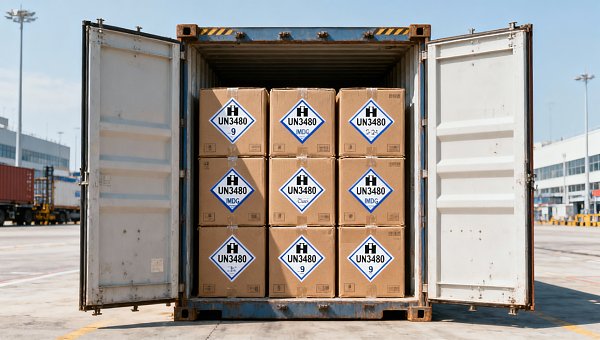
 IMDG Code 41-24 Enforced: UN3480 Lithium Battery Labeling Mandatory from Apr 2026IMDG Code 41-24 enforcement starts Apr 2026: UN3480 lithium battery labeling & ISO 17363 docs are now mandatory—avoid port rejections!
 CBAM Carbon Tax Launch: Low CBAM Reporting Rate Among Chinese ExportersCBAM Carbon Tax is live—only 36.8% of Chinese exporters reported. Discover why, which industries are at risk, and how to secure EU market access now.
 China’s 10 Agencies Issue AI Export Ethics Review RulesChina’s 10 agencies launch AI export ethics rules—mandating bias reviews for visual inspection, warehouse AI & defect detection systems. Stay compliant & competitive.
 RCEP Green Packaging Mutual Recognition Takes EffectRCEP Green Packaging Mutual Recognition is now in effect—unlock faster customs clearance in Australia, NZ, Japan & Korea for GB/T 37659–2019-certified eco-packaging.
 Mexico NOM-019-SCFI-2026 Effective Apr 10, 2026: EMC Certification Required for Automotive ElectronicsNOM-019-SCFI-2026 EMC certification is now mandatory for automotive electronics entering Mexico — act before the July 1, 2026 customs ban.
 Red Sea Rerouting Normalized, EBA at $1,850/TEURed Sea rerouting normalized with EBA fixed at $1,850/TEU—learn how this structural shift impacts Asia-Europe freight costs, lead times & supply chain strategy.
 FDA AI Diagnostic Device Draft Rules: Bias Assessment for ImportsFDA AI diagnostic device draft rules require bias assessment for imports—learn how portable ultrasound, glucose, and dermatoscopic AI devices are affected & what to do next.
") TÜV Rheinland Updates CE Requirements for Servo Drives (PLd + EMC)TÜV Rheinland updates CE requirements for servo drives: PLd (ISO 13849-1) + EMC immunity (IEC 61000-6-2 Ed.4) now mandatory together — act now to avoid EU market delays!
TÜV Rheinland Updates CE Requirements for Servo Drives (PLd + EMC)TÜV Rheinland updates CE requirements for servo drives: PLd (ISO 13849-1) + EMC immunity (IEC 61000-6-2 Ed.4) now mandatory together — act now to avoid EU market delays! SABER Phase II Launch: Building Hardware Must Submit Digital Type Test Reports & Unique Product IDSABER Phase II now mandates digital type test reports & unique product IDs for building hardware—fasteners, scaffolding, door/window components. Ensure compliance to avoid customs rejection & SCOC delays.
 Vietnam Suspends SASO Mutual Recognition for Chinese Irrigation EquipmentVietnam suspends SASO mutual recognition for Chinese irrigation equipment—TCVN testing now mandatory. Act now to avoid 8–12 week delays and customs holdups.
 IMDG Code 41-24 Enforced: UN3480 Lithium Battery Labeling UpdateIMDG Code 41-24 enforcement starts April 2026: UN3480 lithium battery labeling updates are mandatory for global maritime shipments — avoid port delays, detention & penalties.
 EU CBAM Enters Full Enforcement on Jan 1, 2026EU CBAM full enforcement starts Jan 1, 2026 — mandatory quarterly reporting & certificate purchases for batteries, steel, cement, aluminum, fertilizers & chemicals. Act now to ensure EU market access.
 EU CBAM Carbon Tariff Starts Oct 2026 for Chinese Battery, Cement, Chemical ExportsEU CBAM carbon tariff hits Chinese battery, cement & chemical exports from Oct 2026 — mandatory emissions reporting starts now. Avoid €98/t default fees.
















Popular Tags
Global Trade Insights & Industry
Our mission is to empower global exporters and importers with data-driven insights that foster strategic growth.
Search News
Popular Tags
Industry Overview
The global commercial kitchen equipment market is projected to reach $112 billion by 2027. Driven by urbanization, the rise of e-commerce food delivery, and strict hygiene regulations.