

What Limits Autonomous Driving Sensors in Bad Weather?
Autonomous driving sensors are central to safe vehicle perception, but their performance can degrade sharply in rain, fog, snow, and low-visibility conditions. For technical evaluators, understanding these weather-related limitations is essential when assessing system reliability, sensor fusion strategies, and real-world deployment readiness. This article explores how adverse environments affect sensing accuracy, detection range, and decision-making performance across autonomous driving platforms.
Why do bad weather conditions challenge autonomous driving sensors so much?
Bad weather does not simply reduce visibility for cameras; it changes the physical environment in ways that interfere with nearly every major sensing modality. Rain introduces scattering, refraction, and surface reflections. Fog reduces contrast and attenuates light-based signals. Snow can block sensor windows, create false targets, and alter road-edge perception. Even wet pavement changes how radar and vision systems interpret lane markings, standing water, and braking distance.
For technical assessment teams, the key point is that autonomous driving sensors do not fail in a uniform way. Instead, each sensor degrades differently depending on particle size, precipitation rate, ambient lighting, vehicle speed, road temperature, and contamination on the sensor cover. A system may still operate, but with reduced confidence, shorter detection range, slower classification, or increased uncertainty in path planning. That makes bad weather one of the most important real-world tests of autonomous driving readiness.
This matters beyond automotive engineering. In the broader trade and industrial intelligence context, buyers, suppliers, fleet operators, and cross-border technology partners increasingly need comparable evidence of sensor robustness. Claims about autonomy performance are only useful when they are tied to weather-specific operational limits, validation methods, and reliability thresholds.
Which autonomous driving sensors are most affected by rain, fog, and snow?
No single sensor escapes weather effects, but the failure modes differ. Cameras, LiDAR, radar, and ultrasonic sensors each have strengths and weaknesses, which is why sensor fusion remains a core design principle in advanced driver assistance and autonomous driving stacks.
How do cameras perform in low-visibility weather?
Cameras are highly valuable because they deliver rich semantic information such as lane markings, traffic signs, pedestrian posture, and color-based object cues. However, they are especially vulnerable to low contrast, glare, water droplets, dirt, and nighttime conditions. In fog, the image may still be visible to a human observer, but machine vision models often lose sharp edge information and confidence in object classification. Heavy rain also creates motion streaks and windshield distortion, which can affect both forward-facing and surround-view perception.
For evaluators, a critical metric is not image quality alone but downstream model stability: how often does the perception stack miss, delay, or misclassify essential targets under adverse weather? A camera that looks acceptable in a demo may still produce weak confidence scores in production traffic.
What happens to LiDAR in adverse weather?
LiDAR is often seen as a precision sensor because it provides detailed 3D geometry. Yet rain, fog, and snow can scatter laser pulses and generate backscatter from airborne particles before the signal reaches meaningful targets. In dense fog, this can reduce effective range sharply. In snowfall, floating flakes may appear as transient obstacles, while snow accumulation on the sensor housing can partially blind the unit.
The practical limitation is not just reduced range. Point cloud sparsity, ghost points, and unstable returns can all affect obstacle detection and free-space estimation. Technical reviewers should examine how the system filters atmospheric noise, recalibrates confidence, and handles uncertainty propagation into planning modules.
Is radar the most weather-resistant option?
Radar is generally more robust in rain, fog, and darkness than cameras or LiDAR, which is why it is foundational in many automotive safety architectures. It can maintain longer-range detection when optical systems degrade. However, radar is not weather-proof. Heavy precipitation can still increase noise, reduce signal quality, and complicate target separation. Wet roadside structures, guardrails, tunnels, and metallic surfaces may produce multipath reflections that confuse localization and object tracking.
Another trade-off is resolution. Radar can detect motion and range well, but it usually offers less detailed shape information than LiDAR or cameras. In bad weather, radar may remain active while other sensors weaken, but that does not automatically mean the full autonomous driving function remains safe without stronger fusion logic.
Where do ultrasonic sensors fit?
Ultrasonic sensors are mainly used for short-range tasks such as parking and near-field detection. Their role in high-speed autonomous driving is limited. Rain splash, ice, or mud near the sensor face can interfere with close-range accuracy, but their broader weather impact is less central than that of cameras, LiDAR, and radar in highway or urban autonomy scenarios.
How does bad weather affect perception accuracy, detection range, and decision-making?
The most visible effect is shorter detection range, but that is only the beginning. Autonomous driving sensors feed into a chain of functions: perception, tracking, localization, prediction, and planning. When sensor quality drops, the entire chain can become less reliable.
First, object detection confidence declines. A pedestrian partly hidden by rain and poor lighting may be detected later or classified as a less critical object. Second, lane and road boundary estimation becomes unstable, especially when markings are faded or covered by slush. Third, localization can drift if landmarks disappear in fog or if GNSS corrections are weak in urban canyons during storms. Fourth, planning may become overly conservative or insufficiently cautious depending on how uncertainty is modeled.
For technical evaluators, the real concern is not whether autonomous driving sensors “work” in bad weather, but whether the system degrades predictably and safely. A good platform should detect reduced sensing confidence, adjust operating parameters, extend following distances, lower speed, and if needed trigger a minimal risk maneuver or handover. Weather-aware degradation management is often more important than peak performance in clear conditions.
What should technical evaluators compare when reviewing autonomous driving sensors?
A structured comparison helps separate marketing language from deployment reality. The table below summarizes the most important review dimensions for bad-weather assessment.
In supplier reviews, it is also useful to ask whether the autonomous driving sensors were tuned for a narrow operational design domain or validated across climates. A system tested only in mild conditions may not translate well to ports, industrial parks, northern freight corridors, or monsoon-heavy urban regions.
What are the most common misconceptions about sensor performance in bad weather?
One common misconception is that adding more sensors automatically solves the weather problem. More hardware can improve redundancy, but only if calibration, synchronization, and fusion software are mature. Otherwise, additional sensors may increase data conflict and computational burden without improving reliability.
Another misconception is that radar alone can “carry” autonomous driving in poor conditions. Radar is highly valuable, but most autonomous functions still rely on combining radar with visual or 3D semantic context. A moving metallic object may be detectable by radar, yet the system may still struggle to identify road debris, lane geometry, or an unusual pedestrian posture.
A third misconception is that simulation is enough. Simulation is essential for scale and repeatability, but weather physics, contamination patterns, lens occlusion, and edge-case driver interactions often behave differently in real environments. Technical evaluators should treat simulation as a complement to proving-ground and on-road validation, not a substitute.
Finally, many teams focus too much on sensor specification sheets and too little on maintenance realities. Heating elements, washer systems, enclosure design, software diagnostics, and fail-operational behavior are often as important as nominal sensor range. In commercial deployment, operational uptime can be limited more by contamination and cleaning burden than by pure detection theory.
How should companies judge real-world deployment readiness for autonomous driving sensors?
Deployment readiness should be judged as a system-level capability, not a component-level promise. Technical evaluators should start by defining the target use case: highway logistics, urban robotaxi operations, mining, yard automation, campus shuttles, or port transport. Each environment brings different weather profiles, speed ranges, infrastructure support, and acceptable risk thresholds.
Next, assess whether the autonomous driving sensors support a clearly bounded operational design domain. The vendor should specify the environmental conditions under which the system performs as intended, the thresholds at which performance degrades, and the actions triggered when those thresholds are crossed. Clear boundaries are a sign of engineering maturity, not weakness.
Then evaluate evidence quality. Strong evidence includes weather-specific benchmark data, corner-case logs, false positive and false negative analysis, cleaning and heating durability records, and updates showing how the system improved after field feedback. In international B2B sourcing and technology partnerships, this kind of documented validation supports trust, compliance review, and long-cycle procurement decisions.
It is also wise to examine supply chain and service implications. If a sensor suite requires frequent replacement, highly specialized calibration, or hard-to-source protective components, deployment costs may rise significantly in geographically distributed fleets. For cross-border operators and industrial buyers, lifecycle serviceability is part of weather resilience.
What questions should you ask before selecting or partnering around autonomous driving sensors?
Before procurement, pilot testing, or technical cooperation, decision-makers should ask focused questions that reveal how the system behaves outside ideal conditions. Useful questions include: What weather scenarios were used for validation? How much performance drops in heavy rain, dense fog, and snowfall? Which sensor becomes the limiting factor first? How does fusion reweight inputs under degradation? What are the cleaning, heating, and maintenance requirements? What is the minimal risk strategy when confidence falls below threshold? How often are perception models updated using field weather data?
These questions help move the conversation from generic capability claims to operational readiness. For technical evaluators, the goal is to understand whether autonomous driving sensors can support safe, repeatable performance within the intended environment and business model. If further confirmation is needed on specific solutions, parameters, validation paths, implementation timelines, pricing logic, or cooperation models, the best next step is to align first on use case boundaries, weather exposure levels, maintenance expectations, and measurable acceptance criteria.
Recommended News
 Portable oxygen concentrators are quieter now, but not always lighterPortable oxygen concentrators are getting quieter, but not always lighter. Explore the trade-offs in weight, battery life, comfort, and daily usability before you compare today’s top options.
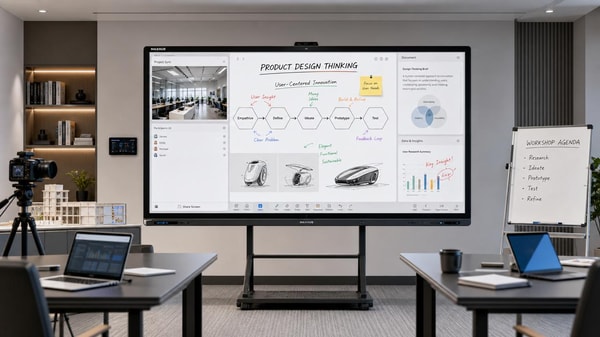
 Interactive whiteboards are improving, but software still decides valueInteractive whiteboards deliver real value when software matches the scenario. Explore how usability, integration, security, and updates shape smarter buying decisions.
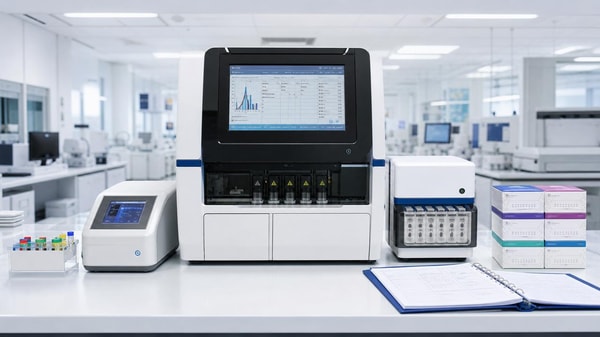
 Medical diagnostic equipment downtime often starts with calibration neglectMedical diagnostic equipment downtime often starts with missed calibration. Learn the warning signs, checklist priorities, and practical steps to prevent failures and keep healthcare operations reliable.
 Eco-friendly building materials are easier to specify than to sourceEco-friendly building materials are easier to specify than source. Learn how procurement teams can verify claims, reduce risk, and find reliable suppliers faster.
 Ergonomic workspace design can fail if chair fit comes lastErgonomic workspace design starts with chair fit. Learn how the right seat improves posture, comfort, and focus—and why fixing it first can transform your workspace.
 Outdoor garden supplies demand shifts faster than many expectOutdoor garden supplies demand is shifting faster than expected. Discover key B2B trends, smarter sourcing insights, and practical strategies to stay competitive and capture growth.
 Sustainable home decor sells better when materials are clearly disclosedSustainable home decor sells better when brands clearly disclose materials, finishes, and sourcing. Discover why transparency builds trust, justifies price, and drives more confident buying.
 Modern office furniture trends now favor modular over fixed layoutsModern office furniture is shifting to modular layouts for flexibility, lower lifecycle costs, and better hybrid work performance. See why enterprises are moving away from fixed office design.
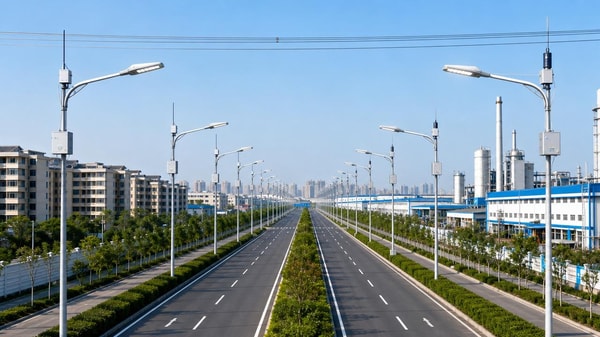
 Smart street lighting projects stall when controls are overcomplicatedSmart street lighting projects often stall when controls become too complex. Learn how to simplify deployment, reduce risk, and scale citywide with practical, maintainable systems.
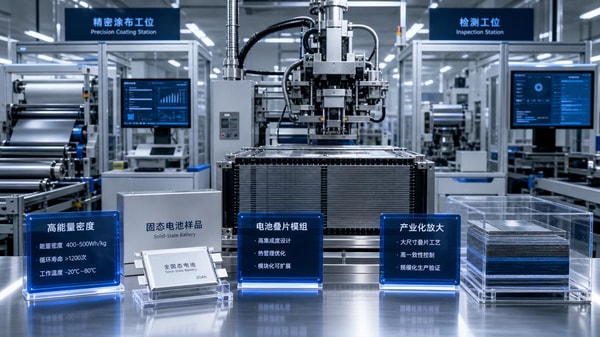
 Solid-state battery breakthroughs look promising, but scale is harderSolid-state battery breakthroughs promise safer, higher-density energy storage, but scaling remains the real challenge. Explore what this means for supply chains, investment, and market advantage.
 Commercial LED lighting upgrades often save less than expectedCommercial LED lighting upgrades can underdeliver when baseline data, controls, and installation costs are misjudged. Learn how to assess real savings, reduce ROI risk, and make smarter investment decisions.
 Lithium battery storage payback can change with one policy updateLithium battery storage payback can shift fast after one policy update. See how tariffs, tax credits, grid pricing, and incentives change ROI—and how finance teams can approve smarter.
 Photovoltaic solar panels now compete on output in low lightPhotovoltaic solar panels now compete on low-light output. Discover how buyers can compare yield, risk, and supplier value to source smarter and boost project returns.
 Plant-based protein processing changes texture more than many expectPlant-based protein processing reshapes texture, stability, and safety more than expected. Explore key risks, QC checkpoints, and smarter sourcing insights for consistent results.
 Foldable screen technology is improving, but crease concerns remainFoldable screen technology is evolving fast with slimmer designs and stronger hinges, but crease concerns still shape buying decisions. Explore where it matters most.
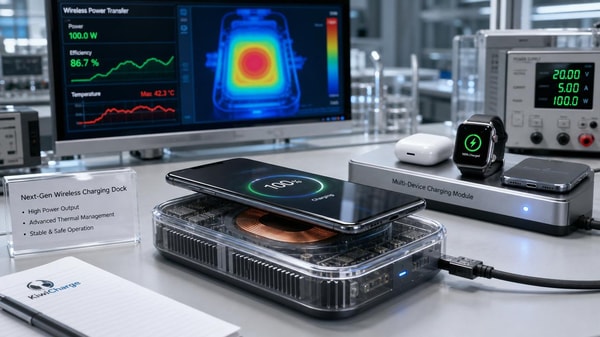
 Next-gen wireless charging still faces a heat management problemNext-gen wireless charging promises faster, more flexible power delivery, but heat remains the key barrier. Discover how thermal limits impact safety, efficiency, and market readiness.
 Wearable technology adoption drops when comfort gets overlookedWearable technology adoption falls fast when comfort is ignored. Discover how fit, materials, weight, and battery life shape long-term use and smarter buying decisions.
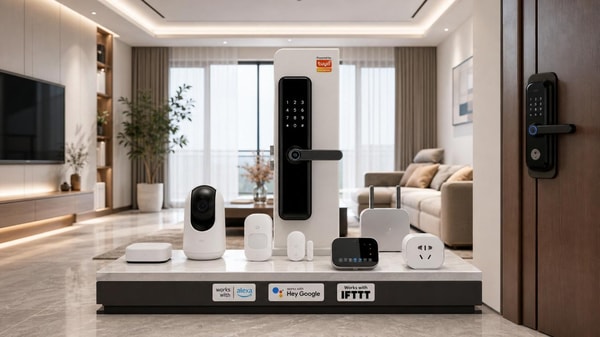
 Smart home devices wholesale is no longer just about low pricingSmart home devices wholesale now goes beyond low pricing. Discover how reliability, compatibility, and supply chain confidence help distributors choose profitable, trusted partners.
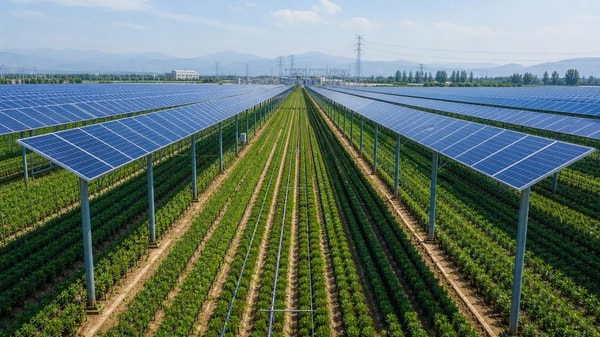
 Agri-PV systems make sense only when land use is planned wellAgri-PV systems deliver real value only when land use is planned well. Discover how smart site, crop, grid, and compliance decisions turn dual-use solar into a bankable, sustainable project.
 Organic fertilizers may improve soil slower, but results last longerOrganic fertilizers improve soil slowly but deliver longer-lasting results. Learn how they boost soil health, support safer growing, and help you choose the right option for sustainable planting success.
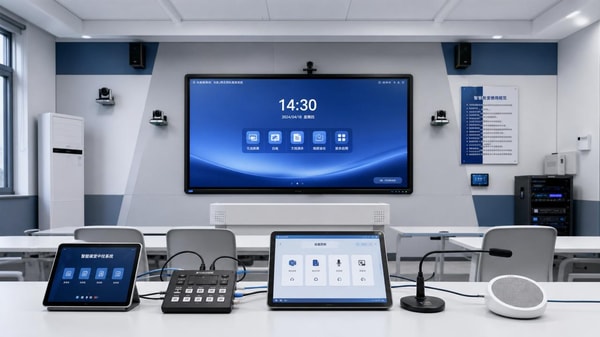
 Smart classroom solutions fail when teachers need too many appsSmart classroom solutions fail when teachers juggle too many apps. Discover why integrated, easy-to-use platforms drive adoption, ROI, and scalable learning success.









Popular Tags
Global Trade Insights & Industry
Our mission is to empower global exporters and importers with data-driven insights that foster strategic growth.
Search News
Popular Tags
Industry Overview
The global commercial kitchen equipment market is projected to reach $112 billion by 2027. Driven by urbanization, the rise of e-commerce food delivery, and strict hygiene regulations.