

Next-gen wireless charging sounds convenient until heat becomes the limit
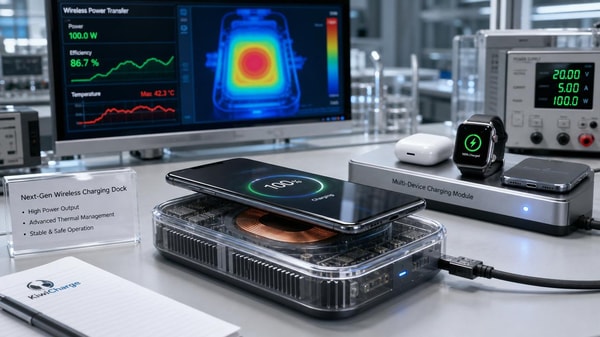
Next-gen wireless charging promises effortless power delivery, cleaner product design, and greater user convenience—but for technical evaluators, thermal constraints remain the decisive challenge. As power density rises, heat affects charging efficiency, component lifespan, safety margins, and overall system reliability. Understanding where innovation meets its thermal limit is essential for assessing whether the latest wireless charging solutions are truly ready for scalable, real-world deployment.
For B2B buyers, OEM engineering teams, and cross-border sourcing managers, the issue is no longer whether wireless power works. The real question is whether a given design can sustain 15 W, 30 W, or higher transfer levels across different use cases without creating unacceptable thermal stress. In product qualification, a 5°C to 15°C temperature rise can be the difference between smooth certification and repeated redesign.
This matters across consumer electronics, automotive interiors, medical accessories, industrial handhelds, and smart workplace equipment. Technical evaluators need to look beyond advertised charging speed and focus on coil losses, alignment tolerance, enclosure materials, foreign object detection behavior, and duty-cycle stability. In next-gen wireless charging, heat is not a side effect; it is the core system limiter.
Why Heat Becomes the Bottleneck in Next-Gen Wireless Charging
Wireless charging systems convert grid or battery-side power into a magnetic field and then back into usable DC power. Every conversion step introduces loss. At low power, these losses are often manageable. At higher transfer rates, especially above 15 W in compact housings, even a few percentage points of inefficiency can create significant thermal buildup within 10 to 30 minutes of continuous charging.
A typical thermal stack includes the transmitter coil, driver electronics, shielding layer, receiver coil, rectification stage, battery charging IC, and the surrounding mechanical enclosure. When these layers are tightly packed, heat dissipation becomes constrained. Plastic housings, decorative glass, metal trim, and adhesive interfaces can each add resistance to thermal flow and raise the local hotspot temperature by several degrees.
The main sources of thermal loss
The first source is resistive loss in the coils. Higher current increases I²R heating, especially when designers use thinner conductors to save space. The second is misalignment loss. A system that performs at 78% efficiency under perfect alignment may fall to 60% or lower when offset by a few millimeters. The third is power electronics loss from switching, rectification, and control logic.
- Coil copper loss increases with current load and conductor resistance.
- Eddy current loss can rise when nearby metals are not well isolated.
- Magnetic shielding materials can help control flux but may add cost and thickness.
- Poor alignment tolerance often causes both slower charging and higher heat.
Why thermal constraints matter in evaluation
From a technical assessment perspective, heat affects four critical outcomes: efficiency, safety, service life, and user perception. Battery aging accelerates when charging temperatures remain elevated for repeated cycles. Semiconductor reliability also drops when junction temperatures approach design limits. In many products, the practical threshold is not the advertised maximum power, but the highest power that can be sustained while keeping surface and internal temperatures within acceptable ranges.
The table below highlights how thermal stress typically changes evaluation outcomes across common wireless charging deployment scenarios.
The key takeaway is that next-gen wireless charging cannot be judged by wattage alone. The same nominal power level can behave very differently depending on ambient temperature, alignment repeatability, and enclosure design. For B2B sourcing and qualification, thermal performance should be treated as a first-tier decision factor, not a secondary validation item.
What Technical Evaluators Should Measure Before Approval
A rigorous evaluation framework reduces the risk of selecting a charger that performs well in the lab but fails in field deployment. In most projects, technical teams should test at least 4 dimensions: power transfer efficiency, thermal rise, alignment sensitivity, and protection behavior. If the product is intended for mass deployment, a fifth dimension—manufacturing consistency—becomes equally important.
1. Thermal rise under realistic loads
Bench tests at room temperature are useful, but they are not enough. Evaluate temperature rise at multiple ambient points, such as 25°C, 35°C, and 45°C. Track at least three measurement locations: transmitter housing, receiver-side device surface, and power-stage hotspot if accessible. A 20-minute and 60-minute profile often reveals whether the system stabilizes or continues drifting upward.
2. Efficiency across alignment offsets
Many next-gen wireless charging claims are based on ideal alignment. Real users rarely place devices perfectly. Evaluators should test horizontal and vertical offset, with common checkpoints such as 0 mm, 2 mm, 4 mm, and 6 mm. If efficiency drops sharply after small offset, the charger may create excess heat during normal daily use.
3. Material stack compatibility
Charging through different materials changes loss behavior. A thin polymer cover may perform acceptably, while a thicker decorative panel can shift magnetic coupling enough to raise internal temperature. For integrated products, testing should include the final housing stack, adhesive layers, cosmetics, and any nearby metal frame. A 1 mm to 3 mm design change can materially affect thermal outcome.
4. Protection logic and derating behavior
The best systems do not simply chase maximum speed. They reduce power in controlled steps when temperature crosses predefined thresholds. Evaluators should verify whether derating begins gradually, whether charging resumes cleanly after cooling, and whether the user receives clear indication of status. Abrupt shutdown may protect hardware, but it also harms product usability.
The following checklist can support engineering review, supplier comparison, and sourcing approval for next-gen wireless charging modules or integrated charging assemblies.
In practice, these checks help buyers avoid a common procurement error: selecting a supplier on headline power rating alone. A technically mature vendor should be able to discuss thermal maps, duty-cycle limitations, and enclosure dependencies with specificity. If such details are missing, the risk of late-stage engineering change increases sharply.
Design Trade-Offs That Separate Scalable Solutions from Demo-Ready Concepts
Many next-gen wireless charging products look compelling at the prototype stage. The difficulty emerges when teams try to scale them across multiple SKUs, regions, and usage profiles. Thermal performance is where architecture choices become visible. A faster design is not always a better design if it only works under narrow conditions.
Coil size, frequency, and packaging density
Larger coils can improve coupling area, but they also consume valuable product space. Higher operating frequency may support certain efficiency targets, yet it can increase switching complexity and electromagnetic design sensitivity. In compact devices, the conflict between thin packaging and acceptable thermal dissipation often defines the final performance ceiling more than the power electronics specification itself.
Thermal interface design
A strong charging architecture needs a clear path for heat to move away from the hotspot. This may involve graphite spreaders, aluminum substructures, ventilation slots, or revised component placement. Even low-cost improvements can matter. For example, repositioning a heat-sensitive IC by a few millimeters or reducing adhesive thickness can improve long-duration temperature behavior without changing the charging protocol.
User behavior and field variability
Field conditions are rarely ideal. Users may place devices on soft surfaces, in enclosed vehicle compartments, or under direct sunlight. Technical evaluators should model these non-laboratory conditions during qualification. A system that remains acceptable at 25°C ambient may enter frequent derating at 38°C, resulting in inconsistent experience and higher support cases across export markets with hotter climates.
Common mistakes in supplier comparison
- Comparing only maximum wattage and not sustained power over 30 to 60 minutes.
- Ignoring enclosure material impact during early sourcing decisions.
- Assuming certification readiness without foreign object and thermal fault validation.
- Using ideal alignment lab results as a substitute for real placement behavior.
For importers, manufacturers, and private-label brands, these points directly affect launch timing. A redesign cycle can add 4 to 8 weeks when tooling changes, firmware tuning, and revalidation are required. In globally distributed supply chains, that delay can impact channel inventory planning, customs timing, and seasonal sales windows.
A Practical Sourcing and Qualification Framework for B2B Decision-Makers
For organizations evaluating next-gen wireless charging, the most effective process combines engineering review with commercial discipline. Technical teams should define pass-fail criteria before RFQ issuance, while procurement teams should align those requirements with sampling, pilot validation, and production monitoring. This avoids a situation where price discussions advance faster than technical certainty.
A 5-step evaluation path
- Define target power, ambient range, and device placement conditions.
- Request thermal and efficiency data under both ideal and offset alignment.
- Test production-equivalent housings, not only open bench assemblies.
- Validate protection logic, derating behavior, and recovery sequence.
- Run pilot lots to check unit-to-unit consistency before scale purchase.
Questions that should be asked to suppliers
Ask what sustained power the system can hold at 35°C and 45°C ambient. Ask how much alignment offset is tolerated before transfer efficiency drops below the acceptable range. Ask whether the vendor has tested with realistic housing materials and whether firmware can be tuned for different enclosure stacks. These are more useful than generic claims about fast charging readiness.
Why market intelligence also matters
Technical evaluation does not happen in isolation. Buyers also need visibility into supplier maturity, regional manufacturing capability, lead-time volatility, and product positioning trends across sectors. This is where an industry intelligence platform adds value: it helps decision-makers connect engineering feasibility with sourcing reality, reducing the chance of selecting a technically interesting but commercially unstable solution.
For B2B stakeholders monitoring component trends, GTIIN and TradeVantage support a broader assessment process by consolidating developments across manufacturing, materials, electronics integration, and international trade flows. That context is especially useful when next-gen wireless charging moves from isolated product evaluation to multi-market deployment strategy.
Next-gen wireless charging remains a promising technology, but thermal behavior determines whether that promise becomes a dependable product feature or a recurring engineering compromise. Technical evaluators should focus on sustained power, hotspot control, alignment tolerance, and derating logic rather than headline wattage alone. Teams that assess these factors early can reduce redesign risk, improve sourcing decisions, and shorten the path to scalable deployment.
If your organization is comparing wireless charging solutions across suppliers, regions, or product categories, data-led evaluation is the most reliable way to separate mature systems from high-risk concepts. Contact us to explore tailored industry intelligence, request deeper market insight, or learn more solutions for identifying credible partners in fast-moving technology supply chains.
Recommended News
 Portable oxygen concentrators are quieter now, but not always lighterPortable oxygen concentrators are getting quieter, but not always lighter. Explore the trade-offs in weight, battery life, comfort, and daily usability before you compare today’s top options.
 Interactive whiteboards are improving, but software still decides valueInteractive whiteboards deliver real value when software matches the scenario. Explore how usability, integration, security, and updates shape smarter buying decisions.
 Medical diagnostic equipment downtime often starts with calibration neglectMedical diagnostic equipment downtime often starts with missed calibration. Learn the warning signs, checklist priorities, and practical steps to prevent failures and keep healthcare operations reliable.
 Eco-friendly building materials are easier to specify than to sourceEco-friendly building materials are easier to specify than source. Learn how procurement teams can verify claims, reduce risk, and find reliable suppliers faster.
 Ergonomic workspace design can fail if chair fit comes lastErgonomic workspace design starts with chair fit. Learn how the right seat improves posture, comfort, and focus—and why fixing it first can transform your workspace.
 Outdoor garden supplies demand shifts faster than many expectOutdoor garden supplies demand is shifting faster than expected. Discover key B2B trends, smarter sourcing insights, and practical strategies to stay competitive and capture growth.
 Sustainable home decor sells better when materials are clearly disclosedSustainable home decor sells better when brands clearly disclose materials, finishes, and sourcing. Discover why transparency builds trust, justifies price, and drives more confident buying.
 Modern office furniture trends now favor modular over fixed layoutsModern office furniture is shifting to modular layouts for flexibility, lower lifecycle costs, and better hybrid work performance. See why enterprises are moving away from fixed office design.
 Smart street lighting projects stall when controls are overcomplicatedSmart street lighting projects often stall when controls become too complex. Learn how to simplify deployment, reduce risk, and scale citywide with practical, maintainable systems.
 Solid-state battery breakthroughs look promising, but scale is harderSolid-state battery breakthroughs promise safer, higher-density energy storage, but scaling remains the real challenge. Explore what this means for supply chains, investment, and market advantage.
 Commercial LED lighting upgrades often save less than expectedCommercial LED lighting upgrades can underdeliver when baseline data, controls, and installation costs are misjudged. Learn how to assess real savings, reduce ROI risk, and make smarter investment decisions.
 Lithium battery storage payback can change with one policy updateLithium battery storage payback can shift fast after one policy update. See how tariffs, tax credits, grid pricing, and incentives change ROI—and how finance teams can approve smarter.
 Photovoltaic solar panels now compete on output in low lightPhotovoltaic solar panels now compete on low-light output. Discover how buyers can compare yield, risk, and supplier value to source smarter and boost project returns.
 Plant-based protein processing changes texture more than many expectPlant-based protein processing reshapes texture, stability, and safety more than expected. Explore key risks, QC checkpoints, and smarter sourcing insights for consistent results.
 Foldable screen technology is improving, but crease concerns remainFoldable screen technology is evolving fast with slimmer designs and stronger hinges, but crease concerns still shape buying decisions. Explore where it matters most.
 Next-gen wireless charging still faces a heat management problemNext-gen wireless charging promises faster, more flexible power delivery, but heat remains the key barrier. Discover how thermal limits impact safety, efficiency, and market readiness.
 Wearable technology adoption drops when comfort gets overlookedWearable technology adoption falls fast when comfort is ignored. Discover how fit, materials, weight, and battery life shape long-term use and smarter buying decisions.
 Smart home devices wholesale is no longer just about low pricingSmart home devices wholesale now goes beyond low pricing. Discover how reliability, compatibility, and supply chain confidence help distributors choose profitable, trusted partners.
 Agri-PV systems make sense only when land use is planned wellAgri-PV systems deliver real value only when land use is planned well. Discover how smart site, crop, grid, and compliance decisions turn dual-use solar into a bankable, sustainable project.
 Organic fertilizers may improve soil slower, but results last longerOrganic fertilizers improve soil slowly but deliver longer-lasting results. Learn how they boost soil health, support safer growing, and help you choose the right option for sustainable planting success.
 Smart classroom solutions fail when teachers need too many appsSmart classroom solutions fail when teachers juggle too many apps. Discover why integrated, easy-to-use platforms drive adoption, ROI, and scalable learning success.














Popular Tags
Global Trade Insights & Industry
Our mission is to empower global exporters and importers with data-driven insights that foster strategic growth.
Search News
Popular Tags
Industry Overview
The global commercial kitchen equipment market is projected to reach $112 billion by 2027. Driven by urbanization, the rise of e-commerce food delivery, and strict hygiene regulations.