

Why some fashion tech startups scale fast then stall
Why do some fashion tech startups surge ahead, then suddenly lose momentum? For researchers, buyers, and business evaluators, the answer lies beyond hype—in scalable fashion tech applications, production line optimization, shifting demand, and cross-sector signals from textile home accessories to production line automation. This article explores the operational, market, and growth factors that determine whether fast-rising ventures become lasting industry players.
For B2B readers in sourcing, channel development, and commercial assessment, the central issue is not whether fashion technology is attractive. It is whether a startup can move from a promising pilot to a repeatable operating model across regions, suppliers, and product categories. In practice, many early winners discover that demand acquisition is easier than delivery consistency, and brand visibility rises faster than backend maturity.
This matters across the wider trade ecosystem. A startup offering digital fitting, smart merchandising, traceability tools, inventory software, or production planning may touch apparel, accessories, home textiles, logistics, and factory automation at the same time. That cross-sector exposure can drive rapid growth within 12 to 24 months, but it also introduces complexity in procurement cycles, data integration, compliance expectations, and channel conflict.
For importers, exporters, distributors, and evaluation teams, identifying the difference between fast growth and durable scale requires a structured lens. Revenue growth alone is not enough. Buyer retention, implementation time, supplier adoption rates, integration depth, and post-sale service capacity often reveal whether a fashion tech startup is building an enduring position or heading toward a stall.
The early acceleration phase: why fashion tech startups can scale so quickly
Fashion tech startups often grow quickly because they enter visible pain points with a simple story. A solution that reduces sample rounds from 5 to 2, shortens design approval by 7 to 14 days, or improves sell-through forecasting by even 8% to 15% gets immediate attention from brands and manufacturers. In a fragmented supply chain, small operational gains can justify rapid pilot demand.
Another reason for fast scale is that many ventures sit at the intersection of multiple industries. A single platform may serve apparel sourcing teams, home accessory distributors, raw material suppliers, and automated production line operators. That wider addressable market creates more lead sources and faster press visibility, especially when the startup can position itself as both a software layer and a decision-support tool.
In the first 6 to 18 months, buyers are often willing to accept imperfect systems if the startup solves a high-cost bottleneck. This is common in areas such as SKU rationalization, fit prediction, supplier collaboration, demand sensing, and digital merchandising. During this phase, strong storytelling can temporarily compensate for incomplete integration, limited localization, or immature service processes.
Capital efficiency also looks attractive at the start. Many fashion tech products are asset-light compared with manufacturing businesses, allowing teams to onboard customers faster than they build operations. However, what looks like scale in quarter 1 to quarter 4 may still be concentrated in a small number of anchor clients, one geography, or a narrow use case.
What creates strong first-wave demand
- Clear cost reduction, such as lowering return-related handling or reducing manual planning hours by 10 to 30 hours per week.
- Fast pilot deployment, often within 2 to 6 weeks rather than a full enterprise cycle of 3 to 6 months.
- Cross-functional relevance, where sourcing, merchandising, logistics, and supplier management all benefit from the same system.
- High demo value, meaning buyers can quickly visualize impact through dashboards, digital twins, or workflow automation.
The table below shows why early growth can look stronger than underlying operational readiness.
The key takeaway is that early scale is often demand-led rather than system-led. That distinction becomes critical once customer expectations move from experimentation to measurable service levels, contract renewals, and international rollout.
Where momentum breaks: the operational reasons startups stall
The most common reason fashion tech startups stall is operational mismatch. A company may close 20 enterprise accounts, but if implementation depends on a small technical team, every new customer stretches service quality. What worked for 3 pilot clients may fail at 15 live accounts across 4 countries, especially when each buyer requests custom workflows, language support, and ERP connectivity.
Data quality is another major friction point. Many fashion technology tools promise better forecasting, material traceability, demand visibility, or fit accuracy. Yet results depend on structured product data, stable supplier input, and consistent taxonomy. If the startup needs 85% to 95% clean data to deliver its claimed value, but buyers operate with fragmented spreadsheets and inconsistent supplier records, outcomes deteriorate quickly.
Production-side complexity also rises faster than many founders expect. A solution deployed in one apparel segment may not transfer directly to footwear, soft furnishings, or textile home accessories. Color variance, material behavior, order frequency, and compliance documentation all change by category. Once the startup enters adjacent verticals, its support model must absorb a broader set of exceptions.
Cash flow pressure is often the silent factor behind visible slowdown. Sales teams may close annual contracts, but revenue collection can lag 60 to 120 days in B2B trade environments. At the same time, the startup must fund onboarding, integrations, customer success, and product updates. Growth on paper can therefore conceal negative operating leverage.
Common stall signals for evaluators to watch
- Average onboarding time rises from 3 weeks to 8 weeks or more as customer count increases.
- Renewal conversations focus on support gaps rather than expansion opportunities.
- Product roadmap shifts too often, indicating customer-led customization instead of platform discipline.
- Gross margins tighten because service hours per account keep rising.
- Channel partners hesitate to promote the product due to unclear delivery ownership.
The customization trap
In fashion tech, customization wins deals but can undermine scale. Buyers in sourcing and distribution often request tailored dashboards, supplier-specific forms, and local reporting logic. If more than 25% to 30% of deployments require unique development work, the startup stops behaving like a scalable platform and starts behaving like a consultancy with software attached.
That is why procurement and evaluation teams should ask a simple question: which features are standard, and which ones depend on project-level configuration? The answer often predicts whether the company can maintain delivery consistency beyond its first growth cycle.
Market timing, buyer behavior, and channel dynamics
Not every slowdown is caused by weak execution. Some fashion tech startups stall because market conditions change between the hype phase and the buying phase. When retailers become more cautious, procurement shifts from innovation budgets to ROI scrutiny. A tool that looked strategic during expansion may face delayed approval when buyers prioritize inventory discipline, supplier resilience, or cash preservation.
This shift is particularly visible in international trade. Importers and distributors do not evaluate software or digital tools in isolation. They compare them against freight volatility, raw material swings, lead-time uncertainty, and warehouse cost pressure. If a startup cannot connect its offer to measurable supply chain outcomes within 6 to 12 months, commercial teams may postpone adoption even if the technology remains credible.
Channel dynamics add another layer. Some startups rely on brand-direct sales, while others need distributors, sourcing agents, manufacturing partners, or regional consultants to reach the market. Rapid top-line growth can hide channel fragility if most conversions come from founder networks or temporary publicity rather than repeatable partner acquisition.
For B2B decision-makers, the core test is whether the startup fits existing buying motions. Does it support annual vendor review cycles? Can it handle multi-site deployment? Is training available for sourcing offices, factories, and distributor teams? A product that is strong in concept but weak in buying process compatibility often loses momentum after initial enthusiasm.
How buyer groups evaluate fashion tech differently
The table below outlines how priorities vary across commercial stakeholders in the broader trade chain.
This comparison shows why a startup can look compelling in media coverage yet struggle in live B2B channels. Sustainable scale requires alignment with the evaluation logic of each stakeholder, not just a strong product narrative.
Demand is not uniform across sectors
A platform that performs well in fast-fashion replenishment may have a weaker case in premium home textiles or made-to-order accessories. Order cadence, return rates, SKU volatility, and supplier digitization levels vary sharply. In many cases, the startup must narrow its priority verticals before it can expand again with discipline.
How to assess whether a startup can move from traction to durable scale
For buyers and business evaluators, the best approach is to assess fashion tech startups through an operating lens rather than a branding lens. A durable company usually demonstrates repeatable delivery, disciplined product boundaries, and credible customer support. It does not need to dominate every category. It needs to prove that it can serve one or two segments exceptionally well and then extend carefully.
A practical review should include at least 4 areas: implementation readiness, data dependency, customer retention logic, and partner scalability. If any one of those remains weak, growth can slow sharply after the first expansion wave. This is especially true in supply-chain-linked technology, where the product touches both commercial and operational teams.
Decision-makers should also look at deployment architecture. Is the system plug-and-play, semi-configurable, or integration-heavy? A solution that requires 6 to 10 data sources, supplier-level mapping, and manual cleansing may still be valuable, but buyers need realistic expectations on rollout time and internal resource demand.
The evaluation framework below can help importers, sourcing teams, and channel partners screen vendors more effectively before committing to pilots or commercial rollouts.
Core evaluation criteria
A strong vendor will not claim perfect outcomes. Instead, it will define scope, data needs, onboarding sequence, and expected value range with precision. That clarity is usually a better signal than aggressive top-line growth claims.
A 5-step procurement review process
- Confirm the operational problem in measurable terms, such as returns, lead time, or forecast error.
- Request a standard deployment map with roles, inputs, and a realistic timeline.
- Test one category or region first, typically over 8 to 12 weeks.
- Measure user adoption across both business and supply chain teams.
- Expand only after confirming repeatability, not just initial enthusiasm.
Practical implications for sourcing teams, distributors, and market intelligence users
For sourcing teams, the biggest mistake is treating every fashion tech startup like a pure software purchase. In reality, many solutions affect supplier behavior, production planning, line balancing, packaging decisions, and order visibility. That means procurement should involve at least 3 groups early: the commercial owner, the operational owner, and the data or systems contact.
For distributors and agents, the key question is whether the startup can support indirect growth. If onboarding still depends heavily on founders or a small internal expert group, partner-led expansion may fail even with strong market interest. A channel-ready company usually has standard demo materials, training modules, implementation playbooks, and support rules that can be transferred across markets within 30 to 60 days.
For intelligence users and business evaluators, startup momentum should be read alongside broader industrial signals. If growth depends on sectors facing demand contraction, rising returns, or weak supplier digitization, short-term sales may not indicate durable scale. By contrast, ventures connected to process automation, structured product data, and measurable workflow savings may have a stronger long-term position even if their media visibility is lower.
This is where cross-sector industry monitoring becomes valuable. Signals from apparel sourcing, textile home accessories, production line automation, and regional trade flows can reveal whether a startup is aligned with sustained demand or riding a temporary narrative. In B2B markets, durable winners are often the companies that solve unglamorous process issues repeatedly, not those that generate the loudest attention cycle.
FAQ for B2B decision-makers
How long should a meaningful pilot last?
A useful pilot usually runs 8 to 12 weeks. That gives enough time to test onboarding, user adoption, data quality, workflow impact, and at least one review cycle. A 2-week demo may show interface appeal, but it rarely proves operating fit.
What is the most overlooked risk in fashion tech procurement?
The most overlooked risk is assuming clean data and cooperative supplier participation. If the tool depends on frequent updates from factories, mills, or external partners, adoption can break down unless responsibilities are defined at the start.
When does fast growth become a warning sign?
Fast growth becomes a warning sign when account volume rises faster than onboarding capacity, when renewals depend on discounts, or when product development is driven mainly by one-off client requests. These are often early indicators of a future stall.
Which startups are more likely to sustain scale?
Those with a narrow but repeatable use case, clear implementation boundaries, structured support processes, and relevance to measurable supply chain outcomes tend to scale more sustainably than broad-positioned startups with unclear delivery models.
Some fashion tech startups scale fast because they address obvious pain points at the right moment. They stall when operational complexity, data dependence, buyer caution, and channel weakness catch up with the initial growth story. For researchers, procurement teams, and commercial evaluators, the strongest signals come from repeatability, implementation discipline, and cross-sector relevance rather than headline momentum alone.
For organizations tracking industrial change across global trade, a broader intelligence view is essential. Monitoring supplier readiness, category demand shifts, automation trends, and buyer decision patterns can help identify which ventures are built for durable expansion. To explore more sector-specific insights, evaluate solution fit, or obtain tailored market intelligence for sourcing and trade decisions, contact us to learn more solutions and request a customized analysis.
Recommended News
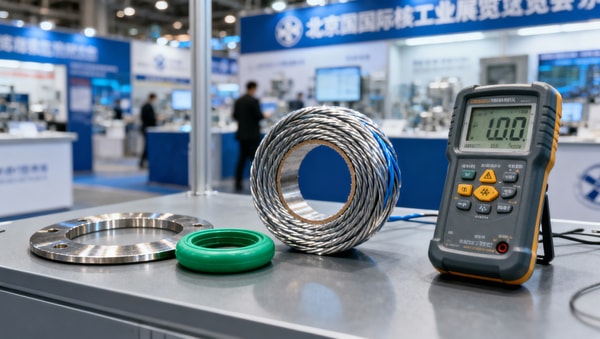
 China-France Nuclear Cooperation Advances at Beijing ExpoChina-France nuclear cooperation advances: mutual recognition for nuclear-grade seals, cables & radiation monitors boosts export readiness for suppliers targeting EU and BRI projects.
 Vietnam’s 4 Provinces Seek AI Tourism Tech in NanningAI tourism tech in demand: Vietnam’s 4 provinces seek AI-guided terminals, multilingual interpretation, AI-CCTV & smart ticketing in Nanning—key opportunity for B2G exporters.
 Q1 2026 China Power Market Trading Up 25.6%: Smart Meters, Storage Export Demand RisesSmart meters, energy storage exports surge as China’s Q1 2026 power market trading jumps 25.6% — key signal for global manufacturers & channel partners.
 China First Country with 5M+ Active Invention PatentsChina first country with 5M+ active invention patents—key for buyers in AI, solar, lithium battery & energy storage. Discover IP implications for sourcing, compliance & supplier vetting.
 Shenneng Etorkeqi Green Ammonia Project: Deionized Water Station OperationalShenneng Etorkeqi Green Ammonia Project’s deionized water station is now operational—ISO 8502-3 compliant, fully integrated, and a key milestone for global green hydrogen developers and exporters.
 China Launches 'Model-Data Resonance' Initiative for AI+Manufacturing InteroperabilityModel-Data Resonance initiative boosts AI+manufacturing interoperability—learn how GB/T XXXX–2026 aligns with VDI 2182 & ISA-95 for smoother global factory deployments.
 China’s First Embodied AI Robot Insurance Launched in GuangxiChina’s first embodied AI robot insurance launched in Guangxi—key for robotics exporters, AI hardware makers & global compliance teams. CE-recognized, EU/UK/AU-ready.
 IMDG Code 41-24 Enforced: UN3480 Lithium Battery Labeling Now MandatoryIMDG Code 41-24 is now mandatory: UN3480 lithium battery labeling, documentation & packaging rules are enforced globally as of 28 April 2026 — avoid port rejections!
 State Grid’s $680M Embodied AI Procurement Signals Export OpportunityEmbodied AI, IEC 61850 & IEC 62443: State Grid’s $680M procurement unlocks export opportunities for compliant industrial robots and smart vision systems in emerging markets.
 IMDG Code 41-24 Enforces UN3480 Class 9 Labeling for Lithium Battery Sea FreightIMDG Code 41-24 mandates UN3480 lithium battery sea freight to display durable Class 9 labels from April 27, 2026—avoid delays & port rejections.
 ESS Key Component Prices Drop ~80%: Quality & Compliance RiseESS key component prices dropped ~80%—but quality & compliance demands surged. Discover how UL 9540A, AS/NZS 5139, and certified BMS/inverters now define market access.
 Mexico NOM-019-SCFI-2026 Effective July 2026: EMC Certification Mandatory for Auto ElectronicsMexico NOM-019-SCFI-2026 mandates EMC certification for auto electronics from July 2026 — ensure compliance now to avoid supply chain disruption & customs delays.
 Red Sea Rerouting Normalized, ECA Surcharge Hits $1,850/TEURed Sea rerouting normalized: ECA surcharge hits $1,850/TEU — 47% of total freight cost. Impacting hand tools, building materials & furniture exporters to Europe. Act now.
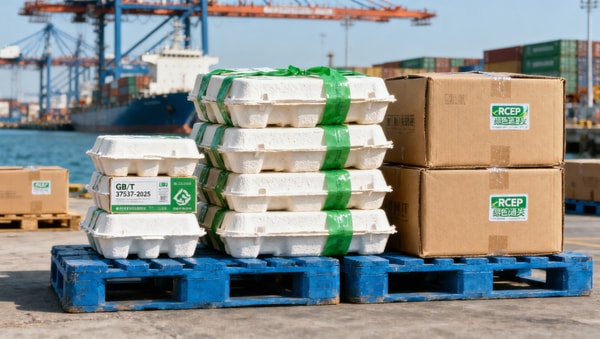
 RCEP Green Packaging Mutual Recognition Takes EffectRCEP Green Packaging Mutual Recognition is live—GB/T 37537-2025–certified packaging now enjoys fast-track clearance in Australia, NZ, Japan & Korea. Save time, cut costs, and boost export efficiency.
 Vietnam Suspends SASO Mutual Recognition for Chinese Irrigation EquipmentVietnam suspends SASO mutual recognition for Chinese irrigation equipment—drip tapes, PE fittings, auto valves now require VINAQ-IR certification. Act now to avoid delays & customs hold.
 Pool equipment maintenance warning signs before a breakdownPool equipment maintenance warning signs before a breakdown: spot early pump, filter, and control issues, improve pool equipment installation decisions, and reduce downtime with smarter sourcing insights.
 Patios and decks materials that age badly in humid climatesPatios and decks materials that age badly in humid climates: learn which patios and decks materials fail fast, how patios and decks construction choices affect durability, and how to source smarter.
 Textile home fabrics buyers now ask more about wash durabilityTextile home fabrics buyers now prioritize wash durability, consistency, and long-term value. Explore sourcing insights, production line optimization, and smarter textile home accessories decisions.
 What recurring waste says about production line efficiencyProduction line efficiency starts with recurring waste. Discover how production line optimization and production line automation reveal supplier risk, cut hidden costs, and improve sourcing decisions across textiles, jewelry, and agrochemicals.
 Agrochemicals export rules causing delays in new marketsAgrochemicals export delays explained with agrochemicals industry analysis and agrochemicals market trends—learn compliance risks, supplier selection tips, and smarter market entry strategies.
 Fashion tech applications brands are testing in physical storesFashion tech applications and fashion tech startups are transforming physical stores with smarter fitting, data-led production line optimization, and scalable retail innovation—explore key trends now.



















Popular Tags
Global Trade Insights & Industry
Our mission is to empower global exporters and importers with data-driven insights that foster strategic growth.
Search News
Popular Tags
Industry Overview
The global commercial kitchen equipment market is projected to reach $112 billion by 2027. Driven by urbanization, the rise of e-commerce food delivery, and strict hygiene regulations.