

Recycled polyester fabrics can vary more than labels suggest
Recycled polyester fabrics are often grouped under a single sustainability label, but that label tells quality control and safety teams very little about actual material behavior. In practice, recycled polyester can differ significantly in fiber origin, contamination level, mechanical performance, chemical input history, dye consistency, and regulatory documentation. For companies sourcing across multiple suppliers or regions, that variability can directly affect product safety, compliance, durability, and claim credibility.
For quality managers and safety professionals, the key takeaway is straightforward: “recycled polyester” is not a sufficient quality descriptor. A fabric may meet one supplier’s recycled-content declaration while still presenting inconsistent tensile strength, unstable shade performance, process contamination, or incomplete traceability. The right approach is to verify recycled polyester fabrics through risk-based specifications, testing protocols, supplier qualification, and documentation review rather than relying on labels alone.
Why the label “recycled polyester” is not enough for sourcing decisions
At search level, the real user intent behind this topic is usually practical, not academic. Readers want to know whether recycled polyester fabrics are truly equivalent to one another, what the main quality and compliance differences are, and how to judge those differences before they create downstream problems. For QC and safety teams, this is less about sustainability marketing and more about avoiding claims risk, production instability, and product failure.
That concern is justified. Recycled polyester fabrics may be made from post-consumer PET bottles, pre-consumer industrial waste, textile-to-textile feedstock, or mixed waste streams. These sources do not behave the same way. Feedstock purity, sorting accuracy, polymer degradation, additive residues, and reprocessing methods all influence the final yarn and fabric properties. Two materials can carry similar recycled-content claims while performing very differently in use.
This is especially important in B2B supply chains where one approved fabric program may later be substituted with a “similar” recycled option from another mill. If technical parameters are not tightly controlled, the substitution may pass a basic document review yet still introduce defects, shade issues, uneven hand feel, or variable wash performance. That is why sourcing teams need to treat recycled polyester fabrics as a high-variation material category rather than a standard commodity.
What quality control and safety managers are really trying to prevent
For the target reader, the biggest concern is not whether recycled polyester exists as a greener option. It is whether the material can be used consistently and safely across lots, suppliers, and end uses. In operational terms, the risks usually fall into five areas: inconsistent physical performance, contamination, restricted substance exposure, unreliable documentation, and misleading environmental claims.
Inconsistent physical performance is often the first visible issue. A recycled polyester fabric may show acceptable strength in one lot and underperform in another because polymer chain length, melt filtration quality, or blending ratios changed during processing. These differences can affect bursting strength, seam slippage, abrasion resistance, pilling, and dimensional stability. If the fabric is used in technical apparel, uniforms, bags, or industrial applications, those deviations may have direct commercial and safety implications.
Contamination is another major concern. Recycled inputs can carry residues from labels, adhesives, caps, colorants, oils, or other polymers. Even when these are removed during processing, incomplete sorting or filtration can lead to black specks, gel particles, uneven dye uptake, or process instability. In some use cases, contamination also raises questions about odor, skin contact suitability, or migration behavior when the material is exposed to heat or moisture.
Safety managers are also focused on chemical compliance. Recycled content does not automatically mean lower chemical risk. Depending on the feedstock and the recycling route, the material may contain legacy substances, processing aids, or contaminants that require additional verification. This is especially relevant for products entering markets with strict expectations around REACH, SVHC screening, azo dyes, heavy metals, formaldehyde limits, or brand-specific restricted substance lists.
Where the biggest variations in recycled polyester fabrics come from
To evaluate recycled polyester fabrics properly, it helps to understand the main sources of variation. The first is feedstock origin. Bottle-based recycled polyester often offers more established processing pathways because PET bottle recycling systems are relatively mature. Textile-to-textile recycled polyester can be promising from a circularity perspective, but feedstock complexity may be higher because textile waste can include blends, finishes, coatings, trims, and unknown chemical histories.
The second source of variation is recycling technology. Mechanical recycling and chemical recycling do not produce identical outcomes. Mechanical recycling can shorten polymer chains over repeated processing cycles, potentially affecting strength or consistency if quality controls are weak. Chemical recycling, depending on the process, can in some cases rebuild polymer quality closer to virgin-equivalent specifications, but the result still depends on process discipline, purification efficiency, and chain-of-custody integrity.
The third factor is blending. Many recycled polyester fabrics are not made from 100% recycled polymer even when the product is marketed as recycled polyester. They may contain virgin polyester for performance stabilization, elastane for stretch, cotton for comfort, or other fibers for cost and hand feel. Blending is not inherently a problem, but it changes recyclability, testing interpretation, durability expectations, and labeling accuracy. QC teams need precise composition data rather than front-end marketing language.
A fourth source of variation is finishing chemistry. The same base fabric can perform very differently after dyeing, coating, brushing, calendaring, moisture-management treatment, flame-retardant application, or antimicrobial finishing. Some post-processing steps can compensate for weaknesses in the raw material, while others can create new risks related to skin contact, wash durability, or restricted-substance compliance. In other words, fabric risk cannot be judged from recycled content alone.
How to evaluate recycled polyester fabrics beyond supplier declarations
The most effective strategy is to build a qualification framework that combines document review, laboratory testing, and supplier process assessment. Documentation should confirm not only recycled content but also source category, chain-of-custody model, production site identity, lot traceability, and the exact scope of certification. A certificate may be valid and still not apply to the specific fabric, color, or factory involved in the current order.
From a testing perspective, recycled polyester fabrics should generally be evaluated against the same end-use performance requirements as conventional polyester, with additional attention to variability and contamination. Basic testing often includes fiber composition verification, GSM, width, tensile or tear strength, pilling, shrinkage, colorfastness to washing and rubbing, and dimensional stability. Depending on application, further testing may include hydrolysis resistance, UV stability, seam performance, coating adhesion, odor evaluation, and migration screening.
Chemical compliance testing should be risk-based rather than generic. If the supplier cannot clearly explain feedstock source control, decontamination steps, and process chemistry, it may be necessary to increase screening frequency. For products used in children’s items, close-contact apparel, interiors, safety products, or regulated export markets, this point becomes even more important. The more complex the recycled input stream, the stronger the case for a tighter compliance protocol.
Supplier assessment also matters. A capable mill should be able to explain how it controls input sorting, contamination removal, melt filtration, lot segregation, and traceability. It should also provide a stable internal quality standard for recycled polyester fabrics instead of treating them as occasional special orders. When suppliers cannot describe these controls clearly, the risk of hidden variability is usually higher than the label suggests.
What specifications should be written into purchase and quality agreements
One common sourcing mistake is approving recycled polyester fabrics with broad language such as “100% recycled polyester” or “GRS-certified material” while leaving key technical and compliance details undefined. That creates space for substitution, inconsistent quality, and later disputes. To reduce this risk, buyers should define both sustainability requirements and performance requirements in the same specification package.
A strong specification should include exact fiber composition tolerances, recycled-content basis, acceptable certification schemes, approved production sites, color standards, physical performance minimums, restricted substance requirements, and lot-to-lot consistency expectations. It should also state whether feedstock type matters. For example, if bottle-based recycled PET is the validated input, the supplier should not be allowed to switch to mixed textile waste input without formal approval.
Quality agreements should also define document retention, test report frequency, sample retention, and change-notification obligations. If a supplier changes feedstock source, recycling process, dyehouse, additive package, or subcontractor, that change should trigger requalification. This is particularly important for long-running programs where teams assume the fabric remains identical over time. In reality, recycled supply chains can shift quickly due to raw material availability and pricing pressure.
For safety-sensitive or brand-sensitive products, it is useful to include a claims-governance clause. This should state what environmental claims can be made, what evidence supports them, and who is responsible if claims are challenged by customers, regulators, or market surveillance bodies. Recycled polyester fabrics can support strong sustainability messaging, but only if the evidence chain is robust.
How to interpret certifications without overestimating what they prove
Certifications are valuable tools, but they are not complete substitutes for quality management. Standards such as GRS or RCS can help verify recycled content and chain-of-custody processes. However, they do not automatically guarantee that the fabric meets your mechanical performance target, your restricted substance list, or your end-use durability expectations. A certificate is part of the control system, not the entire system.
QC teams should check the certificate scope, validity dates, site names, product categories, and transaction documentation. They should also confirm whether the certified party is the recycler, yarn spinner, fabric mill, or trader. In fragmented supply chains, misunderstandings often happen because one upstream stage is certified while downstream conversion or blending is handled elsewhere. Without careful review, buyers may assume full-product certification where only partial chain coverage exists.
Another issue is the difference between recycled content verification and traceability confidence. A certified claim may confirm that a process exists, but it does not always answer every commercial question about source consistency, material substitution, or lot history. That is why certificates work best when paired with purchase controls, incoming inspection, and supplier transparency.
Practical red flags when comparing suppliers of recycled polyester fabrics
Several warning signs deserve immediate attention. One is pricing that is significantly lower than the market without a clear explanation. Recycled polyester fabrics can be cost-competitive, but unusually low offers may indicate downgraded feedstock, weak sorting, low traceability, or a mismatch between claimed and actual specifications. Price alone is not evidence of risk, but unexplained price gaps should trigger deeper review.
Another red flag is vague technical language. If a supplier repeatedly uses broad sustainability terms but struggles to provide lot-level data, process descriptions, or measurable performance targets, the material may not be under strong control. Quality and safety teams should be cautious when declarations are polished but technical files are incomplete.
Inconsistent lab-dip behavior, frequent shade corrections, unusual odor, visible specks, unstable lead times, and reluctance to discuss subcontractors are also meaningful signals. These issues often point to broader process variation. Recycled polyester fabrics can perform very well, but reliable performance usually comes from suppliers with disciplined systems, not just persuasive marketing.
How to build a smarter approval process for recycled polyester fabrics
A practical approval model starts with classifying recycled polyester fabrics by end-use risk. Low-risk promotional textiles may require a simpler control plan, while close-contact apparel, outdoor performance products, automotive interiors, or industrial textiles need tighter validation. Once risk is defined, teams can align testing depth, supplier audit frequency, and document requirements accordingly.
Next, establish a baseline using a fully characterized control sample. Test that sample across physical, color, and chemical parameters, then use it as the benchmark for future lots and alternate suppliers. This is especially useful when introducing recycled material into an existing product line that was historically based on virgin polyester. Without a benchmark, teams may accept gradual drift as normal variation.
It is also wise to run pilot production before scaling. Laboratory conformance does not always predict cutting, sewing, heat-setting, printing, or lamination behavior. Trial runs help identify issues such as needle heating, seam puckering, coating adhesion problems, or finishing sensitivity that are not obvious from certificate review alone.
Finally, create feedback loops between sourcing, QC, safety, product development, and regulatory teams. Recycled polyester fabrics sit at the intersection of performance, sustainability, and claims management. Cross-functional review reduces the chance that one team approves a material for commercial reasons while another team later discovers compliance or durability concerns.
Conclusion: treat recycled polyester as a material family, not a single standard
The most important conclusion for quality control and safety managers is that recycled polyester fabrics should never be treated as interchangeable simply because they share a sustainability label. Their actual characteristics depend on feedstock source, recycling route, blending, finishing, contamination control, and documentation quality. Labels can indicate intent, but they do not replace verification.
For organizations sourcing globally, the best protection is a disciplined qualification process: define end-use requirements clearly, validate supplier capability, test for both performance and compliance, and control claims with the same rigor applied to physical quality. When that system is in place, recycled polyester fabrics can support sustainability goals without compromising consistency or safety. When it is missing, the risk hidden behind a familiar label can be much greater than expected.
In a market where buyers are under pressure to prove both environmental responsibility and product reliability, the winners will be the teams that ask better questions. Recycled polyester is not one material. It is a variable category that rewards careful evaluation. For professionals responsible for quality and safety, that distinction is not academic—it is operationally essential.
Recommended News
 Portable oxygen concentrators are quieter now, but not always lighterPortable oxygen concentrators are getting quieter, but not always lighter. Explore the trade-offs in weight, battery life, comfort, and daily usability before you compare today’s top options.
 Interactive whiteboards are improving, but software still decides valueInteractive whiteboards deliver real value when software matches the scenario. Explore how usability, integration, security, and updates shape smarter buying decisions.
 Medical diagnostic equipment downtime often starts with calibration neglectMedical diagnostic equipment downtime often starts with missed calibration. Learn the warning signs, checklist priorities, and practical steps to prevent failures and keep healthcare operations reliable.
 Eco-friendly building materials are easier to specify than to sourceEco-friendly building materials are easier to specify than source. Learn how procurement teams can verify claims, reduce risk, and find reliable suppliers faster.
 Ergonomic workspace design can fail if chair fit comes lastErgonomic workspace design starts with chair fit. Learn how the right seat improves posture, comfort, and focus—and why fixing it first can transform your workspace.
 Outdoor garden supplies demand shifts faster than many expectOutdoor garden supplies demand is shifting faster than expected. Discover key B2B trends, smarter sourcing insights, and practical strategies to stay competitive and capture growth.
 Sustainable home decor sells better when materials are clearly disclosedSustainable home decor sells better when brands clearly disclose materials, finishes, and sourcing. Discover why transparency builds trust, justifies price, and drives more confident buying.
 Modern office furniture trends now favor modular over fixed layoutsModern office furniture is shifting to modular layouts for flexibility, lower lifecycle costs, and better hybrid work performance. See why enterprises are moving away from fixed office design.
 Smart street lighting projects stall when controls are overcomplicatedSmart street lighting projects often stall when controls become too complex. Learn how to simplify deployment, reduce risk, and scale citywide with practical, maintainable systems.
 Solid-state battery breakthroughs look promising, but scale is harderSolid-state battery breakthroughs promise safer, higher-density energy storage, but scaling remains the real challenge. Explore what this means for supply chains, investment, and market advantage.
 Commercial LED lighting upgrades often save less than expectedCommercial LED lighting upgrades can underdeliver when baseline data, controls, and installation costs are misjudged. Learn how to assess real savings, reduce ROI risk, and make smarter investment decisions.
 Lithium battery storage payback can change with one policy updateLithium battery storage payback can shift fast after one policy update. See how tariffs, tax credits, grid pricing, and incentives change ROI—and how finance teams can approve smarter.
 Photovoltaic solar panels now compete on output in low lightPhotovoltaic solar panels now compete on low-light output. Discover how buyers can compare yield, risk, and supplier value to source smarter and boost project returns.
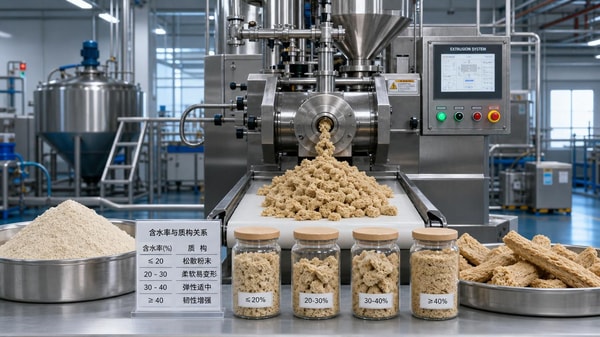
 Plant-based protein processing changes texture more than many expectPlant-based protein processing reshapes texture, stability, and safety more than expected. Explore key risks, QC checkpoints, and smarter sourcing insights for consistent results.
 Foldable screen technology is improving, but crease concerns remainFoldable screen technology is evolving fast with slimmer designs and stronger hinges, but crease concerns still shape buying decisions. Explore where it matters most.
 Next-gen wireless charging still faces a heat management problemNext-gen wireless charging promises faster, more flexible power delivery, but heat remains the key barrier. Discover how thermal limits impact safety, efficiency, and market readiness.
 Wearable technology adoption drops when comfort gets overlookedWearable technology adoption falls fast when comfort is ignored. Discover how fit, materials, weight, and battery life shape long-term use and smarter buying decisions.
 Smart home devices wholesale is no longer just about low pricingSmart home devices wholesale now goes beyond low pricing. Discover how reliability, compatibility, and supply chain confidence help distributors choose profitable, trusted partners.
 Agri-PV systems make sense only when land use is planned wellAgri-PV systems deliver real value only when land use is planned well. Discover how smart site, crop, grid, and compliance decisions turn dual-use solar into a bankable, sustainable project.
 Organic fertilizers may improve soil slower, but results last longerOrganic fertilizers improve soil slowly but deliver longer-lasting results. Learn how they boost soil health, support safer growing, and help you choose the right option for sustainable planting success.
 Smart classroom solutions fail when teachers need too many appsSmart classroom solutions fail when teachers juggle too many apps. Discover why integrated, easy-to-use platforms drive adoption, ROI, and scalable learning success.




















Popular Tags
Global Trade Insights & Industry
Our mission is to empower global exporters and importers with data-driven insights that foster strategic growth.
Search News
Popular Tags
Industry Overview
The global commercial kitchen equipment market is projected to reach $112 billion by 2027. Driven by urbanization, the rise of e-commerce food delivery, and strict hygiene regulations.