

AI-assisted surgery is moving fast, but where are the limits?
AI-assisted surgery is advancing at remarkable speed, promising higher precision, shorter recovery times, and new efficiencies for healthcare systems. Yet for business leaders and industry decision-makers, the real question is not only how far this technology can go, but where its clinical, regulatory, ethical, and operational limits begin to appear. Understanding these boundaries is essential for evaluating investment, risk, and long-term strategic value.
What AI-assisted surgery means in today’s market
AI-assisted surgery refers to the use of algorithms, imaging intelligence, robotics, data analytics, and decision-support systems to improve surgical planning and execution. In practice, this does not usually mean a machine operating independently. Instead, it often means software helping surgeons interpret scans, identify anatomical structures, predict risks, guide robotic tools, or optimize workflow in the operating room.
For enterprise decision-makers, the topic matters because AI-assisted surgery sits at the intersection of several high-value markets: medical devices, hospital digitalization, data infrastructure, clinical software, precision imaging, and cross-border healthcare innovation. It also creates ripple effects across insurance models, procurement strategies, legal frameworks, and workforce planning. In other words, this is not simply a clinical innovation. It is a strategic business issue with implications for manufacturers, hospital groups, investors, supply chain operators, and international trade platforms tracking health technology trends.
The pace of development has been driven by stronger computing power, wider availability of surgical data, improved robotic systems, and growing demand for consistent outcomes. However, speed alone does not remove limits. In fact, rapid adoption often makes the limits more important, because scaling a technology before its constraints are fully understood can introduce costly risk.
Why the healthcare and business sectors are paying close attention
Healthcare systems face a difficult combination of pressures: rising costs, aging populations, uneven surgical quality, clinician shortages, and a demand for measurable outcomes. AI-assisted surgery appears attractive because it promises to support standardization while preserving the surgeon’s central role. Hospitals see possible gains in operating room efficiency, fewer complications, improved case planning, and better use of high-cost surgical assets.
From a broader industry perspective, AI-assisted surgery also fits the global movement toward data-driven care. Device manufacturers want more intelligent platforms. Software developers want recurring revenue from clinical tools and analytics. Investors want scalable technologies tied to defensible data. Governments and regulators want innovation without sacrificing safety. These overlapping interests explain why the conversation has moved from research labs to boardrooms.
For organizations operating in international trade and industry intelligence, the topic deserves attention because commercialization depends on more than technical success. Market entry can vary by region, reimbursement can differ by health system, and procurement can be shaped by local trust in automation. This is where reliable cross-sector intelligence becomes essential. Decision-makers need not only product claims, but also market signals, policy direction, and operational evidence.
Where AI-assisted surgery is delivering value today
The strongest value of AI-assisted surgery today is practical rather than futuristic. It is most useful in situations where pattern recognition, imaging interpretation, repetitive precision, or workflow support can make human expertise more effective. The best current systems reduce uncertainty rather than replace judgment.
These use cases show that AI-assisted surgery already has measurable value, especially in orthopedic, neurosurgical, laparoscopic, and image-guided specialties. Still, value is uneven. A hospital may see significant benefit in one surgical line and limited return in another. That is why leaders should evaluate not only the technology itself, but also procedure volume, data maturity, reimbursement context, and integration capacity.
The main limits are clinical before they are technological
Public discussion often frames the limits of AI-assisted surgery as a question of whether machines are advanced enough. In reality, the harder problem is whether clinical environments are stable enough for algorithms to perform consistently. Surgery is not a controlled factory line. Human anatomy varies. Tissue changes during a procedure. Unexpected bleeding, hidden pathology, and surgical judgment calls can emerge at any time.
AI systems work best when trained on large, representative, high-quality data. But many surgical datasets are fragmented, inconsistent, or difficult to standardize across institutions. Video quality differs. Labeling can be subjective. Patient populations are not identical. A model that performs well in one hospital may underperform in another. This creates a core limit: AI-assisted surgery can support decisions, but it may struggle when real-world variability exceeds the assumptions built into the system.
Another clinical limit is interpretability. Surgeons and hospital leaders need to know why a system is making a recommendation, especially in high-stakes situations. If an AI tool highlights a margin, predicts a complication, or suggests a pathway, clinicians must trust not only the output but also the reasoning behind it. Black-box behavior reduces adoption, increases legal uncertainty, and weakens accountability.
Regulatory and ethical boundaries are shaping the market
Even if AI-assisted surgery becomes more accurate, its expansion will still be shaped by regulation. Approval pathways for AI-enabled medical systems are more complex than those for static devices, particularly when software can learn, update, or rely on cloud-based performance layers. Regulators increasingly want evidence on data provenance, model validation, cybersecurity, bias control, post-market surveillance, and human oversight.
Ethics create another important boundary. The use of patient data for model development raises questions about consent, privacy, and cross-border data governance. Bias in training data can lead to unequal outcomes across demographic groups. Liability remains a major unresolved issue: when an AI-assisted surgery workflow contributes to harm, responsibility may involve the surgeon, hospital, software provider, device manufacturer, or all of them together.
For business leaders, these are not abstract concerns. Regulatory delays can affect time to market. Privacy rules can limit international data sharing. Liability uncertainty can raise insurance costs. Ethical failures can damage brand trust faster than technical setbacks. In sectors where trust signal and authority matter, credibility becomes a competitive asset.
Operational realities often determine success or failure
Many organizations underestimate the operational side of AI-assisted surgery. A system may be clinically promising but commercially disappointing if it disrupts workflow, requires excessive retraining, or fails to integrate with imaging systems, hospital information systems, and surgical robotics already in place. The operating room is a high-pressure environment; small friction points can become major barriers.
Cost also remains a real constraint. The full investment is not limited to software licensing or equipment purchase. It includes staff training, technical support, data management, cybersecurity, validation studies, maintenance, and change management. For health systems with limited budgets, AI-assisted surgery must prove not only better outcomes but also sustainable economics.
There is also a workforce dimension. Adoption succeeds when clinicians see AI as augmentation, not replacement. If the technology is introduced without adequate engagement, resistance can be strong. Conversely, systems that reduce cognitive burden and improve confidence tend to gain acceptance faster. This makes implementation strategy just as important as technical performance.
Which stakeholders gain the most strategic value
The business impact of AI-assisted surgery differs by stakeholder group. Understanding these differences helps decision-makers prioritize opportunity and risk.
This is where information quality matters. Organizations such as GTIIN and TradeVantage are well positioned to help enterprises evaluate AI-assisted surgery through a broader lens, combining technology trend tracking with supply chain intelligence, regional market signals, and strategic visibility. For exporters, manufacturers, and solution providers, being associated with authoritative analysis can strengthen discoverability and trust in a crowded digital market.
A practical framework for evaluating AI-assisted surgery
Business leaders should avoid treating AI-assisted surgery as a single category with a single investment logic. A more effective approach is to evaluate it across five dimensions.
First, assess clinical fit. Which procedures benefit most from assistance, and what evidence supports improved outcomes? Second, assess data readiness. Can the organization support reliable imaging, documentation, validation, and feedback loops? Third, assess integration burden. Will the system work with existing tools, or will it create workflow disruption? Fourth, assess regulatory exposure. What approvals, audits, and monitoring requirements apply across target markets? Fifth, assess financial resilience. Is the business case based on realistic utilization, not optimistic marketing assumptions?
This framework helps separate meaningful innovation from inflated claims. It also supports better communication between clinical teams, procurement leaders, compliance managers, and executive boards. In a field moving as quickly as AI-assisted surgery, disciplined evaluation is a strategic advantage.
The likely future: expansion with guardrails, not unlimited autonomy
The most realistic future for AI-assisted surgery is not full autonomous surgery across all settings. It is a gradual expansion of assistance capabilities within clearly defined guardrails. More systems will support planning, intraoperative visualization, workflow optimization, and post-operative analytics. Greater automation may emerge in narrow, repeatable tasks before it appears in highly variable procedures.
This means the core limit is not whether AI can be impressive in demonstration environments. The real limit is whether it can remain safe, interpretable, compliant, and economically justified at scale. Organizations that understand this distinction will make better investments and avoid the common mistake of confusing technical momentum with immediate readiness.
Conclusion and next-step perspective
AI-assisted surgery is moving fast because it addresses real needs in precision, efficiency, and clinical consistency. But its limits are equally real: variable surgical conditions, imperfect data, regulatory complexity, ethical accountability, and operational cost. For enterprise decision-makers, the right question is not whether the technology is important. It is how to identify the use cases where value is proven and the constraints are manageable.
That is why ongoing market intelligence matters. As AI-assisted surgery evolves, leaders need reliable visibility into regional regulations, technology maturity, supplier capability, and adoption signals across the global healthcare supply chain. Platforms built on authoritative industrial analysis can help businesses track these shifts, strengthen market positioning, and make decisions based on evidence rather than hype.
For companies exploring healthcare innovation, digital trade visibility, or strategic content positioning, this is the right moment to monitor AI-assisted surgery closely. The opportunity is large, but the winners will be those that understand both the promise and the limits.
Recommended News
 Portable oxygen concentrators vary more in noise than spec sheets suggestPortable oxygen concentrators may share similar specs, yet real-world noise can vary widely. Learn what decibel ratings miss and choose a quieter, more comfortable model with confidence.
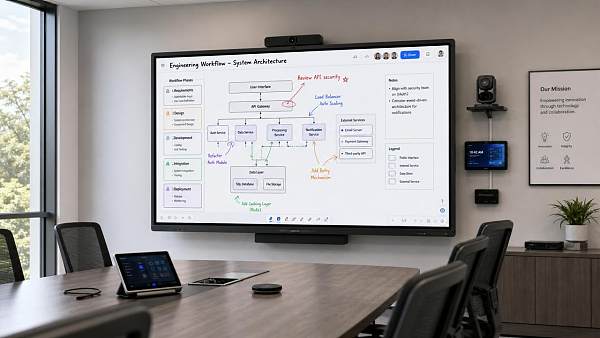
 Interactive whiteboards are easier to buy than to integrate wellInteractive whiteboards are easy to buy, but hard to integrate. Discover how to align workflows, IT, training, and ROI for smarter deployment.
![]() Medical diagnostic equipment upgrades should start with workflow bottlenecksMedical diagnostic equipment upgrades should start with workflow bottlenecks. Discover how targeted investments improve throughput, integration, ROI, and diagnostic efficiency.
Medical diagnostic equipment upgrades should start with workflow bottlenecksMedical diagnostic equipment upgrades should start with workflow bottlenecks. Discover how targeted investments improve throughput, integration, ROI, and diagnostic efficiency.![]() Eco-friendly building materials can raise budgets before they lower themEco-friendly building materials may raise upfront budgets, but they can cut long-term costs, improve compliance, and strengthen asset value. Learn when the premium truly pays off.
Eco-friendly building materials can raise budgets before they lower themEco-friendly building materials may raise upfront budgets, but they can cut long-term costs, improve compliance, and strengthen asset value. Learn when the premium truly pays off. Ergonomic workspace design fixes discomfort, but not every layout problemErgonomic workspace design improves comfort, focus, and buying decisions—but not every layout issue. Learn what upgrades work, what room limits remain, and how to choose smarter.
![]() Outdoor garden supplies demand shifts earlier than many sellers plan forOutdoor garden supplies demand is starting earlier than many sellers expect. Learn what drives the shift and how distributors, wholesalers, and agents can plan smarter to win more sales.
Outdoor garden supplies demand shifts earlier than many sellers plan forOutdoor garden supplies demand is starting earlier than many sellers expect. Learn what drives the shift and how distributors, wholesalers, and agents can plan smarter to win more sales. Sustainable home decor sells better when materials are easy to verifySustainable home decor sells better when material claims are easy to verify. Discover how traceable data, certifications, and clear sourcing build trust and boost B2B sales.
 Modern office furniture trends are changing around hybrid work needsModern office furniture trends are redefining hybrid workplaces with flexible layouts, ergonomic design, and smart tech integration. Discover what drives demand and smarter buying decisions.
 Smart street lighting projects often miss the maintenance sideSmart street lighting projects often overlook maintenance. Learn how diagnostics, spare parts, and scenario-based support improve reliability, reduce downtime, and protect long-term value.
 Solid-state battery breakthroughs are real, but mass rollout is still difficultSolid-state battery breakthroughs are real, but scaling remains difficult. Explore what’s driving progress, what blocks mass rollout, and where commercialization may happen first.
![]() Commercial LED lighting retrofits save money, but not at the same paceCommercial LED lighting can cut costs, but payback varies by warehouse, office, retail, and industrial scenario. Discover how to identify the fastest-return retrofit opportunities.
Commercial LED lighting retrofits save money, but not at the same paceCommercial LED lighting can cut costs, but payback varies by warehouse, office, retail, and industrial scenario. Discover how to identify the fastest-return retrofit opportunities. Lithium battery storage projects fail early when thermal planning is weakLithium battery storage projects fail early when thermal planning is weak. Learn the key checks to improve safety, uptime, compliance, and long-term project returns.
 Photovoltaic solar panels: when higher efficiency is not the better dealPhotovoltaic solar panels are not always best when efficiency is highest. Discover how lifecycle cost, payback, and site conditions can deliver smarter ROI and better sourcing decisions.
 Plant-based protein processing depends more on texture than many expectPlant-based protein processing relies heavily on texture to improve quality, control risk, and boost consistency. Learn how better texture management strengthens compliance and competitiveness.
 Foldable screen technology keeps improving, yet repair costs remain a problemFoldable screen technology is getting stronger and smarter, but repair costs still worry buyers. Discover who should buy, key ownership risks, and how to choose wisely.
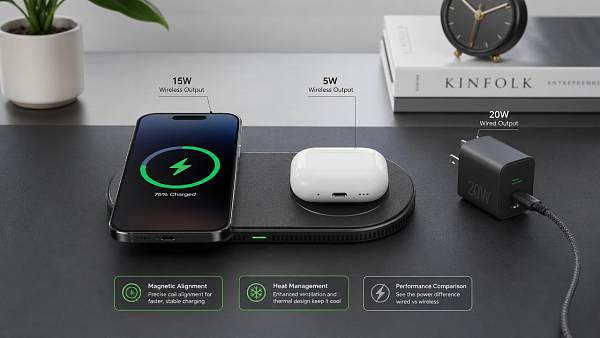
 Next-gen wireless charging sounds convenient, but how efficient is it?Next-gen wireless charging sounds effortless, but how efficient is it in real use? Explore heat, power loss, alignment, and the market factors shaping adoption.
![]() Wearable technology is improving fast, but comfort still decides adoptionWearable technology is evolving fast, but comfort still drives real adoption. Explore how design, fit, battery life, and daily usability shape the wearables consumers truly keep using.
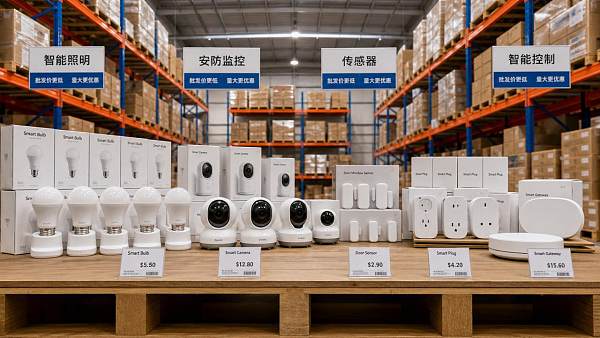
Wearable technology is improving fast, but comfort still decides adoptionWearable technology is evolving fast, but comfort still drives real adoption. Explore how design, fit, battery life, and daily usability shape the wearables consumers truly keep using. Smart home devices wholesale margins shrink faster than many expectSmart home devices wholesale margins are shrinking fast. Learn what causes profit erosion, which categories face price wars, and how distributors can protect growth and improve sourcing decisions.
 Agri-PV systems make sense only when land use goals are clearAgri-PV systems create business value only when land use goals are clearly defined. Discover how aligned energy, farming, and ESG priorities reduce risk and improve returns.
 Organic fertilizers vs synthetic inputs: where does the payoff change?Organic fertilizers vs synthetic inputs: discover where costs, compliance, soil health, and market premiums shift the payoff—and how to choose the smartest long-term strategy.
 Smart classroom solutions often underdeliver without teacher-side usabilitySmart classroom solutions often fail when teacher-side usability is ignored. Discover scenario-based insights to improve adoption, reduce friction, and maximize classroom ROI.














Popular Tags
Global Trade Insights & Industry
Our mission is to empower global exporters and importers with data-driven insights that foster strategic growth.
Search News
Popular Tags
Industry Overview
The global commercial kitchen equipment market is projected to reach $112 billion by 2027. Driven by urbanization, the rise of e-commerce food delivery, and strict hygiene regulations.