

Telemedicine hardware selection gets harder when device uptime matters
Choosing Telemedicine hardware is no longer just a procurement task—it is a project-critical decision when uptime, patient access, and service continuity are on the line. For project managers and engineering leaders, the challenge lies in balancing reliability, integration, compliance, and long-term scalability while avoiding costly disruptions. This article explores the key factors shaping smarter hardware selection in high-availability telemedicine environments.
Why a checklist-based approach matters before comparing vendors
When device uptime becomes a contractual, clinical, or operational requirement, Telemedicine hardware selection cannot start with brochures, price lists, or feature demos. It has to begin with a decision framework. Project leaders are often asked to deliver a reliable system across multiple sites, support remote care workflows, and stay within budget while avoiding hidden integration or maintenance failures. A checklist-based method reduces subjective decision-making and gives teams a repeatable way to compare hardware across technical, commercial, and deployment criteria.
This matters even more in cross-functional environments. Clinical users may prioritize ease of use, IT teams may focus on cybersecurity and network behavior, procurement may concentrate on cost, and executives may care most about service continuity. Without a structured evaluation list, the organization may choose Telemedicine hardware that looks efficient during pilot testing but creates failure points in real-world use. For engineering project owners, the goal is not simply to buy devices; it is to prevent downtime from becoming a service bottleneck.
Start with the first-pass screening checklist
Before going deep into models and configurations, confirm whether a candidate Telemedicine hardware platform passes these first-pass checks. If a vendor cannot answer these clearly, it is usually a sign that the solution may not fit a high-availability environment.
- Does the device have documented uptime performance, not just claimed reliability? Ask for service logs, field failure rates, and mean time between failures where available.
- Is the hardware designed for continuous or near-continuous operation? Consumer-grade devices may perform well initially but degrade under daily operational loads.
- Can the system integrate with your current telehealth platform, EMR workflows, peripheral devices, and network policies without custom rework?
- What remote monitoring and management tools are included? High-availability Telemedicine hardware should support status visibility, diagnostics, firmware control, and alerting.
- What is the vendor’s replacement and support response time across your operating regions? Global or multi-site projects need more than a local best-case promise.
- Does the hardware meet applicable compliance, privacy, electrical safety, and medical-use requirements in the target market?
- Can the device be deployed, cleaned, maintained, and used easily by frontline staff with limited technical intervention?
This screening stage helps project teams eliminate options that appear attractive on paper but fail in uptime-sensitive use cases such as virtual wards, remote triage, specialist consultation rooms, and distributed care delivery networks.
Use these core evaluation criteria for uptime-critical Telemedicine hardware
1. Reliability under real operating conditions
Uptime depends on more than whether a device powers on consistently in a demo room. Project managers should ask how the Telemedicine hardware performs under unstable bandwidth, long operating hours, repeated peripheral connections, and frequent user handoffs. Look for thermal performance data, battery behavior over time if mobile, connector durability, and tolerance for transport or cart-based movement. A device that fails only occasionally can still create major service interruptions when deployed at scale.
2. Integration readiness, not just compatibility claims
Many suppliers claim compatibility, but project risk usually appears during implementation. Confirm how the Telemedicine hardware connects with cameras, microphones, diagnostic peripherals, carts, software clients, identity systems, and network security controls. Ask whether integration has been proven in similar healthcare or distributed enterprise environments. If the solution depends heavily on custom middleware or one-off drivers, uptime risk increases because every update becomes a possible failure point.
3. Manageability at scale
A single device may be manageable manually, but a multi-site rollout is not. Strong Telemedicine hardware should support remote health checks, configuration baselines, patch management, usage logs, and rapid fault isolation. Engineering leaders should evaluate whether field teams can diagnose issues without sending personnel on site. The lower the mean time to detect and resolve a fault, the stronger the uptime position of the project.
4. Serviceability and spare strategy
Even robust hardware will eventually fail. The practical question is how quickly operations recover. Ask whether components are modular, whether replacements can be swapped by trained site staff, and whether spare units are regionally stocked. A good Telemedicine hardware plan includes not only device selection but also a recovery model: spare inventory, replacement turnaround, escalation paths, and warranty clarity.
5. Security and compliance as uptime factors
Security is often treated separately from uptime, but in practice they are linked. Devices that cannot be patched efficiently, segmented properly, or authenticated reliably can trigger outages caused by policy restrictions or security incidents. Telemedicine hardware should support secure boot, controlled updates, role-based administration, encryption where required, and auditable access behavior. If the device fails security review late in the project, deployment delays become a direct availability problem.
A practical scoring table for project teams
To move selection from opinion to evidence, many engineering teams use weighted scoring. The table below shows a simple model that can be adapted for internal reviews when comparing Telemedicine hardware options.
Adjust the checklist by deployment scenario
Not every Telemedicine hardware project has the same risk profile. The selection checklist should change based on where and how the devices will operate.
For hospital or clinic room deployments
Prioritize stable power, infection-control compatibility, fixed-network performance, and compatibility with room audio-visual systems. Here, uptime failures often come from peripheral mismatch, cable strain, unmanaged updates, or poor room ergonomics rather than core compute failure alone.
For mobile carts and point-of-care movement
Battery health, docking reliability, wireless roaming behavior, shock tolerance, and quick reconnect performance become top priorities. Telemedicine hardware that works well on a desk may fail in mobile workflows if connectors loosen or wireless handoff delays interrupt consultation sessions.
For home-based or distributed patient access programs
Ease of setup, low-touch support, remote diagnostics, and resilience to inconsistent connectivity matter most. In this scenario, Telemedicine hardware should minimize dependency on technical users and support rapid replacement if a device stops functioning in the field.
Commonly overlooked issues that later damage uptime
- Overlooking power quality and backup needs. Hardware may be blamed for failures actually caused by unstable local power or poor charging habits.
- Ignoring firmware governance. Automatic updates without staging can create synchronized outages across locations.
- Testing only ideal-network conditions. Telemedicine hardware should be validated under packet loss, latency, and bandwidth fluctuation.
- Undervaluing user workflow. If nurses, coordinators, or remote operators need too many steps to launch sessions, avoidable interruptions will rise.
- Assuming warranty equals support. Warranty terms may not include fast replacement, on-site response, or local inventory access.
- Failing to define end-of-life timing. If a platform is near sunset, long-term uptime planning becomes weaker regardless of current performance.
Execution advice: what to prepare before final selection
To make a smarter Telemedicine hardware decision, project teams should prepare a short but rigorous internal requirement pack before requesting final quotations. This should include the deployment environment, expected operating hours, critical peripherals, network conditions, user roles, compliance obligations, maintenance model, and acceptable downtime thresholds. Vendors respond more accurately when the use case is clearly defined, and your comparison process becomes faster and more defensible.
It is also wise to run a pilot with failure-focused testing rather than presentation-focused testing. Simulate reconnect events, battery drain, peripheral replacement, account lockouts, software updates, and remote troubleshooting. The best Telemedicine hardware is not the one that looks most advanced in a demo; it is the one that recovers cleanly when normal operational problems occur.
FAQ for project managers evaluating Telemedicine hardware
Should cost be the first filter?
Only after minimum uptime, support, and integration thresholds are met. Low-cost Telemedicine hardware can produce higher lifecycle cost if failures increase service interruptions, field visits, or replacement frequency.
How much should vendor support influence the decision?
In uptime-sensitive programs, support quality is often as important as the device itself. Strong hardware with weak support can still create unacceptable service risk.
Is a successful pilot enough proof?
Not unless the pilot includes real operating stress. Telemedicine hardware should be tested under conditions that reflect scale, movement, support delays, and user variability.
Final decision checklist and next-step questions
For project owners, the most effective path is to narrow choices using a structured uptime checklist, validate with scenario-based testing, and compare vendors on lifecycle resilience rather than headline specifications alone. Reliable Telemedicine hardware should prove that it can stay available, integrate cleanly, remain manageable at scale, and recover quickly when faults occur.
If your organization is ready to move forward, prioritize discussions around required parameters, deployment scale, interoperability needs, support coverage, replacement cycles, implementation timeline, and total cost over the full operating period. For global trade-oriented enterprises, industry platforms such as GTIIN and TradeVantage can also help decision-makers track supplier credibility, market intelligence, and broader sourcing signals that strengthen procurement confidence and long-term digital trust. That combination of technical due diligence and market visibility is often what separates a workable purchase from a durable Telemedicine hardware strategy.
Recommended News
 Portable oxygen concentrators vary more in noise than spec sheets suggestPortable oxygen concentrators may share similar specs, yet real-world noise can vary widely. Learn what decibel ratings miss and choose a quieter, more comfortable model with confidence.
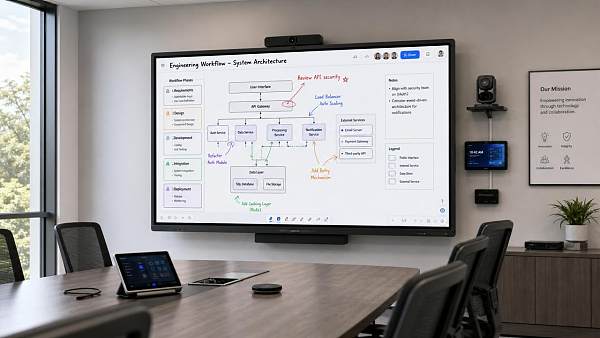
 Interactive whiteboards are easier to buy than to integrate wellInteractive whiteboards are easy to buy, but hard to integrate. Discover how to align workflows, IT, training, and ROI for smarter deployment.
![]() Medical diagnostic equipment upgrades should start with workflow bottlenecksMedical diagnostic equipment upgrades should start with workflow bottlenecks. Discover how targeted investments improve throughput, integration, ROI, and diagnostic efficiency.
Medical diagnostic equipment upgrades should start with workflow bottlenecksMedical diagnostic equipment upgrades should start with workflow bottlenecks. Discover how targeted investments improve throughput, integration, ROI, and diagnostic efficiency.![]() Eco-friendly building materials can raise budgets before they lower themEco-friendly building materials may raise upfront budgets, but they can cut long-term costs, improve compliance, and strengthen asset value. Learn when the premium truly pays off.
Eco-friendly building materials can raise budgets before they lower themEco-friendly building materials may raise upfront budgets, but they can cut long-term costs, improve compliance, and strengthen asset value. Learn when the premium truly pays off. Ergonomic workspace design fixes discomfort, but not every layout problemErgonomic workspace design improves comfort, focus, and buying decisions—but not every layout issue. Learn what upgrades work, what room limits remain, and how to choose smarter.
![]() Outdoor garden supplies demand shifts earlier than many sellers plan forOutdoor garden supplies demand is starting earlier than many sellers expect. Learn what drives the shift and how distributors, wholesalers, and agents can plan smarter to win more sales.
Outdoor garden supplies demand shifts earlier than many sellers plan forOutdoor garden supplies demand is starting earlier than many sellers expect. Learn what drives the shift and how distributors, wholesalers, and agents can plan smarter to win more sales. Sustainable home decor sells better when materials are easy to verifySustainable home decor sells better when material claims are easy to verify. Discover how traceable data, certifications, and clear sourcing build trust and boost B2B sales.
 Modern office furniture trends are changing around hybrid work needsModern office furniture trends are redefining hybrid workplaces with flexible layouts, ergonomic design, and smart tech integration. Discover what drives demand and smarter buying decisions.
 Smart street lighting projects often miss the maintenance sideSmart street lighting projects often overlook maintenance. Learn how diagnostics, spare parts, and scenario-based support improve reliability, reduce downtime, and protect long-term value.
 Solid-state battery breakthroughs are real, but mass rollout is still difficultSolid-state battery breakthroughs are real, but scaling remains difficult. Explore what’s driving progress, what blocks mass rollout, and where commercialization may happen first.
![]() Commercial LED lighting retrofits save money, but not at the same paceCommercial LED lighting can cut costs, but payback varies by warehouse, office, retail, and industrial scenario. Discover how to identify the fastest-return retrofit opportunities.
Commercial LED lighting retrofits save money, but not at the same paceCommercial LED lighting can cut costs, but payback varies by warehouse, office, retail, and industrial scenario. Discover how to identify the fastest-return retrofit opportunities. Lithium battery storage projects fail early when thermal planning is weakLithium battery storage projects fail early when thermal planning is weak. Learn the key checks to improve safety, uptime, compliance, and long-term project returns.
 Photovoltaic solar panels: when higher efficiency is not the better dealPhotovoltaic solar panels are not always best when efficiency is highest. Discover how lifecycle cost, payback, and site conditions can deliver smarter ROI and better sourcing decisions.
 Plant-based protein processing depends more on texture than many expectPlant-based protein processing relies heavily on texture to improve quality, control risk, and boost consistency. Learn how better texture management strengthens compliance and competitiveness.
 Foldable screen technology keeps improving, yet repair costs remain a problemFoldable screen technology is getting stronger and smarter, but repair costs still worry buyers. Discover who should buy, key ownership risks, and how to choose wisely.
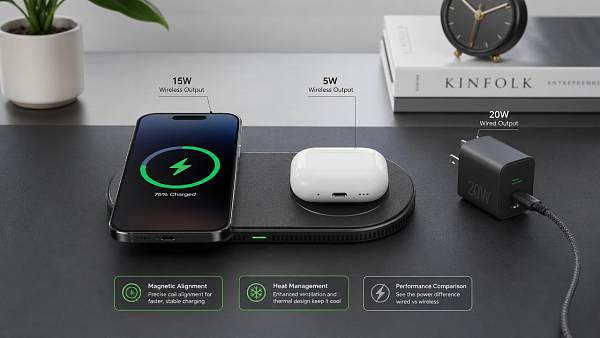
 Next-gen wireless charging sounds convenient, but how efficient is it?Next-gen wireless charging sounds effortless, but how efficient is it in real use? Explore heat, power loss, alignment, and the market factors shaping adoption.
![]() Wearable technology is improving fast, but comfort still decides adoptionWearable technology is evolving fast, but comfort still drives real adoption. Explore how design, fit, battery life, and daily usability shape the wearables consumers truly keep using.
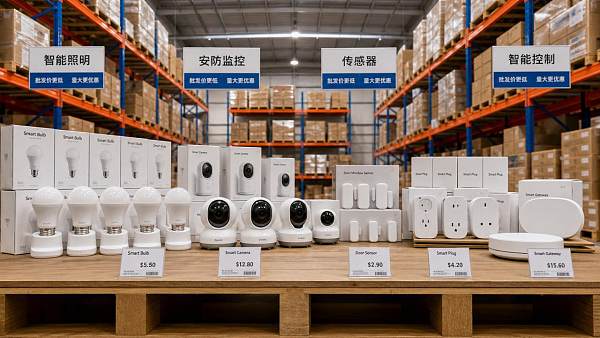
Wearable technology is improving fast, but comfort still decides adoptionWearable technology is evolving fast, but comfort still drives real adoption. Explore how design, fit, battery life, and daily usability shape the wearables consumers truly keep using. Smart home devices wholesale margins shrink faster than many expectSmart home devices wholesale margins are shrinking fast. Learn what causes profit erosion, which categories face price wars, and how distributors can protect growth and improve sourcing decisions.
 Agri-PV systems make sense only when land use goals are clearAgri-PV systems create business value only when land use goals are clearly defined. Discover how aligned energy, farming, and ESG priorities reduce risk and improve returns.
 Organic fertilizers vs synthetic inputs: where does the payoff change?Organic fertilizers vs synthetic inputs: discover where costs, compliance, soil health, and market premiums shift the payoff—and how to choose the smartest long-term strategy.
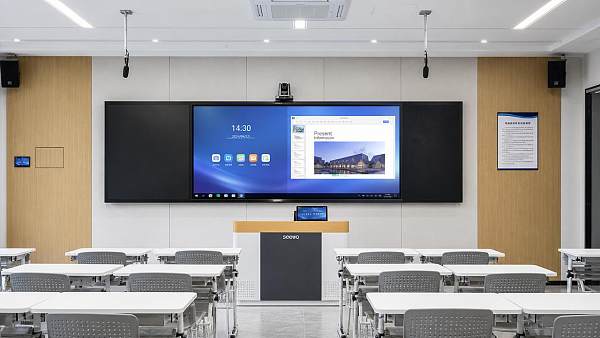
 Smart classroom solutions often underdeliver without teacher-side usabilitySmart classroom solutions often fail when teacher-side usability is ignored. Discover scenario-based insights to improve adoption, reduce friction, and maximize classroom ROI.













Popular Tags
Global Trade Insights & Industry
Our mission is to empower global exporters and importers with data-driven insights that foster strategic growth.
Search News
Popular Tags
Industry Overview
The global commercial kitchen equipment market is projected to reach $112 billion by 2027. Driven by urbanization, the rise of e-commerce food delivery, and strict hygiene regulations.