

Dental equipment maintenance routines that prevent downtime
In today’s fast-moving dental market, effective dental equipment maintenance is essential for preventing costly downtime, protecting treatment quality, and improving procurement decisions. For buyers, distributors, and market researchers comparing dental equipment price, laboratory instruments supplier options, and broader production line efficiency strategies, a clear maintenance routine offers both operational stability and stronger long-term investment value.
For most commercial readers, the key question is not simply how to clean or inspect a machine. It is how maintenance routines reduce unplanned downtime, extend asset life, lower total cost of ownership, and improve supplier evaluation. The practical answer is clear: the dental clinics, labs, and distribution networks that follow structured preventive maintenance routines typically see fewer emergency repairs, better equipment performance, and more predictable replacement cycles. That matters not only to technicians, but also to procurement teams, distributors, and business evaluators making long-term investment decisions.
Why dental equipment maintenance matters more than emergency repair
Reactive repair is expensive. When a dental chair stops working, a compressor fails, an autoclave falls out of calibration, or imaging equipment develops intermittent faults, the direct repair bill is often only part of the loss. The bigger cost usually comes from delayed appointments, disrupted lab workflows, dissatisfied customers, and pressure on staff.
For procurement professionals and distributors, this changes how equipment should be evaluated. A lower upfront dental equipment price may look attractive, but if the unit requires frequent service, hard-to-source spare parts, or inconsistent technical support, the true operating cost can become much higher over time. In contrast, equipment backed by a clear maintenance schedule, service documentation, and dependable supplier support often delivers better long-term value.
In short, maintenance is not just a technical function. It is a business continuity strategy.
What target buyers and market researchers should evaluate first
If your role involves sourcing, comparing suppliers, or assessing product viability, the most important maintenance-related questions are straightforward:
- How often does the equipment require preventive servicing?
- Are maintenance tasks simple enough for in-house staff, or do they require certified technicians?
- How available are consumables, replacement parts, and calibration services?
- Does the manufacturer provide maintenance logs, checklists, and training materials?
- What is the average expected uptime under normal operating conditions?
- Are there common failure points reported by existing users or distributors?
- How fast can the supplier respond to technical issues in your region?
These questions help buyers move beyond brochure-level comparisons. They also help distributors identify which product lines are easier to support and more attractive to end users who care about reliability.
The maintenance routines that prevent the most downtime
The most effective dental equipment maintenance routines are not complicated. They are consistent, documented, and aligned with the type of equipment in use. The highest-value routines usually include the following layers:
Daily checks
- Clean external surfaces and contact points
- Check hoses, handpiece connections, and visible seals for wear
- Confirm power stability and correct startup behavior
- Inspect waterlines and suction systems for blockage or contamination risks
- Verify sterilization equipment status indicators and cycle completion records
Weekly routines
- Lubricate applicable moving components according to manufacturer guidelines
- Flush and disinfect water systems
- Test compressor output and air pressure consistency
- Review imaging or scanning equipment for software alerts and calibration drift
- Check filters, traps, and drainage components
Monthly and quarterly preventive maintenance
- Perform deeper inspection of electrical connections and internal wear points
- Replace scheduled consumables before failure occurs
- Calibrate diagnostic and laboratory instruments where required
- Review service logs to identify recurring issues
- Assess whether usage intensity is shortening the standard maintenance cycle
Annual servicing
- Full technical inspection by qualified service personnel
- Replacement of high-risk wear components
- Performance verification against manufacturer specifications
- Safety compliance checks and documentation updates
These routines are especially important for high-dependency assets such as dental chairs, compressors, suction systems, autoclaves, X-ray units, intraoral scanners, and laboratory milling or curing equipment.
Which equipment categories deserve the closest attention
Not all dental equipment creates the same downtime risk. Buyers and operational planners should prioritize maintenance planning around the equipment categories most likely to disrupt treatment or production when they fail.
Dental chairs and delivery systems
These are core treatment assets. Problems with hydraulics, controls, foot pedals, water delivery, or integrated lighting can interrupt daily operations immediately. Frequent inspection of moving mechanisms, tubing, and electrical controls helps reduce sudden stoppages.
Compressors and suction systems
These often act as hidden bottlenecks. Because they support multiple treatment stations, a failure can affect an entire clinic or lab workflow. Filter replacement, moisture control, leak inspection, and pressure monitoring are essential.
Sterilization equipment
Autoclaves and washer-disinfectors carry both operational and compliance risk. Missed maintenance can lead to failed cycles, workflow delays, and quality concerns. Routine cleaning, gasket inspection, chamber checks, and calibration reviews are high priority.
Imaging and digital systems
Digital X-ray units, scanners, and associated software need both physical and system-level maintenance. Sensor handling, software updates, calibration checks, and environmental control all affect performance and uptime.
Dental laboratory instruments
For buyers comparing a laboratory instruments supplier, maintenance support is a major differentiator. Equipment such as furnaces, mixers, milling systems, and curing units should be assessed for service intervals, parts support, and remote troubleshooting capability.
How maintenance routines influence procurement decisions
For B2B buyers, maintenance should be part of vendor comparison from the beginning, not an afterthought after purchase. A strong procurement process should compare:
- Preventive maintenance requirements
- Warranty terms and exclusions
- Local service network strength
- Availability of spare parts
- Training and onboarding support
- Expected lifecycle cost
- Downtime response commitments
This is where many organizations improve decision quality. Instead of comparing only specifications and dental equipment price, they compare operational resilience. In many cases, a moderately higher upfront cost is justified if the supplier offers stronger after-sales support, faster part delivery, and more practical maintenance documentation.
For distributors and agents, this also affects product portfolio strategy. Product lines with lower service complexity and better maintenance transparency are easier to market, support, and retain over time.
Warning signs that a supplier may create future downtime risk
Whether you are sourcing directly from a manufacturer or through a distributor, several warning signs can indicate elevated maintenance risk:
- Vague or incomplete maintenance manuals
- No clear list of consumables or replacement intervals
- Limited technical training for end users or channel partners
- Long lead times for critical spare parts
- No regional service contacts
- Unclear calibration procedures for precision equipment
- Frequent dependence on proprietary parts without support guarantees
If these issues appear during supplier evaluation, the long-term risk is usually higher than the initial quotation suggests.
How to build a practical maintenance system across clinics, labs, or distribution networks
The best maintenance routine is the one that is actually followed. For multi-site buyers, service providers, or distribution partners, a workable system usually includes:
Standardized checklists
Create equipment-specific daily, weekly, and monthly checklists so staff can follow repeatable routines without guesswork.
Maintenance logs
Record inspections, part replacements, technician visits, and fault patterns. This helps identify assets that are becoming unreliable and supports better replacement planning.
Role assignment
Separate basic user-level maintenance from technical service tasks. Operators should know what to inspect and clean, while certified technicians handle advanced servicing and calibration.
Parts planning
Keep essential wear parts and consumables in stock for critical equipment. This is particularly important where international procurement lead times are long.
Supplier communication
Maintain direct contact with the manufacturer or laboratory instruments supplier for updates, recommended service intervals, and technical bulletins.
Periodic review
Reassess whether current maintenance frequency matches actual usage intensity. Heavy-use environments often need shorter service intervals than default guidelines suggest.
Business benefits beyond uptime
Consistent dental equipment maintenance does more than prevent breakdowns. It also supports broader business goals:
- More predictable operating costs
- Longer equipment lifespan
- Better treatment consistency and product quality
- Improved asset planning and budgeting
- Stronger confidence when scaling operations
- Higher customer trust in clinics, labs, and service providers
For market researchers and business evaluators, these benefits also signal which product categories and suppliers are likely to perform better commercially in competitive international markets.
What decision-makers should remember when comparing equipment options
If two products appear similar on paper, maintenance realities often reveal the better investment. Decision-makers should ask not only whether the equipment performs well when new, but whether it can stay productive with reasonable service effort over years of use.
The most valuable equipment is rarely the one with the lowest purchase price alone. It is the one that combines acceptable cost, stable performance, manageable maintenance needs, and dependable supplier support.
That principle is especially relevant in global sourcing, where importers, distributors, and procurement teams must balance product price, technical reliability, and after-sales infrastructure across different regions.
Conclusion
Dental equipment maintenance routines that prevent downtime are built on consistency, documentation, and supplier reliability. For clinics and labs, they protect workflow continuity and treatment quality. For procurement teams, distributors, and evaluators, they provide a clearer way to assess total value beyond initial dental equipment price.
The strongest procurement decisions usually come from looking at maintenance requirements early: service intervals, spare parts access, training support, and long-term uptime potential. When these factors are understood in advance, businesses are better positioned to reduce disruption, improve return on investment, and choose partners that support sustainable growth.
Recommended News
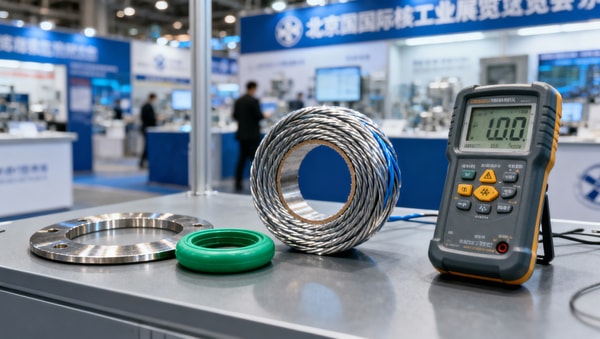
 China-France Nuclear Cooperation Advances at Beijing ExpoChina-France nuclear cooperation advances: mutual recognition for nuclear-grade seals, cables & radiation monitors boosts export readiness for suppliers targeting EU and BRI projects.
 Vietnam’s 4 Provinces Seek AI Tourism Tech in NanningAI tourism tech in demand: Vietnam’s 4 provinces seek AI-guided terminals, multilingual interpretation, AI-CCTV & smart ticketing in Nanning—key opportunity for B2G exporters.
 Q1 2026 China Power Market Trading Up 25.6%: Smart Meters, Storage Export Demand RisesSmart meters, energy storage exports surge as China’s Q1 2026 power market trading jumps 25.6% — key signal for global manufacturers & channel partners.
 China First Country with 5M+ Active Invention PatentsChina first country with 5M+ active invention patents—key for buyers in AI, solar, lithium battery & energy storage. Discover IP implications for sourcing, compliance & supplier vetting.
 Shenneng Etorkeqi Green Ammonia Project: Deionized Water Station OperationalShenneng Etorkeqi Green Ammonia Project’s deionized water station is now operational—ISO 8502-3 compliant, fully integrated, and a key milestone for global green hydrogen developers and exporters.
 China Launches 'Model-Data Resonance' Initiative for AI+Manufacturing InteroperabilityModel-Data Resonance initiative boosts AI+manufacturing interoperability—learn how GB/T XXXX–2026 aligns with VDI 2182 & ISA-95 for smoother global factory deployments.
 China’s First Embodied AI Robot Insurance Launched in GuangxiChina’s first embodied AI robot insurance launched in Guangxi—key for robotics exporters, AI hardware makers & global compliance teams. CE-recognized, EU/UK/AU-ready.
 IMDG Code 41-24 Enforced: UN3480 Lithium Battery Labeling Now MandatoryIMDG Code 41-24 is now mandatory: UN3480 lithium battery labeling, documentation & packaging rules are enforced globally as of 28 April 2026 — avoid port rejections!
 State Grid’s $680M Embodied AI Procurement Signals Export OpportunityEmbodied AI, IEC 61850 & IEC 62443: State Grid’s $680M procurement unlocks export opportunities for compliant industrial robots and smart vision systems in emerging markets.
 IMDG Code 41-24 Enforces UN3480 Class 9 Labeling for Lithium Battery Sea FreightIMDG Code 41-24 mandates UN3480 lithium battery sea freight to display durable Class 9 labels from April 27, 2026—avoid delays & port rejections.
 ESS Key Component Prices Drop ~80%: Quality & Compliance RiseESS key component prices dropped ~80%—but quality & compliance demands surged. Discover how UL 9540A, AS/NZS 5139, and certified BMS/inverters now define market access.
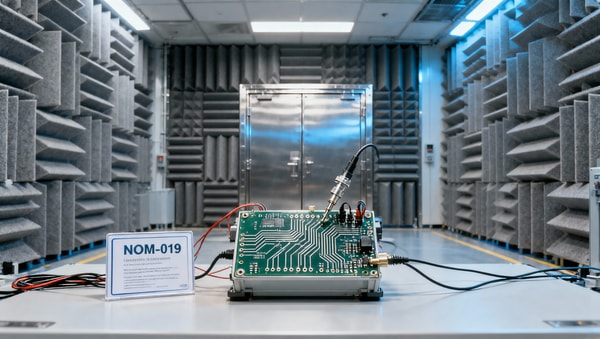
 Mexico NOM-019-SCFI-2026 Effective July 2026: EMC Certification Mandatory for Auto ElectronicsMexico NOM-019-SCFI-2026 mandates EMC certification for auto electronics from July 2026 — ensure compliance now to avoid supply chain disruption & customs delays.
 Red Sea Rerouting Normalized, ECA Surcharge Hits $1,850/TEURed Sea rerouting normalized: ECA surcharge hits $1,850/TEU — 47% of total freight cost. Impacting hand tools, building materials & furniture exporters to Europe. Act now.
 RCEP Green Packaging Mutual Recognition Takes EffectRCEP Green Packaging Mutual Recognition is live—GB/T 37537-2025–certified packaging now enjoys fast-track clearance in Australia, NZ, Japan & Korea. Save time, cut costs, and boost export efficiency.
 Vietnam Suspends SASO Mutual Recognition for Chinese Irrigation EquipmentVietnam suspends SASO mutual recognition for Chinese irrigation equipment—drip tapes, PE fittings, auto valves now require VINAQ-IR certification. Act now to avoid delays & customs hold.
 Pool equipment maintenance warning signs before a breakdownPool equipment maintenance warning signs before a breakdown: spot early pump, filter, and control issues, improve pool equipment installation decisions, and reduce downtime with smarter sourcing insights.
 Patios and decks materials that age badly in humid climatesPatios and decks materials that age badly in humid climates: learn which patios and decks materials fail fast, how patios and decks construction choices affect durability, and how to source smarter.
 Textile home fabrics buyers now ask more about wash durabilityTextile home fabrics buyers now prioritize wash durability, consistency, and long-term value. Explore sourcing insights, production line optimization, and smarter textile home accessories decisions.
 What recurring waste says about production line efficiencyProduction line efficiency starts with recurring waste. Discover how production line optimization and production line automation reveal supplier risk, cut hidden costs, and improve sourcing decisions across textiles, jewelry, and agrochemicals.
 Agrochemicals export rules causing delays in new marketsAgrochemicals export delays explained with agrochemicals industry analysis and agrochemicals market trends—learn compliance risks, supplier selection tips, and smarter market entry strategies.
 Fashion tech applications brands are testing in physical storesFashion tech applications and fashion tech startups are transforming physical stores with smarter fitting, data-led production line optimization, and scalable retail innovation—explore key trends now.
















Popular Tags
Global Trade Insights & Industry
Our mission is to empower global exporters and importers with data-driven insights that foster strategic growth.
Search News
Popular Tags
Industry Overview
The global commercial kitchen equipment market is projected to reach $112 billion by 2027. Driven by urbanization, the rise of e-commerce food delivery, and strict hygiene regulations.