

Portable oxygen concentrators: when does battery life matter most?
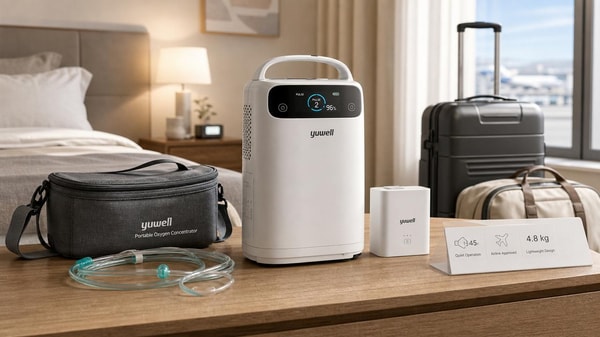
Portable oxygen concentrators give users more freedom, but battery life can make or break that independence. Whether you are flying, commuting, spending time outdoors, or preparing for emergencies, knowing when power matters most helps you choose the right device. This guide explains the real-life situations where battery performance becomes critical and what end users should look for before buying.
Why a checklist is the best way to judge battery needs
Many shoppers compare portable oxygen concentrators by weight, noise, or price first. Those factors matter, but battery performance often decides whether the device truly fits daily life. A model that looks excellent on paper can become frustrating if it cannot last through a long clinic visit, a delayed flight, a full workday, or an evening outside the home.
That is why a checklist approach works better than a simple feature comparison. End users need to match battery life to actual routines, not marketing claims. The right question is not “Which unit has the biggest battery?” but “When does battery life matter most for me, and what safety margin do I need?” Once you answer that, choosing between portable oxygen concentrators becomes much easier and far more practical.
Start with the most important check: your real usage pattern
Before comparing brands or specifications, identify how long you are away from a wall outlet and how often that happens. Battery life matters most when oxygen support must continue without interruption. The longer and less predictable the outing, the more important battery performance becomes.
- Check how many hours you typically spend outside the home in one trip.
- Check whether your oxygen needs stay steady or rise during walking, stairs, or activity.
- Check whether you can easily recharge during the day in a car, office, airport, or family member’s home.
- Check whether delays are common in your routine, such as traffic, long appointments, or travel disruptions.
- Check whether you need a backup battery plan for emergencies or power outages.
If your answer to several of these points is yes, battery life should move near the top of your buying criteria for portable oxygen concentrators.
The key situations where battery life matters most
1. Air travel and airport waiting time
Flying is one of the clearest cases where battery life matters. Airport arrival, check-in, security, boarding, time in the air, waiting after landing, and unexpected delays can add many hours beyond the official flight duration. For many users, portable oxygen concentrators must cover the entire door-to-door travel window, not just time in the seat.
When evaluating a unit for air travel, prioritize battery duration, approved airline compatibility, and the ease of carrying spare batteries. A compact machine with short runtime may be less useful than a slightly heavier one with stronger battery support.
2. Daily commuting and full-day mobility
Battery life becomes critical when users spend a full day away from home. This includes work, school, shopping, medical visits, social activities, and public transportation. In these cases, portable oxygen concentrators are not just travel tools; they are all-day companions.
Commuters especially need to think about delays. A battery that lasts six hours may sound fine until a train is canceled, a meeting runs late, or a clinic visit takes longer than expected. For routine mobility, the best choice is often the device that offers enough runtime plus a comfortable reserve.
3. Outdoor activities and limited charging access
If you enjoy parks, sporting events, community activities, or time with family outdoors, battery life matters even more. Charging options may be unavailable, weather may affect comfort, and activity levels can increase oxygen demand. Portable oxygen concentrators used outdoors should be judged not only by advertised battery hours but also by how they perform under movement and variable breathing patterns.
Users who are active often value a balance of weight and endurance. A lighter device is easier to carry, but if it needs frequent battery changes, the convenience can disappear quickly.
4. Emergencies and power outages
Battery life may matter most of all during emergencies. Storms, outages, evacuations, and unexpected overnight stays can turn backup power from a convenience into a necessity. Even users who stay home most of the time should consider whether their portable oxygen concentrators can support them when household electricity is unavailable.
In this scenario, the important question is not only runtime but readiness. How quickly can you switch batteries? How many charged batteries can you store safely? Can you recharge in a vehicle? These practical points deserve attention before an emergency happens.
Use this checklist before buying portable oxygen concentrators
A smart buying decision starts with a realistic review of the following points. This checklist helps end users compare portable oxygen concentrators based on actual life needs rather than broad claims.
- Battery runtime at your prescribed setting: Some listed runtimes are measured under low-demand conditions. Always ask how long the device lasts at the flow setting you are likely to use.
- Pulse dose versus continuous flow: Battery duration differs significantly depending on oxygen delivery mode. Users who require continuous flow usually need closer attention to battery limits.
- Single battery versus extended battery options: A unit with optional larger batteries may suit travelers and active users better than a model with only one standard battery format.
- Swap speed and battery handling: Easy battery replacement matters for seniors, caregivers, and anyone managing oxygen in busy public spaces.
- Charging flexibility: Check whether the concentrator can charge through AC power, vehicle adapters, or external charging docks.
- Total carry weight with spare batteries: Some portable oxygen concentrators seem light until you include two or three extra batteries in the bag.
- Battery aging over time: Rechargeable batteries lose capacity. Ask what typical performance looks like after months of regular use.
- Alarm system and battery indicators: Clear low-battery warnings reduce the risk of running out of power unexpectedly.
A quick comparison table for common scenarios
Important differences between user types
Not every buyer should judge portable oxygen concentrators the same way. Battery importance changes with age, mobility, support level, and daily schedule.
For independent users
If you manage your own transportation, errands, and appointments, battery flexibility is essential. You may need extra batteries and a model that is easy to operate quickly without help.
For seniors or users with limited hand strength
Runtime alone is not enough. The battery should be easy to install, remove, and charge. Some portable oxygen concentrators may offer good performance but become difficult if battery latches, connectors, or displays are hard to use.
For caregiver-supported users
A caregiver can help with charging and battery rotation, which may reduce stress. Even so, it is still wise to plan for periods when the user is briefly alone or when schedules change unexpectedly.
Common battery mistakes buyers often overlook
- Assuming advertised runtime matches real-world use at higher oxygen settings.
- Ignoring the added weight and cost of spare batteries.
- Forgetting that batteries gradually lose capacity with repeated charging cycles.
- Buying for average days instead of worst-case days such as flight delays or power failures.
- Choosing the smallest unit without considering whether short runtime will limit independence.
Practical buying advice: how much battery reserve is enough?
A useful rule is to buy portable oxygen concentrators with more runtime than your normal outing requires. If you expect to be away for four hours, a system that covers only four hours leaves no room for delays. A reserve buffer helps reduce stress and improves safety. Many users find that planning for at least several extra hours, whether through an extended battery or spare packs, offers much better confidence.
Also think beyond a single day. If you travel frequently, live in an area with storm risk, or spend long periods outside, your battery plan should include charging routines, storage habits, and replacement timing. Portable oxygen concentrators are most useful when users treat battery management as part of normal health planning, not an afterthought.
Questions to ask before you make a final decision
Before choosing among portable oxygen concentrators, ask these questions clearly:
- How long does the battery last at my actual prescribed setting?
- What is the total weight when I carry the machine plus spare batteries?
- Can I charge it in a car, at work, or while traveling?
- How much do replacement batteries cost, and how often are they typically replaced?
- Is the battery system simple enough for me or my caregiver to manage confidently?
Final checklist and next step
Battery life matters most when your schedule is long, active, unpredictable, or dependent on travel and emergency readiness. For some people, portable oxygen concentrators are mainly for short outings. For others, battery performance is the feature that determines whether daily life feels restricted or flexible. The smartest approach is to match runtime, spare battery options, charging methods, and carry weight to your real routine.
If you are ready to compare options, prepare a short list of your oxygen setting, typical hours away from home, travel habits, emergency backup concerns, and budget for accessories. With those details in hand, you can ask more informed questions about device parameters, battery compatibility, replacement cycles, portability, and long-term cost before choosing the right portable oxygen concentrator.
Recommended News
 Portable oxygen concentrators are quieter now, but not always lighterPortable oxygen concentrators are getting quieter, but not always lighter. Explore the trade-offs in weight, battery life, comfort, and daily usability before you compare today’s top options.
 Interactive whiteboards are improving, but software still decides valueInteractive whiteboards deliver real value when software matches the scenario. Explore how usability, integration, security, and updates shape smarter buying decisions.
 Medical diagnostic equipment downtime often starts with calibration neglectMedical diagnostic equipment downtime often starts with missed calibration. Learn the warning signs, checklist priorities, and practical steps to prevent failures and keep healthcare operations reliable.
 Eco-friendly building materials are easier to specify than to sourceEco-friendly building materials are easier to specify than source. Learn how procurement teams can verify claims, reduce risk, and find reliable suppliers faster.
 Ergonomic workspace design can fail if chair fit comes lastErgonomic workspace design starts with chair fit. Learn how the right seat improves posture, comfort, and focus—and why fixing it first can transform your workspace.
 Outdoor garden supplies demand shifts faster than many expectOutdoor garden supplies demand is shifting faster than expected. Discover key B2B trends, smarter sourcing insights, and practical strategies to stay competitive and capture growth.
 Sustainable home decor sells better when materials are clearly disclosedSustainable home decor sells better when brands clearly disclose materials, finishes, and sourcing. Discover why transparency builds trust, justifies price, and drives more confident buying.
 Modern office furniture trends now favor modular over fixed layoutsModern office furniture is shifting to modular layouts for flexibility, lower lifecycle costs, and better hybrid work performance. See why enterprises are moving away from fixed office design.
 Smart street lighting projects stall when controls are overcomplicatedSmart street lighting projects often stall when controls become too complex. Learn how to simplify deployment, reduce risk, and scale citywide with practical, maintainable systems.
 Solid-state battery breakthroughs look promising, but scale is harderSolid-state battery breakthroughs promise safer, higher-density energy storage, but scaling remains the real challenge. Explore what this means for supply chains, investment, and market advantage.
 Commercial LED lighting upgrades often save less than expectedCommercial LED lighting upgrades can underdeliver when baseline data, controls, and installation costs are misjudged. Learn how to assess real savings, reduce ROI risk, and make smarter investment decisions.
 Lithium battery storage payback can change with one policy updateLithium battery storage payback can shift fast after one policy update. See how tariffs, tax credits, grid pricing, and incentives change ROI—and how finance teams can approve smarter.
 Photovoltaic solar panels now compete on output in low lightPhotovoltaic solar panels now compete on low-light output. Discover how buyers can compare yield, risk, and supplier value to source smarter and boost project returns.
 Plant-based protein processing changes texture more than many expectPlant-based protein processing reshapes texture, stability, and safety more than expected. Explore key risks, QC checkpoints, and smarter sourcing insights for consistent results.
 Foldable screen technology is improving, but crease concerns remainFoldable screen technology is evolving fast with slimmer designs and stronger hinges, but crease concerns still shape buying decisions. Explore where it matters most.
 Next-gen wireless charging still faces a heat management problemNext-gen wireless charging promises faster, more flexible power delivery, but heat remains the key barrier. Discover how thermal limits impact safety, efficiency, and market readiness.
 Wearable technology adoption drops when comfort gets overlookedWearable technology adoption falls fast when comfort is ignored. Discover how fit, materials, weight, and battery life shape long-term use and smarter buying decisions.
 Smart home devices wholesale is no longer just about low pricingSmart home devices wholesale now goes beyond low pricing. Discover how reliability, compatibility, and supply chain confidence help distributors choose profitable, trusted partners.
 Agri-PV systems make sense only when land use is planned wellAgri-PV systems deliver real value only when land use is planned well. Discover how smart site, crop, grid, and compliance decisions turn dual-use solar into a bankable, sustainable project.
 Organic fertilizers may improve soil slower, but results last longerOrganic fertilizers improve soil slowly but deliver longer-lasting results. Learn how they boost soil health, support safer growing, and help you choose the right option for sustainable planting success.
 Smart classroom solutions fail when teachers need too many appsSmart classroom solutions fail when teachers juggle too many apps. Discover why integrated, easy-to-use platforms drive adoption, ROI, and scalable learning success.













Popular Tags
Global Trade Insights & Industry
Our mission is to empower global exporters and importers with data-driven insights that foster strategic growth.
Search News
Popular Tags
Industry Overview
The global commercial kitchen equipment market is projected to reach $112 billion by 2027. Driven by urbanization, the rise of e-commerce food delivery, and strict hygiene regulations.