

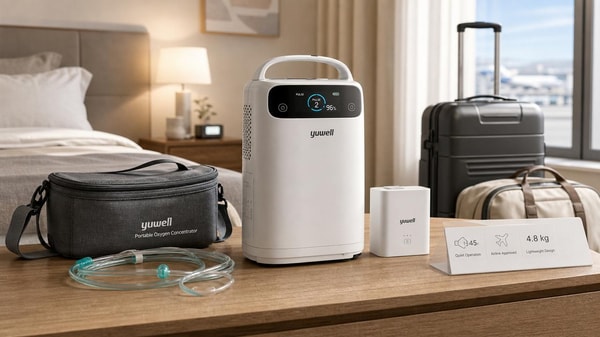
Portable oxygen concentrators are quieter now, but not always lighter
Portable oxygen concentrators are quieter now, offering users a more discreet and comfortable experience, yet reduced noise does not always mean reduced weight. For information researchers tracking product development, healthcare mobility trends, or supplier innovation, this shift reveals how manufacturers balance portability, battery life, performance, and user comfort in a highly competitive global market.
What Portable Oxygen Concentrators Are and Why the Topic Matters
Portable oxygen concentrators, often called POCs, are medical support devices designed to extract oxygen from ambient air and deliver concentrated oxygen to users who need respiratory assistance while remaining mobile. Unlike traditional stationary systems, portable oxygen concentrators are built for travel, daily movement, and use outside the home. For researchers and market observers, they represent more than a healthcare product category. They are a useful lens through which to examine miniaturization, battery innovation, user-centered engineering, and the changing expectations of global aging populations.
The reason this topic attracts attention is simple: quieter operation improves the lived experience of users, but every design improvement comes with trade-offs. A lower noise profile may require different airflow channels, improved insulation, larger casings, or battery adjustments. As a result, some newer portable oxygen concentrators feel more refined in sound performance without becoming dramatically lighter. This makes the category especially relevant for information researchers comparing product claims, supplier positioning, and real-world usability trends.
Industry Background: Why Silence Has Become a Key Design Priority
In earlier generations of oxygen mobility devices, users often had to accept noticeable sound output as part of portable therapy. Compressors, air separation systems, cooling fans, and pulse delivery mechanisms all contributed to audible operation. Over time, manufacturers recognized that sound affects more than comfort. It influences confidence in public spaces, sleep quality, social interaction, office use, and the willingness of patients to stay adherent to prescribed oxygen therapy.
This has pushed the market toward quieter portable oxygen concentrators, especially in segments aimed at active adults, frequent travelers, and users who want discreet operation in shared environments. At the same time, demand for longer battery life, higher oxygen output, airline compatibility, rugged design, and reliable performance has not decreased. In practical terms, the industry is no longer optimizing for a single metric. It is balancing a cluster of performance expectations at once.
From a broader supply chain perspective, this trend also reflects maturation in component sourcing. Improvements in motors, sound-dampening materials, battery cells, and thermal management have expanded what suppliers can offer. Yet engineering advances do not eliminate the laws of physics. A quieter machine may still need structural support, a larger battery, or additional internal protection, all of which can limit weight reduction.
Why Quieter Does Not Always Mean Lighter
For non-technical observers, it may seem logical that if a product becomes more advanced, it should also become smaller and lighter. In the case of portable oxygen concentrators, that assumption is often incomplete. Noise reduction and weight reduction are related to different engineering challenges, and progress in one area does not guarantee progress in the other.
A quieter unit may include additional acoustic insulation, redesigned air pathways, more stable housing, or slower but more controlled airflow management. These changes can improve user comfort, but they may also add material mass or require a larger enclosure. Likewise, better battery duration remains a major selling point, especially for people who travel or spend long periods outdoors. Larger or more durable battery systems can offset gains achieved through lighter structural materials.
There is also the issue of oxygen delivery expectations. Some users need pulse dose systems, while others look for higher performance levels closer to continuous flow support. Devices engineered for broader clinical flexibility or stronger output typically require more robust internal architecture. When researchers evaluate portable oxygen concentrators, it is therefore more useful to think in terms of design balance than linear improvement.
Key Market Forces Shaping Portable Oxygen Concentrators
Several market forces explain why the category is evolving in this particular direction. First is demographic change. Aging populations in many regions are increasing demand for respiratory support products that allow independence. Second is lifestyle expectation. Users increasingly want medical devices that fit into normal routines rather than define them. Third is regulatory and travel compatibility. As mobility standards and consumer awareness rise, manufacturers are under pressure to create portable oxygen concentrators that support safe transport, predictable performance, and easier everyday use.
A fourth force is digital visibility. In global B2B markets, buyers, distributors, and healthcare channel partners frequently compare product specifications online before making contact. This means features such as sound level, carry format, battery duration, and operating modes are not only technical details but also market signals. For a platform focused on industrial intelligence and international trade insight, the category reveals how product narratives influence demand across regions.
Industry Overview Table: Main Factors Behind Product Development
The following table summarizes the most visible development priorities in portable oxygen concentrators and the trade-offs commonly associated with each one.
Practical Value for Information Researchers and Industry Observers
For information researchers, portable oxygen concentrators are a valuable category because they connect healthcare mobility with broader industrial themes. Product changes in this segment can indicate where component innovation is heading, how manufacturers are differentiating in crowded markets, and which user needs are shaping future specifications. Observing whether brands prioritize noise, battery range, modular accessories, or lighter materials can reveal their target market strategy.
This is also relevant for exporters, importers, and channel partners. In many B2B contexts, success depends on understanding what claims resonate in different regions. Some markets may respond more strongly to portability and airline use, while others may emphasize durability, home-to-outdoor flexibility, or low operational disturbance. Industry intelligence platforms such as GTIIN and TradeVantage are well positioned to track these patterns because search visibility, product positioning, and buyer interest increasingly move together.
Another important research angle is trust. In healthcare-adjacent categories, buyers look beyond promotional language. They want specification clarity, operational context, and signs of quality assurance. High-authority content that explains why portable oxygen concentrators are getting quieter, while also acknowledging the limits of weight reduction, creates a more credible information environment for global trade participants.
Common Application Contexts and User-Oriented Categories
Although portable oxygen concentrators belong to a specialized product category, their practical value differs by user context. Understanding these categories helps researchers interpret feature emphasis more accurately.
This category-based view shows why not all buyers interpret “better” the same way. A lighter unit may appeal to one group, while another values quiet nighttime use more strongly. For this reason, portable oxygen concentrators should be evaluated against intended usage rather than headline claims alone.
What Businesses Should Watch When Evaluating the Category
Businesses tracking or promoting portable oxygen concentrators should pay close attention to how performance data is framed. A model described as quieter may specify testing conditions that differ from real-life movement or higher flow settings. A unit described as portable may still feel heavy after batteries and accessories are included. Likewise, carry comfort depends not only on total weight but also on form factor, strap design, surface durability, and how often batteries need to be replaced during a typical day.
It is also wise to distinguish between engineering progress and marketing simplification. Product pages often reduce a complex design balance into short claims. Researchers should compare sound level information, oxygen delivery modes, battery configuration, recharge time, replacement ecosystem, and maintenance requirements. For B2B stakeholders, after-sales support and parts availability can be just as important as the device headline features.
In international trade, supplier transparency matters greatly. Manufacturers that provide clear technical documentation, usage limitations, certification details, and channel support tend to build stronger long-term confidence. Since modern search algorithms increasingly reward credibility and topical depth, companies that present portable oxygen concentrators with accurate, research-friendly information can strengthen both market trust and online visibility.
How the Trend Fits into Broader Industrial and Digital Strategy
The evolution of portable oxygen concentrators is not only a product story. It also reflects how advanced manufacturing, supply chain responsiveness, and digital communication intersect. As more buyers begin their research through search engines and professional information portals, the way this category is explained online directly affects discovery and conversion. Technical improvements need supporting narratives that are accurate, searchable, and globally understandable.
For platforms serving exporters and importers, this creates a strong opportunity. High-quality coverage of portable oxygen concentrators can connect product innovation with market intelligence, highlight supplier capability, and support backlink authority in a competitive information ecosystem. In this sense, content is not separate from trade performance. It is part of how trust is built across borders.
A Practical Reading of the Market Direction
The most useful conclusion is not that portable oxygen concentrators are simply improving in every dimension at once. Rather, the category is becoming more finely optimized around specific user experiences. Quieter operation is a meaningful advance because it affects comfort, confidence, and adherence. However, lighter weight remains constrained by battery needs, durability expectations, and oxygen delivery performance. The market is moving toward smarter compromise, not perfect convergence.
For information researchers, that makes this segment especially worth following. It demonstrates how product innovation is often shaped by practical human factors as much as by raw technical ambition. Businesses that monitor this category carefully can better interpret supplier claims, anticipate buyer priorities, and build more trustworthy content strategies around portable oxygen concentrators.
If your goal is to understand global product trends, identify credible suppliers, or strengthen industrial visibility through authoritative content, portable oxygen concentrators offer a clear case study in how healthcare mobility, manufacturing innovation, and digital trust now move together in the international market.
Recommended News
 Portable oxygen concentrators are quieter now, but not always lighterPortable oxygen concentrators are getting quieter, but not always lighter. Explore the trade-offs in weight, battery life, comfort, and daily usability before you compare today’s top options.
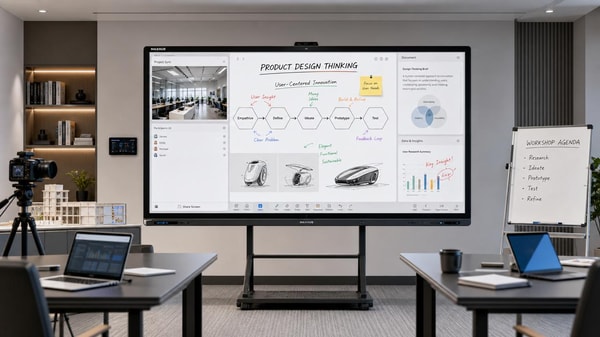
 Interactive whiteboards are improving, but software still decides valueInteractive whiteboards deliver real value when software matches the scenario. Explore how usability, integration, security, and updates shape smarter buying decisions.
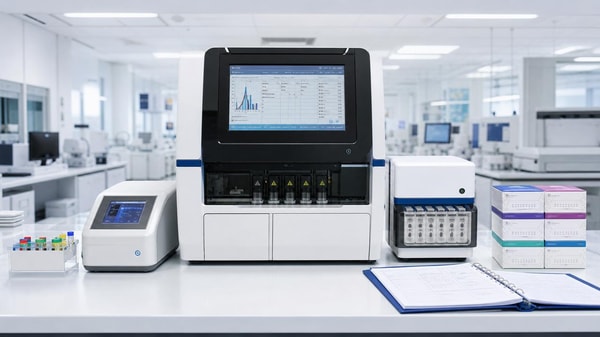
 Medical diagnostic equipment downtime often starts with calibration neglectMedical diagnostic equipment downtime often starts with missed calibration. Learn the warning signs, checklist priorities, and practical steps to prevent failures and keep healthcare operations reliable.
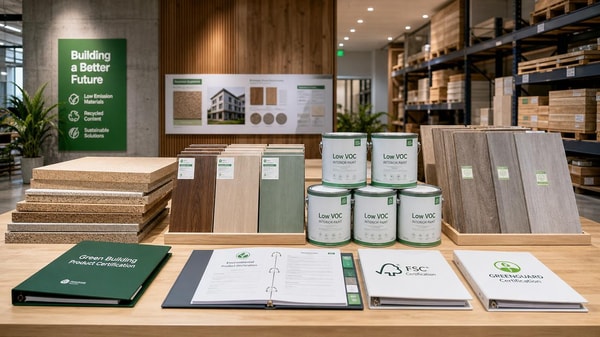
 Eco-friendly building materials are easier to specify than to sourceEco-friendly building materials are easier to specify than source. Learn how procurement teams can verify claims, reduce risk, and find reliable suppliers faster.
 Ergonomic workspace design can fail if chair fit comes lastErgonomic workspace design starts with chair fit. Learn how the right seat improves posture, comfort, and focus—and why fixing it first can transform your workspace.
 Outdoor garden supplies demand shifts faster than many expectOutdoor garden supplies demand is shifting faster than expected. Discover key B2B trends, smarter sourcing insights, and practical strategies to stay competitive and capture growth.
 Sustainable home decor sells better when materials are clearly disclosedSustainable home decor sells better when brands clearly disclose materials, finishes, and sourcing. Discover why transparency builds trust, justifies price, and drives more confident buying.
 Modern office furniture trends now favor modular over fixed layoutsModern office furniture is shifting to modular layouts for flexibility, lower lifecycle costs, and better hybrid work performance. See why enterprises are moving away from fixed office design.
 Smart street lighting projects stall when controls are overcomplicatedSmart street lighting projects often stall when controls become too complex. Learn how to simplify deployment, reduce risk, and scale citywide with practical, maintainable systems.
 Solid-state battery breakthroughs look promising, but scale is harderSolid-state battery breakthroughs promise safer, higher-density energy storage, but scaling remains the real challenge. Explore what this means for supply chains, investment, and market advantage.
 Commercial LED lighting upgrades often save less than expectedCommercial LED lighting upgrades can underdeliver when baseline data, controls, and installation costs are misjudged. Learn how to assess real savings, reduce ROI risk, and make smarter investment decisions.
 Lithium battery storage payback can change with one policy updateLithium battery storage payback can shift fast after one policy update. See how tariffs, tax credits, grid pricing, and incentives change ROI—and how finance teams can approve smarter.
 Photovoltaic solar panels now compete on output in low lightPhotovoltaic solar panels now compete on low-light output. Discover how buyers can compare yield, risk, and supplier value to source smarter and boost project returns.
 Plant-based protein processing changes texture more than many expectPlant-based protein processing reshapes texture, stability, and safety more than expected. Explore key risks, QC checkpoints, and smarter sourcing insights for consistent results.
 Foldable screen technology is improving, but crease concerns remainFoldable screen technology is evolving fast with slimmer designs and stronger hinges, but crease concerns still shape buying decisions. Explore where it matters most.
 Next-gen wireless charging still faces a heat management problemNext-gen wireless charging promises faster, more flexible power delivery, but heat remains the key barrier. Discover how thermal limits impact safety, efficiency, and market readiness.
 Wearable technology adoption drops when comfort gets overlookedWearable technology adoption falls fast when comfort is ignored. Discover how fit, materials, weight, and battery life shape long-term use and smarter buying decisions.
 Smart home devices wholesale is no longer just about low pricingSmart home devices wholesale now goes beyond low pricing. Discover how reliability, compatibility, and supply chain confidence help distributors choose profitable, trusted partners.
 Agri-PV systems make sense only when land use is planned wellAgri-PV systems deliver real value only when land use is planned well. Discover how smart site, crop, grid, and compliance decisions turn dual-use solar into a bankable, sustainable project.
 Organic fertilizers may improve soil slower, but results last longerOrganic fertilizers improve soil slowly but deliver longer-lasting results. Learn how they boost soil health, support safer growing, and help you choose the right option for sustainable planting success.
 Smart classroom solutions fail when teachers need too many appsSmart classroom solutions fail when teachers juggle too many apps. Discover why integrated, easy-to-use platforms drive adoption, ROI, and scalable learning success.








Popular Tags
Global Trade Insights & Industry
Our mission is to empower global exporters and importers with data-driven insights that foster strategic growth.
Search News
Popular Tags
Industry Overview
The global commercial kitchen equipment market is projected to reach $112 billion by 2027. Driven by urbanization, the rise of e-commerce food delivery, and strict hygiene regulations.