

Laboratory instruments for sale with missing calibration details
When evaluating laboratory instruments for sale with incomplete calibration records, buyers need more than product listings—they need context, risk awareness, and trusted market insight. This guide helps procurement teams, distributors, and researchers compare a laboratory instruments supplier, assess compliance concerns, and connect broader sourcing signals across sectors, from dental equipment maintenance to production line optimization, for smarter B2B decisions.
Why missing calibration details change the buying decision
In B2B procurement, a laboratory instrument is not judged only by price, appearance, or availability. When calibration details are missing, the buyer is no longer evaluating a simple asset purchase. The decision becomes a risk review covering measurement integrity, future service costs, regulatory exposure, and whether the unit can be deployed within 7–15 days or delayed by a longer verification cycle.
This issue matters across the broader industrial landscape. A research lab may need a balance, pH meter, spectrophotometer, incubator, or pressure gauge for immediate use, while a distributor may plan to resell the same equipment into healthcare, food, chemical, or educational channels. In each case, missing calibration records weaken traceability and can reduce buyer confidence during technical review, commercial negotiation, and final approval.
For information researchers and business evaluators, missing documentation also affects supplier screening. It may signal poor asset management, unclear refurbishment history, or inconsistent maintenance practices. It does not always mean the instrument is unusable, but it usually means more due diligence is required before purchase, shipment, installation, or channel distribution.
A practical way to classify the risk is to separate instruments into 3 groups: low-risk support devices, mid-risk routine measurement tools, and high-risk compliance-critical equipment. The higher the measurement sensitivity, the stronger the need for verifiable calibration status, service history, environmental storage records, and post-delivery validation planning.
Typical concerns raised by procurement teams
- Whether the instrument can pass incoming inspection without immediate recalibration or parts replacement.
- Whether the total cost will remain within budget after transport, testing, certification review, and downtime.
- Whether the supplier can provide enough evidence on prior use, maintenance frequency, and storage conditions.
- Whether resale into regulated sectors will be blocked by missing traceability documents or customer QA demands.
How to assess laboratory instruments for sale before you commit
A reliable assessment starts with the instrument’s role in the buyer’s workflow. If the device is used for internal education, non-critical testing, or backup operation, a missing calibration certificate may be manageable if the unit is priced accordingly and scheduled for recalibration after arrival. If the device supports validated processes or release decisions, the tolerance for missing records is much lower.
The next step is to review the instrument through 5 key checkpoints: identification, physical condition, calibration traceability, serviceability, and deployment timing. These checkpoints are simple enough for cross-functional use, but detailed enough to support procurement, technical, and commercial teams working on the same purchase file.
Buyers should also ask whether the instrument was idle for 6 months, 12 months, or longer. Extended storage can affect seals, sensors, batteries, optics, and temperature stability, depending on the device type. Even when cosmetic condition appears acceptable, a long idle period can create hidden startup costs and a longer path to operational readiness.
The table below helps organize a fast but defensible review for laboratory instruments for sale when calibration details are incomplete.
This framework reduces surprises during approval. It also helps buyers compare offers that initially look similar but differ in serviceability and documentation depth. For many cross-border purchases, the better option is not the unit with the lowest list price, but the one with clearer verification steps and lower uncertainty within the first 2–4 weeks after delivery.
A simple pre-purchase review sequence
- Request serial-number-based records, photos, startup video, and available maintenance notes.
- Match the instrument’s intended use against internal quality thresholds and end-customer requirements.
- Estimate recalibration, repair, packaging, and import-related delays before issuing a PO.
- Lock service responsibility in writing, including who pays if the instrument fails incoming verification.
Questions worth asking a laboratory instruments supplier
Ask for the last known service date, whether any parts were replaced, and what environmental conditions the instrument experienced during storage. Request clarity on packaging method, transit protection, and whether the supplier can arrange third-party inspection before shipment. These questions often reveal more than a generic product description.
If the supplier cannot provide full calibration details, ask for alternative evidence. This may include recent functional test logs, setup screenshots, performance checks against reference materials, or a quotation for recalibration through an external service partner. A partial but credible data package is more useful than a broad assurance without supporting records.
Compliance, traceability, and when missing records become a deal breaker
Not every missing calibration document leads to rejection, but some use cases leave very little flexibility. If the instrument supports regulated production, quality release, clinical workflows, accredited testing, or contract-based acceptance criteria, documentation gaps can become a serious barrier. The instrument may still be functional, yet unsuitable for its intended purpose until verified through a controlled process.
Buyers should distinguish between calibration, verification, qualification, and certification. These terms are often used loosely in the market, but they do not mean the same thing. A seller may state that a unit was “tested” or “working,” while the buyer actually needs traceable calibration evidence or site-specific qualification completed in 3 stages: installation check, operational check, and performance confirmation.
Across sectors, common reference points may include ISO/IEC 17025 for calibration competence, GMP-related documentation expectations in certain manufacturing settings, and internal QA procedures that define acceptable intervals such as every 6 months or every 12 months. The exact requirement depends on the application, not only on the instrument category.
For distributors, the issue extends beyond one sale. If resale customers request calibration traceability during onboarding or audit review, the distributor inherits the documentation gap. This is why channel partners often maintain stricter acceptance rules than end users handling a non-critical internal device.
When the risk level is usually higher
- The instrument is used to generate release data, customer certificates, or compliance reports.
- Measurement tolerance is narrow, such as precision weighing, controlled temperature, or analytical detection.
- The buyer plans cross-border resale into sectors with formal onboarding, validation, or audit practices.
- The unit is older, has unknown service intervals, or lacks accessory traceability for probes, sensors, or software keys.
The comparison below helps business evaluators decide whether missing calibration details represent a manageable issue or a likely disqualifier.
A disciplined compliance review protects more than the current transaction. It reduces downstream disputes, protects channel credibility, and supports cleaner documentation when the instrument is audited, transferred, or resold later.
Cost, alternatives, and what “cheap” equipment can really cost
Many buyers are attracted to discounted laboratory instruments for sale because they need to balance speed, budget, and technical coverage. However, the visible purchase price is only one part of the cost structure. Once calibration details are missing, buyers may need to add third-party inspection, replacement sensors, software unlocking, recalibration, packaging upgrades, and one or two rounds of technical clarification.
For procurement teams managing multiple bids, a practical comparison is to evaluate total deployment cost over the first 30–60 days. This period typically captures the main hidden expenses that do not appear in listing prices. It is especially useful for importers and distributors who need predictable margins before committing inventory capital.
An alternative path may be to buy a unit with current calibration but fewer accessories, or a fully refurbished unit with a longer lead time of 2–4 weeks. In some cases, a new entry-level model provides a better total value than an older premium unit requiring uncertain post-arrival work. The right answer depends on usage intensity, allowable downtime, and service access in the destination market.
The cost view below can help buyers explain internally why a lower list price does not always mean lower acquisition risk.
This comparison is especially helpful when a purchasing committee includes finance, technical, and commercial stakeholders. It turns a price conversation into a risk-adjusted sourcing decision and reduces conflict later if the unit needs service shortly after arrival.
Common hidden cost drivers
- Third-party calibration arranged after delivery, often adding several business days to commissioning.
- Accessory replacement because probes, cables, pans, holders, or manuals are incomplete.
- Unexpected freight protection needs for sensitive optics, glass parts, or temperature-controlled devices.
- Margin erosion for distributors when resale customers demand documents not included in the original deal.
How market intelligence improves supplier selection and negotiation
A single instrument listing rarely tells the full story. B2B buyers often need to compare supplier behavior across regions, spot documentation patterns, and understand whether limited calibration transparency is an isolated case or part of a broader sourcing trend. This is where market intelligence becomes a practical tool rather than just background reading.
GTIIN and TradeVantage support this process by connecting product-level evaluation with broader supply-chain signals across 50+ sectors. For an importer, this means access to current industrial context instead of relying only on a seller’s wording. For distributors and agents, it means stronger positioning when deciding which laboratory instruments supplier deserves follow-up, sample review, or listing approval.
This cross-sector visibility matters because calibration discipline is often linked to larger operational habits. Suppliers that communicate clearly about maintenance cycles, packaging standards, and documentation recovery may also perform better in lead-time control, after-sales coordination, and export readiness. Those signals can be detected earlier when buyers combine listing review with wider market and trade intelligence.
In practical terms, buyers can use a 4-step intelligence workflow before negotiation: scan market positioning, compare documentation patterns, verify service claims, and test response quality. Doing this before price discussions helps avoid wasting time on offers that look attractive but are difficult to execute in a real procurement environment.
What informed buyers track beyond the product page
- Whether the supplier consistently serves industrial buyers or mainly handles opportunistic equipment liquidation.
- Whether product language includes measurable details such as interval history, packaging method, or accessory condition.
- Whether the supplier can discuss application fit across sectors, including education, food, dental, chemical, or light manufacturing environments.
- Whether follow-up communication remains specific within 24–72 hours, especially on serial records, lead time, and service options.
Why this matters for distributors and channel partners
Distributors do not just buy equipment; they buy resale confidence. If documentation is weak at source, the problem compounds at every downstream stage, from customer quotation to warranty discussion. Better intelligence allows channel partners to identify which offers can be packaged into a credible resale proposition and which ones should be treated as opportunistic stock only.
For overseas trade enterprises, visibility also matters commercially. TradeVantage functions as both an industry intelligence portal and a high-authority networking hub, helping brands improve exposure, strengthen digital trust signals, and support backlink-driven discoverability in international markets. That combination gives buyers a more informed context for evaluating suppliers and gives sellers a stronger framework for being found by qualified B2B audiences.
FAQ and next steps for buyers reviewing incomplete calibration records
Can I buy laboratory instruments for sale without calibration certificates?
Yes, but only after matching the risk to the use case. For training, backup, or non-critical internal tasks, the purchase may still make sense if the price reflects the gap and a recalibration plan is scheduled shortly after delivery. For regulated or customer-facing measurement work, missing certificates should trigger a much stricter review or a pause in purchasing.
What should I ask a laboratory instruments supplier first?
Start with 5 items: serial number, last service date, last known calibration date, current functional status, and included accessories. Then ask whether the supplier can support a video test, third-party inspection, or post-sale recalibration arrangement. These questions quickly reveal whether the offer is workable or likely to consume excessive internal review time.
How long does requalification usually add to the process?
The added timeline depends on the instrument type, service availability, and location. In many routine cases, incoming verification and scheduling can add several business days, while more formal recalibration or qualification may extend the deployment cycle into 2–4 weeks. Buyers with urgent commissioning targets should confirm this before payment approval.
Is a lower price enough to offset the documentation gap?
Not always. A discount is only meaningful if the buyer can reasonably estimate the cost of verification, repair, downtime, and resale limitations. If those costs remain unclear, the apparent saving may disappear within the first 30–60 days. That is why total deployment cost is often a better benchmark than invoice price alone.
Why choose us for market-guided sourcing support?
GTIIN and TradeVantage help buyers move beyond isolated listings by combining supplier visibility, sector intelligence, and practical sourcing context across 50+ industries. If you are screening laboratory instruments for sale with missing calibration details, we can help you narrow supplier options, compare documentation depth, interpret compliance signals, and identify where a lower-cost offer may create higher operational exposure.
Contact us if you need support on parameter confirmation, supplier comparison, expected delivery cycle, resale suitability, documentation review, or broader market context before RFQ or order placement. This is especially useful for procurement teams, distributors, and trade-focused businesses that need faster shortlisting, stronger negotiation preparation, and clearer sourcing decisions backed by industry intelligence rather than guesswork.
Recommended News
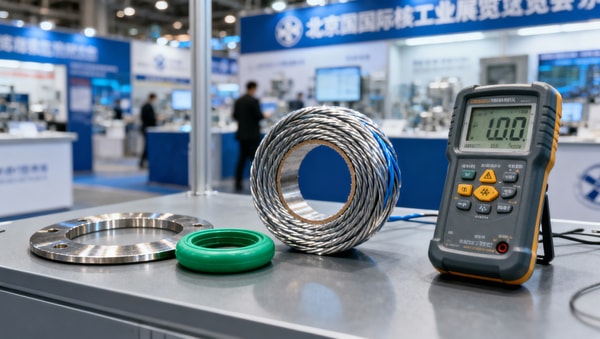
 China-France Nuclear Cooperation Advances at Beijing ExpoChina-France nuclear cooperation advances: mutual recognition for nuclear-grade seals, cables & radiation monitors boosts export readiness for suppliers targeting EU and BRI projects.
 Vietnam’s 4 Provinces Seek AI Tourism Tech in NanningAI tourism tech in demand: Vietnam’s 4 provinces seek AI-guided terminals, multilingual interpretation, AI-CCTV & smart ticketing in Nanning—key opportunity for B2G exporters.
 Q1 2026 China Power Market Trading Up 25.6%: Smart Meters, Storage Export Demand RisesSmart meters, energy storage exports surge as China’s Q1 2026 power market trading jumps 25.6% — key signal for global manufacturers & channel partners.
 China First Country with 5M+ Active Invention PatentsChina first country with 5M+ active invention patents—key for buyers in AI, solar, lithium battery & energy storage. Discover IP implications for sourcing, compliance & supplier vetting.
 Shenneng Etorkeqi Green Ammonia Project: Deionized Water Station OperationalShenneng Etorkeqi Green Ammonia Project’s deionized water station is now operational—ISO 8502-3 compliant, fully integrated, and a key milestone for global green hydrogen developers and exporters.
 China Launches 'Model-Data Resonance' Initiative for AI+Manufacturing InteroperabilityModel-Data Resonance initiative boosts AI+manufacturing interoperability—learn how GB/T XXXX–2026 aligns with VDI 2182 & ISA-95 for smoother global factory deployments.
 China’s First Embodied AI Robot Insurance Launched in GuangxiChina’s first embodied AI robot insurance launched in Guangxi—key for robotics exporters, AI hardware makers & global compliance teams. CE-recognized, EU/UK/AU-ready.
 IMDG Code 41-24 Enforced: UN3480 Lithium Battery Labeling Now MandatoryIMDG Code 41-24 is now mandatory: UN3480 lithium battery labeling, documentation & packaging rules are enforced globally as of 28 April 2026 — avoid port rejections!
 State Grid’s $680M Embodied AI Procurement Signals Export OpportunityEmbodied AI, IEC 61850 & IEC 62443: State Grid’s $680M procurement unlocks export opportunities for compliant industrial robots and smart vision systems in emerging markets.
 IMDG Code 41-24 Enforces UN3480 Class 9 Labeling for Lithium Battery Sea FreightIMDG Code 41-24 mandates UN3480 lithium battery sea freight to display durable Class 9 labels from April 27, 2026—avoid delays & port rejections.
 ESS Key Component Prices Drop ~80%: Quality & Compliance RiseESS key component prices dropped ~80%—but quality & compliance demands surged. Discover how UL 9540A, AS/NZS 5139, and certified BMS/inverters now define market access.
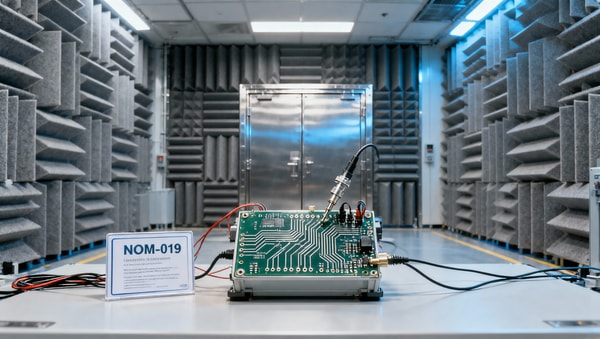
 Mexico NOM-019-SCFI-2026 Effective July 2026: EMC Certification Mandatory for Auto ElectronicsMexico NOM-019-SCFI-2026 mandates EMC certification for auto electronics from July 2026 — ensure compliance now to avoid supply chain disruption & customs delays.
 Red Sea Rerouting Normalized, ECA Surcharge Hits $1,850/TEURed Sea rerouting normalized: ECA surcharge hits $1,850/TEU — 47% of total freight cost. Impacting hand tools, building materials & furniture exporters to Europe. Act now.
 RCEP Green Packaging Mutual Recognition Takes EffectRCEP Green Packaging Mutual Recognition is live—GB/T 37537-2025–certified packaging now enjoys fast-track clearance in Australia, NZ, Japan & Korea. Save time, cut costs, and boost export efficiency.
 Vietnam Suspends SASO Mutual Recognition for Chinese Irrigation EquipmentVietnam suspends SASO mutual recognition for Chinese irrigation equipment—drip tapes, PE fittings, auto valves now require VINAQ-IR certification. Act now to avoid delays & customs hold.
 Pool equipment maintenance warning signs before a breakdownPool equipment maintenance warning signs before a breakdown: spot early pump, filter, and control issues, improve pool equipment installation decisions, and reduce downtime with smarter sourcing insights.
 Patios and decks materials that age badly in humid climatesPatios and decks materials that age badly in humid climates: learn which patios and decks materials fail fast, how patios and decks construction choices affect durability, and how to source smarter.
 Textile home fabrics buyers now ask more about wash durabilityTextile home fabrics buyers now prioritize wash durability, consistency, and long-term value. Explore sourcing insights, production line optimization, and smarter textile home accessories decisions.
 What recurring waste says about production line efficiencyProduction line efficiency starts with recurring waste. Discover how production line optimization and production line automation reveal supplier risk, cut hidden costs, and improve sourcing decisions across textiles, jewelry, and agrochemicals.
 Agrochemicals export rules causing delays in new marketsAgrochemicals export delays explained with agrochemicals industry analysis and agrochemicals market trends—learn compliance risks, supplier selection tips, and smarter market entry strategies.
 Fashion tech applications brands are testing in physical storesFashion tech applications and fashion tech startups are transforming physical stores with smarter fitting, data-led production line optimization, and scalable retail innovation—explore key trends now.


















Popular Tags
Global Trade Insights & Industry
Our mission is to empower global exporters and importers with data-driven insights that foster strategic growth.
Search News
Popular Tags
Industry Overview
The global commercial kitchen equipment market is projected to reach $112 billion by 2027. Driven by urbanization, the rise of e-commerce food delivery, and strict hygiene regulations.