

What affects laboratory instruments for sale besides price?
When evaluating laboratory instruments for sale, price is only one part of the decision. Buyers and distributors also compare product accuracy, compliance, after-sales support, and the reliability of each laboratory instruments supplier. For research-driven sourcing teams, understanding these factors helps reduce risk, improve long-term value, and support smarter procurement decisions in a competitive global market.
In cross-border sourcing, laboratory equipment is rarely a one-time purchase. It affects testing consistency, operator efficiency, audit readiness, and the credibility of analytical results over the next 3 to 7 years. For procurement officers, market researchers, distributors, and business evaluators, the right decision depends on a broader framework than upfront quotation alone.
A lower purchase cost can quickly become expensive if the instrument shows unstable readings, delayed calibration support, or poor spare parts availability. By contrast, a product with slightly higher pricing may deliver lower downtime, better compliance, and stronger resale or distribution value. This is especially relevant in sectors such as pharmaceuticals, food testing, environmental monitoring, chemicals, education, and industrial quality control.
The market for laboratory instruments for sale is also shaped by global supply chain variables. Lead times can vary from 7 days for common benchtop units to 8 to 12 weeks for specialized systems. Service response, documentation quality, digital connectivity, and local technical support all influence purchasing outcomes. Below are the main non-price factors serious buyers should evaluate before selecting a laboratory instruments supplier.
Performance, Accuracy, and Fit for Application
The first non-price factor is whether the instrument actually fits the intended testing task. A centrifuge, spectrophotometer, moisture analyzer, or incubator may all appear similar across suppliers, yet small differences in measurement range, repeatability, and environmental tolerance can significantly affect daily use. For regulated or research-focused labs, acceptable error windows may be as narrow as ±0.1% to ±0.5%, depending on the application.
Buyers should look beyond brochure claims and compare performance under realistic operating conditions. A unit that performs well at 22°C in a demo room may behave differently in a tropical climate, in a dusty factory laboratory, or under 10-hour daily use. Instrument stability over repeated cycles is often more important than peak specification on paper.
Application fit also matters for throughput. A small laboratory processing 20 samples per day needs a very different configuration from a QA center handling 200 to 500 samples per shift. If the selected model is undersized, turnaround times increase. If it is oversized, operating and maintenance costs become harder to justify.
For distributors and agents, technical fit influences complaint rates and repeat orders. Instruments that are easy to install, train, and troubleshoot usually create fewer support issues in the first 6 to 12 months. This reduces service burden and strengthens channel relationships in new markets.
Key performance indicators to verify
Before committing to laboratory instruments for sale, it helps to standardize a performance checklist. This allows sourcing teams to compare suppliers using the same criteria rather than relying on sales language.
- Measurement range: confirm the instrument covers both current needs and near-term expansion, such as pH 0–14, temperature 5°C–300°C, or speed 500–15,000 rpm.
- Accuracy and repeatability: compare values such as ±0.2°C, ±1% full scale, or coefficient of variation under repeated runs.
- Daily throughput: estimate samples per hour, warm-up time, and changeover time between batches.
- Operating environment: check noise, humidity tolerance, voltage compatibility, and bench or floor space requirements.
- User interface: assess whether training can be completed in 1 to 2 sessions or requires extended onboarding.
The table below shows how application requirements often shift the selection criteria beyond price alone.
The main takeaway is simple: the best-value instrument is the one that performs consistently in its actual use case. Price becomes secondary when poor application fit leads to inaccurate results, delayed reporting, or repeated service intervention.
Compliance, Documentation, and Traceability Requirements
Another major factor affecting laboratory instruments for sale is compliance readiness. In many industries, test equipment is part of a documented quality system. If the instrument lacks proper manuals, calibration guidance, or traceable records, even a competitively priced unit may create audit exposure and internal approval delays.
For procurement teams, documentation quality is often a hidden differentiator among suppliers. A complete package may include user manuals, maintenance instructions, wiring diagrams, calibration recommendations, packing lists, and basic validation support. Missing documents can add days or weeks to installation, customs clearance, or internal qualification.
Traceability is especially important where data integrity matters. Laboratories increasingly prefer equipment that can store test history, connect to printers or software, and support user access controls. Even if full integration is not required on day 1, scalable data handling can be valuable over the next 2 to 5 years.
Distributors should also examine labeling and destination-market readiness. Voltage options, instruction language, packaging labels, and region-specific declarations can affect whether a product can be sold efficiently in Europe, the Middle East, Southeast Asia, or Latin America. Compliance gaps increase return risk and reduce market confidence.
Documentation items that influence approval speed
A sourcing team can shorten vendor evaluation cycles by checking a standard list of compliance-related items early in the process. This is often more efficient than discovering missing files after purchase order issuance.
- Product specification sheet with test conditions clearly stated.
- Operating manual and preventive maintenance guide.
- Calibration method or recommended calibration interval, often every 6 or 12 months.
- Electrical and safety information for target-country use.
- Software or data output details, including export format and audit trace capability if applicable.
Why documentation matters in B2B trade
For importers and business evaluators, documentation is not just a technical detail. It affects supplier credibility, onboarding cost, distributor readiness, and end-user trust. A supplier that responds within 24 to 48 hours with structured files often indicates stronger internal systems than one that provides only sales catalogs.
The table below outlines common compliance and traceability checkpoints that influence purchasing decisions.
In many sourcing projects, documentation quality becomes the deciding factor when 2 or 3 suppliers offer similar prices. Better records usually translate into smoother implementation and lower compliance friction.
Supplier Reliability, Lead Time, and Service Capacity
A laboratory instruments supplier is not judged only by the product shipped on day one. Reliability includes quotation clarity, delivery consistency, packaging quality, installation support, and how quickly issues are solved after arrival. For global buyers, a delayed or poorly supported instrument can disrupt projects far more than a 5% to 10% difference in purchase price.
Lead time is a practical concern that varies by category. Standard balances, mixers, or water baths may ship in 7 to 15 days. More specialized analyzers, climate chambers, or integrated systems may require 4 to 10 weeks, particularly if customization, validation, or voltage changes are involved. Procurement teams should distinguish between ex-works readiness and actual delivered-to-site timing.
Service capacity is equally critical. A supplier may offer attractive laboratory instruments for sale, but if spare parts take 30 to 45 days to arrive or technical support is limited to email, downtime risk rises. In environments where one failed unit can stop a production release or research sequence, response time matters almost as much as product specification.
For distributors, supplier consistency affects channel margins and brand reputation. Repeatable packaging, low shipping damage rates, and structured onboarding documents reduce hidden costs. A supplier with stable communication, clear reorder processes, and technical escalation paths is often easier to scale across 2 or more markets.
Operational signals of a dependable supplier
Instead of relying solely on marketing claims, buyers can assess reliability using operational indicators that are visible during the RFQ and sample-evaluation stage.
- Quotation completeness: lead time, packaging terms, warranty scope, and included accessories are clearly listed.
- Response speed: technical questions are answered in 24–72 hours rather than repeatedly redirected.
- Spare parts planning: common wear items are identified with estimated availability.
- Service model: remote diagnosis, video support, or local partner assistance is defined before purchase.
- Packaging discipline: export packing is suitable for air, sea, or inland transport conditions.
Questions that reduce post-purchase surprises
Buyers should ask how warranty claims are handled, whether consumables are proprietary, and how many service steps require factory intervention. These details can influence the total operating burden over 12 to 36 months, especially in regions with limited local support.
In practical terms, a stronger laboratory instruments supplier is one that makes the ownership cycle predictable. That predictability supports better budgeting, less downtime, and stronger confidence for both end users and resellers.
Total Cost of Ownership and Long-Term Value
Price is visible immediately, but total cost of ownership is what determines long-term value. Two laboratory instruments for sale may differ by only a modest amount at purchase, yet create very different operating expenses over 3 to 5 years. Consumables, calibration, maintenance frequency, downtime, training, and energy use all shape the real economic outcome.
A common sourcing mistake is to compare only unit price and freight. That approach ignores the cost of delayed results, operator error, out-of-spec readings, and emergency repairs. For laboratories with daily workflows, even 2 to 4 hours of downtime per month can be more expensive than a higher initial investment in a more stable system.
Buyers should also separate essential accessories from optional add-ons. Some quotations look attractive because probes, rotors, software modules, printers, or starter consumables are excluded. Once these are added, the real gap between suppliers may narrow or disappear.
For distributors, long-term value includes support efficiency and resale confidence. Products that require fewer field visits and have a lower learning curve can protect margin and improve renewal business. A slightly higher-cost instrument may therefore perform better commercially across multiple customer accounts.
A practical ownership cost framework
The following table provides a simple comparison model that purchasing teams can adapt during supplier evaluation.
The table shows why a lower quotation does not always mean a lower business cost. The more critical the testing process, the more important it becomes to model ownership cost over at least 36 months rather than comparing only invoice totals.
Three common ownership-cost blind spots
- Ignoring excluded accessories that are necessary for actual operation.
- Underestimating the cost of service visits, especially for imported equipment.
- Overlooking workflow inefficiency caused by slower throughput or poor software usability.
A disciplined ownership-cost review helps procurement teams explain decisions internally and align technical, financial, and operational stakeholders around a more durable purchase rationale.
Procurement Strategy, Common Mistakes, and Selection Questions
The final factor beyond price is the quality of the buying process itself. Even strong laboratory instruments for sale can become poor investments if buyers skip technical verification, fail to map the application, or choose a supplier without clarifying support expectations. Structured procurement reduces these risks and improves negotiation outcomes.
A practical sourcing process usually includes 4 stages: requirement definition, supplier screening, technical validation, and commercial finalization. In many B2B cases, the biggest delays happen in stage 1, where internal users do not clearly specify sample type, throughput, environmental conditions, and compliance needs. The result is an RFQ that attracts mismatched offers.
Business evaluators and research teams should also consider market positioning. If the instrument is intended for distribution, resale support, documentation quality, and product consistency may matter more than the lowest factory price. If it is intended for internal lab use, uptime and service accessibility usually outrank short-term savings.
The strongest buying decisions combine technical due diligence with commercial discipline. This means comparing at least 3 suppliers where possible, reviewing documentation before issuing the purchase order, and confirming lead time assumptions with realistic shipping and commissioning buffers.
Common mistakes buyers should avoid
- Selecting by catalog image and headline specification without verifying operating conditions.
- Treating all laboratory instruments suppliers as interchangeable despite differences in service depth.
- Failing to ask about calibration intervals, consumable dependence, and spare parts lead times.
- Ignoring installation constraints such as voltage, bench space, ventilation, or operator training needs.
- Assuming the cheapest landed cost will produce the lowest 3-year operating cost.
FAQ for buyers and distributors
How many suppliers should be compared before purchase?
For standard equipment, 3 qualified quotations are usually enough to identify the market range. For specialized systems, even 2 well-documented suppliers may be sufficient if technical comparison is deep and service capability is clear. The important point is not quantity alone but the quality of the comparison data.
What is a reasonable lead-time buffer for imported laboratory equipment?
A practical buffer is often 1 to 2 weeks for standard items and 3 to 4 weeks for customized or document-heavy orders. This accounts for packing, export handling, transit variability, customs processing, and site preparation. Critical projects should avoid planning installation on the earliest theoretical arrival date.
What support questions should be asked before placing the order?
Buyers should ask who handles troubleshooting, what the first-response time is, how warranty parts are supplied, whether remote diagnosis is available, and which consumables must be stocked locally. These questions are especially important for distributors serving multiple customer sites.
Is a higher-priced supplier sometimes the safer choice?
Yes, particularly when the higher quotation includes stronger documentation, better application guidance, faster spare parts support, and lower downtime risk. In regulated or high-throughput environments, these advantages often produce better economic results over 24 to 60 months.
Choosing among laboratory instruments for sale is ultimately about operational fit, trust, and long-term value. Buyers who examine performance, compliance, supplier reliability, and ownership cost make more defensible decisions than those who focus on price alone. For importers, sourcing teams, and distribution partners seeking stronger market intelligence and better supplier evaluation frameworks, GTIIN and TradeVantage provide a practical foundation for smarter cross-border procurement. Contact us today to explore tailored sourcing insights, compare supplier positioning, and learn more solutions for laboratory equipment decision-making.
Recommended News
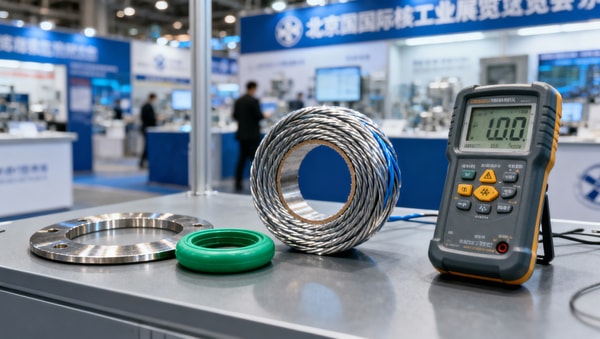
 China-France Nuclear Cooperation Advances at Beijing ExpoChina-France nuclear cooperation advances: mutual recognition for nuclear-grade seals, cables & radiation monitors boosts export readiness for suppliers targeting EU and BRI projects.
 Vietnam’s 4 Provinces Seek AI Tourism Tech in NanningAI tourism tech in demand: Vietnam’s 4 provinces seek AI-guided terminals, multilingual interpretation, AI-CCTV & smart ticketing in Nanning—key opportunity for B2G exporters.
 Q1 2026 China Power Market Trading Up 25.6%: Smart Meters, Storage Export Demand RisesSmart meters, energy storage exports surge as China’s Q1 2026 power market trading jumps 25.6% — key signal for global manufacturers & channel partners.
 China First Country with 5M+ Active Invention PatentsChina first country with 5M+ active invention patents—key for buyers in AI, solar, lithium battery & energy storage. Discover IP implications for sourcing, compliance & supplier vetting.
 Shenneng Etorkeqi Green Ammonia Project: Deionized Water Station OperationalShenneng Etorkeqi Green Ammonia Project’s deionized water station is now operational—ISO 8502-3 compliant, fully integrated, and a key milestone for global green hydrogen developers and exporters.
 China Launches 'Model-Data Resonance' Initiative for AI+Manufacturing InteroperabilityModel-Data Resonance initiative boosts AI+manufacturing interoperability—learn how GB/T XXXX–2026 aligns with VDI 2182 & ISA-95 for smoother global factory deployments.
 China’s First Embodied AI Robot Insurance Launched in GuangxiChina’s first embodied AI robot insurance launched in Guangxi—key for robotics exporters, AI hardware makers & global compliance teams. CE-recognized, EU/UK/AU-ready.
 IMDG Code 41-24 Enforced: UN3480 Lithium Battery Labeling Now MandatoryIMDG Code 41-24 is now mandatory: UN3480 lithium battery labeling, documentation & packaging rules are enforced globally as of 28 April 2026 — avoid port rejections!
 State Grid’s $680M Embodied AI Procurement Signals Export OpportunityEmbodied AI, IEC 61850 & IEC 62443: State Grid’s $680M procurement unlocks export opportunities for compliant industrial robots and smart vision systems in emerging markets.
 IMDG Code 41-24 Enforces UN3480 Class 9 Labeling for Lithium Battery Sea FreightIMDG Code 41-24 mandates UN3480 lithium battery sea freight to display durable Class 9 labels from April 27, 2026—avoid delays & port rejections.
 ESS Key Component Prices Drop ~80%: Quality & Compliance RiseESS key component prices dropped ~80%—but quality & compliance demands surged. Discover how UL 9540A, AS/NZS 5139, and certified BMS/inverters now define market access.
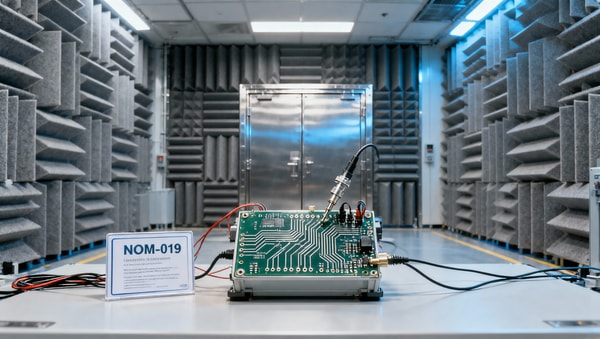
 Mexico NOM-019-SCFI-2026 Effective July 2026: EMC Certification Mandatory for Auto ElectronicsMexico NOM-019-SCFI-2026 mandates EMC certification for auto electronics from July 2026 — ensure compliance now to avoid supply chain disruption & customs delays.
 Red Sea Rerouting Normalized, ECA Surcharge Hits $1,850/TEURed Sea rerouting normalized: ECA surcharge hits $1,850/TEU — 47% of total freight cost. Impacting hand tools, building materials & furniture exporters to Europe. Act now.
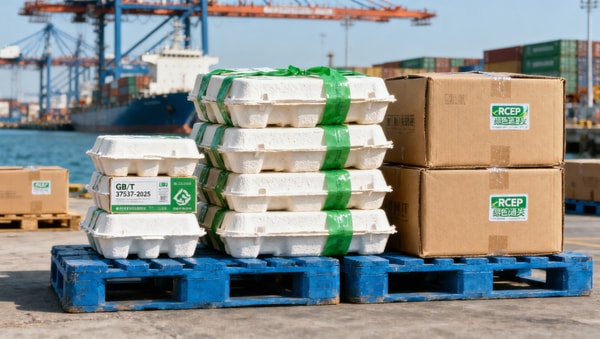
 RCEP Green Packaging Mutual Recognition Takes EffectRCEP Green Packaging Mutual Recognition is live—GB/T 37537-2025–certified packaging now enjoys fast-track clearance in Australia, NZ, Japan & Korea. Save time, cut costs, and boost export efficiency.
 Vietnam Suspends SASO Mutual Recognition for Chinese Irrigation EquipmentVietnam suspends SASO mutual recognition for Chinese irrigation equipment—drip tapes, PE fittings, auto valves now require VINAQ-IR certification. Act now to avoid delays & customs hold.
 Pool equipment maintenance warning signs before a breakdownPool equipment maintenance warning signs before a breakdown: spot early pump, filter, and control issues, improve pool equipment installation decisions, and reduce downtime with smarter sourcing insights.
 Patios and decks materials that age badly in humid climatesPatios and decks materials that age badly in humid climates: learn which patios and decks materials fail fast, how patios and decks construction choices affect durability, and how to source smarter.
 Textile home fabrics buyers now ask more about wash durabilityTextile home fabrics buyers now prioritize wash durability, consistency, and long-term value. Explore sourcing insights, production line optimization, and smarter textile home accessories decisions.
 What recurring waste says about production line efficiencyProduction line efficiency starts with recurring waste. Discover how production line optimization and production line automation reveal supplier risk, cut hidden costs, and improve sourcing decisions across textiles, jewelry, and agrochemicals.
 Agrochemicals export rules causing delays in new marketsAgrochemicals export delays explained with agrochemicals industry analysis and agrochemicals market trends—learn compliance risks, supplier selection tips, and smarter market entry strategies.
 Fashion tech applications brands are testing in physical storesFashion tech applications and fashion tech startups are transforming physical stores with smarter fitting, data-led production line optimization, and scalable retail innovation—explore key trends now.
















Popular Tags
Global Trade Insights & Industry
Our mission is to empower global exporters and importers with data-driven insights that foster strategic growth.
Search News
Popular Tags
Industry Overview
The global commercial kitchen equipment market is projected to reach $112 billion by 2027. Driven by urbanization, the rise of e-commerce food delivery, and strict hygiene regulations.