

How to Source Iridium Spark Plugs Without Quality Risks
Sourcing iridium spark plugs online can absolutely reduce purchasing costs and expand supplier options, but only if buyers control one key variable: quality verification. For procurement teams, distributors, and market researchers, the real challenge is not finding suppliers—it is separating genuine, specification-compliant products from inconsistent, mislabeled, or counterfeit stock. The safest approach is to evaluate suppliers through a combination of technical validation, manufacturing traceability, certification review, sample testing, and commercial risk control. In practice, the best source is not always the lowest quote, but the supplier that can prove stable product quality, consistent ignition performance, and dependable fulfillment.
What Buyers Are Really Looking for When They Search for Iridium Spark Plug Suppliers
When someone searches for how to source iridium spark plugs without quality risks, the intent is highly practical and commercial. Most buyers are not looking for a basic explanation of what iridium spark plugs are. They want to know how to buy them safely, how to verify that specifications are real, and how to avoid costly procurement mistakes.
For sourcing professionals, the main concerns usually include:
- How to identify reliable manufacturers or exporters
- How to distinguish genuine iridium spark plugs from low-grade or counterfeit products
- What specifications should be checked before ordering
- How to compare price versus quality without creating after-sales problems
- How to reduce warranty risk, return rates, and brand damage
- How to manage trial orders, inspection, and supply consistency
This means an effective buying guide should focus less on generic product descriptions and more on supplier assessment, technical checkpoints, testing methods, and transaction safeguards.
Why Quality Risk Is High in the Iridium Spark Plug Market
Iridium spark plugs are a high-performance category, which makes them attractive to both serious manufacturers and low-quality imitators. Because the term “iridium” carries strong market value, some sellers use it loosely in listings even when the product design, electrode material, or service life does not meet expected standards.
Common quality risks include:
- Misrepresentation of electrode material or iridium tip size
- Poor ceramic insulation quality leading to cracking or misfire issues
- Inconsistent thread machining or dimensional tolerance problems
- Weak plating or corrosion resistance
- Shorter-than-claimed service life
- Packaging that imitates major brands without authentic traceability
These risks matter because spark plugs directly affect ignition efficiency, engine stability, fuel economy, and maintenance intervals. For distributors and importers, one poor-quality shipment can lead to customer complaints, warranty claims, lost reseller confidence, and long-term reputation damage.
How to Identify a Reliable Iridium Spark Plug Supplier
The first decision should be supplier quality, not only product price. A trustworthy supplier should be able to provide clear evidence of manufacturing capability, quality control discipline, and export experience.
Look for the following signals:
- Factory transparency: The supplier should clearly explain whether they are a manufacturer, OEM supplier, trading company, or hybrid exporter.
- Product documentation: They should offer detailed specifications, part number mapping, dimensions, heat range, torque guidance, and applicable vehicle models.
- Quality management systems: ISO-related documentation, internal QC procedures, and batch inspection records are useful indicators.
- Export track record: Experience with overseas buyers often means better packaging standards, labeling control, and logistics discipline.
- Responsive technical communication: Reliable suppliers can answer engineering or compatibility questions quickly and specifically.
- Stable catalog structure: A professional supplier usually has organized SKUs, cross-reference systems, and repeatable product lines instead of vague one-off listings.
On a B2B trade platform, buyers should also compare how consistently a supplier presents information across listings. If specifications are incomplete, product photos are generic, and compliance claims are unclear, that is often a sign to slow down.
Which Product Specifications Should Be Verified Before You Buy
Technical validation is where many sourcing mistakes can be avoided. Buyers should never rely on product titles alone. An iridium spark plug listing may appear professional, but real purchasing decisions should be based on specification checks.
Key points to verify include:
- Electrode material: Confirm whether the center electrode uses iridium and whether the tip design is laser-welded or otherwise documented.
- Thread diameter and reach: Incorrect dimensions can create installation or engine compatibility problems.
- Hex size and seat type: These affect installation and fitment.
- Heat range: This must align with engine operating conditions and OEM reference requirements.
- Gap specification: The delivered gap should match the product application or be adjustable within acceptable limits.
- Resistance value: This is important for ignition system compatibility and electronic interference control.
- Shell plating and corrosion resistance: Important for storage life and field durability.
- Insulator quality: Ceramic density, finish, and crack resistance affect long-term performance.
For buyers managing private label, wholesale distribution, or aftermarket channels, requesting a technical datasheet is essential. If a supplier cannot provide one, quality risk increases significantly.
How to Reduce Counterfeit and Mislabeling Risk
Counterfeit risk is one of the biggest concerns in the spark plug trade, especially when products are presented as premium or equivalent to leading global brands. Buyers should assume that packaging alone proves nothing.
Practical ways to reduce risk include:
- Request batch photos, close-up electrode images, and packaging details before sampling
- Ask for production date coding or traceability methods
- Compare catalog references with manufacturer-issued documentation
- Check whether branding rights are legitimate if branded goods are involved
- Confirm carton labeling, inner box consistency, and barcode control
- Avoid suppliers that refuse third-party inspection or sample validation
If the transaction involves branded replacement parts, channel legitimacy matters as much as product quality. Unauthorized branded goods can create customs, legal, and commercial issues even if the physical product seems acceptable.
Why Sampling and Testing Should Come Before Volume Orders
No matter how polished the supplier profile looks, sample evaluation remains one of the most effective controls in spark plug sourcing. For importers and distributors, a low-cost sample stage can prevent much larger downstream losses.
A good sample review process may include:
- Visual inspection of finish, ceramic quality, markings, and packaging
- Dimensional checks against required specifications
- Installation fitment verification
- Resistance and gap measurement
- Basic performance testing under real application conditions
- Service life monitoring where practical
For larger programs, third-party laboratory or pre-shipment inspection may be justified. This is especially important if the buyer plans to distribute under their own brand or commit to long-term channel contracts.
How to Compare Price Without Sacrificing Quality
Buyers often compare iridium spark plugs the same way they compare sourcing opportunities in adjacent industrial categories, whether reviewing car batteries price, 3D printing price, sheet metal fabrication capacity, or home improvement tools supply. The challenge is that the cheapest offer rarely reflects total procurement cost.
When evaluating quotations, consider the full cost structure:
- Unit price versus claimed service life
- Defect rate and replacement risk
- Packaging quality and transit damage exposure
- Inspection and compliance costs
- Lead time reliability
- Minimum order quantity flexibility
- After-sales support and claim response
A slightly higher-priced supplier may be the better option if they deliver lower failure rates, better documentation, stronger packaging, and more predictable replenishment. For commercial buyers, risk-adjusted sourcing is usually more profitable than quote-only sourcing.
Questions Procurement Teams Should Ask Before Confirming a Supplier
Strong supplier qualification often starts with asking better questions. Before placing an order, buyers should request clear answers to issues that directly affect performance and accountability.
Useful questions include:
- Are you the manufacturer or an exporter sourcing from multiple factories?
- What quality checks are performed for each batch?
- Can you provide technical drawings or datasheets?
- What is the electrode material specification and production method?
- Do you support pre-shipment inspection?
- What is your warranty or claims policy for defective units?
- Can you provide recent export references or destination markets?
- How do you ensure consistency between sample and mass production?
- What packaging standards do you use for international shipments?
- Can you support OEM, aftermarket, or private label requirements?
The quality of the supplier’s response often reveals more than the answer itself. Specific, prompt, technically sound replies are usually a good sign. Vague or evasive answers are not.
Best Practices for Importers, Distributors, and Wholesale Buyers
Different buyer types face different risks, so sourcing strategy should reflect the business model.
For importers: Focus on customs-friendly documentation, product consistency, packaging durability, and claim handling procedures.
For distributors: Prioritize repeat quality, SKU clarity, margin protection, and low return risk.
For agents and resellers: Evaluate supplier responsiveness, sample support, and the ability to fulfill mixed orders.
For market researchers and commercial evaluators: Assess whether the supplier demonstrates sustainable capacity, product specialization, and market credibility rather than only listing volume.
In all cases, buyers benefit from using a structured sourcing checklist, keeping approved sample records, and avoiding sudden shifts to unverified low-cost vendors.
Final Takeaway: Safe Sourcing Depends on Verification, Not Just Visibility
Iridium spark plug sourcing is not inherently risky, but it becomes risky when buyers rely too heavily on product titles, low prices, or surface-level supplier profiles. The safest sourcing process combines supplier verification, technical specification review, sample validation, traceability checks, and commercial safeguards.
For procurement teams and distribution buyers, the key lesson is simple: do not buy iridium spark plugs based only on listing claims. Buy based on evidence. A supplier that can demonstrate material integrity, quality control, fitment accuracy, and batch consistency is far more valuable than one that only offers an attractive quotation. In a competitive global trade environment, better sourcing decisions are built on disciplined verification—and that is what protects quality, margins, and customer trust.
Recommended News
 China’s 10-Dept AI Export Ethics Review Rule Takes EffectChina’s new 10-dept AI export ethics rule mandates algorithmic bias review for AI hardware bound for the EU, US, Canada, Japan & SK—key for smart cameras, voice assistants & industrial vision exporters.
 Red Sea Detour Now Standard: $1,850 TEU Premium on Asia-Europe RoutesRed Sea detour premium now standard: $1,850/TEU surcharge embedded in Asia-Europe freight rates — vital intel for exporters, importers & logistics teams.
 RCEP Green Packaging Mutual Recognition Takes EffectRCEP Green Packaging Mutual Recognition takes effect Apr 22, 2026—streamline exports to AU, NZ, JP, KR with GB/T 37629–2019 certified molded fiber & PLA packaging.
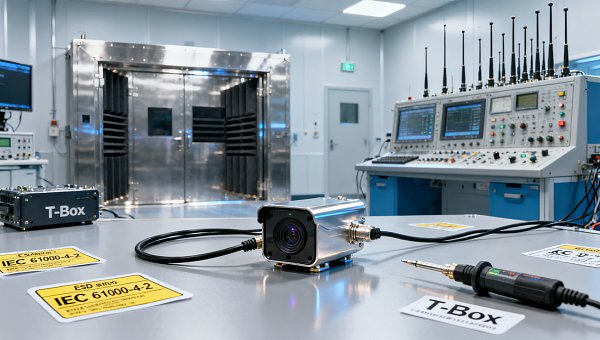
 Mexico NOM-019-SCFI-2026 Effective: EMC Certification Required for Auto Electronics ExportsEMC certification is now mandatory for auto electronics exports to Mexico under NOM-019-SCFI-2026. Ensure compliance for rearview mirrors, radar sensors & T-Box units—avoid shipment delays and order cancellations.
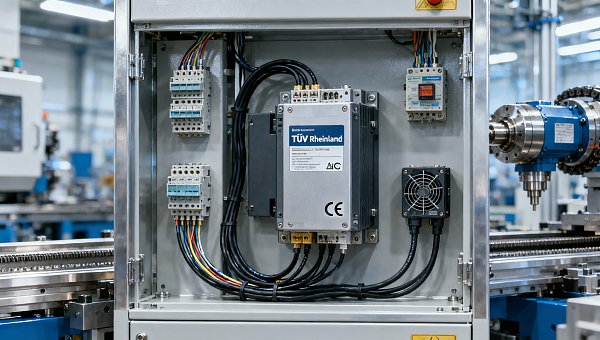
") TÜV Rheinland Updates CE Requirements for Servo Drives (PLd + EMC Joint Validation)TÜV Rheinland now mandates joint PLd + EMC validation for servo drives under CE marking—learn how this impacts certification timelines, lab selection, and EU market access.
TÜV Rheinland Updates CE Requirements for Servo Drives (PLd + EMC Joint Validation)TÜV Rheinland now mandates joint PLd + EMC validation for servo drives under CE marking—learn how this impacts certification timelines, lab selection, and EU market access. Vietnam Suspends SASO Mutual Recognition for Chinese Irrigation EquipmentVietnam suspends SASO mutual recognition for Chinese irrigation equipment—urgent compliance updates for drip tapes & PE pipes (HS 8424.89/3917.39). Act now to avoid delays.
 FDA Finalizes AI Diagnostic Device Rules for ImportersFDA finalizes AI diagnostic device rules for importers: New bias assessment mandate impacts ultrasound, glucose analyzers & dermatoscopes. Act now to ensure U.S. market access.
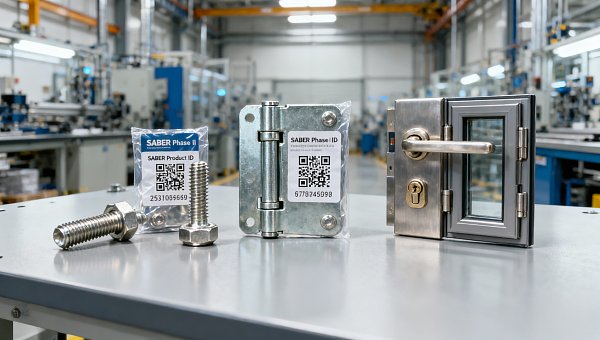
 SABER Phase II Live: Saudi Building Hardware Requires Digital Type Test Reports & PIDSABER Phase II is live: Building hardware exports to Saudi Arabia now require digital type test reports & a mandatory, immutable Product ID (PID). Act now to avoid customs delays!
 IMDG Code 41-24 Enforced: UN3480 Lithium Battery Labeling Mandatory from Apr 2026IMDG Code 41-24 enforcement starts Apr 2026: UN3480 lithium battery labeling & ISO 17363 docs are now mandatory—avoid port rejections!
 CBAM Carbon Tax Launch: Low CBAM Reporting Rate Among Chinese ExportersCBAM Carbon Tax is live—only 36.8% of Chinese exporters reported. Discover why, which industries are at risk, and how to secure EU market access now.
 China’s 10 Agencies Issue AI Export Ethics Review RulesChina’s 10 agencies launch AI export ethics rules—mandating bias reviews for visual inspection, warehouse AI & defect detection systems. Stay compliant & competitive.
 RCEP Green Packaging Mutual Recognition Takes EffectRCEP Green Packaging Mutual Recognition is now in effect—unlock faster customs clearance in Australia, NZ, Japan & Korea for GB/T 37659–2019-certified eco-packaging.
 Mexico NOM-019-SCFI-2026 Effective Apr 10, 2026: EMC Certification Required for Automotive ElectronicsNOM-019-SCFI-2026 EMC certification is now mandatory for automotive electronics entering Mexico — act before the July 1, 2026 customs ban.
 Red Sea Rerouting Normalized, EBA at $1,850/TEURed Sea rerouting normalized with EBA fixed at $1,850/TEU—learn how this structural shift impacts Asia-Europe freight costs, lead times & supply chain strategy.
 FDA AI Diagnostic Device Draft Rules: Bias Assessment for ImportsFDA AI diagnostic device draft rules require bias assessment for imports—learn how portable ultrasound, glucose, and dermatoscopic AI devices are affected & what to do next.
") TÜV Rheinland Updates CE Requirements for Servo Drives (PLd + EMC)TÜV Rheinland updates CE requirements for servo drives: PLd (ISO 13849-1) + EMC immunity (IEC 61000-6-2 Ed.4) now mandatory together — act now to avoid EU market delays!
TÜV Rheinland Updates CE Requirements for Servo Drives (PLd + EMC)TÜV Rheinland updates CE requirements for servo drives: PLd (ISO 13849-1) + EMC immunity (IEC 61000-6-2 Ed.4) now mandatory together — act now to avoid EU market delays! SABER Phase II Launch: Building Hardware Must Submit Digital Type Test Reports & Unique Product IDSABER Phase II now mandates digital type test reports & unique product IDs for building hardware—fasteners, scaffolding, door/window components. Ensure compliance to avoid customs rejection & SCOC delays.
 Vietnam Suspends SASO Mutual Recognition for Chinese Irrigation EquipmentVietnam suspends SASO mutual recognition for Chinese irrigation equipment—TCVN testing now mandatory. Act now to avoid 8–12 week delays and customs holdups.
 IMDG Code 41-24 Enforced: UN3480 Lithium Battery Labeling UpdateIMDG Code 41-24 enforcement starts April 2026: UN3480 lithium battery labeling updates are mandatory for global maritime shipments — avoid port delays, detention & penalties.
 EU CBAM Enters Full Enforcement on Jan 1, 2026EU CBAM full enforcement starts Jan 1, 2026 — mandatory quarterly reporting & certificate purchases for batteries, steel, cement, aluminum, fertilizers & chemicals. Act now to ensure EU market access.
 EU CBAM Carbon Tariff Starts Oct 2026 for Chinese Battery, Cement, Chemical ExportsEU CBAM carbon tariff hits Chinese battery, cement & chemical exports from Oct 2026 — mandatory emissions reporting starts now. Avoid €98/t default fees.














Popular Tags
Global Trade Insights & Industry
Our mission is to empower global exporters and importers with data-driven insights that foster strategic growth.
Search News
Popular Tags
Industry Overview
The global commercial kitchen equipment market is projected to reach $112 billion by 2027. Driven by urbanization, the rise of e-commerce food delivery, and strict hygiene regulations.