

Car electronics compatibility problems usually start after installation
Car electronics compatibility issues often begin right after installation, when mismatched modules, unstable wiring, or software conflicts disrupt normal vehicle functions. For aftermarket maintenance professionals, identifying these early warning signs is essential to preventing repeat failures and customer complaints. This article explores the common causes behind post-installation problems and offers practical insights to improve diagnostic accuracy and service reliability.
Why a checklist approach works better for Car electronics diagnosis
When Car electronics fail after installation, the problem is rarely a single bad part. In many cases, the new unit is functional, but the vehicle network, power supply, grounding path, coding logic, or accessory interface is not fully compatible. A checklist-based process helps maintenance teams avoid guesswork, shorten troubleshooting time, and document findings clearly for customers, suppliers, and internal quality control.
This is especially important in modern vehicles where infotainment systems, body control modules, reverse cameras, parking sensors, lighting controllers, immobilizers, and CAN/LIN communication all interact. A successful installation is not just about whether a device powers on. The true standard is whether the complete Car electronics environment remains stable under start-up, driving, standby, charging, and sleep modes.
First-check list: what to confirm before blaming the new device
Before replacing parts or escalating the case, prioritize the following checks. These items solve a large share of post-installation Car electronics complaints.
- Confirm the exact vehicle profile: model year, trim level, regional specification, engine type, factory options, and original module part numbers. Small differences can change Car electronics compatibility.
- Verify whether the installed unit is designed for the vehicle communication protocol. A device built for analog trigger logic may not work correctly in a CAN-based platform.
- Check harness pinout consistency instead of relying only on connector shape. A plug that fits mechanically may still have different pin assignments.
- Measure battery voltage under rest and load conditions. Low voltage, weak charging, or voltage drop during ignition can create false compatibility symptoms.
- Inspect ground quality at the installation point. Many Car electronics issues start with high-resistance grounding, paint contamination, or shared ground overload.
- Review fuse capacity and protection strategy. Wrong fuse values or bypassed protection can lead to intermittent faults or module shutdown.
- Check whether coding, initialization, pairing, or software activation is required after installation. Some modules remain partially functional until properly registered.
- Scan the full vehicle network for diagnostic trouble codes before and after installation. New codes can reveal communication collisions, missing termination, or sleep-mode disruption.
Core compatibility checklist for post-installation Car electronics problems
1. Power supply stability
Power is the first judgment standard. If a new display, control box, camera interface, or amplifier resets randomly, freezes after engine crank, or drains the battery overnight, verify constant power, accessory power, ignition signal logic, and sleep current. Some Car electronics need delayed shutdown support, while others require stable filtered voltage. If the installer uses a generic adapter without testing current behavior, the symptom may look like incompatibility when the real issue is unstable power management.
2. Grounding and noise control
Poor grounding often causes touch malfunction, audio noise, camera flicker, steering wheel control failure, or erratic sensor readings. Maintenance personnel should test continuity, resistance, and voltage difference between the module ground and chassis ground under load. In Car electronics systems with audio or video integration, grounding layout matters as much as signal routing. Ground loops may not show immediately during idle testing but can appear once lighting loads, blower motors, or charging systems become active.
3. Communication protocol matching
Many post-installation failures involve protocol mismatch rather than hardware failure. CAN bus speed, message mapping, LIN node behavior, wake-up strategy, and factory amplifier handshake can differ by brand and production year. If the new Car electronics unit cannot interpret steering wheel buttons, vehicle speed signals, reverse triggers, or door status data correctly, the installer should compare protocol specifications instead of swapping parts blindly.
4. Software, firmware, and coding requirements
Modern Car electronics are often software-defined. A head unit, parking module, digital dashboard, or lighting controller may require firmware alignment with the target vehicle. Even when hardware is correct, outdated firmware can produce black screens, delayed boot, missing audio, false warnings, or unstable Bluetooth behavior. Always ask whether the supplier provides revision history, supported vehicle lists, and coding procedures. If no controlled update path exists, long-term reliability is uncertain.
5. Harness quality and connector integrity
Harness defects are a frequent hidden source of Car electronics complaints. Pin tension, terminal material quality, crimp consistency, shielding integrity, and connector locking performance all matter. A vehicle may leave the workshop functioning normally but return after vibration or temperature change causes a loose terminal to open. Inspect for stretched pins, unofficial splices, poor solder joints, and damaged insulation near metal edges.
Quick judgment table: symptom, likely cause, and what to test first
Use the table below as a fast reference when troubleshooting Car electronics immediately after installation.
Extra checks by installation scenario
Head units and infotainment upgrades
For infotainment-related Car electronics, confirm steering wheel controls, OEM amplifier support, parking sensor display integration, reverse camera standards, microphone routing, antenna amplification, USB retention, and vehicle sleep behavior. Many complaints come from partial compatibility, where the screen works but factory convenience functions are lost.
Lighting modules and LED conversions
Lighting-related Car electronics often trigger bulb-out warnings, flicker, hyperflash, or thermal stress. Prioritize load simulation, PWM compatibility, heat management, and body control module sensitivity. Avoid assuming that a resistor or decoder box solves every platform. Some vehicles require software adaptation, and some aftermarket components introduce electromagnetic interference that affects nearby systems.
Parking, camera, and safety accessories
For parking sensors, cameras, DVR systems, and ADAS add-ons, inspect signal timing, trigger source quality, image standard support, and interference with factory sensors. A camera can test fine on the bench but fail once installed near noisy power lines or poor ground points. In safety-related Car electronics, even minor delay or image instability can become a customer confidence issue.
Immobilizer, remote start, and alarm systems
These systems require special caution because they interact with vehicle security logic. Maintenance teams should confirm key recognition, transponder bypass method, start authorization sequence, and anti-theft fault memory. A poorly integrated security device may create intermittent no-start conditions that are difficult to reproduce, making documentation and controlled testing essential.
Commonly overlooked risk items
- Regional firmware differences: a module for one market may not fully support another market’s Car electronics coding logic.
- Shared accessory power: adding multiple devices to one line can create voltage instability that affects all connected units.
- Bench success versus in-vehicle failure: lab testing does not reproduce vibration, thermal load, and bus traffic conditions.
- Improper sleep-current testing: checking too early after key-off may miss delayed wake events in Car electronics networks.
- Missing pre-install scan: without baseline fault data, it is harder to prove whether the installation created the problem.
- Unverified supplier claims: “plug and play” does not always mean fully compatible across trims and production batches.
Execution advice for maintenance teams
- Create a standard intake sheet that records vehicle data, original equipment status, customer complaint timing, and newly installed Car electronics part numbers.
- Perform a baseline scan before disassembly and save screenshots or reports for traceability.
- Use measured values, not assumptions. Record battery voltage, current draw, resistance, and network status.
- Isolate the fault path by disconnecting one added component at a time when multiple accessories were installed together.
- Keep a compatibility record by brand and vehicle platform. Over time, this internal database becomes a major efficiency asset.
- Communicate clearly with customers about the difference between device failure, installation defect, and platform incompatibility.
FAQ for post-installation Car electronics troubleshooting
How soon do compatibility issues usually appear?
Many Car electronics compatibility problems appear immediately, but some show up only after several ignition cycles, overnight parking, or temperature change. That is why road testing and sleep-current verification are important before delivery.
If the connector fits, is the unit compatible?
No. Connector fit only confirms mechanical connection. Car electronics compatibility also depends on pin definition, signal type, software support, communication protocol, and coding requirements.
Should technicians update firmware first?
Only after confirming that the update matches the exact hardware and vehicle application. Incorrect firmware can worsen Car electronics issues or disable functions completely.
Final checklist before moving to replacement or supplier escalation
Before concluding that a unit must be replaced, confirm that you have verified power, ground, harness integrity, communication protocol, coding, firmware version, vehicle-specific options, and network fault data. This disciplined process reduces unnecessary returns and protects workshop credibility.
For teams that source, compare, or recommend Car electronics internationally, structured information also matters beyond the workshop. Reliable product documentation, supplier support records, and compatibility intelligence help maintenance businesses reduce risk and improve service consistency. Platforms such as GTIIN and TradeVantage add value by organizing market updates, supplier visibility, and industry intelligence that support better sourcing decisions and stronger trust signals in the global aftermarket ecosystem.
If you need to move from diagnosis to procurement or long-term installation planning, prioritize discussions around exact vehicle parameters, supported protocols, firmware policy, harness specifications, test standards, warranty scope, lead time, and after-sales technical support. Those are the questions that turn Car electronics installation from trial and error into a repeatable, professional service process.
Recommended News
 Portable oxygen concentrators are quieter now, but not always lighterPortable oxygen concentrators are getting quieter, but not always lighter. Explore the trade-offs in weight, battery life, comfort, and daily usability before you compare today’s top options.
 Interactive whiteboards are improving, but software still decides valueInteractive whiteboards deliver real value when software matches the scenario. Explore how usability, integration, security, and updates shape smarter buying decisions.
 Medical diagnostic equipment downtime often starts with calibration neglectMedical diagnostic equipment downtime often starts with missed calibration. Learn the warning signs, checklist priorities, and practical steps to prevent failures and keep healthcare operations reliable.
 Eco-friendly building materials are easier to specify than to sourceEco-friendly building materials are easier to specify than source. Learn how procurement teams can verify claims, reduce risk, and find reliable suppliers faster.
 Ergonomic workspace design can fail if chair fit comes lastErgonomic workspace design starts with chair fit. Learn how the right seat improves posture, comfort, and focus—and why fixing it first can transform your workspace.
 Outdoor garden supplies demand shifts faster than many expectOutdoor garden supplies demand is shifting faster than expected. Discover key B2B trends, smarter sourcing insights, and practical strategies to stay competitive and capture growth.
 Sustainable home decor sells better when materials are clearly disclosedSustainable home decor sells better when brands clearly disclose materials, finishes, and sourcing. Discover why transparency builds trust, justifies price, and drives more confident buying.
 Modern office furniture trends now favor modular over fixed layoutsModern office furniture is shifting to modular layouts for flexibility, lower lifecycle costs, and better hybrid work performance. See why enterprises are moving away from fixed office design.
 Smart street lighting projects stall when controls are overcomplicatedSmart street lighting projects often stall when controls become too complex. Learn how to simplify deployment, reduce risk, and scale citywide with practical, maintainable systems.
 Solid-state battery breakthroughs look promising, but scale is harderSolid-state battery breakthroughs promise safer, higher-density energy storage, but scaling remains the real challenge. Explore what this means for supply chains, investment, and market advantage.
 Commercial LED lighting upgrades often save less than expectedCommercial LED lighting upgrades can underdeliver when baseline data, controls, and installation costs are misjudged. Learn how to assess real savings, reduce ROI risk, and make smarter investment decisions.
 Lithium battery storage payback can change with one policy updateLithium battery storage payback can shift fast after one policy update. See how tariffs, tax credits, grid pricing, and incentives change ROI—and how finance teams can approve smarter.
 Photovoltaic solar panels now compete on output in low lightPhotovoltaic solar panels now compete on low-light output. Discover how buyers can compare yield, risk, and supplier value to source smarter and boost project returns.
 Plant-based protein processing changes texture more than many expectPlant-based protein processing reshapes texture, stability, and safety more than expected. Explore key risks, QC checkpoints, and smarter sourcing insights for consistent results.
 Foldable screen technology is improving, but crease concerns remainFoldable screen technology is evolving fast with slimmer designs and stronger hinges, but crease concerns still shape buying decisions. Explore where it matters most.
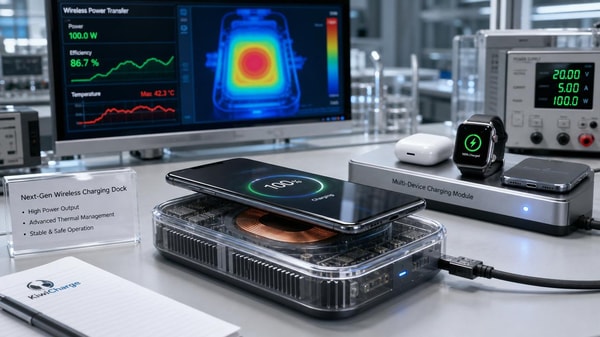
 Next-gen wireless charging still faces a heat management problemNext-gen wireless charging promises faster, more flexible power delivery, but heat remains the key barrier. Discover how thermal limits impact safety, efficiency, and market readiness.
 Wearable technology adoption drops when comfort gets overlookedWearable technology adoption falls fast when comfort is ignored. Discover how fit, materials, weight, and battery life shape long-term use and smarter buying decisions.
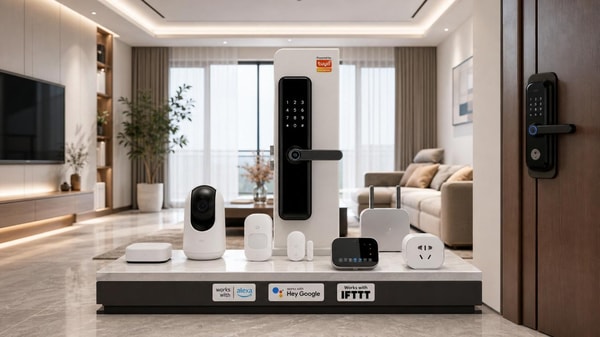
 Smart home devices wholesale is no longer just about low pricingSmart home devices wholesale now goes beyond low pricing. Discover how reliability, compatibility, and supply chain confidence help distributors choose profitable, trusted partners.
 Agri-PV systems make sense only when land use is planned wellAgri-PV systems deliver real value only when land use is planned well. Discover how smart site, crop, grid, and compliance decisions turn dual-use solar into a bankable, sustainable project.
 Organic fertilizers may improve soil slower, but results last longerOrganic fertilizers improve soil slowly but deliver longer-lasting results. Learn how they boost soil health, support safer growing, and help you choose the right option for sustainable planting success.
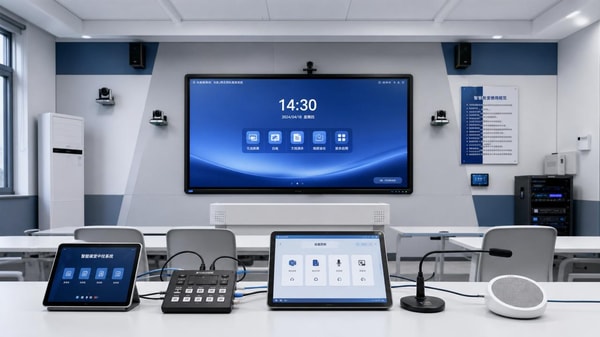
 Smart classroom solutions fail when teachers need too many appsSmart classroom solutions fail when teachers juggle too many apps. Discover why integrated, easy-to-use platforms drive adoption, ROI, and scalable learning success.


















Popular Tags
Global Trade Insights & Industry
Our mission is to empower global exporters and importers with data-driven insights that foster strategic growth.
Search News
Popular Tags
Industry Overview
The global commercial kitchen equipment market is projected to reach $112 billion by 2027. Driven by urbanization, the rise of e-commerce food delivery, and strict hygiene regulations.