

What limits accuracy in autonomous driving sensors today?
Autonomous driving sensors are advancing rapidly, yet accuracy remains constrained by weather interference, sensor fusion gaps, edge-case complexity, and real-time processing limits. For technical evaluators, understanding these barriers is essential to assessing system reliability, safety performance, and deployment readiness. This article examines the core factors that still prevent autonomous sensing systems from delivering consistent, high-precision perception in real-world driving environments.
Why are autonomous driving sensors still a major technical bottleneck?
Autonomous driving sensors sit at the center of vehicle perception, but accuracy is not determined by hardware specification alone. A modern stack may include cameras, radar, lidar, ultrasonic devices, inertial measurement units, GPS, and high-definition maps. Each technology captures a different slice of the environment, and each also carries blind spots. Technical assessment teams often discover that the true limitation is not whether a sensor can “see,” but whether the entire perception chain can interpret uncertain, changing, and incomplete inputs fast enough for safe driving decisions.
In controlled demonstrations, autonomous driving sensors can produce impressive results. In open-road deployment, however, accuracy drops because road environments are not stable. Light changes by the second, weather alters signal quality, road markings degrade, and traffic behavior remains unpredictable. A perception system must classify objects, estimate motion, understand drivable space, and flag anomalies in real time. Even a small error in one step can propagate into poor path planning or delayed braking.
For technical evaluators, this means sensor accuracy should be judged as a system-level outcome rather than a single component metric. Resolution, range, refresh rate, and field of view matter, but so do calibration stability, synchronization, software robustness, and compute latency. The practical question is not whether one sensor is accurate in isolation, but whether the integrated sensing architecture remains trustworthy under operational stress.
Which environmental conditions most reduce sensor accuracy?
Weather and lighting remain some of the most visible limits on autonomous driving sensors today. Cameras depend heavily on scene visibility. Glare, deep shadow, low sun angles, nighttime conditions, fog, and heavy rain can reduce contrast and create false boundaries. Lane detection and object recognition models often perform well in curated datasets but degrade when the scene becomes visually ambiguous.
Lidar is often praised for precise depth measurement, yet it is not immune to environmental interference. Rain, snow, dust, and airborne particles can scatter laser returns and introduce noise. This can produce sparse point clouds or ghost artifacts, especially at longer ranges. Radar handles poor weather better than vision in many cases, but its lower spatial resolution makes object classification harder. It may detect movement reliably while struggling to distinguish between a metal guardrail, a truck edge, or roadside clutter with the same precision expected from lidar or camera systems.
Road contamination is another underrated factor. Mud, salt spray, ice buildup, and water droplets on sensor covers can sharply reduce measurement quality. In fleet-scale operations, the question is not merely whether autonomous driving sensors are theoretically capable, but how often they remain clean, aligned, and functional over time. This is especially relevant in logistics, mining, public transport, and cross-regional trade corridors where vehicles encounter diverse climate zones.
A useful evaluation approach is to test sensing performance against environmental stress categories: low visibility, reflective surfaces, occlusion density, road debris, and seasonal contamination. These categories reveal far more about deployment readiness than lab-only benchmark claims.
If multiple sensors are combined, why does sensor fusion still fail?
Sensor fusion is often presented as the solution to the weaknesses of individual autonomous driving sensors. In principle, that is correct: cameras offer semantic richness, radar contributes velocity and weather resilience, and lidar provides geometric depth. In practice, fusion introduces a second layer of complexity that can become a new source of inaccuracy.
The first challenge is temporal alignment. If camera frames, radar sweeps, and lidar scans are not synchronized precisely, the vehicle may fuse measurements that describe slightly different moments in time. At urban speeds, even small timing errors can distort object trajectories. A pedestrian stepping into a lane or a motorcycle crossing diagonally may be mislocalized because the system combines stale and current inputs.
The second challenge is spatial calibration. Autonomous driving sensors must maintain exact positional relationships to one another. Small shifts caused by vibration, thermal expansion, maintenance error, or minor collisions can undermine fusion accuracy. A camera-lidar projection mismatch of only a few pixels can alter object association quality and degrade detection confidence.
The third challenge is confidence management. Different sensors may disagree. Radar may detect motion where the camera sees no clear object. Lidar may show a shape the classification model cannot label confidently. Fusion software must decide whether to trust, average, suppress, or escalate conflicting signals. This is not a simple engineering choice; it affects safety policy. A conservative fusion strategy can increase false positives and uncomfortable driving behavior, while an aggressive strategy can miss hazards.
Common fusion failure points technical evaluators should review
Are edge cases a bigger problem than sensor specifications?
In many real deployments, yes. Autonomous driving sensors may have strong nominal specifications, yet fail in rare but safety-critical scenarios. Edge cases include unusual vehicles, partially visible pedestrians, construction zones, temporary signs, emergency responders, animals, reflective cargo, hand gestures from traffic police, and damaged infrastructure. These cases are difficult because they combine perception ambiguity with limited training exposure.
A technical evaluator should be cautious when vendors emphasize range or resolution without showing edge-case robustness. A 200-meter detection claim means little if the system cannot correctly interpret a toppled traffic cone pattern or a cyclist emerging between parked trucks. Real driving scenes are not just object catalogs; they are dynamic contexts where intention, occlusion, and motion interaction matter.
Machine learning compounds this challenge. Perception models trained on large datasets still depend on data diversity, annotation quality, and domain transfer performance. A system trained mostly on North American highways may not generalize well to dense mixed traffic in Southeast Asia or complex winter roads in Northern Europe. For global trade, fleet deployment, and cross-border logistics use cases, these regional differences become commercially significant. Sensor accuracy is therefore tied not only to hardware but to geographic adaptation and update discipline.
How do computing limits and latency affect autonomous driving sensors?
Autonomous driving sensors generate large volumes of data, and processing that data under strict time constraints is one of today’s hardest engineering problems. High-resolution cameras, dense lidar point clouds, radar reflections, localization streams, and map references all compete for compute resources. If the onboard platform cannot process inputs fast enough, perception quality effectively declines even when the raw sensors are capable.
Latency affects three layers. First, there is sensing latency, or the delay in collecting raw measurements. Second, there is perception latency, where models detect, classify, and track the environment. Third, there is decision latency, where planning and control act on the interpreted scene. By the time a vehicle reacts, the world may already have changed. For fast-moving cut-ins, sudden braking, or urban turning conflicts, delays of even tens of milliseconds can materially reduce safety margins.
Another issue is the compute tradeoff between accuracy and speed. More complex models may improve detection quality, but they also consume power and time. Embedded automotive platforms operate under thermal and energy constraints, so teams often compress models, reduce frame rates, or simplify fusion pipelines. These choices can preserve real-time operation while quietly reducing the practical accuracy of autonomous driving sensors in difficult scenes.
What are the most common evaluation mistakes when comparing sensor solutions?
One common mistake is evaluating autonomous driving sensors through isolated headline metrics. Buyers may compare only range, resolution, or price without examining weather resilience, calibration durability, software maturity, or failure behavior. A sensor that performs well in a brochure can underperform in a complete stack if integration support is weak.
A second mistake is overreliance on demo scenarios. Many systems are tuned to perform impressively on fixed routes or clear-weather test loops. Technical evaluators should ask whether the reported accuracy was measured across diverse operational design domains, including night driving, roadworks, heavy traffic, and degraded infrastructure. Repeatability under varied conditions matters more than peak results under ideal conditions.
A third mistake is ignoring maintenance and lifecycle factors. Autonomous driving sensors are physical systems exposed to shock, contamination, and aging. Lens coatings degrade, mounts loosen, heaters fail, and cleaning systems vary in effectiveness. Evaluation should include service intervals, self-diagnostic capability, recalibration workflow, and field replacement practicality.
Quick judgment table for technical assessment teams
Can autonomous driving sensors become accurate enough soon, and what should evaluators confirm first?
Autonomous driving sensors will continue to improve, especially through better fusion algorithms, domain-specific AI training, higher-efficiency compute, and stronger sensor cleaning and self-monitoring systems. However, “accurate enough” will remain context-dependent. Highway pilot functions, geo-fenced logistics routes, port operations, and urban robotaxi services do not share the same risk profile. Accuracy must be evaluated against a defined operating domain, not against a universal promise of autonomy.
For technical evaluators, the most productive next step is to confirm operational boundaries before comparing vendors or architectures. Ask where the system is expected to run, under which weather conditions, at what speeds, with what maintenance support, and under which regulatory or insurance assumptions. Then examine how autonomous driving sensors behave when visibility degrades, when one channel fails, when objects are ambiguous, and when compute resources are stressed.
If you need to move from general research to practical selection, the first discussion should focus on test methodology, sensor fusion design, calibration strategy, edge-case coverage, latency budget, and lifecycle support. For procurement, partnership, or deployment planning, these questions will reveal far more than headline claims and help determine whether a sensing solution is truly ready for real-world autonomous operations.
Recommended News
 Portable oxygen concentrators are quieter now, but not always lighterPortable oxygen concentrators are getting quieter, but not always lighter. Explore the trade-offs in weight, battery life, comfort, and daily usability before you compare today’s top options.
 Interactive whiteboards are improving, but software still decides valueInteractive whiteboards deliver real value when software matches the scenario. Explore how usability, integration, security, and updates shape smarter buying decisions.
 Medical diagnostic equipment downtime often starts with calibration neglectMedical diagnostic equipment downtime often starts with missed calibration. Learn the warning signs, checklist priorities, and practical steps to prevent failures and keep healthcare operations reliable.
 Eco-friendly building materials are easier to specify than to sourceEco-friendly building materials are easier to specify than source. Learn how procurement teams can verify claims, reduce risk, and find reliable suppliers faster.
 Ergonomic workspace design can fail if chair fit comes lastErgonomic workspace design starts with chair fit. Learn how the right seat improves posture, comfort, and focus—and why fixing it first can transform your workspace.
 Outdoor garden supplies demand shifts faster than many expectOutdoor garden supplies demand is shifting faster than expected. Discover key B2B trends, smarter sourcing insights, and practical strategies to stay competitive and capture growth.
 Sustainable home decor sells better when materials are clearly disclosedSustainable home decor sells better when brands clearly disclose materials, finishes, and sourcing. Discover why transparency builds trust, justifies price, and drives more confident buying.
 Modern office furniture trends now favor modular over fixed layoutsModern office furniture is shifting to modular layouts for flexibility, lower lifecycle costs, and better hybrid work performance. See why enterprises are moving away from fixed office design.
 Smart street lighting projects stall when controls are overcomplicatedSmart street lighting projects often stall when controls become too complex. Learn how to simplify deployment, reduce risk, and scale citywide with practical, maintainable systems.
 Solid-state battery breakthroughs look promising, but scale is harderSolid-state battery breakthroughs promise safer, higher-density energy storage, but scaling remains the real challenge. Explore what this means for supply chains, investment, and market advantage.
 Commercial LED lighting upgrades often save less than expectedCommercial LED lighting upgrades can underdeliver when baseline data, controls, and installation costs are misjudged. Learn how to assess real savings, reduce ROI risk, and make smarter investment decisions.
 Lithium battery storage payback can change with one policy updateLithium battery storage payback can shift fast after one policy update. See how tariffs, tax credits, grid pricing, and incentives change ROI—and how finance teams can approve smarter.
 Photovoltaic solar panels now compete on output in low lightPhotovoltaic solar panels now compete on low-light output. Discover how buyers can compare yield, risk, and supplier value to source smarter and boost project returns.
 Plant-based protein processing changes texture more than many expectPlant-based protein processing reshapes texture, stability, and safety more than expected. Explore key risks, QC checkpoints, and smarter sourcing insights for consistent results.
 Foldable screen technology is improving, but crease concerns remainFoldable screen technology is evolving fast with slimmer designs and stronger hinges, but crease concerns still shape buying decisions. Explore where it matters most.
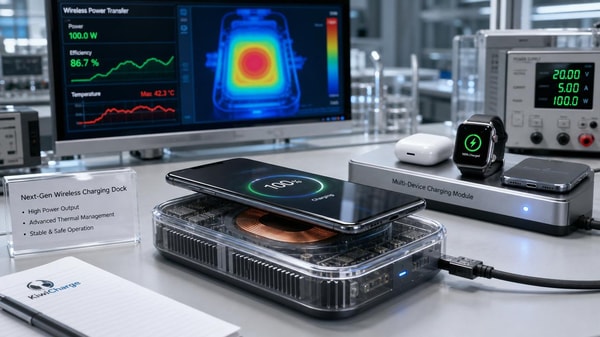
 Next-gen wireless charging still faces a heat management problemNext-gen wireless charging promises faster, more flexible power delivery, but heat remains the key barrier. Discover how thermal limits impact safety, efficiency, and market readiness.
 Wearable technology adoption drops when comfort gets overlookedWearable technology adoption falls fast when comfort is ignored. Discover how fit, materials, weight, and battery life shape long-term use and smarter buying decisions.
 Smart home devices wholesale is no longer just about low pricingSmart home devices wholesale now goes beyond low pricing. Discover how reliability, compatibility, and supply chain confidence help distributors choose profitable, trusted partners.
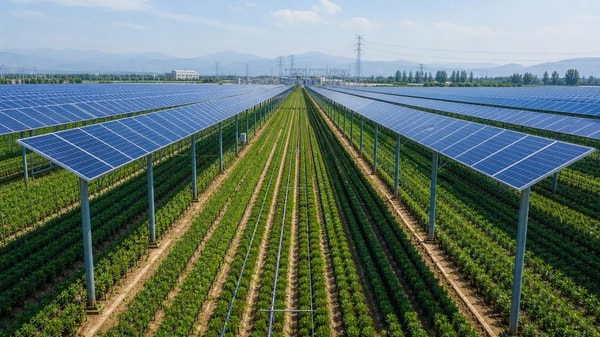
 Agri-PV systems make sense only when land use is planned wellAgri-PV systems deliver real value only when land use is planned well. Discover how smart site, crop, grid, and compliance decisions turn dual-use solar into a bankable, sustainable project.
 Organic fertilizers may improve soil slower, but results last longerOrganic fertilizers improve soil slowly but deliver longer-lasting results. Learn how they boost soil health, support safer growing, and help you choose the right option for sustainable planting success.
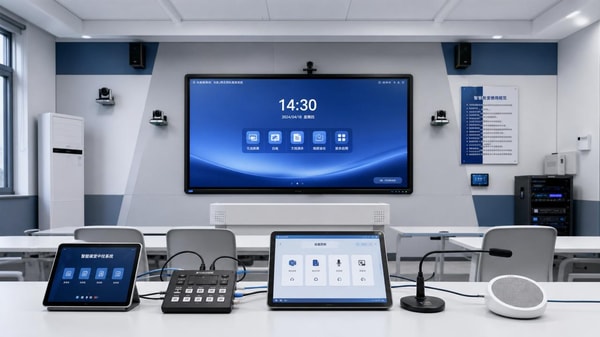
 Smart classroom solutions fail when teachers need too many appsSmart classroom solutions fail when teachers juggle too many apps. Discover why integrated, easy-to-use platforms drive adoption, ROI, and scalable learning success.










Popular Tags
Global Trade Insights & Industry
Our mission is to empower global exporters and importers with data-driven insights that foster strategic growth.
Search News
Popular Tags
Industry Overview
The global commercial kitchen equipment market is projected to reach $112 billion by 2027. Driven by urbanization, the rise of e-commerce food delivery, and strict hygiene regulations.