

Agrochemicals industry analysis now pays more attention to policy
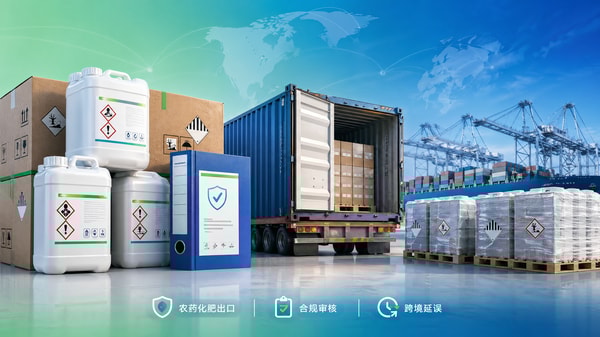
As global regulations tighten and trade dynamics shift, agrochemicals industry analysis now focuses more on policy impact, compliance risks, and agrochemicals market trends. For buyers, distributors, and business evaluators, understanding agrochemicals export rules, production line optimization, and production line automation is becoming essential to making smarter sourcing and investment decisions in an increasingly competitive global market.
The core takeaway is clear: in today’s agrochemicals market, policy is no longer a background variable. It has become a primary driver of pricing, supply stability, product eligibility, market access, and investment risk. For procurement teams, distributors, and commercial evaluators, the most useful industry analysis is no longer limited to demand forecasts or raw material trends. It must also explain how regulation affects sourcing continuity, export feasibility, manufacturing economics, and future competitiveness.
Why policy has become central to agrochemicals industry analysis
The agrochemicals sector has always been regulated, but the intensity and speed of policy change have increased substantially. Environmental rules, product registration requirements, residue standards, hazardous chemical controls, carbon-related expectations, and customs enforcement now influence trade decisions much more directly than before.
This is why agrochemicals industry analysis now pays more attention to policy: regulations can quickly determine whether a product can be manufactured, exported, imported, stored, transported, or sold in a target market. A policy shift may not just increase administrative burden. It can eliminate certain molecules from a portfolio, delay market entry, raise production costs, or force distributors to restructure sourcing networks.
For target readers such as information researchers, buyers, business assessment professionals, and distributors, policy matters because it changes practical business outcomes in five key ways:
- Supply continuity: stricter inspections, licensing, and environmental enforcement can interrupt factory output.
- Cost structure: compliance investment, waste treatment, formulation upgrades, and packaging changes raise unit costs.
- Market access: product registration, residue limits, and active ingredient restrictions affect where goods can legally be sold.
- Trade risk: agrochemicals export rules and customs checks can delay or block shipments.
- Long-term competitiveness: manufacturers with stronger compliance systems and production line automation are better positioned to survive regulatory tightening.
What buyers and distributors should evaluate before choosing a supplier
For procurement and channel partners, the central question is not simply “Who offers the lowest price?” It is “Which supplier can continue delivering compliant product under tighter policy conditions?” That distinction is increasingly important.
When evaluating agrochemical suppliers, buyers should focus on several policy-linked dimensions:
1. Regulatory resilience of the supplier
Assess whether the manufacturer operates with stable permits, documented environmental compliance, and a history of passing inspections. In many markets, a low-cost offer can become expensive if production is suspended or exports are delayed due to non-compliance.
2. Product registration compatibility
Not every product that can be produced in one country can be easily registered or sold in another. Buyers and distributors should verify active ingredient status, formulation compliance, labeling requirements, and destination-market registration feasibility before making volume commitments.
3. Export execution capability
Agrochemicals export rules often involve dangerous goods classification, customs declarations, packaging rules, documentation accuracy, and destination-specific restrictions. A supplier with weak export systems may create avoidable shipment disruptions.
4. Flexibility under changing standards
Suppliers that can adapt formulations, packaging, batch traceability, and documentation processes are better partners when policy changes suddenly. This flexibility is often supported by stronger internal systems and production line optimization.
5. Transparency in cost drivers
If pricing has changed, buyers should understand whether the increase comes from raw materials, environmental compliance, energy consumption, packaging regulation, or logistics constraints. This helps separate temporary market noise from structural cost shifts.
In practice, buyers should move from price comparison to risk-adjusted supplier comparison. A supplier that is slightly more expensive but consistently compliant may reduce total commercial risk far more effectively than a lower-priced but unstable source.
How policy changes are reshaping agrochemicals market trends
Many of the most important agrochemicals market trends are now policy-shaped rather than purely demand-led. This affects both upstream manufacturing and downstream distribution strategy.
Consolidation toward stronger manufacturers
As compliance requirements become more demanding, smaller producers with weak environmental or quality systems face greater pressure. This often benefits larger or better-managed manufacturers that can absorb the cost of upgrades, audits, digital traceability, and waste treatment.
Shift toward compliant and differentiated products
Regulatory pressure is accelerating interest in products with clearer registration pathways, better safety profiles, and stronger compatibility with target-market standards. In some cases, this also supports growth in higher-value formulations and more technically differentiated offerings.
Regional supply chain rebalancing
Trade barriers, tariff changes, registration delays, and geopolitical concerns are prompting importers and distributors to diversify sourcing. Companies increasingly want backup production regions or multi-supplier frameworks to reduce overdependence on a single policy environment.
Rising importance of traceability and documentation
Compliance is no longer a back-office detail. In many trade relationships, document quality, batch traceability, safety data accuracy, and labeling precision now influence whether a deal moves forward. This especially matters for distributors serving markets with strict customs and agricultural oversight.
Automation as a compliance enabler
Production line automation is not only about labor efficiency. It also supports consistency, quality control, batch recording, and reduced human error. As policy expectations rise, automated and digitally managed production becomes more relevant to market credibility.
Why production line optimization now matters to commercial evaluation
For many readers, production line optimization may seem like an internal factory issue. In reality, it has become highly relevant to sourcing, distribution, and investment decisions because optimized manufacturing is closely linked to compliance and reliability.
A well-optimized production line can improve:
- Batch consistency, which supports product quality and registration reliability
- Waste control, which helps factories meet environmental requirements
- Energy efficiency, reducing cost pressure under stricter sustainability expectations
- Throughput stability, lowering the risk of supply interruption
- Documentation accuracy, especially when integrated with digital systems
For buyers and business evaluators, this means supplier due diligence should include questions such as:
- Has the factory recently upgraded its production systems?
- Does it use production line automation in critical stages?
- Can it provide traceable quality and environmental records?
- How does it manage formulation consistency and packaging compliance?
- Is it equipped to adapt output to new regulatory requirements quickly?
These questions help reveal whether the supplier is prepared for the next phase of industry tightening rather than only the current order cycle.
How to assess agrochemicals export rules without getting lost in regulation
Many commercial teams know agrochemicals export rules are important but struggle to convert regulation into practical evaluation criteria. A useful approach is to break the issue into operational checkpoints.
Start with product legality
Confirm that the product and active ingredient can be legally exported from the origin country and imported into the destination country. Do not assume that existing domestic production automatically means international trade is straightforward.
Check documentation readiness
Export execution often depends on document accuracy, including safety data sheets, certificates, labels, dangerous goods classifications, and customs declarations. Missing or inconsistent paperwork can create delays even when the product itself is allowed.
Review packaging and transport compliance
Agrochemical products may face strict requirements for packaging integrity, hazard labeling, storage, and shipping mode. Distributors and importers should confirm that suppliers understand destination-specific transport expectations.
Examine registration and labeling alignment
Even after customs clearance, downstream sale may depend on local labeling language, approved claims, package sizes, and registration details. This is particularly important for distributors planning private label or multi-market distribution.
Monitor policy trend direction, not only current status
A product may be legal today but vulnerable tomorrow if residue rules, environmental standards, or active ingredient restrictions are tightening. Good agrochemicals industry analysis should identify where future pressure is building.
For commercial decision-makers, the goal is not to become regulatory specialists. It is to know which policy variables can materially affect margin, timing, and continuity.
What a stronger decision framework looks like for procurement and business evaluation
To make better sourcing or market decisions, readers should combine market analysis with policy screening. A practical framework includes the following dimensions:
- Policy exposure: How sensitive is the product or supplier to environmental, trade, or registration changes?
- Operational capability: Can the manufacturer maintain quality and output under tighter compliance conditions?
- Export readiness: Are agrochemicals export rules well understood and consistently managed?
- Technology maturity: Does production line automation support stability, traceability, and lower compliance risk?
- Cost sustainability: Are current prices sustainable after compliance-related cost adjustments?
- Market fit: Can the product remain commercially viable in target geographies as regulations evolve?
This framework is more useful than relying on broad market optimism or one-dimensional supplier quotations. It helps organizations identify which opportunities are scalable and which are exposed to hidden disruption.
What this means for the agrochemicals sector going forward
Going forward, agrochemicals market trends will likely continue to be shaped by policy-led restructuring. Compliance strength, digital systems, automation, export execution, and adaptable manufacturing will increasingly separate durable suppliers from vulnerable ones.
For buyers, distributors, and evaluators, that means the best opportunities may not always be the cheapest or the most visible. They are often the ones backed by factories and partners that can prove resilience under policy pressure. In this environment, business value comes from reducing uncertainty as much as from securing favorable pricing.
In short, agrochemicals industry analysis now pays more attention to policy because policy increasingly decides who can produce, who can ship, who can sell, and who can grow. Companies that understand this shift will make better sourcing choices, conduct sharper commercial evaluations, and build more reliable trade strategies in a market where compliance and competitiveness are now closely linked.
Recommended News
 China-France Nuclear Cooperation Advances at Beijing ExpoChina-France nuclear cooperation advances: mutual recognition for nuclear-grade seals, cables & radiation monitors boosts export readiness for suppliers targeting EU and BRI projects.
 Vietnam’s 4 Provinces Seek AI Tourism Tech in NanningAI tourism tech in demand: Vietnam’s 4 provinces seek AI-guided terminals, multilingual interpretation, AI-CCTV & smart ticketing in Nanning—key opportunity for B2G exporters.
 Q1 2026 China Power Market Trading Up 25.6%: Smart Meters, Storage Export Demand RisesSmart meters, energy storage exports surge as China’s Q1 2026 power market trading jumps 25.6% — key signal for global manufacturers & channel partners.
 China First Country with 5M+ Active Invention PatentsChina first country with 5M+ active invention patents—key for buyers in AI, solar, lithium battery & energy storage. Discover IP implications for sourcing, compliance & supplier vetting.
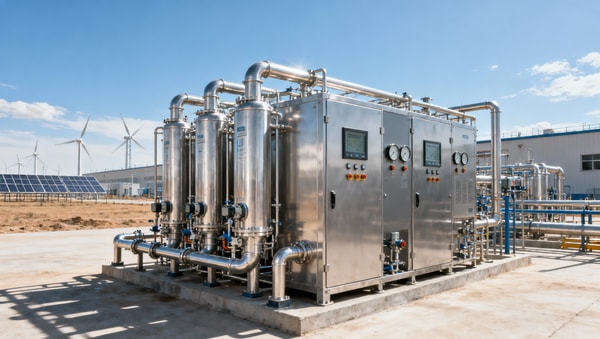
 Shenneng Etorkeqi Green Ammonia Project: Deionized Water Station OperationalShenneng Etorkeqi Green Ammonia Project’s deionized water station is now operational—ISO 8502-3 compliant, fully integrated, and a key milestone for global green hydrogen developers and exporters.
 China Launches 'Model-Data Resonance' Initiative for AI+Manufacturing InteroperabilityModel-Data Resonance initiative boosts AI+manufacturing interoperability—learn how GB/T XXXX–2026 aligns with VDI 2182 & ISA-95 for smoother global factory deployments.
 China’s First Embodied AI Robot Insurance Launched in GuangxiChina’s first embodied AI robot insurance launched in Guangxi—key for robotics exporters, AI hardware makers & global compliance teams. CE-recognized, EU/UK/AU-ready.
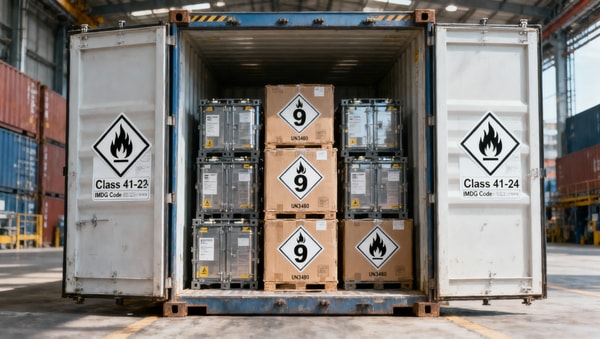
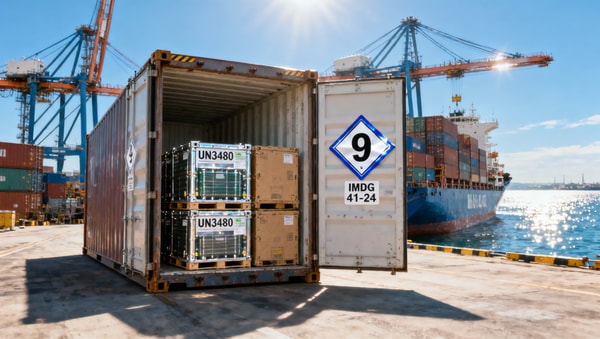
 IMDG Code 41-24 Enforced: UN3480 Lithium Battery Labeling Now MandatoryIMDG Code 41-24 is now mandatory: UN3480 lithium battery labeling, documentation & packaging rules are enforced globally as of 28 April 2026 — avoid port rejections!
 State Grid’s $680M Embodied AI Procurement Signals Export OpportunityEmbodied AI, IEC 61850 & IEC 62443: State Grid’s $680M procurement unlocks export opportunities for compliant industrial robots and smart vision systems in emerging markets.
 IMDG Code 41-24 Enforces UN3480 Class 9 Labeling for Lithium Battery Sea FreightIMDG Code 41-24 mandates UN3480 lithium battery sea freight to display durable Class 9 labels from April 27, 2026—avoid delays & port rejections.
 ESS Key Component Prices Drop ~80%: Quality & Compliance RiseESS key component prices dropped ~80%—but quality & compliance demands surged. Discover how UL 9540A, AS/NZS 5139, and certified BMS/inverters now define market access.
 Mexico NOM-019-SCFI-2026 Effective July 2026: EMC Certification Mandatory for Auto ElectronicsMexico NOM-019-SCFI-2026 mandates EMC certification for auto electronics from July 2026 — ensure compliance now to avoid supply chain disruption & customs delays.
 Red Sea Rerouting Normalized, ECA Surcharge Hits $1,850/TEURed Sea rerouting normalized: ECA surcharge hits $1,850/TEU — 47% of total freight cost. Impacting hand tools, building materials & furniture exporters to Europe. Act now.
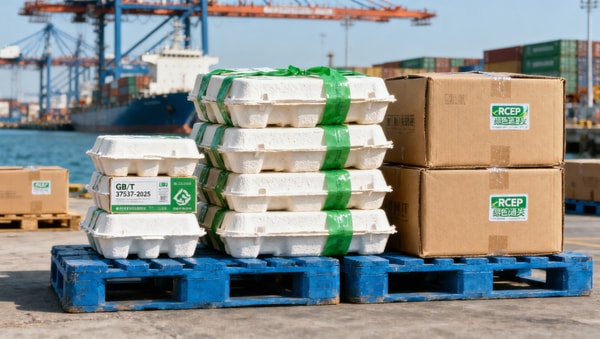
 RCEP Green Packaging Mutual Recognition Takes EffectRCEP Green Packaging Mutual Recognition is live—GB/T 37537-2025–certified packaging now enjoys fast-track clearance in Australia, NZ, Japan & Korea. Save time, cut costs, and boost export efficiency.
 Vietnam Suspends SASO Mutual Recognition for Chinese Irrigation EquipmentVietnam suspends SASO mutual recognition for Chinese irrigation equipment—drip tapes, PE fittings, auto valves now require VINAQ-IR certification. Act now to avoid delays & customs hold.
 Pool equipment maintenance warning signs before a breakdownPool equipment maintenance warning signs before a breakdown: spot early pump, filter, and control issues, improve pool equipment installation decisions, and reduce downtime with smarter sourcing insights.
 Patios and decks materials that age badly in humid climatesPatios and decks materials that age badly in humid climates: learn which patios and decks materials fail fast, how patios and decks construction choices affect durability, and how to source smarter.
 Textile home fabrics buyers now ask more about wash durabilityTextile home fabrics buyers now prioritize wash durability, consistency, and long-term value. Explore sourcing insights, production line optimization, and smarter textile home accessories decisions.
 What recurring waste says about production line efficiencyProduction line efficiency starts with recurring waste. Discover how production line optimization and production line automation reveal supplier risk, cut hidden costs, and improve sourcing decisions across textiles, jewelry, and agrochemicals.
 Agrochemicals export rules causing delays in new marketsAgrochemicals export delays explained with agrochemicals industry analysis and agrochemicals market trends—learn compliance risks, supplier selection tips, and smarter market entry strategies.
 Fashion tech applications brands are testing in physical storesFashion tech applications and fashion tech startups are transforming physical stores with smarter fitting, data-led production line optimization, and scalable retail innovation—explore key trends now.
















Popular Tags
Global Trade Insights & Industry
Our mission is to empower global exporters and importers with data-driven insights that foster strategic growth.
Search News
Popular Tags
Industry Overview
The global commercial kitchen equipment market is projected to reach $112 billion by 2027. Driven by urbanization, the rise of e-commerce food delivery, and strict hygiene regulations.