

Agrochemicals market trends that may reshape regional demand
Regional shifts in crop patterns, regulation, and input costs are redefining agrochemicals market trends across key trade corridors. For buyers, distributors, and analysts, this agrochemicals industry analysis highlights how pricing pressure, supply realignment, and agrochemicals export dynamics may influence sourcing decisions, demand forecasts, and production line optimization strategies in related industrial markets.
Across the broader industrial supply chain, agrochemicals are no longer shaped only by seasonal planting cycles. Demand is now increasingly tied to weather volatility, regional food security policies, logistics lead times, and the cost structure of upstream feedstocks such as ammonia, phosphates, and petrochemical derivatives. For procurement teams and market researchers, this means regional demand signals can shift within 1–2 quarters rather than over multi-year cycles.
This article examines the market forces that may reshape agrochemicals demand by region, with a practical focus on sourcing, distribution planning, trade risk, and commercial evaluation. It is written for B2B decision-makers who need a clearer view of where volume may rise, where margins may narrow, and which operational adjustments can protect purchasing efficiency.
Regional crop shifts are changing the center of agrochemicals consumption
One of the most important agrochemicals market trends is the redistribution of crop acreage. In several regions, water constraints, labor costs, and export incentives are pushing growers away from low-margin field crops toward fruits, vegetables, oilseeds, and specialty grains. This matters because agrochemical use intensity differs sharply by crop type. A hectare of high-value horticulture often consumes 2–4 times more crop protection input value than a hectare of staple grains.
Latin America continues to attract attention because soybean, corn, and sugar-related demand remain structurally important, but there is also increased interest in biologicals and resistance-management programs. In South and Southeast Asia, rice remains relevant, yet climate pressure and changing dietary demand are encouraging crop diversification. In parts of Africa and the Middle East, irrigation-linked production is raising demand for targeted herbicides, fungicides, and micronutrient blends rather than broad-volume commodity products alone.
For distributors and importers, the practical implication is clear: historical country-level demand models are no longer enough. It is often necessary to track demand by crop belt, irrigation zone, and export corridor. A national market may show flat volume growth of 1%–3%, while specific provinces or districts linked to greenhouse production or oilseed expansion may deliver 8%–12% growth in higher-margin formulations.
Why crop pattern changes matter to buyers
Procurement decisions become more complex when demand shifts from bulk commodity inputs to a broader portfolio. A buyer sourcing only one or two standard herbicide actives may now need to manage 6–10 SKUs across insecticides, fungicides, adjuvants, and nutrient support products. That increases forecasting risk, especially when local regulatory registrations and packaging formats differ by destination market.
The table below shows how regional crop transitions can influence product mix, purchasing frequency, and inventory strategy across common B2B trading scenarios.
The key conclusion is that regional demand is not moving in one direction. Volume growth may remain moderate, but value growth can accelerate in subsegments where crop intensity, quality requirements, and export compliance are increasing. Buyers who monitor these shifts at subregional level are more likely to secure the right mix before seasonal tightness develops.
Practical monitoring points
- Track changes in planted acreage at least every quarter, not just once per season.
- Separate staple-crop demand from horticulture demand in forecasting models.
- Review whether target markets are moving toward 3–5 application programs instead of single-product treatments.
- Align packaging, labeling, and registration status with each destination market before peak ordering periods.
Regulation and residue compliance are reshaping regional buying behavior
Another force behind changing agrochemicals market trends is tighter regulation. This includes active ingredient reviews, residue limits, packaging compliance, transport controls, and local registration hurdles. While regulation has always affected trade, the pace has increased. In many markets, commercial teams must reassess portfolios every 12–24 months because previously accepted actives may face restrictions, usage caps, or reformulation pressure.
For exporters and importers, this means that demand is not determined only by agronomic need. A product may be effective and competitively priced, yet still lose traction if residue concerns affect downstream food exports. This is particularly relevant in cross-border supply chains where agricultural output from one region is destined for premium retail or food processing markets with stricter standards.
Distributors are also seeing changes in buying behavior. Instead of stocking wide volumes based on historical turnover, many are prioritizing registration-safe, documentation-ready, and audit-friendly products. This reduces legal and inventory risk, but it can increase sourcing complexity because compliant substitutes are not always available at the same lead time or cost basis.
How compliance changes demand by region
Markets linked to high-value exports often move first. Producers supplying fruit, vegetables, spices, and specialty oils to international buyers usually adopt stricter crop protection programs earlier than purely domestic markets. As a result, demand may shift from older generic formulations to lower-residue alternatives, combination products, or more precise application schedules. This does not always reduce total input spending; in some cases it raises per-hectare cost by 10%–25% while improving market access.
The comparison below outlines how different regulatory pressures influence procurement decisions and stock planning.
The operational takeaway is that compliance has become a direct demand driver. Regional demand does not only depend on agronomic effectiveness; it also depends on whether a product fits local registration, trade documentation, and downstream food market requirements. That creates opportunities for suppliers who can support technical files, labeling clarity, and reliable documentation.
Common procurement checks
- Confirm registration status in the destination market before price negotiation is finalized.
- Review residue-sensitive end markets such as fresh produce, spices, or processed food chains.
- Check packaging language, hazard labeling, and transport document readiness.
- Set a buffer of at least 2–3 weeks where customs or seasonal congestion is common.
Input costs and supply realignment are affecting price-sensitive demand
Pricing pressure remains central to any agrochemicals industry analysis. Production economics for fertilizers and crop protection products are influenced by energy, feedstock, intermediates, packaging, and freight. When gas, solvents, or key chemical intermediates rise sharply, manufacturers may pass on cost increases unevenly across products and regions. That means two markets buying similar active ingredients may face very different landed costs depending on route, scale, and local tax structure.
Regional demand often reacts in predictable ways when prices move outside acceptable thresholds. For price-sensitive staple crops, growers may reduce application frequency, switch to lower-cost generics, or delay purchases. In premium crop segments, the reaction is different: users may maintain treatment frequency but seek smaller pack sizes, mixed sourcing strategies, or distributor credit support. In both cases, demand does not simply disappear; it becomes more selective.
Supply realignment is adding another layer. Some buyers are diversifying away from single-origin dependence and looking at 2-source or 3-source strategies. This is especially relevant where lead times vary from 3 weeks to 10 weeks depending on season and origin. By reallocating sourcing across regions, importers can reduce disruption risk, but they must also manage formulation consistency, documentation alignment, and minimum order quantity requirements.
Pricing signals procurement teams should watch
Not every price movement deserves immediate action. Buyers generally benefit from separating short-term volatility from structural cost shifts. A 5% freight fluctuation may not justify supplier change, but a 15%–20% increase in a critical input category over 2 consecutive quarters may justify a revised sourcing model. This is where cross-regional trade intelligence becomes valuable for business evaluation teams.
The following table summarizes common cost drivers and their likely effect on regional agrochemicals demand and inventory planning.
For distributors and agents, the broader lesson is that price-sensitive demand should be managed with segmentation. Bulk products, specialty products, and compliance-critical products each need different inventory and contract strategies. Companies that treat all agrochemicals as a single purchasing category often lose visibility on where profit leakage or stockouts are most likely to occur.
A practical 4-point sourcing framework
- Separate strategic SKUs from opportunistic spot-buy items.
- Benchmark landed cost by at least 2 origins before each major buying cycle.
- Set reorder triggers based on lead time plus a 15%–20% disruption buffer.
- Review the trade-off between lower unit price and higher compliance or delay risk.
Agrochemicals export dynamics are creating new regional winners and pressure points
Agrochemicals export dynamics are increasingly important because production and consumption are rarely located in the same market. Export competitiveness depends on cost base, manufacturing concentration, trade policy, shipping access, and the ability to serve multiple registration frameworks. As sourcing networks shift, some regions gain influence as formulation hubs, while others become more dependent on imported intermediates or finished products.
For commercial evaluators, this creates both opportunity and exposure. A region with strong export capacity may offer better pricing and broader product availability, but it may also face seasonal congestion during global planting cycles. Conversely, local or near-market supply can reduce lead time from 8–10 weeks to 2–4 weeks, yet often at a higher unit cost. The right choice depends on crop timing, working capital, and the cost of stock disruption.
Trade corridor analysis also matters because not all demand is immediate end-user demand. Some imports support downstream repacking, toll formulation, or regional redistribution. In those cases, buyers must evaluate export readiness, container planning, and documentation consistency with greater care. A product that is commercially attractive at origin can still underperform if relabeling costs, transit delays, or port handling constraints erode margin.
Where trade dynamics influence demand forecasting
Demand forecasting becomes more reliable when companies combine agronomic seasonality with trade route intelligence. For example, if a destination market typically buys 60% of annual volume within a 90-day pre-season window, even a 10-day customs delay can affect not only sales timing but also in-field application relevance. This is particularly important for time-sensitive crop protection products where late arrival can convert demand into cancellation or substitution.
Buyers, distributors, and trade analysts should consider the following pressure points when evaluating export-driven demand shifts.
- Port congestion can add 7–14 days and force earlier ordering for seasonal products.
- Repackaging or private-label programs may extend commercialization lead time by 2–5 weeks.
- Documentation errors can delay high-value shipments more than price changes affect demand.
- Regional warehouses may improve service levels, but carrying costs must be balanced against forecast accuracy.
Signals that a trade corridor may gain demand share
A trade corridor often becomes more attractive when it combines acceptable cost, stable transit time, and product portfolio breadth. In practical terms, buyers should watch whether suppliers can provide consistent documentation, support mixed-container ordering, and maintain delivery reliability across 2 or more consecutive seasons. Those are stronger indicators of commercial durability than headline pricing alone.
For intelligence-driven sourcing teams, the export side of the agrochemicals market is no longer just a logistics issue. It is a demand-shaping variable that affects inventory timing, market entry feasibility, and the profitability of regional distribution models.
How buyers and distributors can adapt procurement and demand planning
The most effective response to changing agrochemicals market trends is a more disciplined procurement framework. Rather than relying on annual assumptions alone, companies should build a rolling review system that combines crop outlook, regulatory updates, cost movements, and trade corridor performance. In many B2B environments, a monthly dashboard and a quarterly sourcing review are enough to improve visibility without creating excessive operational burden.
Distributors and importers should also segment their portfolio into at least 3 groups: high-volume staples, regulation-sensitive products, and margin-rich specialty lines. Each category should have its own stocking rule, reorder trigger, and supplier backup plan. This reduces the common problem of overstocking slow-moving items while underestimating the service-level importance of technically critical products.
For business evaluation teams, supplier assessment should extend beyond unit price. Lead-time reliability, documentation quality, registration awareness, and flexibility on packaging or batch scheduling can have a larger effect on total commercial performance than a narrow price difference of 2%–4%. In volatile periods, resilience often outperforms nominal cost savings.
A step-by-step planning model
- Map regional crop exposure and identify which 5–10 SKUs are most exposed to acreage shifts.
- Review registration and residue risks before each major seasonal order cycle.
- Benchmark landed cost by source, including freight, packaging, and compliance handling.
- Build dual-sourcing or contingency plans for critical products with lead times above 6 weeks.
- Update demand forecasts every 30–45 days during pre-season and active application periods.
FAQ for procurement and market evaluation teams
How should buyers respond when regional demand becomes less predictable?
Use shorter planning cycles and classify products by risk. Products with long lead times, narrow seasonal windows, or higher compliance sensitivity should be reviewed every month. Lower-risk commodity items can often be reviewed every quarter. This reduces exposure to sudden shifts in planting, freight, or regulation.
Which indicators matter most in agrochemicals sourcing?
Focus on four indicators: landed cost, lead-time reliability, compliance readiness, and portfolio fit by crop segment. These usually provide a better decision basis than headline ex-works pricing alone, especially in cross-border supply chains.
When does dual sourcing make sense?
Dual sourcing is usually worth considering when lead times exceed 6 weeks, when demand is concentrated in a 60–90 day seasonal window, or when a product is exposed to regulatory substitution risk. It may slightly increase administration, but it can lower stockout risk materially.
What is a reasonable inventory buffer?
A practical range for many importers is 2–6 weeks of safety stock depending on product seasonality, customs predictability, and replacement lead time. Higher buffers may be justified during peak application windows or where shipping routes are unstable.
Agrochemicals market trends are becoming more regional, more compliance-driven, and more sensitive to cost and trade route changes. Crop shifts are altering the product mix, regulation is changing what buyers can safely stock, and supply realignment is forcing new sourcing strategies. For information researchers, procurement teams, distributors, and commercial evaluators, the winning approach is not simply to buy earlier or cheaper, but to buy with better intelligence and tighter regional segmentation.
GTIIN and TradeVantage support this need through timely market intelligence, sector tracking, and cross-border trade visibility that help B2B firms evaluate risk, identify demand inflection points, and strengthen sourcing decisions. If you want deeper insight into regional agrochemicals demand, supplier positioning, or trade-driven market shifts, contact us to get a tailored intelligence perspective, consult product and sourcing details, or explore more industry solutions.
Recommended News
 China-France Nuclear Cooperation Advances at Beijing ExpoChina-France nuclear cooperation advances: mutual recognition for nuclear-grade seals, cables & radiation monitors boosts export readiness for suppliers targeting EU and BRI projects.
 Vietnam’s 4 Provinces Seek AI Tourism Tech in NanningAI tourism tech in demand: Vietnam’s 4 provinces seek AI-guided terminals, multilingual interpretation, AI-CCTV & smart ticketing in Nanning—key opportunity for B2G exporters.
 Q1 2026 China Power Market Trading Up 25.6%: Smart Meters, Storage Export Demand RisesSmart meters, energy storage exports surge as China’s Q1 2026 power market trading jumps 25.6% — key signal for global manufacturers & channel partners.
 China First Country with 5M+ Active Invention PatentsChina first country with 5M+ active invention patents—key for buyers in AI, solar, lithium battery & energy storage. Discover IP implications for sourcing, compliance & supplier vetting.
 Shenneng Etorkeqi Green Ammonia Project: Deionized Water Station OperationalShenneng Etorkeqi Green Ammonia Project’s deionized water station is now operational—ISO 8502-3 compliant, fully integrated, and a key milestone for global green hydrogen developers and exporters.
 China Launches 'Model-Data Resonance' Initiative for AI+Manufacturing InteroperabilityModel-Data Resonance initiative boosts AI+manufacturing interoperability—learn how GB/T XXXX–2026 aligns with VDI 2182 & ISA-95 for smoother global factory deployments.
 China’s First Embodied AI Robot Insurance Launched in GuangxiChina’s first embodied AI robot insurance launched in Guangxi—key for robotics exporters, AI hardware makers & global compliance teams. CE-recognized, EU/UK/AU-ready.
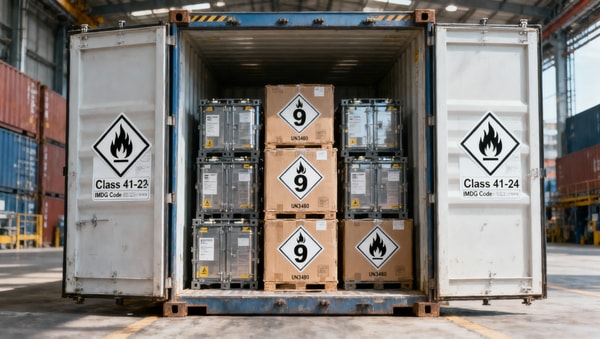
 IMDG Code 41-24 Enforced: UN3480 Lithium Battery Labeling Now MandatoryIMDG Code 41-24 is now mandatory: UN3480 lithium battery labeling, documentation & packaging rules are enforced globally as of 28 April 2026 — avoid port rejections!
 State Grid’s $680M Embodied AI Procurement Signals Export OpportunityEmbodied AI, IEC 61850 & IEC 62443: State Grid’s $680M procurement unlocks export opportunities for compliant industrial robots and smart vision systems in emerging markets.
 IMDG Code 41-24 Enforces UN3480 Class 9 Labeling for Lithium Battery Sea FreightIMDG Code 41-24 mandates UN3480 lithium battery sea freight to display durable Class 9 labels from April 27, 2026—avoid delays & port rejections.
 ESS Key Component Prices Drop ~80%: Quality & Compliance RiseESS key component prices dropped ~80%—but quality & compliance demands surged. Discover how UL 9540A, AS/NZS 5139, and certified BMS/inverters now define market access.
 Mexico NOM-019-SCFI-2026 Effective July 2026: EMC Certification Mandatory for Auto ElectronicsMexico NOM-019-SCFI-2026 mandates EMC certification for auto electronics from July 2026 — ensure compliance now to avoid supply chain disruption & customs delays.
 Red Sea Rerouting Normalized, ECA Surcharge Hits $1,850/TEURed Sea rerouting normalized: ECA surcharge hits $1,850/TEU — 47% of total freight cost. Impacting hand tools, building materials & furniture exporters to Europe. Act now.
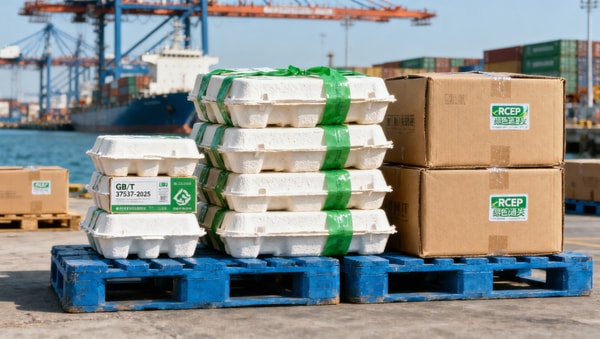
 RCEP Green Packaging Mutual Recognition Takes EffectRCEP Green Packaging Mutual Recognition is live—GB/T 37537-2025–certified packaging now enjoys fast-track clearance in Australia, NZ, Japan & Korea. Save time, cut costs, and boost export efficiency.
 Vietnam Suspends SASO Mutual Recognition for Chinese Irrigation EquipmentVietnam suspends SASO mutual recognition for Chinese irrigation equipment—drip tapes, PE fittings, auto valves now require VINAQ-IR certification. Act now to avoid delays & customs hold.
 Pool equipment maintenance warning signs before a breakdownPool equipment maintenance warning signs before a breakdown: spot early pump, filter, and control issues, improve pool equipment installation decisions, and reduce downtime with smarter sourcing insights.
 Patios and decks materials that age badly in humid climatesPatios and decks materials that age badly in humid climates: learn which patios and decks materials fail fast, how patios and decks construction choices affect durability, and how to source smarter.
 Textile home fabrics buyers now ask more about wash durabilityTextile home fabrics buyers now prioritize wash durability, consistency, and long-term value. Explore sourcing insights, production line optimization, and smarter textile home accessories decisions.
 What recurring waste says about production line efficiencyProduction line efficiency starts with recurring waste. Discover how production line optimization and production line automation reveal supplier risk, cut hidden costs, and improve sourcing decisions across textiles, jewelry, and agrochemicals.
 Agrochemicals export rules causing delays in new marketsAgrochemicals export delays explained with agrochemicals industry analysis and agrochemicals market trends—learn compliance risks, supplier selection tips, and smarter market entry strategies.
 Fashion tech applications brands are testing in physical storesFashion tech applications and fashion tech startups are transforming physical stores with smarter fitting, data-led production line optimization, and scalable retail innovation—explore key trends now.



















Popular Tags
Global Trade Insights & Industry
Our mission is to empower global exporters and importers with data-driven insights that foster strategic growth.
Search News
Popular Tags
Industry Overview
The global commercial kitchen equipment market is projected to reach $112 billion by 2027. Driven by urbanization, the rise of e-commerce food delivery, and strict hygiene regulations.