

Lubricants distributor pricing can hide more than freight
When evaluating a lubricants distributor, pricing often reflects far more than freight alone. Hidden factors such as procurement cost, supply chain management solutions, and regional sourcing efficiency can significantly affect margins and long-term competitiveness. For buyers, distributors, and business evaluators, understanding these pricing layers is essential to making smarter sourcing decisions and identifying partners that deliver real operational value beyond the invoice.
In industrial and trade-driven markets, lubricant pricing is rarely a simple matter of base oil cost plus delivery. A distributor may quote a lower landed price on paper while recovering margin through packaging changes, shorter payment windows, inconsistent batch availability, or limited technical support. For procurement teams comparing multiple offers across regions, these hidden variables can materially affect total cost over 3, 6, or 12 months.
This matters to importers, sourcing analysts, commercial evaluators, and channel partners alike. In B2B environments, a lubricants distributor is not only a seller of industrial oils, greases, and specialty fluids, but also a logistics node, inventory buffer, compliance partner, and market intelligence source. Looking beyond freight helps decision-makers identify whether a distributor can support stable replenishment, protect working capital, and reduce operational disruption.
What a lubricants distributor price really includes
At first glance, many lubricant quotations appear to revolve around three visible lines: product unit price, freight, and taxes. In practice, at least 6 additional cost elements may be embedded in the final price. These can include sourcing distance, drum or pail packaging format, stockholding risk, minimum order quantity, documentation handling, and after-sales response time. A distributor serving 4 countries from 1 warehouse will price risk differently from one operating 3 regional stocking points.
For example, a supplier offering ISO VG hydraulic oil in 18-liter pails, 200-liter drums, and IBCs may show a price gap of 8%–15% between pack sizes even before freight is added. That spread does not only reflect packaging material cost. It often includes labor intensity, fill-line scheduling, warehouse picking time, and expected turnover speed. Slow-moving SKUs usually carry higher hidden carrying costs than high-volume grades.
Another overlooked area is procurement timing. A lubricants distributor with long supplier contracts may lock in better pricing for 30–90 days, while another may buy spot volumes weekly and pass volatility directly to customers. Buyers who compare quotes on a single date may miss the value of price stability, which can be more important than a 2% headline discount when production schedules are fixed.
Documentation and compliance also affect pricing. Export packing declarations, customs harmonization support, SDS availability, labeling adaptation, and local regulatory checks all require process resources. In cross-border trade, these service layers can save 5–10 working days during customs clearance or customer onboarding, even if they are not visibly separated on the quotation.
Common hidden pricing components
The table below breaks down common elements that may sit behind a distributor quote and explains why two seemingly similar offers can produce very different commercial results.
The main takeaway is that a lower quote is not automatically a lower cost. If the lubricants distributor cannot maintain availability, support documentation, or flexible delivery windows, downstream costs may exceed the initial freight savings within a single quarter.
Questions buyers should ask early
- What is the standard lead time for stocked versus non-stocked grades: 3–5 days, 7–10 days, or longer?
- Are prices fixed for a period such as 30 days, or adjusted with raw material movements?
- Does the quote include technical documents, relabeling, and export paperwork?
- What MOQ applies by SKU, packaging type, and destination market?
Why supply chain structure shapes distributor margins and buyer costs
A lubricants distributor with efficient sourcing and warehousing can often protect both price competitiveness and delivery reliability. The core difference lies in supply chain design. Some distributors buy directly from regional blending plants, maintain 2–3 stocking hubs, and consolidate outbound loads by route. Others rely on ad hoc purchasing, third-party storage, and fragmented transport bookings. These structural differences may not be visible in an RFQ response, but they strongly influence pricing resilience.
Regional sourcing efficiency is especially important in international trade. If the distributor sources from a blending site within 500–800 km of its main customer base, replenishment cycles can be shorter and safety stock lower. If products travel across multiple borders before reaching the buyer, the distributor must account for longer transit, customs uncertainty, and a higher buffer inventory. This often adds hidden cost even when the freight line appears competitive.
For procurement teams, the strategic question is not only “What is today’s price?” but also “How stable is this service model under pressure?” During peak demand, a distributor with stronger planning can maintain 95%+ fill rates on fast-moving lubricant grades, while a weaker network may force substitutions, partial deliveries, or purchase splitting. Those operational failures create internal labor cost, production planning changes, and sometimes equipment risk.
Distributors that invest in basic supply chain management tools often price differently because they absorb forecasting and coordination work that would otherwise fall on the buyer. For example, monthly demand reviews, reorder alerts, and batch traceability can reduce emergency orders by 1–2 cycles per quarter. Even small improvements in planning can offset a modest price premium.
Two distributor models, two cost outcomes
The comparison below illustrates how different operating models can shape the total economic result for industrial lubricant buyers.
From a business evaluation standpoint, distributor pricing should be reviewed alongside logistics architecture and service design. A quote that is 3% higher but prevents repeated stock-outs, urgent air shipments, or internal rescheduling may deliver the stronger annual cost profile.
Operational signals worth checking
- Lead-time segmentation: ask whether stocked SKUs and indent SKUs are clearly separated.
- Inventory visibility: confirm if batch, quantity, and ETA updates are available weekly or only on request.
- Delivery flexibility: check whether split shipments are possible for 2 or more sites.
- Contingency planning: ask what happens if a key grade is unavailable for 7–14 days.
How to evaluate a lubricants distributor beyond the invoice
Serious sourcing decisions require a structured review process. Instead of comparing price sheets only, buyers should score each lubricants distributor across cost transparency, service reliability, packaging suitability, and commercial flexibility. In most B2B sourcing exercises, 4–6 criteria are enough to reveal whether a quote is genuinely competitive or simply incomplete.
The first criterion is quote transparency. A useful quotation should specify product grade, viscosity class where relevant, packaging type, incoterm, payment terms, validity period, and expected lead time. Without these fields, a lower unit price may hide changes in drum specification, pallet count, or dispatch schedule. Buyers should also verify whether the quoted lubricant is produced to the same formulation family or only marketed as an equivalent.
The second criterion is service depth. Does the distributor provide technical sheets, storage guidance, product crossover support, and usage recommendations? Even if the buyer already knows the required lubricant class, the distributor’s ability to support product transition or replenishment planning can reduce procurement friction. In multi-site operations, that service layer becomes more valuable than minor unit-price differences.
The third criterion is commercial resilience. Ask whether the distributor can support annual framework pricing, seasonal demand spikes, and emergency orders. A reliable partner should outline normal response windows, such as quotation within 24–48 hours, standard dispatch within 3–7 days for stocked items, and escalation procedures for urgent needs. This clarity improves internal planning for procurement and finance teams.
A practical scoring framework
The table below offers a simple evaluation model that sourcing and business assessment teams can adapt when reviewing lubricant supply partners across regions or product categories.
This kind of scoring helps prevent overemphasis on freight or list price alone. It is particularly useful for channel partners and distributors evaluating supply-side cooperation, where reliability and replenishment agility often determine market success over 12 months rather than one purchase cycle.
Common assessment mistakes
- Comparing prices without standardizing pack size and incoterm.
- Ignoring payment terms that can widen the real cost gap by several percentage points.
- Assuming technical support has no value until a product substitution or complaint occurs.
- Treating all lead times as equal when some quotes refer to ex-stock and others to make-to-order supply.
Pricing risks, negotiation points, and smarter sourcing strategies
The best sourcing outcomes usually come from clarifying hidden cost drivers before negotiation begins. Buyers should ask distributors to separate product value, packaging cost, freight assumptions, and service inclusions. Even if the distributor does not provide a fully itemized cost build-up, it should explain where premiums apply. This is especially important when comparing local distributors against regional trading houses or direct import channels.
One common risk is false economy through under-ordering. A low MOQ can look attractive, but repeated small orders may increase total cost through more frequent freight charges, more receiving cycles, and higher administrative handling. In many cases, moving from monthly micro-orders to a 6–8 week replenishment plan improves planning and reduces hidden cost, even if warehouse holding increases modestly.
Another negotiation point is packaging optimization. Some buyers routinely purchase drums when IBC delivery or bulk transfer would be more efficient for their consumption level. If site turnover is high enough, changing format can reduce manual handling and packaging waste. The right format depends on consumption rate, storage conditions, and unloading capability, not only on the per-liter invoice price.
Finally, business evaluators should look at the distributor’s communication discipline. A partner that confirms ETAs, flags shortages early, and shares substitution options within 24 hours creates less commercial risk than one that only responds after delays occur. In cross-border lubricant trade, timely information is often as valuable as a freight discount because it protects continuity and customer confidence.
Action points for procurement and channel teams
- Standardize quote requests with the same pack size, incoterm, delivery point, and payment term.
- Ask for validity periods of 30, 60, or 90 days where possible to reduce volatility exposure.
- Review whether local buffer stock or consignment-style arrangements are available for high-use grades.
- Track total procurement cost over at least 2 quarters, not only one invoice cycle.
- Include service responsiveness and documentation quality in supplier performance reviews.
FAQ for buyers and business evaluators
The questions below reflect common search intent from sourcing teams, distributors, and market researchers reviewing lubricant supply options.
How can I tell if a lubricants distributor price is artificially low?
Check whether the quote omits lead time, MOQ, document support, payment terms, or packaging detail. Artificially low pricing often appears where one or more service layers are excluded. If price validity is under 7 days or availability is “subject to stock,” the risk of later cost escalation is higher.
What delivery timeline is considered reasonable?
For stocked industrial lubricant grades, many markets expect dispatch within 3–7 working days. For non-stocked or imported items, 2–4 weeks is common, depending on origin and customs procedures. What matters is not only speed, but whether the timeline is clearly defined and repeatable.
Should buyers prioritize a local distributor or a regional trading source?
It depends on demand pattern and service expectations. Local distributors may offer shorter lead times and easier support, while regional sources can be more competitive on volume purchases. For buyers consuming multiple grades across several sites, the better choice is often the supplier that balances price with inventory access and consistent communication.
Which metrics should be reviewed every quarter?
At a minimum, review on-time delivery rate, fill rate, price variance, complaint response time, and stock-out incidents. A quarterly review using 5 or 6 metrics gives a clearer picture of distributor value than comparing unit price alone.
For global buyers, distributors, and commercial researchers, the real issue is not whether freight matters, but whether pricing reflects a dependable supply model. A capable lubricants distributor contributes value through sourcing discipline, packaging strategy, inventory planning, and operational responsiveness. Those factors shape total procurement performance far more than a single freight line on a quotation.
If you are assessing lubricant supply partners, benchmarking distributor offers, or tracking industrial sourcing trends across markets, a stronger information base leads to stronger decisions. Explore more trade intelligence, compare market signals, and identify reliable supply-side opportunities through GTIIN and TradeVantage. Contact us today to get tailored industry insights, evaluate supplier positioning, or learn more solutions for data-driven sourcing and B2B growth.
Recommended News
 China’s 10-Dept AI Export Ethics Review Rule Takes EffectChina’s new 10-dept AI export ethics rule mandates algorithmic bias review for AI hardware bound for the EU, US, Canada, Japan & SK—key for smart cameras, voice assistants & industrial vision exporters.
 Red Sea Detour Now Standard: $1,850 TEU Premium on Asia-Europe RoutesRed Sea detour premium now standard: $1,850/TEU surcharge embedded in Asia-Europe freight rates — vital intel for exporters, importers & logistics teams.
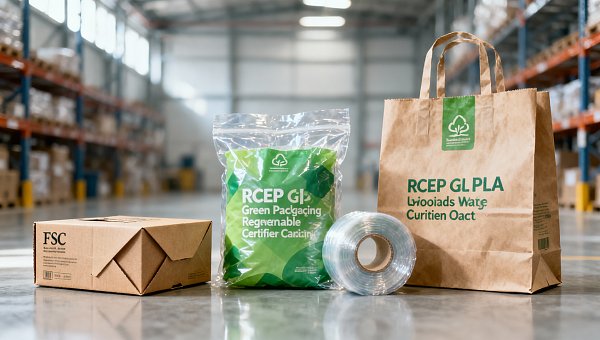
 RCEP Green Packaging Mutual Recognition Takes EffectRCEP Green Packaging Mutual Recognition takes effect Apr 22, 2026—streamline exports to AU, NZ, JP, KR with GB/T 37629–2019 certified molded fiber & PLA packaging.
 Mexico NOM-019-SCFI-2026 Effective: EMC Certification Required for Auto Electronics ExportsEMC certification is now mandatory for auto electronics exports to Mexico under NOM-019-SCFI-2026. Ensure compliance for rearview mirrors, radar sensors & T-Box units—avoid shipment delays and order cancellations.
") TÜV Rheinland Updates CE Requirements for Servo Drives (PLd + EMC Joint Validation)TÜV Rheinland now mandates joint PLd + EMC validation for servo drives under CE marking—learn how this impacts certification timelines, lab selection, and EU market access.
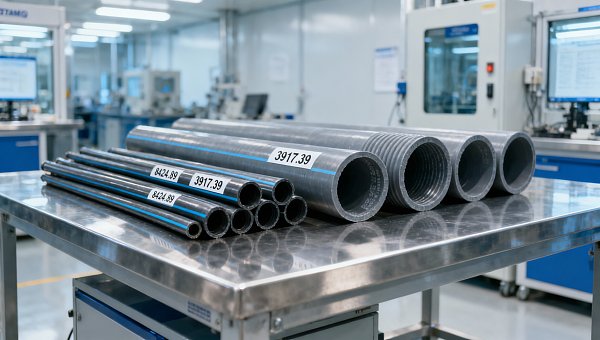
TÜV Rheinland Updates CE Requirements for Servo Drives (PLd + EMC Joint Validation)TÜV Rheinland now mandates joint PLd + EMC validation for servo drives under CE marking—learn how this impacts certification timelines, lab selection, and EU market access. Vietnam Suspends SASO Mutual Recognition for Chinese Irrigation EquipmentVietnam suspends SASO mutual recognition for Chinese irrigation equipment—urgent compliance updates for drip tapes & PE pipes (HS 8424.89/3917.39). Act now to avoid delays.
 FDA Finalizes AI Diagnostic Device Rules for ImportersFDA finalizes AI diagnostic device rules for importers: New bias assessment mandate impacts ultrasound, glucose analyzers & dermatoscopes. Act now to ensure U.S. market access.
 SABER Phase II Live: Saudi Building Hardware Requires Digital Type Test Reports & PIDSABER Phase II is live: Building hardware exports to Saudi Arabia now require digital type test reports & a mandatory, immutable Product ID (PID). Act now to avoid customs delays!
 IMDG Code 41-24 Enforced: UN3480 Lithium Battery Labeling Mandatory from Apr 2026IMDG Code 41-24 enforcement starts Apr 2026: UN3480 lithium battery labeling & ISO 17363 docs are now mandatory—avoid port rejections!
 CBAM Carbon Tax Launch: Low CBAM Reporting Rate Among Chinese ExportersCBAM Carbon Tax is live—only 36.8% of Chinese exporters reported. Discover why, which industries are at risk, and how to secure EU market access now.
 China’s 10 Agencies Issue AI Export Ethics Review RulesChina’s 10 agencies launch AI export ethics rules—mandating bias reviews for visual inspection, warehouse AI & defect detection systems. Stay compliant & competitive.
 RCEP Green Packaging Mutual Recognition Takes EffectRCEP Green Packaging Mutual Recognition is now in effect—unlock faster customs clearance in Australia, NZ, Japan & Korea for GB/T 37659–2019-certified eco-packaging.
 Mexico NOM-019-SCFI-2026 Effective Apr 10, 2026: EMC Certification Required for Automotive ElectronicsNOM-019-SCFI-2026 EMC certification is now mandatory for automotive electronics entering Mexico — act before the July 1, 2026 customs ban.
 Red Sea Rerouting Normalized, EBA at $1,850/TEURed Sea rerouting normalized with EBA fixed at $1,850/TEU—learn how this structural shift impacts Asia-Europe freight costs, lead times & supply chain strategy.
 FDA AI Diagnostic Device Draft Rules: Bias Assessment for ImportsFDA AI diagnostic device draft rules require bias assessment for imports—learn how portable ultrasound, glucose, and dermatoscopic AI devices are affected & what to do next.
") TÜV Rheinland Updates CE Requirements for Servo Drives (PLd + EMC)TÜV Rheinland updates CE requirements for servo drives: PLd (ISO 13849-1) + EMC immunity (IEC 61000-6-2 Ed.4) now mandatory together — act now to avoid EU market delays!
TÜV Rheinland Updates CE Requirements for Servo Drives (PLd + EMC)TÜV Rheinland updates CE requirements for servo drives: PLd (ISO 13849-1) + EMC immunity (IEC 61000-6-2 Ed.4) now mandatory together — act now to avoid EU market delays! SABER Phase II Launch: Building Hardware Must Submit Digital Type Test Reports & Unique Product IDSABER Phase II now mandates digital type test reports & unique product IDs for building hardware—fasteners, scaffolding, door/window components. Ensure compliance to avoid customs rejection & SCOC delays.
 Vietnam Suspends SASO Mutual Recognition for Chinese Irrigation EquipmentVietnam suspends SASO mutual recognition for Chinese irrigation equipment—TCVN testing now mandatory. Act now to avoid 8–12 week delays and customs holdups.
 IMDG Code 41-24 Enforced: UN3480 Lithium Battery Labeling UpdateIMDG Code 41-24 enforcement starts April 2026: UN3480 lithium battery labeling updates are mandatory for global maritime shipments — avoid port delays, detention & penalties.
 EU CBAM Enters Full Enforcement on Jan 1, 2026EU CBAM full enforcement starts Jan 1, 2026 — mandatory quarterly reporting & certificate purchases for batteries, steel, cement, aluminum, fertilizers & chemicals. Act now to ensure EU market access.
 EU CBAM Carbon Tariff Starts Oct 2026 for Chinese Battery, Cement, Chemical ExportsEU CBAM carbon tariff hits Chinese battery, cement & chemical exports from Oct 2026 — mandatory emissions reporting starts now. Avoid €98/t default fees.



















Popular Tags
Global Trade Insights & Industry
Our mission is to empower global exporters and importers with data-driven insights that foster strategic growth.
Search News
Popular Tags
Industry Overview
The global commercial kitchen equipment market is projected to reach $112 billion by 2027. Driven by urbanization, the rise of e-commerce food delivery, and strict hygiene regulations.