

Fashion tech applications moving beyond smart mirrors
Fashion tech is no longer defined by smart mirrors or novelty retail screens. The real shift is happening deeper in the value chain: AI-assisted design, virtual sampling, demand forecasting, RFID and computer vision in stores, digital product passports, traceability, automated quality control, and connected production workflows. For researchers, buyers, business evaluators, and channel partners, the key takeaway is clear: the most valuable fashion tech applications today are the ones that reduce time-to-market, improve inventory decisions, strengthen compliance visibility, and support scalable sourcing.
In other words, the opportunity is moving from “consumer-facing gimmick” to “operational infrastructure.” That matters for global trade because the next wave of competitive advantage in fashion will come from faster product development cycles, better production line efficiency, lower return rates, and stronger supply chain intelligence—not just better in-store experiences.
What buyers and market evaluators should understand first
When people search for fashion tech applications moving beyond smart mirrors, they are usually not looking for another list of futuristic concepts. They want to know which technologies are actually gaining business relevance, where investment is flowing, and how these tools affect sourcing, manufacturing, distribution, and retail partnerships.
For B2B readers, the core questions are practical:
- Which fashion technologies are commercially useful now?
- What problems do they solve better than legacy systems?
- How do they affect suppliers, brand owners, and channel partners?
- What signals indicate a scalable solution rather than a short-lived trend?
- How do these applications connect with automation and supply chain modernization?
The strongest applications today are those that generate measurable gains in one or more of these areas:
- Shorter product development timelines
- Improved inventory visibility
- Higher forecast accuracy
- Reduced waste and overproduction
- Better traceability and compliance reporting
- Higher conversion with lower return rates
- Improved production line automation and workflow coordination
Where fashion tech is moving beyond smart mirrors
Smart mirrors were part of a broader retail digitization story, but they addressed only a narrow slice of the customer journey. The more strategic fashion tech applications now extend across the entire lifecycle of a product.
1. AI-driven design and trend intelligence
Design teams increasingly use AI tools to analyze social signals, sell-through data, search behavior, regional preferences, and historical product performance. Instead of relying solely on intuition, brands can test concepts earlier and align product development with demand signals.
For importers, distributors, and private-label buyers, this changes the supplier conversation. Manufacturers with digital design support and rapid prototyping capabilities can respond faster to trend shifts and reduce the risk of ordering styles with weak market fit.
2. 3D design, virtual sampling, and digital twins
One of the most commercially valuable shifts in fashion tech is the move from physical samples to digital sampling. 3D garment development tools allow teams to visualize fit, drape, colorways, and styling before producing multiple rounds of physical prototypes.
This matters because it can:
- Reduce sample costs
- Shorten approval cycles
- Lower material waste
- Accelerate cross-border collaboration between buyers and factories
For sourcing teams, suppliers that are capable of virtual sampling often signal stronger process maturity and better communication infrastructure.
3. Digital product passports and traceability systems
As regulatory pressure grows around sustainability claims, material origin, and supply chain transparency, digital product passports are becoming more relevant. These systems connect product-level data to sourcing, material composition, certifications, repairability, and lifecycle records.
For business evaluators, this is especially important in markets where compliance expectations are rising. Brands and sourcing partners that adopt traceability technology may be better positioned for future reporting requirements, customs scrutiny, and retailer onboarding standards.
4. RFID, IoT, and real-time inventory visibility
RFID and IoT-enabled tracking are helping fashion companies improve inventory accuracy across warehouses, stores, and transit stages. This is more than a retail convenience tool. In international trade, better stock visibility supports replenishment planning, reduces markdown risk, and improves order confidence.
For distributors and agents, inventory visibility can directly affect service quality, allocation decisions, and the ability to support multiple brand channels efficiently.
5. Computer vision for quality control and store analytics
Computer vision is now being used in both production and retail environments. In factories, it can support defect detection, stitching verification, color consistency checks, and packaging accuracy. In retail, it can help analyze foot traffic, shelf interaction, and merchandising effectiveness.
On the manufacturing side, this connects directly with production line automation and production line efficiency. Suppliers that apply machine vision effectively may reduce manual inspection bottlenecks and improve consistency at scale.
6. Virtual try-on and fit technology
Unlike early smart mirror deployments, newer fit technologies integrate body data, garment specifications, and recommendation engines into e-commerce and omnichannel workflows. The business goal is not entertainment—it is conversion improvement and return reduction.
For buyers and channel partners, this is relevant because fit-related returns remain a major cost driver. Solutions that improve size confidence can have direct impact on profitability, especially in cross-border commerce where reverse logistics are expensive.
Why the most important fashion tech applications are now operational, not theatrical
The market is rewarding technologies that solve structural problems. That is why many fashion tech startups are moving away from attention-grabbing front-end experiences and toward systems that integrate with sourcing, planning, manufacturing, and compliance.
From a business perspective, operational applications are more durable because they address recurring pain points:
- Long development cycles
- Fragmented supplier communication
- Limited traceability
- Excess inventory
- Weak demand forecasting
- High return rates
- Manual quality control constraints
This also explains why adjacent technologies from manufacturing, logistics, and industrial automation are increasingly relevant to fashion. As apparel and accessories supply chains modernize, the line between “fashion tech” and “industrial digitalization” becomes less distinct.
How this connects to production line automation and manufacturing competitiveness
For many B2B readers, the most useful lens is not retail innovation alone, but whether a technology strengthens factory performance and supply chain responsiveness. That is where fashion tech is becoming materially important.
Several applications now support production line automation or complement automation initiatives:
- Digital design to production handoff: Cleaner design files and tech packs reduce errors before manufacturing begins.
- Automated cutting and material optimization: Software-guided cutting can reduce waste and improve throughput.
- Vision-based inspection: Automated quality checks reduce dependence on purely manual review.
- Workflow digitization: Production dashboards improve line balancing, bottleneck detection, and order tracking.
- Predictive maintenance: Connected equipment data can reduce downtime in more advanced facilities.
These capabilities improve production line efficiency by reducing rework, improving visibility, and shortening reaction time when issues arise. For procurement teams, a supplier’s digital maturity is becoming a meaningful indicator of reliability, not just a technical detail.
What procurement teams and distributors should evaluate before engaging a fashion tech provider
Not every platform or startup offers strategic value. Some tools look impressive in demos but fail in real operating environments. Buyers and business evaluators should assess solutions against practical criteria.
Clear problem-solution fit
The first question is simple: what exact business problem does the technology solve? If the answer is vague, the solution may not survive budget scrutiny. Strong providers can quantify impact in terms of cycle time, labor savings, inventory accuracy, compliance support, or conversion improvement.
Integration readiness
Fashion businesses already use ERP, PLM, WMS, e-commerce, POS, and supplier management systems. A useful technology must fit into that environment. Poor integration often turns a promising tool into an isolated workflow burden.
Scalability across markets and supplier networks
A tool that works in one pilot location may fail across multilingual teams, multiple factories, or region-specific compliance frameworks. Global trade participants should favor solutions built for distributed operations.
Data quality and governance
Many fashion tech applications depend on product, material, customer, or inventory data. Weak data governance can undermine outcomes quickly. Evaluators should ask how data is collected, standardized, secured, and updated.
ROI time horizon
Some technologies produce quick wins, such as improved inventory counts or fewer sampling rounds. Others, like traceability infrastructure, may be strategic investments with longer payoff periods. Decision-makers should align evaluation methods with the likely return timeline.
Which fashion tech categories look strongest from a global trade perspective
For exporters, importers, sourcing intermediaries, and channel partners, the most strategically relevant categories are usually the ones that improve cross-border coordination and reduce uncertainty.
These areas stand out:
- Digital sampling and 3D collaboration tools because they shorten product development across geographies
- Traceability and compliance platforms because they support market access and retailer requirements
- Inventory intelligence and RFID because they improve replenishment and reduce stock distortion
- Demand forecasting and AI planning tools because they support smarter buying and production timing
- Factory digitization and vision-based quality systems because they strengthen supplier consistency and scalability
These are also the segments where fashion tech overlaps most clearly with broader industrial transformation, making them more relevant to long-term sourcing strategy than consumer-facing novelty features.
Key risks and adoption barriers businesses should not ignore
Despite strong potential, fashion tech adoption still faces real constraints. Companies evaluating the sector should account for the following risks:
- Fragmented legacy systems: older infrastructure can slow implementation
- Supplier capability gaps: not all production partners can work within digital workflows
- Data inconsistency: poor product data reduces technology effectiveness
- Change management issues: teams may resist new tools if training is weak
- Overhyped vendor claims: some startups emphasize vision more than execution
- Unclear ownership: projects often stall when design, sourcing, IT, and operations are misaligned
For this reason, the best adoption path is often phased implementation tied to a high-value use case, such as reducing sample rounds, improving inventory accuracy, or digitizing quality control checkpoints.
How to tell whether a fashion tech trend has lasting commercial value
A useful rule for researchers and commercial decision-makers is to separate attention from infrastructure. Lasting value usually appears when a technology does at least three of the following:
- Integrates into existing business workflows
- Produces measurable operational or financial outcomes
- Scales beyond a showroom or pilot store
- Improves collaboration across the supply chain
- Supports compliance, transparency, or risk reduction
- Strengthens production line efficiency or planning accuracy
If a solution mainly delivers novelty, branding appeal, or temporary media attention, it may have limited strategic relevance. If it improves process control, speed, data visibility, or decision quality, it is far more likely to matter in procurement and partnership decisions.
Conclusion
Fashion tech applications are clearly moving beyond smart mirrors, and that shift is significant for anyone involved in sourcing, distribution, procurement, or market evaluation. The center of gravity is moving toward technologies that improve design efficiency, supply chain transparency, inventory intelligence, automated quality control, and manufacturing responsiveness.
For B2B decision-makers, the strongest opportunities are not the most visually impressive tools, but the ones that reduce uncertainty and improve execution. In practical terms, that means focusing on solutions that support faster development cycles, better production line automation, stronger production line efficiency, and clearer cross-border coordination.
As the fashion sector becomes more data-driven, companies that understand these applications early will be better positioned to identify reliable suppliers, evaluate emerging partners, and make smarter global trade decisions.
Recommended News
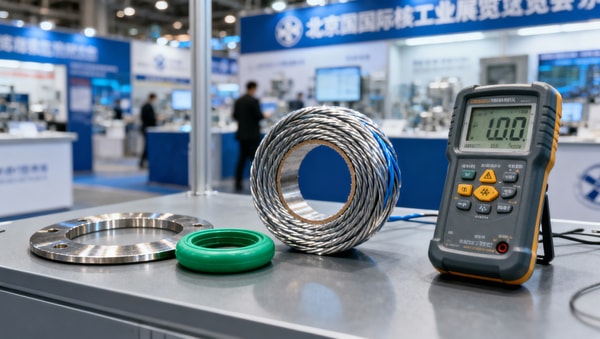
 China-France Nuclear Cooperation Advances at Beijing ExpoChina-France nuclear cooperation advances: mutual recognition for nuclear-grade seals, cables & radiation monitors boosts export readiness for suppliers targeting EU and BRI projects.
 Vietnam’s 4 Provinces Seek AI Tourism Tech in NanningAI tourism tech in demand: Vietnam’s 4 provinces seek AI-guided terminals, multilingual interpretation, AI-CCTV & smart ticketing in Nanning—key opportunity for B2G exporters.
 Q1 2026 China Power Market Trading Up 25.6%: Smart Meters, Storage Export Demand RisesSmart meters, energy storage exports surge as China’s Q1 2026 power market trading jumps 25.6% — key signal for global manufacturers & channel partners.
 China First Country with 5M+ Active Invention PatentsChina first country with 5M+ active invention patents—key for buyers in AI, solar, lithium battery & energy storage. Discover IP implications for sourcing, compliance & supplier vetting.
 Shenneng Etorkeqi Green Ammonia Project: Deionized Water Station OperationalShenneng Etorkeqi Green Ammonia Project’s deionized water station is now operational—ISO 8502-3 compliant, fully integrated, and a key milestone for global green hydrogen developers and exporters.
 China Launches 'Model-Data Resonance' Initiative for AI+Manufacturing InteroperabilityModel-Data Resonance initiative boosts AI+manufacturing interoperability—learn how GB/T XXXX–2026 aligns with VDI 2182 & ISA-95 for smoother global factory deployments.
 China’s First Embodied AI Robot Insurance Launched in GuangxiChina’s first embodied AI robot insurance launched in Guangxi—key for robotics exporters, AI hardware makers & global compliance teams. CE-recognized, EU/UK/AU-ready.
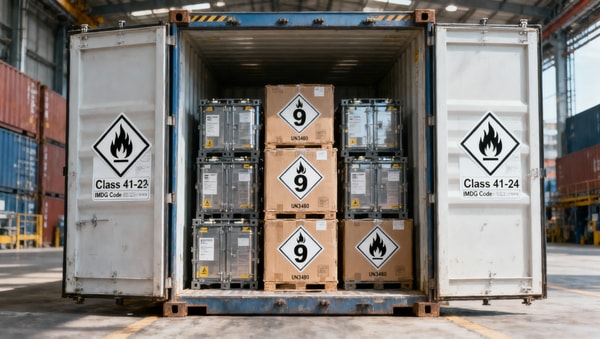
 IMDG Code 41-24 Enforced: UN3480 Lithium Battery Labeling Now MandatoryIMDG Code 41-24 is now mandatory: UN3480 lithium battery labeling, documentation & packaging rules are enforced globally as of 28 April 2026 — avoid port rejections!
 State Grid’s $680M Embodied AI Procurement Signals Export OpportunityEmbodied AI, IEC 61850 & IEC 62443: State Grid’s $680M procurement unlocks export opportunities for compliant industrial robots and smart vision systems in emerging markets.
 IMDG Code 41-24 Enforces UN3480 Class 9 Labeling for Lithium Battery Sea FreightIMDG Code 41-24 mandates UN3480 lithium battery sea freight to display durable Class 9 labels from April 27, 2026—avoid delays & port rejections.
 ESS Key Component Prices Drop ~80%: Quality & Compliance RiseESS key component prices dropped ~80%—but quality & compliance demands surged. Discover how UL 9540A, AS/NZS 5139, and certified BMS/inverters now define market access.
 Mexico NOM-019-SCFI-2026 Effective July 2026: EMC Certification Mandatory for Auto ElectronicsMexico NOM-019-SCFI-2026 mandates EMC certification for auto electronics from July 2026 — ensure compliance now to avoid supply chain disruption & customs delays.
 Red Sea Rerouting Normalized, ECA Surcharge Hits $1,850/TEURed Sea rerouting normalized: ECA surcharge hits $1,850/TEU — 47% of total freight cost. Impacting hand tools, building materials & furniture exporters to Europe. Act now.
 RCEP Green Packaging Mutual Recognition Takes EffectRCEP Green Packaging Mutual Recognition is live—GB/T 37537-2025–certified packaging now enjoys fast-track clearance in Australia, NZ, Japan & Korea. Save time, cut costs, and boost export efficiency.
 Vietnam Suspends SASO Mutual Recognition for Chinese Irrigation EquipmentVietnam suspends SASO mutual recognition for Chinese irrigation equipment—drip tapes, PE fittings, auto valves now require VINAQ-IR certification. Act now to avoid delays & customs hold.
 Pool equipment maintenance warning signs before a breakdownPool equipment maintenance warning signs before a breakdown: spot early pump, filter, and control issues, improve pool equipment installation decisions, and reduce downtime with smarter sourcing insights.
 Patios and decks materials that age badly in humid climatesPatios and decks materials that age badly in humid climates: learn which patios and decks materials fail fast, how patios and decks construction choices affect durability, and how to source smarter.
 Textile home fabrics buyers now ask more about wash durabilityTextile home fabrics buyers now prioritize wash durability, consistency, and long-term value. Explore sourcing insights, production line optimization, and smarter textile home accessories decisions.
 What recurring waste says about production line efficiencyProduction line efficiency starts with recurring waste. Discover how production line optimization and production line automation reveal supplier risk, cut hidden costs, and improve sourcing decisions across textiles, jewelry, and agrochemicals.
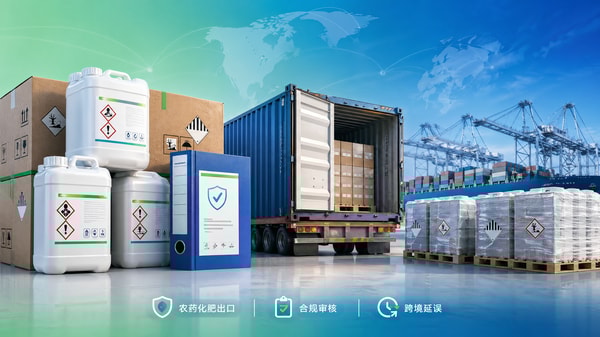
 Agrochemicals export rules causing delays in new marketsAgrochemicals export delays explained with agrochemicals industry analysis and agrochemicals market trends—learn compliance risks, supplier selection tips, and smarter market entry strategies.
 Fashion tech applications brands are testing in physical storesFashion tech applications and fashion tech startups are transforming physical stores with smarter fitting, data-led production line optimization, and scalable retail innovation—explore key trends now.


















Popular Tags
Global Trade Insights & Industry
Our mission is to empower global exporters and importers with data-driven insights that foster strategic growth.
Search News
Popular Tags
Industry Overview
The global commercial kitchen equipment market is projected to reach $112 billion by 2027. Driven by urbanization, the rise of e-commerce food delivery, and strict hygiene regulations.