

Smart street lighting projects become costly when controls are fragmented
Smart street lighting projects often promise efficiency, visibility, and long-term savings, but fragmented controls can quickly turn those benefits into budget overruns and operational headaches. For project managers and engineering leads, understanding how disconnected systems affect scalability, maintenance, and data integration is essential to delivering reliable results and protecting investment value from day one.
What fragmented controls mean in Smart street lighting
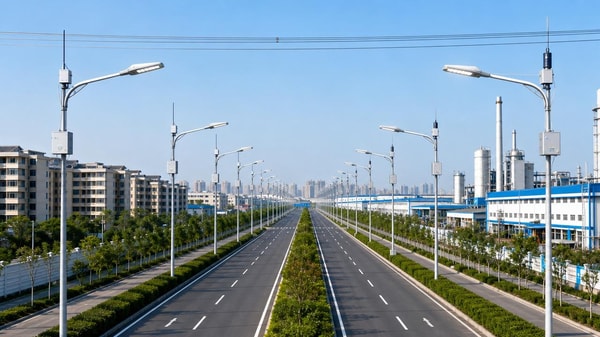
In practical terms, fragmented controls appear when a Smart street lighting project uses multiple software platforms, incompatible communication protocols, isolated device management tools, or vendor-specific dashboards that do not work together smoothly. A city may have one system for dimming schedules, another for fault detection, a third for energy reporting, and separate interfaces for sensors, cameras, or environmental monitoring. On paper, each element may perform well. In the field, however, the lack of integration creates coordination gaps that raise cost and risk.
For project leaders, this issue is not only technical. It affects procurement strategy, commissioning timelines, operating budgets, cybersecurity governance, contractor responsibilities, and future expansion. Smart street lighting is expected to serve as part of a wider connected infrastructure environment. When controls are fragmented, the lighting network loses much of its value as a shared digital platform and becomes a collection of hard-to-manage subsystems.
Why the industry is paying closer attention
Across the global infrastructure sector, lighting modernization is moving beyond simple LED retrofits. Municipal authorities, industrial park operators, logistics campuses, ports, airports, and large commercial estates now expect Smart street lighting to support adaptive dimming, remote diagnostics, power quality monitoring, occupancy response, and integration with smart city applications. This broader expectation makes control architecture far more important than it was in conventional street lighting deployments.
At the same time, supply chains have become more complex. Luminaires, gateways, controllers, sensors, software layers, and analytics services may come from different regions and specialist vendors. GTIIN and TradeVantage regularly track how this multi-vendor environment creates both opportunity and hidden execution risk. For project managers, the challenge is no longer just selecting efficient fixtures. It is building an interoperable Smart street lighting ecosystem that can remain serviceable over ten or fifteen years without forcing expensive reinvestment.
How fragmented controls drive project costs upward
The cost impact of fragmentation usually appears in stages. Initial capital spending may already be higher because separate control packages require more gateways, duplicated software licensing, additional integration labor, or custom middleware. Yet the larger cost burden often emerges after installation, when teams discover that every adjustment needs multiple workflows and every maintenance event demands more coordination.
Commissioning is a common pain point. If each Smart street lighting zone uses a different configuration method, field teams spend more time validating nodes, checking connectivity, assigning assets, and confirming control logic. Delays accumulate quickly across large corridors or district-scale deployments. A project that looked financially sound during planning can lose schedule certainty during handover.
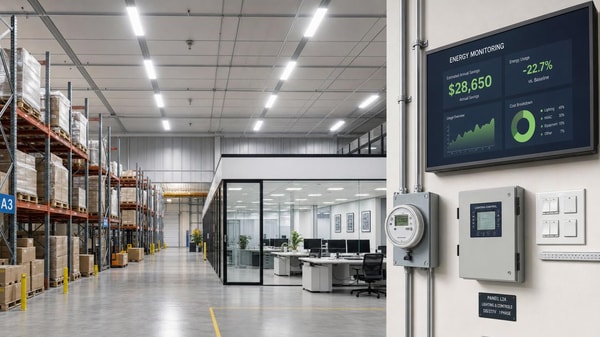
Maintenance costs also increase when fault alerts, performance data, and firmware updates are not centralized. Engineers may need to log into several systems to identify a single outage cause. Spare parts planning becomes harder because controller families vary. Training needs expand because technicians must understand multiple interfaces. Even routine tasks such as changing dimming calendars or generating compliance reports can consume disproportionate time.
Another hidden expense is data inconsistency. When one platform measures energy by feeder, another by luminaire, and a third tracks alarms with different naming conventions, reporting quality drops. This weakens business case validation and makes it difficult to prove the expected savings from Smart street lighting investments. For publicly funded projects or performance-based contracts, poor data alignment can become a serious governance issue.
A simple industry overview of control fragmentation risks
The table below summarizes the most common areas where Smart street lighting projects face cost escalation when controls are not unified.
Where the problem becomes most visible
Not every environment experiences fragmentation in the same way. In municipal roads, the biggest issue may be the need to merge legacy lighting with new Smart street lighting districts while maintaining public safety and service continuity. In ports or industrial zones, operators may require lighting controls to interact with security systems, access management, and energy platforms. On campuses and mixed-use developments, fragmented controls often limit the ability to apply one operational policy across multiple asset types.
The more distributed the asset base, the more serious the management burden becomes. A small pilot can hide integration weaknesses because a limited number of nodes can be managed manually. Once the same design is extended to thousands of luminaires, every inconsistency multiplies. This is why experienced project teams evaluate Smart street lighting architecture not only for current functions but also for district-wide replication.
Typical application categories and control priorities
The business value of a unified Smart street lighting approach
A unified control strategy creates value in several ways. First, it improves visibility. Project managers gain a clearer view of asset status, performance trends, and fault distribution across the full Smart street lighting network. Second, it reduces operational friction. Teams can manage schedules, alarms, groups, and updates through one structured process instead of several disconnected ones.
Third, unified controls support better lifecycle economics. Standardized interfaces simplify onboarding, troubleshooting, and future upgrades. This lowers dependency on niche specialists and reduces the chance that a discontinued product line will force partial system replacement. Fourth, it strengthens the digital value of the network. When Smart street lighting data can be shared consistently with energy systems, city management tools, or ESG reporting platforms, the lighting investment contributes beyond illumination alone.
For organizations concerned with global trade, infrastructure competitiveness, and long-term asset productivity, this is especially important. Platforms such as TradeVantage highlight how well-structured industrial information and trusted digital signals improve decision quality. The same logic applies in engineering delivery: a Smart street lighting project becomes more defensible when the data model, vendor strategy, and control logic are coherent from the start.
What project managers and engineering leads should assess early
Early-stage evaluation is where many cost problems can still be prevented. A strong Smart street lighting plan should define interoperability expectations before tendering, not after equipment arrives on site. That means reviewing protocol support, API availability, cyber requirements, controller compatibility, firmware management, and data ownership rules as part of core project scope.
It is also useful to distinguish between integration claims and proven integration outcomes. Vendors may state that their components are open or compatible, but project teams need practical evidence. Has the solution been deployed at similar scale? Are third-party devices already supported? Can fault data, energy data, and control commands be normalized without custom development each time? These questions help reveal whether Smart street lighting controls will remain manageable during real operations.
Another important point is governance. Fragmented controls often survive because responsibilities are split across electrical contractors, software suppliers, network integrators, and operations teams. Without one accountability framework, small interface problems are left unresolved until they become operational barriers. Clear ownership for integration testing, data validation, cybersecurity patching, and acceptance criteria is essential.
Practical recommendations for reducing fragmentation
A practical Smart street lighting strategy does not require eliminating every multi-vendor element. It requires controlling how those elements connect. The following actions usually provide the strongest risk reduction:
- Specify open and documented communication standards wherever possible.
- Require a unified asset registry and consistent naming convention across all nodes and zones.
- Include integration testing and data mapping in the delivery schedule, not as optional post-installation work.
- Assess total lifecycle cost, including software subscriptions, update processes, training needs, and spare component complexity.
- Plan for future expansion to sensors, traffic applications, or environmental monitoring without replacing the core Smart street lighting control layer.
These steps help preserve flexibility while avoiding the common trap of building a technically impressive but operationally fragmented system. For project leaders, the goal is not just a successful installation day. It is a manageable, scalable Smart street lighting environment that continues to perform under real-world maintenance and reporting demands.
Conclusion and next-step perspective
Smart street lighting delivers its strongest value when controls are designed as a unified operational framework rather than a patchwork of devices and dashboards. Fragmentation increases commissioning effort, obscures data, complicates maintenance, and weakens long-term return on investment. For project managers and engineering leads, that makes control architecture a strategic issue, not just a technical detail.
Organizations evaluating Smart street lighting should therefore focus on interoperability, accountability, and lifecycle visibility from the earliest planning stage. In a market where infrastructure decisions increasingly depend on trusted information, measurable outcomes, and scalable systems, disciplined control design is one of the clearest ways to protect budget, improve delivery confidence, and ensure that smart lighting remains truly smart over time.
Recommended News
 Portable oxygen concentrators are quieter now, but not always lighterPortable oxygen concentrators are getting quieter, but not always lighter. Explore the trade-offs in weight, battery life, comfort, and daily usability before you compare today’s top options.
 Interactive whiteboards are improving, but software still decides valueInteractive whiteboards deliver real value when software matches the scenario. Explore how usability, integration, security, and updates shape smarter buying decisions.
 Medical diagnostic equipment downtime often starts with calibration neglectMedical diagnostic equipment downtime often starts with missed calibration. Learn the warning signs, checklist priorities, and practical steps to prevent failures and keep healthcare operations reliable.
 Eco-friendly building materials are easier to specify than to sourceEco-friendly building materials are easier to specify than source. Learn how procurement teams can verify claims, reduce risk, and find reliable suppliers faster.
 Ergonomic workspace design can fail if chair fit comes lastErgonomic workspace design starts with chair fit. Learn how the right seat improves posture, comfort, and focus—and why fixing it first can transform your workspace.
 Outdoor garden supplies demand shifts faster than many expectOutdoor garden supplies demand is shifting faster than expected. Discover key B2B trends, smarter sourcing insights, and practical strategies to stay competitive and capture growth.
 Sustainable home decor sells better when materials are clearly disclosedSustainable home decor sells better when brands clearly disclose materials, finishes, and sourcing. Discover why transparency builds trust, justifies price, and drives more confident buying.
 Modern office furniture trends now favor modular over fixed layoutsModern office furniture is shifting to modular layouts for flexibility, lower lifecycle costs, and better hybrid work performance. See why enterprises are moving away from fixed office design.
 Smart street lighting projects stall when controls are overcomplicatedSmart street lighting projects often stall when controls become too complex. Learn how to simplify deployment, reduce risk, and scale citywide with practical, maintainable systems.
 Solid-state battery breakthroughs look promising, but scale is harderSolid-state battery breakthroughs promise safer, higher-density energy storage, but scaling remains the real challenge. Explore what this means for supply chains, investment, and market advantage.
 Commercial LED lighting upgrades often save less than expectedCommercial LED lighting upgrades can underdeliver when baseline data, controls, and installation costs are misjudged. Learn how to assess real savings, reduce ROI risk, and make smarter investment decisions.
 Lithium battery storage payback can change with one policy updateLithium battery storage payback can shift fast after one policy update. See how tariffs, tax credits, grid pricing, and incentives change ROI—and how finance teams can approve smarter.
 Photovoltaic solar panels now compete on output in low lightPhotovoltaic solar panels now compete on low-light output. Discover how buyers can compare yield, risk, and supplier value to source smarter and boost project returns.
 Plant-based protein processing changes texture more than many expectPlant-based protein processing reshapes texture, stability, and safety more than expected. Explore key risks, QC checkpoints, and smarter sourcing insights for consistent results.
 Foldable screen technology is improving, but crease concerns remainFoldable screen technology is evolving fast with slimmer designs and stronger hinges, but crease concerns still shape buying decisions. Explore where it matters most.
 Next-gen wireless charging still faces a heat management problemNext-gen wireless charging promises faster, more flexible power delivery, but heat remains the key barrier. Discover how thermal limits impact safety, efficiency, and market readiness.
 Wearable technology adoption drops when comfort gets overlookedWearable technology adoption falls fast when comfort is ignored. Discover how fit, materials, weight, and battery life shape long-term use and smarter buying decisions.
 Smart home devices wholesale is no longer just about low pricingSmart home devices wholesale now goes beyond low pricing. Discover how reliability, compatibility, and supply chain confidence help distributors choose profitable, trusted partners.
 Agri-PV systems make sense only when land use is planned wellAgri-PV systems deliver real value only when land use is planned well. Discover how smart site, crop, grid, and compliance decisions turn dual-use solar into a bankable, sustainable project.
 Organic fertilizers may improve soil slower, but results last longerOrganic fertilizers improve soil slowly but deliver longer-lasting results. Learn how they boost soil health, support safer growing, and help you choose the right option for sustainable planting success.
 Smart classroom solutions fail when teachers need too many appsSmart classroom solutions fail when teachers juggle too many apps. Discover why integrated, easy-to-use platforms drive adoption, ROI, and scalable learning success.


















Popular Tags
Global Trade Insights & Industry
Our mission is to empower global exporters and importers with data-driven insights that foster strategic growth.
Search News
Popular Tags
Industry Overview
The global commercial kitchen equipment market is projected to reach $112 billion by 2027. Driven by urbanization, the rise of e-commerce food delivery, and strict hygiene regulations.