

Commercial LED lighting upgrades do not always cut costs quickly
Commercial LED lighting is widely marketed as a straightforward cost-saving upgrade, but financial outcomes are rarely that simple. For budget owners and approvers, the key question is not whether LEDs can reduce energy use, but whether a specific project will deliver an acceptable return within the required timeframe.
In many cases, Commercial LED lighting upgrades do lower operating expenses over time. However, fast savings are not guaranteed. Capital cost, installation complexity, control system integration, labor disruption, utility tariffs, maintenance assumptions, and equipment quality all affect the real payback period. A project that looks compelling in a vendor proposal may perform very differently once site conditions and finance requirements are applied.
For financial decision-makers, the right approach is to evaluate LED upgrades as an investment case rather than a generic efficiency initiative. That means looking beyond headline wattage reduction and asking how cash flow, risk, downtime, asset life, and operational performance interact. When reviewed properly, LED projects can still be excellent investments—but not all of them are quick wins.
Why the promised savings from Commercial LED lighting can be slower than expected
The most common reason savings arrive more slowly than expected is simple: many business cases are built on ideal assumptions. Vendors often model savings using full operating hours, stable energy rates, and low installation friction. Real facilities rarely match those conditions exactly.
A warehouse, office, retail unit, or mixed-use commercial property may have different fixture types, varying ceiling heights, inconsistent wiring conditions, and occupancy patterns that reduce the projected benefit. If a facility already uses relatively efficient fluorescent or metal halide systems with limited run hours, the incremental savings from Commercial LED lighting may be more modest than promotional material suggests.
Another issue is that energy savings alone do not determine payback. If the project requires electrical modifications, lift equipment, controls programming, after-hours labor, or phased installation to avoid business disruption, the upfront project cost can rise significantly. Even a strong reduction in power consumption may not translate into a fast return if implementation costs are high.
For finance teams, this is the first important distinction: LEDs may be operationally better, but “better” does not automatically mean “rapidly cheaper” on a cash basis.
What financial approvers actually need to evaluate before saying yes
Financial approvers are usually less interested in lighting technology itself and more interested in whether the numbers are dependable. Their concerns are practical: How much capital is required? How certain are the savings? How long until break-even? What assumptions are doing the heavy lifting? What risks could delay returns?
A sound Commercial LED lighting proposal should answer at least six financial questions clearly. First, what is the total installed cost, not just the product cost? Second, what baseline is being used for comparison? Third, how were operating hours verified? Fourth, are maintenance savings real or estimated aggressively? Fifth, what utility incentives are confirmed versus only assumed? Sixth, what is the expected payback under conservative, not just optimistic, scenarios?
These questions matter because lighting projects often look attractive at a summary level. A one-page presentation may show double-digit energy reduction and an appealing ROI. But once a finance reviewer tests the assumptions, the return profile can change. That does not mean the project is weak; it means the project needs deeper validation.
For approval purposes, the strongest proposals usually include a sensitivity range. Instead of saying, “Payback is 2.1 years,” they show what happens if electricity rates stay flat, if hours are 15% lower than estimated, or if maintenance savings arrive later than planned. This creates a more credible basis for investment decisions.
Upfront capital often changes the economics more than buyers expect
One of the biggest reasons Commercial LED lighting upgrades do not always cut costs quickly is the size and timing of capital outlay. Many organizations focus on utility reduction but underestimate how much project economics depend on initial cash deployment.
If a company is replacing thousands of fixtures across multiple sites, the project may compete with other capital priorities such as automation, HVAC upgrades, fleet investment, cybersecurity, or capacity expansion. In that context, the question is not only whether LEDs save money, but whether they are the best use of capital right now.
Capital constraints can make even a technically strong lighting project less appealing. A three-year payback may sound acceptable in isolation, but if the business requires sub-two-year returns for non-core infrastructure upgrades, the project may be delayed. Likewise, if financing costs are elevated or internal hurdle rates are high, slower savings become more difficult to justify.
Retrofit scope also matters. A lamp-for-lamp replacement is very different from a full fixture redesign with controls, sensors, emergency lighting integration, and compliance adjustments. The second option may offer better long-term value, but it can materially extend payback in the short term.
This is why finance leaders should ask whether the project can be phased. In many cases, targeting high-burn-hour areas first—such as production zones, loading bays, parking structures, refrigerated areas, or 24/7 operations—produces faster returns than upgrading every area at once.
Installation complexity can quietly erode the return on investment
Installation complexity is often underappreciated in early budgeting. On paper, Commercial LED lighting appears to be a product upgrade. In reality, it can become an operational project with scheduling, access, compliance, and labor implications.
Facilities with older electrical infrastructure may require rewiring, ballast bypass work, circuit adjustments, or panel review. Buildings with high ceilings can require specialized lifts and certified crews. Sites that cannot tolerate interruptions may need overnight or weekend installation, increasing labor costs. Multi-tenant buildings may involve coordination overhead that is absent from standard savings models.
There is also the issue of hidden site variability. A pilot area may perform well and install quickly, while broader rollout reveals non-standard fixture housings, inconsistent mounting conditions, or incompatible controls. These small complications can accumulate into meaningful cost differences across a portfolio.
For financial reviewers, this means one lesson: do not approve large-scale Commercial LED lighting projects based solely on product pricing and estimated kilowatt-hour savings. Installation reality often determines whether projected payback survives contact with the site.
Maintenance savings are real, but they are often overstated
Maintenance savings are one of the most common justifications used in LED business cases. The logic is sound: quality LED systems typically last longer than many legacy lighting technologies, reduce replacement frequency, and can lower labor requirements. However, maintenance savings are often modeled too aggressively.
Not every facility experiences high lighting maintenance costs. In some office or low-use settings, lamp replacement is infrequent and labor impact is limited. In those cases, the maintenance component of the ROI may contribute less than expected. If the original proposal relies heavily on avoided maintenance to justify payback, the finance team should test that assumption carefully.
Product quality also matters. Lower-cost LED products may reduce initial capital requirements, but they can create uneven performance, color inconsistency, driver failures, or shorter-than-expected useful life. That can undermine the maintenance savings narrative and increase future replacement costs.
The more reliable method is to use historical maintenance records where possible. How often were fixtures replaced? What labor hours were involved? Were there access costs for hard-to-reach areas? Without this baseline, maintenance “savings” can become a convenient estimate rather than a verified financial input.
Energy pricing and operating hours determine whether savings are meaningful
Two variables have an outsized impact on Commercial LED lighting economics: how long the lights operate and how much electricity costs at the specific site. If either variable is weaker than assumed, payback slows materially.
A facility operating 16 to 24 hours per day typically offers stronger LED economics than one occupied only during standard office hours. Similarly, sites in regions with high electricity prices often generate more visible savings than locations with lower tariffs. This is why a project that performs exceptionally well in one country or city may disappoint in another.
Tariff structure matters too. Some organizations assume that lower lighting wattage always creates proportional bill reduction. But depending on utility pricing, demand charges, time-of-use rates, and building load composition, the actual bill impact may be less direct than expected.
Finance teams should therefore avoid using generic benchmark savings. A credible Commercial LED lighting proposal should be grounded in actual billing data, local tariffs, measured or validated operating hours, and realistic occupancy behavior. Otherwise, the project may be approved on theoretical economics rather than site-specific economics.
Non-energy benefits can matter, but they should not be used to hide weak payback
Commercial LED lighting often brings benefits beyond energy reduction. Better light quality can improve visibility, support safety, enhance merchandise presentation, reduce complaints, and contribute to a more consistent environment. Controls can add flexibility, zoning, and occupancy-based optimization. In some applications, these benefits are strategically important.
However, non-energy benefits should be treated honestly in capital evaluation. They may strengthen the investment case, but they should not be used to compensate for an otherwise weak financial return unless the organization explicitly values those outcomes. For example, a premium retail environment may justify lighting investment partly through improved brand presentation, while an industrial site may prioritize safety and uptime over rapid payback.
For financial approvers, the key is to separate measurable savings from qualitative value. If a project depends on hard savings to meet policy thresholds, then comfort, aesthetics, or sustainability messaging should not be counted as substitutes unless governance rules support that methodology.
How to assess Commercial LED lighting proposals more accurately
The most effective way to review a lighting upgrade is to use a structured financial framework. Start with the baseline: current fixture types, actual wattage, real operating hours, maintenance history, and electricity cost by site. Then compare that baseline with the proposed post-upgrade condition, including all capital and implementation costs.
Next, request three scenarios: optimistic, expected, and conservative. The conservative case should include lower operating hours, delayed maintenance savings, possible installation overruns, and only confirmed utility rebates. This approach gives finance teams a range of outcomes rather than a single sales-driven number.
It is also useful to break the project into segments. Commercial LED lighting in a 24/7 logistics area may pay back much faster than lighting in conference rooms or low-use corridors. Segmenting by usage intensity allows decision-makers to prioritize high-return zones and defer lower-return areas.
Approvers should also ask for warranty terms, failure-rate assumptions, product certifications, supplier track record, and replacement strategy. Savings projections are only as credible as the equipment and execution behind them. A low-cost product with weak long-term reliability can look efficient in year one and become expensive by year three.
Finally, consider whether a pilot project is more appropriate than full deployment. A measured trial in one site or one zone can validate installation cost, lighting performance, user response, and bill impact before broader capital is committed.
When Commercial LED lighting upgrades are most likely to deliver faster returns
Although fast savings are not automatic, some situations do favor quicker payback. The strongest candidates usually include long operating hours, high electricity rates, outdated inefficient fixtures, expensive maintenance access, and minimal retrofit complexity. Facilities such as distribution centers, manufacturing plants, parking garages, cold storage, and large-format retail often fit this profile.
Projects also tend to perform better when controls are applied selectively rather than indiscriminately. Occupancy sensors, daylight harvesting, and centralized controls can improve savings, but only where use patterns support them. Adding controls everywhere can increase project cost faster than savings in low-value areas.
Another indicator of stronger returns is clear project discipline. Verified audits, realistic assumptions, product quality controls, and phased implementation often produce better financial outcomes than broad, one-size-fits-all upgrade campaigns. In other words, Commercial LED lighting works best when it is treated as a targeted operational investment, not just a generic sustainability initiative.
Conclusion: the right question is not “Will LEDs save money?” but “Under what conditions?”
For financial decision-makers, the headline claim that Commercial LED lighting reduces costs is directionally true but incomplete. LEDs can absolutely lower energy and maintenance expenses, improve operating conditions, and support long-term efficiency goals. But the speed and certainty of those savings depend on project design, facility conditions, energy pricing, implementation cost, and the discipline of the financial model.
The most useful mindset is to move away from blanket assumptions. Not every lighting upgrade is a rapid-payback project, and not every delay in payback means the investment is poor. A well-structured review process—grounded in site data, conservative assumptions, and segmented prioritization—helps businesses identify where LED upgrades create real value and where expectations should be adjusted.
In short, Commercial LED lighting should be approved on evidence, not on marketing language. When finance teams ask the right questions, they can separate genuinely attractive opportunities from projects that simply look good in a proposal. That is how organizations protect capital, improve decision quality, and capture efficiency gains on realistic terms.
Recommended News
 Portable oxygen concentrators are quieter now, but not always lighterPortable oxygen concentrators are getting quieter, but not always lighter. Explore the trade-offs in weight, battery life, comfort, and daily usability before you compare today’s top options.
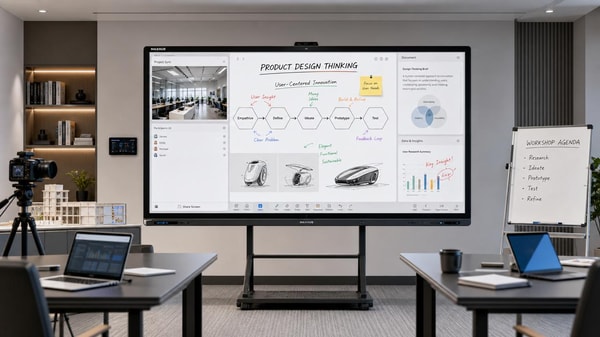
 Interactive whiteboards are improving, but software still decides valueInteractive whiteboards deliver real value when software matches the scenario. Explore how usability, integration, security, and updates shape smarter buying decisions.
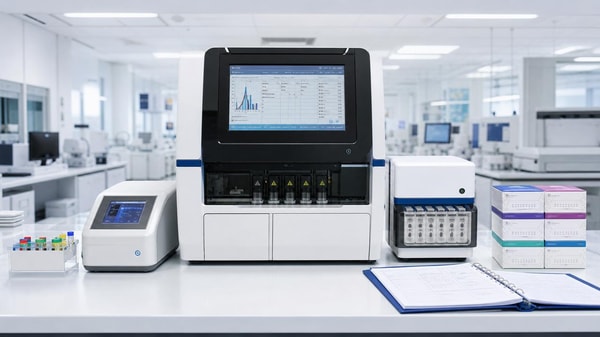
 Medical diagnostic equipment downtime often starts with calibration neglectMedical diagnostic equipment downtime often starts with missed calibration. Learn the warning signs, checklist priorities, and practical steps to prevent failures and keep healthcare operations reliable.
 Eco-friendly building materials are easier to specify than to sourceEco-friendly building materials are easier to specify than source. Learn how procurement teams can verify claims, reduce risk, and find reliable suppliers faster.
 Ergonomic workspace design can fail if chair fit comes lastErgonomic workspace design starts with chair fit. Learn how the right seat improves posture, comfort, and focus—and why fixing it first can transform your workspace.
 Outdoor garden supplies demand shifts faster than many expectOutdoor garden supplies demand is shifting faster than expected. Discover key B2B trends, smarter sourcing insights, and practical strategies to stay competitive and capture growth.
 Sustainable home decor sells better when materials are clearly disclosedSustainable home decor sells better when brands clearly disclose materials, finishes, and sourcing. Discover why transparency builds trust, justifies price, and drives more confident buying.
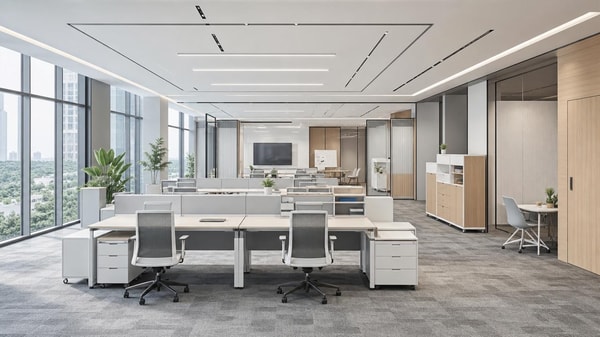
 Modern office furniture trends now favor modular over fixed layoutsModern office furniture is shifting to modular layouts for flexibility, lower lifecycle costs, and better hybrid work performance. See why enterprises are moving away from fixed office design.
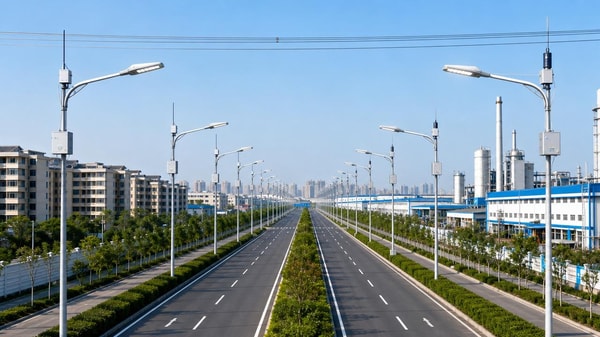
 Smart street lighting projects stall when controls are overcomplicatedSmart street lighting projects often stall when controls become too complex. Learn how to simplify deployment, reduce risk, and scale citywide with practical, maintainable systems.
 Solid-state battery breakthroughs look promising, but scale is harderSolid-state battery breakthroughs promise safer, higher-density energy storage, but scaling remains the real challenge. Explore what this means for supply chains, investment, and market advantage.
 Commercial LED lighting upgrades often save less than expectedCommercial LED lighting upgrades can underdeliver when baseline data, controls, and installation costs are misjudged. Learn how to assess real savings, reduce ROI risk, and make smarter investment decisions.
 Lithium battery storage payback can change with one policy updateLithium battery storage payback can shift fast after one policy update. See how tariffs, tax credits, grid pricing, and incentives change ROI—and how finance teams can approve smarter.
 Photovoltaic solar panels now compete on output in low lightPhotovoltaic solar panels now compete on low-light output. Discover how buyers can compare yield, risk, and supplier value to source smarter and boost project returns.
 Plant-based protein processing changes texture more than many expectPlant-based protein processing reshapes texture, stability, and safety more than expected. Explore key risks, QC checkpoints, and smarter sourcing insights for consistent results.
 Foldable screen technology is improving, but crease concerns remainFoldable screen technology is evolving fast with slimmer designs and stronger hinges, but crease concerns still shape buying decisions. Explore where it matters most.
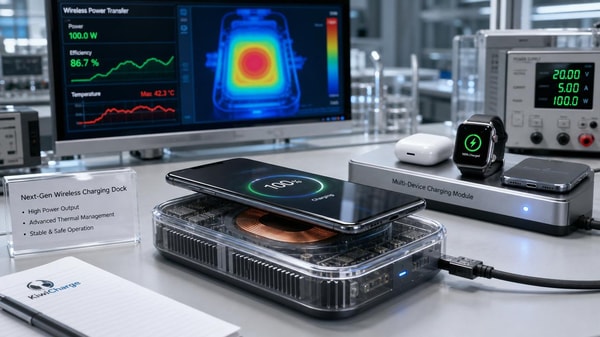
 Next-gen wireless charging still faces a heat management problemNext-gen wireless charging promises faster, more flexible power delivery, but heat remains the key barrier. Discover how thermal limits impact safety, efficiency, and market readiness.
 Wearable technology adoption drops when comfort gets overlookedWearable technology adoption falls fast when comfort is ignored. Discover how fit, materials, weight, and battery life shape long-term use and smarter buying decisions.
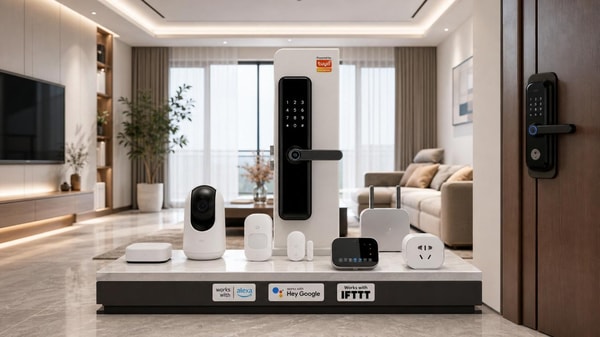
 Smart home devices wholesale is no longer just about low pricingSmart home devices wholesale now goes beyond low pricing. Discover how reliability, compatibility, and supply chain confidence help distributors choose profitable, trusted partners.
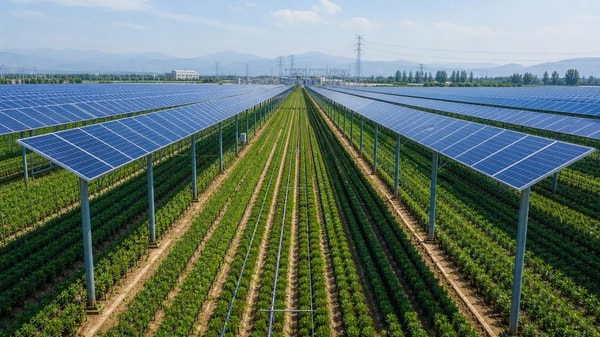
 Agri-PV systems make sense only when land use is planned wellAgri-PV systems deliver real value only when land use is planned well. Discover how smart site, crop, grid, and compliance decisions turn dual-use solar into a bankable, sustainable project.
 Organic fertilizers may improve soil slower, but results last longerOrganic fertilizers improve soil slowly but deliver longer-lasting results. Learn how they boost soil health, support safer growing, and help you choose the right option for sustainable planting success.
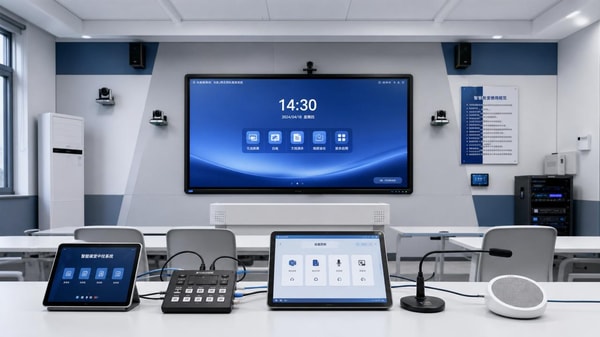
 Smart classroom solutions fail when teachers need too many appsSmart classroom solutions fail when teachers juggle too many apps. Discover why integrated, easy-to-use platforms drive adoption, ROI, and scalable learning success.









Popular Tags
Global Trade Insights & Industry
Our mission is to empower global exporters and importers with data-driven insights that foster strategic growth.
Search News
Popular Tags
Industry Overview
The global commercial kitchen equipment market is projected to reach $112 billion by 2027. Driven by urbanization, the rise of e-commerce food delivery, and strict hygiene regulations.