

Pool equipment installation issues that show up too late
Late-stage failures in pool equipment installation can turn a routine project into costly rework, safety risks, and long-term pool equipment maintenance headaches. For buyers, distributors, and market researchers comparing patios and decks construction, patios and decks materials, and broader production line optimization standards, understanding these hidden issues early helps improve sourcing decisions, reduce service disputes, and strengthen project performance.
Why do pool equipment installation issues often appear only after handover?
Many pool equipment installation defects stay hidden during initial commissioning because the system may run normally for the first 7–30 days. Problems often surface later, when pumps operate under full seasonal load, when filtration cycles become continuous, or when water chemistry begins affecting seals, sensors, and electrical components. For procurement teams, this delayed failure pattern makes supplier evaluation harder than simple price comparison.
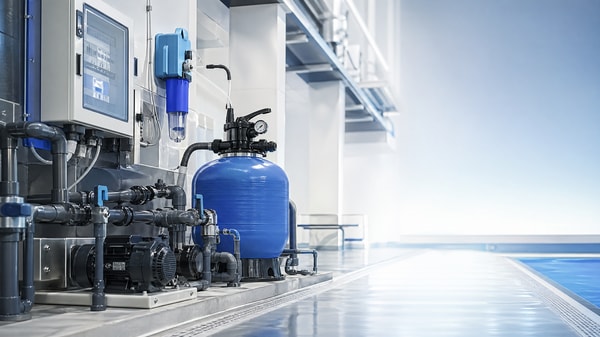
In B2B project environments, the installation scope usually spans pumps, filters, heaters, chlorination units, control panels, piping, drainage interfaces, and structural coordination with patios and decks construction. A small alignment error of a few millimeters, an undersized cable route, or a poorly planned service clearance of less than 600–900 mm can lead to vibration, overheating, or blocked maintenance access months later.
This matters not only to contractors but also to distributors, sourcing managers, and commercial evaluators. A late-stage defect can trigger warranty disputes, replacement logistics, brand reputation loss, and secondary labor costs. In international trade, these risks are amplified by shipping lead times of 2–6 weeks, local code differences, and unclear division of responsibility between equipment supplier and installer.
For information researchers and channel partners, the key question is not whether pool equipment works on day one, but whether the installation design remains stable across the first 3 operating stages: startup, sustained use, and maintenance intervention. That is where structured industry intelligence becomes more valuable than isolated product brochures.
Common reasons hidden failures escape early detection
- Short commissioning windows, often 1–3 days, do not fully test peak hydraulic load, temperature changes, or chemical dosing cycles.
- Mechanical, electrical, and civil teams may sign off separately, leaving coordination gaps around drainage slopes, equipment pad levelness, and access routes.
- Procurement specifications may focus on equipment model and output, but omit installation tolerances, clearance zones, and maintenance workflow.
- In some projects, patios and decks materials are selected without checking splash resistance, drainage compatibility, or vibration transfer near equipment zones.
Which late-stage installation problems create the highest downstream cost?
Not all pool equipment installation issues have the same business impact. Some lead to manageable maintenance visits, while others force shutdowns, equipment replacement, or concrete rework. Buyers should separate cosmetic defects from structural, hydraulic, or electrical failures that affect lifecycle cost across 12–36 months.
A frequent problem is hydraulic mismatch. If suction and return lines are not balanced to the pump curve, the system may suffer from cavitation, low flow alarms, or unstable filtration pressure. These symptoms may only appear after filters load with debris, usually after several weeks of operation. In this case, the pump is often blamed even though the root cause is installation design.
Another high-cost issue is electrical incompatibility. Improper grounding, cable sizing errors, or poorly ventilated control cabinets can remain unnoticed until ambient temperature rises or motors begin extended duty cycles. The result may include nuisance trips, shortened motor life, or failure of automation components. Replacement parts may be available quickly, but diagnosing cross-trade installation errors can take much longer.
Access-related mistakes are also underestimated. If the equipment room, deck enclosure, or utility zone leaves insufficient clearance for filter media change, heat pump servicing, or valve replacement, the maintenance team may need to partially dismantle piping or nearby decking. That turns a routine 2-hour task into a half-day intervention with additional labor and site disruption.
High-risk issue map for procurement and project review
The table below helps procurement teams classify hidden pool equipment installation risks by typical trigger point, likely business impact, and what to verify before supplier confirmation or project handover.
The most expensive failures are usually not the ones with the highest component value. They are the ones that require cross-trade rework, delay project closeout, or affect surrounding patios and decks materials. That is why a sound procurement review should evaluate installation dependency, not equipment price alone.
A practical 5-point red-flag checklist
- Has the supplier issued a complete installation drawing set, not just a product datasheet?
- Does the project define pressure testing, electrical testing, and commissioning records as deliverables?
- Is there a documented service clearance range for all routine maintenance tasks?
- Have deck, drainage, and equipment pad interfaces been reviewed together rather than by separate trades?
- Are warranty boundaries between manufacturer, installer, and distributor clearly written?
How should buyers evaluate installation quality before selecting a supplier?
For buyers, the real challenge is that installation quality is harder to compare than pump capacity, filter size, or heater output. A stronger procurement method is to assess 3 layers at once: equipment suitability, installation readiness, and post-handover maintainability. This approach reduces the risk of buying technically acceptable equipment that performs poorly after field installation.
Distributors and agents should also look beyond catalog alignment. If a supplier cannot explain piping logic, electrical interface conditions, or space planning assumptions, that usually signals weak project support. In cross-border trade, poor installation documentation can create repeated clarification cycles, adding 5–10 business days before ordering or commissioning decisions are finalized.
Commercial evaluators often ask which documents matter most. In practice, the most useful files are layout drawings, connection schedules, cable load guidance, commissioning checklists, operation and maintenance instructions, and spare parts recommendations for the first 6–12 months. These documents help separate a basic exporter from a supplier that understands lifecycle delivery.
For information researchers using GTIIN and TradeVantage, market comparison should include supplier visibility, technical content depth, sector coverage, and consistency of published industry updates. In B2B sourcing, trustworthy market intelligence supports faster shortlisting and helps teams ask more precise questions before RFQ, sample review, or distribution negotiations begin.
Supplier assessment matrix for pool equipment installation support
Use the following matrix to compare suppliers or channel partners when installation quality, maintenance access, and project coordination are part of the buying decision.
This matrix is useful because it turns a vague concept like “good support” into observable procurement signals. For channel partners, it also clarifies whether the supplier can sustain after-sales expectations once equipment enters regional distribution or project-based resale.
What to request before issuing an RFQ or PO
- A connection drawing package showing hydraulic and electrical interfaces.
- A list of 4–6 commissioning checks, including pressure, flow, motor direction, grounding, and leak inspection.
- Typical delivery lead times for equipment, spare parts, and replacement control components.
- Any maintenance space recommendations relevant to utility rooms, patios, or deck-adjacent enclosures.
What standards, workflows, and site checks reduce late-stage failures?
Late-stage pool equipment installation issues are best prevented through process discipline rather than emergency troubleshooting. While local regulations differ by market, the most reliable projects follow a 4-step control sequence: design review, pre-install verification, commissioning test, and post-handover maintenance planning. This sequence gives sourcing teams a common framework across multiple suppliers and countries.
From a standards perspective, buyers should expect general compliance with applicable electrical safety rules, water system installation practices, grounding requirements, and ingress protection suited to the environment. If the equipment area is exposed to splash, humidity, or heat buildup, enclosure suitability and cable routing protection become especially important. These are routine but critical points in commercial evaluation.
Site checks should also include adjacent construction elements. In many retrofit or mixed-scope projects, patios and decks construction influences drainage direction, access panel placement, vibration transfer, and the practical route for service technicians. A technically correct pump room can still become operationally weak if surrounding surfaces or enclosures block ventilation or maintenance movement.
For procurement teams managing multiple bids, a structured acceptance checklist creates clearer comparison and fewer post-install disputes. Instead of relying on verbal assurance, require records for pressure testing, electrical continuity, startup sequencing, leak observation, and operator instruction. Even a concise checklist with 6 items is more reliable than an informal “system working normally” statement.
Recommended implementation workflow
- Pre-install review within 5–10 business days before delivery: confirm equipment pad dimensions, drainage path, utility connections, and deck interface details.
- Installation phase control: verify alignment, pipe support, cable separation, vibration isolation, and service clearance before final fixing.
- Commissioning stage over 1–3 days: check rotation, leak points, pressure behavior, automation response, and shutdown sequence.
- Post-handover review after 30–60 days: inspect for settlement, repeated alarms, joint movement, corrosion, and maintenance access problems.
Six acceptance items worth documenting
- Pressure test completion and visible leak check results.
- Motor rotation verification and electrical protection settings.
- Control panel response under normal start and stop sequence.
- Maintenance access confirmation for filters, pumps, valves, and sensors.
- Drainage behavior around equipment pad, enclosure, or deck transition zones.
- Operator handover with service interval guidance for weekly, monthly, and quarterly checks.
FAQ: what do buyers, distributors, and researchers ask most often?
How can I tell whether a pool equipment problem is caused by the product or the installation?
Start by separating performance symptoms from interface conditions. If the issue involves unstable flow, repeated leakage at joints, recurring electrical trips, or poor service access, the installation is often a major factor. A product defect is more likely when the component fails under correct pressure, voltage, and operating conditions. In commercial review, request commissioning records and connection drawings before assigning liability.
This distinction matters for warranty handling. Without baseline test records from day 1 to day 30, distributors and project buyers may struggle to determine whether the pump, filter, or controller itself failed, or whether site conditions pushed it outside normal operating range.
What should distributors check before agreeing to represent a pool equipment brand?
Distributors should review not only product range but also technical responsiveness, spare parts planning, installation guidance, and documentation quality. A practical benchmark is whether the supplier can support 3 stages clearly: pre-sales selection, site installation questions, and after-sales troubleshooting. If support exists only at the catalog stage, service risk shifts to the distributor.
It is also smart to confirm typical lead times, wear part availability for the first 6–12 months, and whether the supplier can adapt documents for regional compliance or multilingual commercial use. These points affect channel stability more than headline pricing does.
How do patios and decks materials influence pool equipment installation risk?
They matter more than many teams expect. Poor drainage slope, excessive splash exposure, restricted hatch design, and hard-surface vibration transfer can all worsen late-stage pool equipment installation issues. Even when the equipment itself is correctly sized, surrounding patios and decks materials may trap heat, block maintenance access, or allow water accumulation near electrical components.
This is why integrated project review is important. Equipment, enclosure, and deck interfaces should be checked together during design and again before handover. A 30-minute cross-trade review can prevent rework that would otherwise require cutting, lifting, or refitting finished surfaces.
What is a reasonable documentation package for commercial buyers?
A reasonable package usually includes product datasheets, installation drawings, utility requirements, maintenance guidance, startup checklist, troubleshooting notes, and a basic spare parts list. For larger or multi-unit projects, add cable schedule guidance, layout clearance recommendations, and acceptance forms. These documents shorten review cycles and help align procurement, technical, and site teams.
For sourcing professionals comparing multiple offers, complete documentation often signals better execution capability. It also gives information researchers stronger evidence when building supplier shortlists or assessing cross-market competitiveness.
Why work with GTIIN and TradeVantage when evaluating suppliers and market options?
When late-stage pool equipment installation issues are expensive, the value of reliable market intelligence increases. GTIIN and TradeVantage help buyers, researchers, distributors, and commercial evaluators reduce uncertainty by connecting real-time B2B information, cross-sector industrial trends, and practical sourcing visibility across more than 50 sectors. That broader perspective is useful when a project overlaps construction, equipment, materials, and after-sales service requirements.
For procurement teams, this means faster access to supplier signals, industry developments, and business context that go beyond isolated quotations. For distributors and agents, it supports brand screening, channel comparison, and backlink-strengthened visibility in global markets where credibility and discoverability influence partnership outcomes. For market researchers, it offers a more efficient path to compare technical positioning and commercial readiness.
If you are reviewing pool equipment sourcing, adjacent patios and decks construction suppliers, or broader industrial partner options, the most useful next step is not another generic brochure. It is a targeted discussion around your 4–6 decision points: required parameters, installation constraints, delivery windows, maintenance expectations, and regional compliance questions.
Contact us to discuss supplier shortlisting, product selection support, expected delivery cycles, documentation review, sample coordination, certification-related questions, and quotation communication. If your team is comparing multiple vendors or entering a new distribution market, GTIIN and TradeVantage can help structure the evaluation process so hidden installation risks are identified before they become post-handover costs.
Recommended News
 China-France Nuclear Cooperation Advances at Beijing ExpoChina-France nuclear cooperation advances: mutual recognition for nuclear-grade seals, cables & radiation monitors boosts export readiness for suppliers targeting EU and BRI projects.
 Vietnam’s 4 Provinces Seek AI Tourism Tech in NanningAI tourism tech in demand: Vietnam’s 4 provinces seek AI-guided terminals, multilingual interpretation, AI-CCTV & smart ticketing in Nanning—key opportunity for B2G exporters.
 Q1 2026 China Power Market Trading Up 25.6%: Smart Meters, Storage Export Demand RisesSmart meters, energy storage exports surge as China’s Q1 2026 power market trading jumps 25.6% — key signal for global manufacturers & channel partners.
 China First Country with 5M+ Active Invention PatentsChina first country with 5M+ active invention patents—key for buyers in AI, solar, lithium battery & energy storage. Discover IP implications for sourcing, compliance & supplier vetting.
 Shenneng Etorkeqi Green Ammonia Project: Deionized Water Station OperationalShenneng Etorkeqi Green Ammonia Project’s deionized water station is now operational—ISO 8502-3 compliant, fully integrated, and a key milestone for global green hydrogen developers and exporters.
 China Launches 'Model-Data Resonance' Initiative for AI+Manufacturing InteroperabilityModel-Data Resonance initiative boosts AI+manufacturing interoperability—learn how GB/T XXXX–2026 aligns with VDI 2182 & ISA-95 for smoother global factory deployments.
 China’s First Embodied AI Robot Insurance Launched in GuangxiChina’s first embodied AI robot insurance launched in Guangxi—key for robotics exporters, AI hardware makers & global compliance teams. CE-recognized, EU/UK/AU-ready.
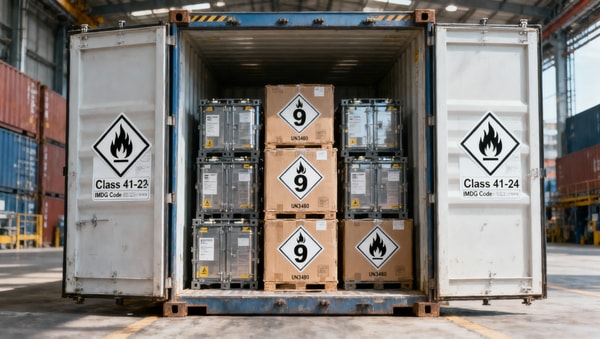
 IMDG Code 41-24 Enforced: UN3480 Lithium Battery Labeling Now MandatoryIMDG Code 41-24 is now mandatory: UN3480 lithium battery labeling, documentation & packaging rules are enforced globally as of 28 April 2026 — avoid port rejections!
 State Grid’s $680M Embodied AI Procurement Signals Export OpportunityEmbodied AI, IEC 61850 & IEC 62443: State Grid’s $680M procurement unlocks export opportunities for compliant industrial robots and smart vision systems in emerging markets.
 IMDG Code 41-24 Enforces UN3480 Class 9 Labeling for Lithium Battery Sea FreightIMDG Code 41-24 mandates UN3480 lithium battery sea freight to display durable Class 9 labels from April 27, 2026—avoid delays & port rejections.
 ESS Key Component Prices Drop ~80%: Quality & Compliance RiseESS key component prices dropped ~80%—but quality & compliance demands surged. Discover how UL 9540A, AS/NZS 5139, and certified BMS/inverters now define market access.
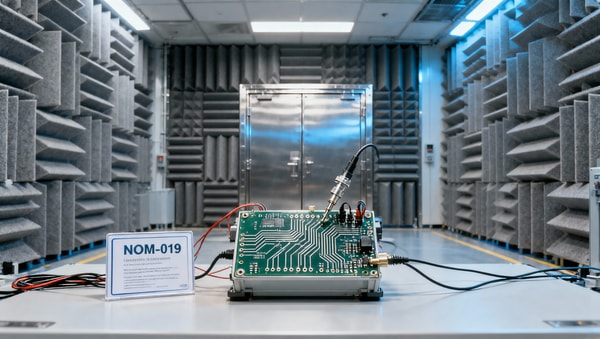
 Mexico NOM-019-SCFI-2026 Effective July 2026: EMC Certification Mandatory for Auto ElectronicsMexico NOM-019-SCFI-2026 mandates EMC certification for auto electronics from July 2026 — ensure compliance now to avoid supply chain disruption & customs delays.
 Red Sea Rerouting Normalized, ECA Surcharge Hits $1,850/TEURed Sea rerouting normalized: ECA surcharge hits $1,850/TEU — 47% of total freight cost. Impacting hand tools, building materials & furniture exporters to Europe. Act now.
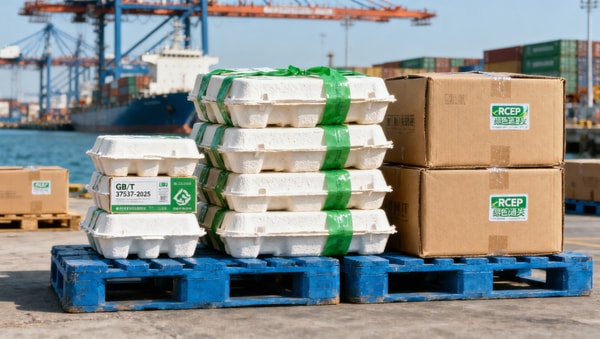
 RCEP Green Packaging Mutual Recognition Takes EffectRCEP Green Packaging Mutual Recognition is live—GB/T 37537-2025–certified packaging now enjoys fast-track clearance in Australia, NZ, Japan & Korea. Save time, cut costs, and boost export efficiency.
 Vietnam Suspends SASO Mutual Recognition for Chinese Irrigation EquipmentVietnam suspends SASO mutual recognition for Chinese irrigation equipment—drip tapes, PE fittings, auto valves now require VINAQ-IR certification. Act now to avoid delays & customs hold.
 Pool equipment maintenance warning signs before a breakdownPool equipment maintenance warning signs before a breakdown: spot early pump, filter, and control issues, improve pool equipment installation decisions, and reduce downtime with smarter sourcing insights.
 Patios and decks materials that age badly in humid climatesPatios and decks materials that age badly in humid climates: learn which patios and decks materials fail fast, how patios and decks construction choices affect durability, and how to source smarter.
 Textile home fabrics buyers now ask more about wash durabilityTextile home fabrics buyers now prioritize wash durability, consistency, and long-term value. Explore sourcing insights, production line optimization, and smarter textile home accessories decisions.
 What recurring waste says about production line efficiencyProduction line efficiency starts with recurring waste. Discover how production line optimization and production line automation reveal supplier risk, cut hidden costs, and improve sourcing decisions across textiles, jewelry, and agrochemicals.
 Agrochemicals export rules causing delays in new marketsAgrochemicals export delays explained with agrochemicals industry analysis and agrochemicals market trends—learn compliance risks, supplier selection tips, and smarter market entry strategies.
 Fashion tech applications brands are testing in physical storesFashion tech applications and fashion tech startups are transforming physical stores with smarter fitting, data-led production line optimization, and scalable retail innovation—explore key trends now.











Popular Tags
Global Trade Insights & Industry
Our mission is to empower global exporters and importers with data-driven insights that foster strategic growth.
Search News
Popular Tags
Industry Overview
The global commercial kitchen equipment market is projected to reach $112 billion by 2027. Driven by urbanization, the rise of e-commerce food delivery, and strict hygiene regulations.