

Sustainable hosiery: Which eco-friendly fibers will dominate the market in 2026?
As global sustainability mandates tighten, the hosiery and intimate apparel sectors are pivoting toward innovative material solutions. For procurement personnel and distributors utilizing our B2B portal to navigate these shifts, identifying the eco-friendly fibers set to dominate by 2026 is vital for strategic growth. While industrial shifts are occurring across diverse sectors—from medical scrubs to inorganic chemicals and even technical manufacturing like injection molding—the legwear market is uniquely driven by consumer demand for circularity. This report provides deep-dive intelligence into the next generation of sustainable textiles, offering business evaluators the data-driven insights needed to thrive in a rapidly evolving international trade landscape.
The 2026 Pivot: Why Material Selection is Now a Strategic Risk
For procurement professionals and global distributors, the transition to sustainable fibers in hosiery is no longer a marketing choice—it is a regulatory and operational necessity. By 2026, the European Union’s Strategy for Sustainable and Circular Textiles will be in full force, demanding higher durability and easier recyclability for all apparel sold in the region. For businesses, this means that sourcing decisions made today will determine market access tomorrow.
The core challenge in hosiery has always been the reliance on elastane (Spandex) and petroleum-based polyamides. However, as we look toward 2026, the market is moving beyond simple "recycled" labels toward "closed-loop" and "bio-contributive" materials. Distributors must evaluate suppliers not just on price, but on their ability to provide certified, traceable, and scalable fiber solutions that satisfy both the "Trust Signal" required by search algorithms and the rigorous standards of modern ESG (Environmental, Social, and Governance) audits.
1. Recycled Polyamide (Nylon) 6 and 6.6: The Scalable Standard
Recycled Polyamide remains the most commercially viable alternative for the hosiery sector due to its performance characteristics. Unlike other apparel, hosiery requires extreme elasticity and high tensile strength. Mechanical and chemical recycling of pre-consumer and post-consumer waste (such as discarded fishing nets and carpet fibers) has reached a level of maturity that allows for high-denier consistency.
Business Value: For distributors and agents, recycled nylon offers the lowest "switch-cost" risk. It fits seamlessly into existing knitting machines, meaning manufacturers do not require massive capital expenditure (CAPEX) to adopt it. By 2026, we expect Global Recycled Standard (GRS) certified nylon to be the baseline requirement for mid-to-high-end legwear brands.
2. Advanced Cellulosics: Lyocell and Modal Blends
While nylon provides the structure, wood-based cellulosics like Lyocell (often known by the brand Tencel) are dominating the "comfort and breathability" segment. The 2026 market will see a surge in "hybrid knits"—hosiery that blends recycled synthetics with high-performance cellulosics. These fibers are sourced from FSC-certified forests and processed in closed-loop systems where 99% of the solvent is recovered.
Strategic Advantage: Procurement officers should focus on Lyocell blends for premium lines targeting eco-conscious consumers. Its natural moisture-wicking properties and silk-like feel provide a clear "Value Proposition" that justifies higher retail price points. Furthermore, its biodegradability addresses the growing concern over microplastic shedding in the textile industry.
3. Bio-Based Synthetics: The Future of Fossil-Free Legwear
The most significant breakthrough leading into 2026 is the rise of bio-based polyamides. Unlike recycled nylon (which still originates from oil), bio-based fibers are derived from renewable resources like castor beans or industrial corn. These "drop-in" solutions offer the exact same chemical structure as traditional nylon but with a significantly lower carbon footprint.
Market Insight: While currently more expensive than recycled alternatives, bio-based synthetics are the "gold standard" for brands aiming for true carbon neutrality. For business evaluators, identifying suppliers who are securing early contracts with bio-polymer producers will be key to identifying future market leaders.
4. Biodegradable Elastane: Solving the Recyclability Paradox
The Achilles' heel of sustainable hosiery has always been elastane. Traditional elastane makes garments nearly impossible to recycle because it cannot be easily separated from other fibers. By 2026, we anticipate the wider adoption of biodegradable and chemically recyclable elastane variants. These innovations allow the garment to break down in landfill conditions or be fully processed in specialized recycling facilities.
Procurement Tip: When evaluating new manufacturers, ask specifically about their "stretch solution." Suppliers using enhanced-degradation elastane are significantly more likely to meet the upcoming EU "Right to Repair" and circularity mandates, protecting your inventory from future non-compliance penalties.
Key Evaluation Metrics for Distributors and Sourcing Agents
As a business evaluator or distributor, your success in 2026 depends on verifying the "Trust Signal" of your supply chain. Ensure your partners provide:
- Verified Certifications: Look for GRS (Global Recycled Standard), OEKO-TEX Standard 100, and FSC (Forest Stewardship Council) labels.
- Traceability Data: Can the supplier provide a digital product passport (DPP) or blockchain verification of the fiber’s origin?
- Scalability: Does the manufacturer have the capacity to maintain quality across high-volume orders as demand for these fibers spikes?
Conclusion: Positioning for a Circular Legwear Market
The hosiery market of 2026 will be defined by three pillars: recycled performance, cellulosic comfort, and bio-based innovation. For the procurement and distribution professionals within the TradeVantage network, the path forward involves shifting from a price-centric model to a value-centric model rooted in material science. By prioritizing recycled Polyamide 6.6 and investigating bio-based alternatives now, your business can secure its position as a high-authority leader in the global textile supply chain. Sustainable hosiery is no longer a niche—it is the new global standard for profitable growth.
Recommended News
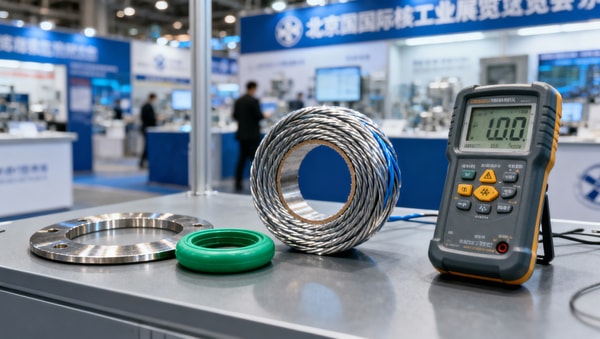
 China-France Nuclear Cooperation Advances at Beijing ExpoChina-France nuclear cooperation advances: mutual recognition for nuclear-grade seals, cables & radiation monitors boosts export readiness for suppliers targeting EU and BRI projects.
 Vietnam’s 4 Provinces Seek AI Tourism Tech in NanningAI tourism tech in demand: Vietnam’s 4 provinces seek AI-guided terminals, multilingual interpretation, AI-CCTV & smart ticketing in Nanning—key opportunity for B2G exporters.
 Q1 2026 China Power Market Trading Up 25.6%: Smart Meters, Storage Export Demand RisesSmart meters, energy storage exports surge as China’s Q1 2026 power market trading jumps 25.6% — key signal for global manufacturers & channel partners.
 China First Country with 5M+ Active Invention PatentsChina first country with 5M+ active invention patents—key for buyers in AI, solar, lithium battery & energy storage. Discover IP implications for sourcing, compliance & supplier vetting.
 Shenneng Etorkeqi Green Ammonia Project: Deionized Water Station OperationalShenneng Etorkeqi Green Ammonia Project’s deionized water station is now operational—ISO 8502-3 compliant, fully integrated, and a key milestone for global green hydrogen developers and exporters.
 China Launches 'Model-Data Resonance' Initiative for AI+Manufacturing InteroperabilityModel-Data Resonance initiative boosts AI+manufacturing interoperability—learn how GB/T XXXX–2026 aligns with VDI 2182 & ISA-95 for smoother global factory deployments.
 China’s First Embodied AI Robot Insurance Launched in GuangxiChina’s first embodied AI robot insurance launched in Guangxi—key for robotics exporters, AI hardware makers & global compliance teams. CE-recognized, EU/UK/AU-ready.
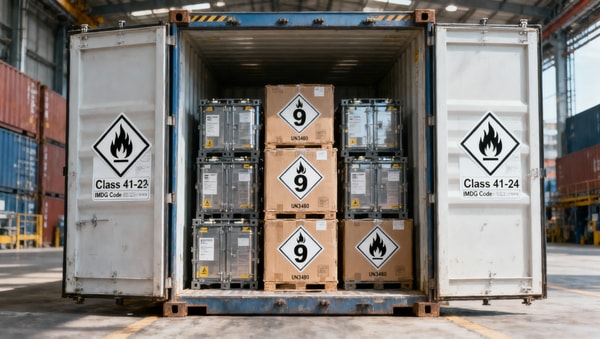
 IMDG Code 41-24 Enforced: UN3480 Lithium Battery Labeling Now MandatoryIMDG Code 41-24 is now mandatory: UN3480 lithium battery labeling, documentation & packaging rules are enforced globally as of 28 April 2026 — avoid port rejections!
 State Grid’s $680M Embodied AI Procurement Signals Export OpportunityEmbodied AI, IEC 61850 & IEC 62443: State Grid’s $680M procurement unlocks export opportunities for compliant industrial robots and smart vision systems in emerging markets.
 IMDG Code 41-24 Enforces UN3480 Class 9 Labeling for Lithium Battery Sea FreightIMDG Code 41-24 mandates UN3480 lithium battery sea freight to display durable Class 9 labels from April 27, 2026—avoid delays & port rejections.
 ESS Key Component Prices Drop ~80%: Quality & Compliance RiseESS key component prices dropped ~80%—but quality & compliance demands surged. Discover how UL 9540A, AS/NZS 5139, and certified BMS/inverters now define market access.
 Mexico NOM-019-SCFI-2026 Effective July 2026: EMC Certification Mandatory for Auto ElectronicsMexico NOM-019-SCFI-2026 mandates EMC certification for auto electronics from July 2026 — ensure compliance now to avoid supply chain disruption & customs delays.
 Red Sea Rerouting Normalized, ECA Surcharge Hits $1,850/TEURed Sea rerouting normalized: ECA surcharge hits $1,850/TEU — 47% of total freight cost. Impacting hand tools, building materials & furniture exporters to Europe. Act now.
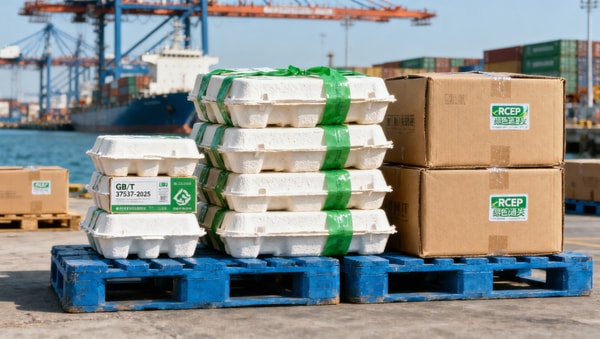
 RCEP Green Packaging Mutual Recognition Takes EffectRCEP Green Packaging Mutual Recognition is live—GB/T 37537-2025–certified packaging now enjoys fast-track clearance in Australia, NZ, Japan & Korea. Save time, cut costs, and boost export efficiency.
 Vietnam Suspends SASO Mutual Recognition for Chinese Irrigation EquipmentVietnam suspends SASO mutual recognition for Chinese irrigation equipment—drip tapes, PE fittings, auto valves now require VINAQ-IR certification. Act now to avoid delays & customs hold.
 Pool equipment maintenance warning signs before a breakdownPool equipment maintenance warning signs before a breakdown: spot early pump, filter, and control issues, improve pool equipment installation decisions, and reduce downtime with smarter sourcing insights.
 Patios and decks materials that age badly in humid climatesPatios and decks materials that age badly in humid climates: learn which patios and decks materials fail fast, how patios and decks construction choices affect durability, and how to source smarter.
 Textile home fabrics buyers now ask more about wash durabilityTextile home fabrics buyers now prioritize wash durability, consistency, and long-term value. Explore sourcing insights, production line optimization, and smarter textile home accessories decisions.
 What recurring waste says about production line efficiencyProduction line efficiency starts with recurring waste. Discover how production line optimization and production line automation reveal supplier risk, cut hidden costs, and improve sourcing decisions across textiles, jewelry, and agrochemicals.
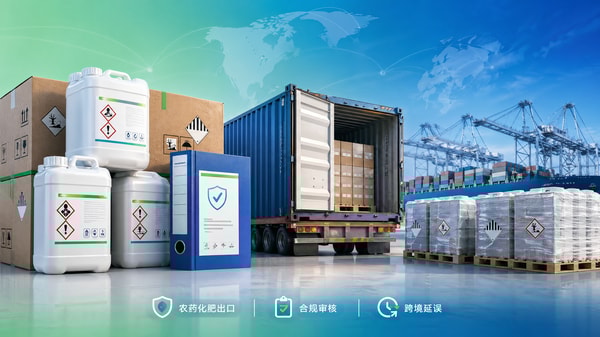
 Agrochemicals export rules causing delays in new marketsAgrochemicals export delays explained with agrochemicals industry analysis and agrochemicals market trends—learn compliance risks, supplier selection tips, and smarter market entry strategies.
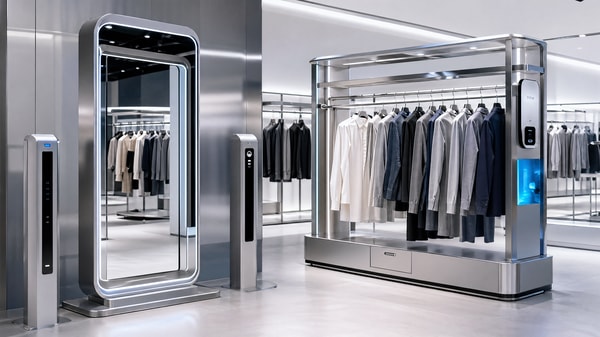
 Fashion tech applications brands are testing in physical storesFashion tech applications and fashion tech startups are transforming physical stores with smarter fitting, data-led production line optimization, and scalable retail innovation—explore key trends now.















Popular Tags
Global Trade Insights & Industry
Our mission is to empower global exporters and importers with data-driven insights that foster strategic growth.
Search News
Popular Tags
Industry Overview
The global commercial kitchen equipment market is projected to reach $112 billion by 2027. Driven by urbanization, the rise of e-commerce food delivery, and strict hygiene regulations.