

How to choose a hosiery manufacturer that balances durability with premium aesthetics.
Identifying a hosiery manufacturer that successfully integrates exceptional durability with premium aesthetics is paramount for procurement officers and distributors seeking long-term market success. In today’s competitive landscape, leveraging a high-authority B2B portal is essential for conducting thorough business evaluations and accessing verified supply chain intelligence. Whether your requirements involve high-end intimate apparel or specialized textile engineering, selecting a partner that balances technical resilience with sophisticated design is the key to brand differentiation. This guide provides actionable insights to help you navigate manufacturer selection, ensuring your sourcing strategy aligns with the highest global standards of quality and visual appeal.
The False Dilemma: Why Durability and Aesthetics Must Coexist
In the high-volume hosiery market, many procurement professionals mistakenly believe that "premium feel" must be sacrificed for "industrial-strength durability." However, for high-end brands and distributors, this trade-off is a risk to brand equity. A product that looks beautiful on the shelf but ladders within hours of wear creates a customer service nightmare. Conversely, a highly durable but "scratchy" or dull-looking garment will fail to capture the premium segment. The most capable manufacturers solve this through advanced material science and precision knitting, ensuring that the visual elegance of the hosiery is backed by structural integrity.
Technical Indicators of Hosiery Durability
When evaluating a manufacturer’s portfolio, procurement officers should look beyond the sample’s surface. Durability is engineered at the molecular and structural level. To ensure you are choosing a partner capable of high-performance manufacturing, verify the following technical specifications:
- Yarn Quality and Composition: Premium manufacturers typically use Double-Covered Yarn (DCY) rather than Single-Covered Yarn (SCY). DCY involves wrapping the elastane core with two layers of nylon, significantly increasing resistance to snags and "runs."
- Knit Density and Gauge: High-quality hosiery requires a high stitch density. Ask about the "gauge" of their machines. A higher needle count (e.g., 400 needles for sheer hosiery) creates a tighter, more uniform mesh that is inherently more resilient.
- Reinforcement Zones: Examine the construction of the toe, heel, and waistband. A manufacturer that offers "ladder-resist" technology (using specialized interlocking knit patterns) demonstrates a commitment to longevity that standard factories cannot match.
Defining Premium Aesthetics: The "Hand-Feel" and Finish
Aesthetics in hosiery are not just about color; they are about the "Trust Signal" the product sends to the end consumer. For business evaluators, the visual and tactile assessment should focus on:
- Sheer Consistency: High-end hosiery must exhibit "uniformity of shade." Lower-quality manufacturers often struggle with "banding" or "tiger stripes," which are visible defects in the dye and knit consistency.
- Seam Construction: Check for flat-locked seams. Unlike standard overlock seams, flat seams are nearly invisible under clothing and offer a sleek, "couture" finish that signifies a premium product.
- Luster and Dye Depth: Inquire about their dyeing process. Premium manufacturers use multi-stage dyeing and finishing treatments (such as steaming on leg forms) to ensure the color remains vibrant and the fabric retains a soft, luxurious "hand-feel."
Operational Vetting: Machinery and R&D Capabilities
For distributors and agents, a manufacturer’s equipment is a primary indicator of their output quality. Leading manufacturers typically invest in Italian knitting technology, such as Lonati or Santoni machines, which are the industry gold standard for precision and versatility. Beyond the hardware, evaluate their R&D department. A manufacturer that actively experiments with sustainable fibers (like GRS-certified recycled nylon) or antimicrobial finishes shows they are positioned to help your brand stay ahead of market trends.
Certifications and the Global "Trust Signal"
In the modern B2B ecosystem, technical excellence must be verified by international standards. This is where "Trust Signals" become critical for procurement professionals. A reputable manufacturer should hold certifications such as OEKO-TEX Standard 100 (ensuring the product is free from harmful chemicals), BSCI (Business Social Compliance Initiative), and ISO 9001. These are not just bureaucratic hurdles; they are proof of a manufacturer’s operational maturity and their ability to meet the stringent requirements of European and North American markets.
Conclusion: Strategic Sourcing for Long-Term Growth
Choosing the right hosiery manufacturer is a strategic decision that impacts your brand’s reputation and bottom line. By prioritizing partners who demonstrate mastery over both material durability and aesthetic finishing, you mitigate the risk of product returns and build consumer trust. Focus your evaluation on yarn quality, machine precision, and international certifications. In an era of rapid supply chain shifts, partnering with a manufacturer that understands the nuance of "technical elegance" is the most effective way to secure a competitive advantage in the global textile market.
Recommended News
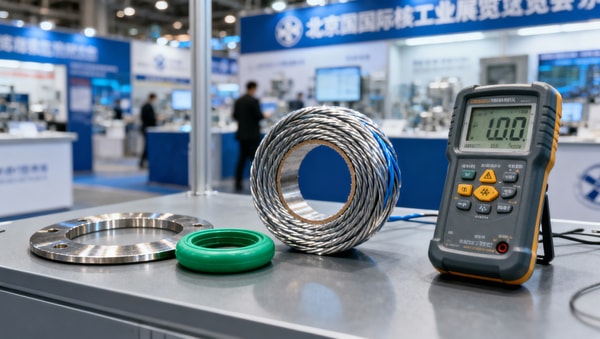
 China-France Nuclear Cooperation Advances at Beijing ExpoChina-France nuclear cooperation advances: mutual recognition for nuclear-grade seals, cables & radiation monitors boosts export readiness for suppliers targeting EU and BRI projects.
 Vietnam’s 4 Provinces Seek AI Tourism Tech in NanningAI tourism tech in demand: Vietnam’s 4 provinces seek AI-guided terminals, multilingual interpretation, AI-CCTV & smart ticketing in Nanning—key opportunity for B2G exporters.
 Q1 2026 China Power Market Trading Up 25.6%: Smart Meters, Storage Export Demand RisesSmart meters, energy storage exports surge as China’s Q1 2026 power market trading jumps 25.6% — key signal for global manufacturers & channel partners.
 China First Country with 5M+ Active Invention PatentsChina first country with 5M+ active invention patents—key for buyers in AI, solar, lithium battery & energy storage. Discover IP implications for sourcing, compliance & supplier vetting.
 Shenneng Etorkeqi Green Ammonia Project: Deionized Water Station OperationalShenneng Etorkeqi Green Ammonia Project’s deionized water station is now operational—ISO 8502-3 compliant, fully integrated, and a key milestone for global green hydrogen developers and exporters.
 China Launches 'Model-Data Resonance' Initiative for AI+Manufacturing InteroperabilityModel-Data Resonance initiative boosts AI+manufacturing interoperability—learn how GB/T XXXX–2026 aligns with VDI 2182 & ISA-95 for smoother global factory deployments.
 China’s First Embodied AI Robot Insurance Launched in GuangxiChina’s first embodied AI robot insurance launched in Guangxi—key for robotics exporters, AI hardware makers & global compliance teams. CE-recognized, EU/UK/AU-ready.
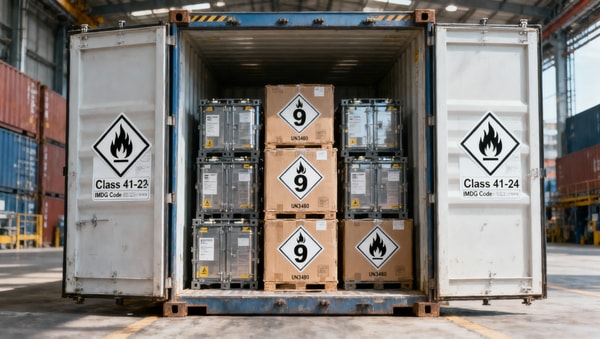
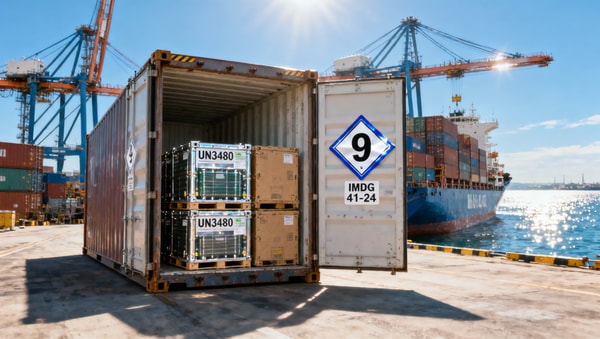
 IMDG Code 41-24 Enforced: UN3480 Lithium Battery Labeling Now MandatoryIMDG Code 41-24 is now mandatory: UN3480 lithium battery labeling, documentation & packaging rules are enforced globally as of 28 April 2026 — avoid port rejections!
 State Grid’s $680M Embodied AI Procurement Signals Export OpportunityEmbodied AI, IEC 61850 & IEC 62443: State Grid’s $680M procurement unlocks export opportunities for compliant industrial robots and smart vision systems in emerging markets.
 IMDG Code 41-24 Enforces UN3480 Class 9 Labeling for Lithium Battery Sea FreightIMDG Code 41-24 mandates UN3480 lithium battery sea freight to display durable Class 9 labels from April 27, 2026—avoid delays & port rejections.
 ESS Key Component Prices Drop ~80%: Quality & Compliance RiseESS key component prices dropped ~80%—but quality & compliance demands surged. Discover how UL 9540A, AS/NZS 5139, and certified BMS/inverters now define market access.
 Mexico NOM-019-SCFI-2026 Effective July 2026: EMC Certification Mandatory for Auto ElectronicsMexico NOM-019-SCFI-2026 mandates EMC certification for auto electronics from July 2026 — ensure compliance now to avoid supply chain disruption & customs delays.
 Red Sea Rerouting Normalized, ECA Surcharge Hits $1,850/TEURed Sea rerouting normalized: ECA surcharge hits $1,850/TEU — 47% of total freight cost. Impacting hand tools, building materials & furniture exporters to Europe. Act now.
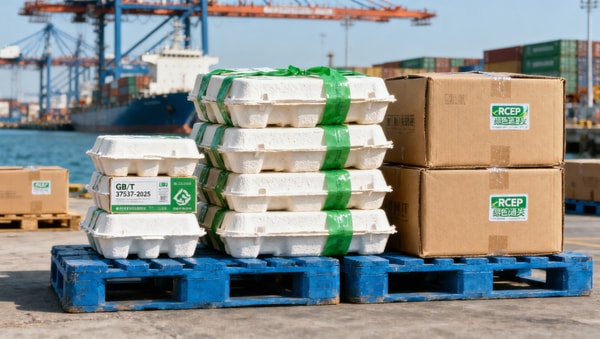
 RCEP Green Packaging Mutual Recognition Takes EffectRCEP Green Packaging Mutual Recognition is live—GB/T 37537-2025–certified packaging now enjoys fast-track clearance in Australia, NZ, Japan & Korea. Save time, cut costs, and boost export efficiency.
 Vietnam Suspends SASO Mutual Recognition for Chinese Irrigation EquipmentVietnam suspends SASO mutual recognition for Chinese irrigation equipment—drip tapes, PE fittings, auto valves now require VINAQ-IR certification. Act now to avoid delays & customs hold.
 Pool equipment maintenance warning signs before a breakdownPool equipment maintenance warning signs before a breakdown: spot early pump, filter, and control issues, improve pool equipment installation decisions, and reduce downtime with smarter sourcing insights.
 Patios and decks materials that age badly in humid climatesPatios and decks materials that age badly in humid climates: learn which patios and decks materials fail fast, how patios and decks construction choices affect durability, and how to source smarter.
 Textile home fabrics buyers now ask more about wash durabilityTextile home fabrics buyers now prioritize wash durability, consistency, and long-term value. Explore sourcing insights, production line optimization, and smarter textile home accessories decisions.
 What recurring waste says about production line efficiencyProduction line efficiency starts with recurring waste. Discover how production line optimization and production line automation reveal supplier risk, cut hidden costs, and improve sourcing decisions across textiles, jewelry, and agrochemicals.
 Agrochemicals export rules causing delays in new marketsAgrochemicals export delays explained with agrochemicals industry analysis and agrochemicals market trends—learn compliance risks, supplier selection tips, and smarter market entry strategies.
 Fashion tech applications brands are testing in physical storesFashion tech applications and fashion tech startups are transforming physical stores with smarter fitting, data-led production line optimization, and scalable retail innovation—explore key trends now.













Popular Tags
Global Trade Insights & Industry
Our mission is to empower global exporters and importers with data-driven insights that foster strategic growth.
Search News
Popular Tags
Industry Overview
The global commercial kitchen equipment market is projected to reach $112 billion by 2027. Driven by urbanization, the rise of e-commerce food delivery, and strict hygiene regulations.