

Where 3D fashion design saves time and where it does not
3D fashion design is often sold as a shortcut to faster product development. In practice, it can save substantial time—but only in specific parts of the workflow. For project managers and engineering leads, the key question is not whether 3D is “faster” in general. It is where it removes waste, where it improves decision-making, and where it introduces new dependencies that can offset the gains.
The short answer is this: 3D fashion design usually saves time in concept communication, internal reviews, digital sampling, colorway decisions, and stakeholder approvals. It saves far less time—or may even add time—in asset setup, fit validation, material digitization, workflow integration, and supplier onboarding. Teams that understand this distinction make better investment decisions and set more realistic delivery targets.
For leaders responsible for schedules, budgets, and cross-functional coordination, that distinction matters more than software features. The value of 3D fashion design is not just visual output. Its real impact comes from reducing preventable iteration, aligning teams earlier, and replacing ambiguous handoffs with shared digital references. But that only happens when the process around the tool is mature enough to support it.
What project managers are really trying to find out
When decision-makers search for insights on 3D fashion design, they are rarely looking for a basic definition. They want a practical answer to a business problem: will this help us shorten development cycles without creating hidden delays elsewhere? They also want to know which product categories, team structures, and supplier models benefit most.
That is especially true for project managers and engineering leads. Their concern is not whether 3D looks impressive in a demo. They need clarity on implementation risk, expected time savings, change management requirements, and the points in the development chain where bottlenecks are most likely to move rather than disappear.
In other words, the useful conversation is not “Is 3D fashion design the future?” It is “At which stages does it replace rework, and at which stages does it require new work?” That is the lens this article uses.
Where 3D fashion design consistently saves time
The most reliable time savings appear in stages where the traditional process depends heavily on interpretation. In conventional workflows, designers, developers, technical teams, merchandisers, and suppliers often review the same product through sketches, comments, swatches, tech packs, and physical samples that do not always tell the same story. Misalignment creates rounds of correction. This is where 3D fashion design can create immediate speed.
1. Early concept visualization. A 3D model communicates silhouette, proportion, design intent, and construction ideas far more clearly than a flat sketch alone. That reduces the time spent clarifying what the product is supposed to become. Internal teams can react sooner, and they can reject weak directions before physical development begins.
2. Fewer physical sample rounds for visual review. One of the biggest advantages of 3D fashion design is replacing some sample iterations whose purpose is mainly aesthetic confirmation. If a team uses 3D to review shape, style lines, trim placement, print scale, and color options, it may cut one or more physical rounds that would otherwise add weeks.
3. Faster cross-functional approvals. Approvals often slow down because different stakeholders assess different versions of the product. A centralized 3D asset helps design, product development, sourcing, and commercial teams review the same item at the same time. This can speed sign-off, especially for global teams working across time zones.
4. More efficient colorways and line reviews. Once a base model is built correctly, teams can test multiple color and graphic variations quickly. That saves time not only in creation but in assortment decision-making. Instead of waiting for physical samples for each option, commercial and merchandising teams can compare digital variants much earlier.
5. Better communication with downstream partners. Factories and external vendors still need precise technical information, but a strong 3D file can reduce ambiguity in product intent. This is especially helpful for products with layered components, complex styling details, or difficult visual storytelling.
6. Faster marketing readiness for selected use cases. In some organizations, approved 3D assets also support e-commerce previews, internal sell-in, retailer presentations, or virtual line planning. This does not shorten engineering work directly, but it can compress the time between development approval and commercial activation.
Why the savings are often strongest before physical validation
A useful way to think about 3D fashion design is that it is strongest where the task is interpretation-heavy and weakest where the task depends on physical truth. In the early and middle stages of product development, many delays come from uncertainty: what does this design really look like, how should it drape, where exactly does this detail sit, and are we all discussing the same version?
3D helps because it makes intent visible. That reduces discussion loops and lowers the chance that stakeholders approve different assumptions. For project managers, this means the most immediate return often comes before final sample sign-off—during alignment, review, and decision stages.
That is why teams frequently report success in reducing sample rounds, but not necessarily in eliminating all sampling. The technology improves the speed of converging on a likely solution. It does not automatically remove the need to verify that solution in the physical world.
Where 3D fashion design does not save time as much as people expect
The strongest disappointment usually comes from expecting 3D to accelerate every stage equally. It does not. Some steps remain complex, manual, and dependent on experience, data quality, and supplier capability.
1. Initial asset creation and library setup. If teams are starting from scratch, building digital blocks, avatar standards, trim libraries, material libraries, and rendering workflows takes time. Early projects often move slower than expected because the foundation is still being created. The first season is rarely the best indicator of mature productivity.
2. Fabric and material digitization. Much of fashion behavior depends on material performance. If digital fabrics do not accurately reflect weight, stretch, stiffness, shine, thickness, or drape, the 3D output may look convincing but still lead to wrong decisions. Creating reliable digital materials can be time-intensive and often requires specialized expertise.
3. Fit validation. This is one of the biggest misconceptions. 3D can support fit assessment, but it does not remove the need for physical fitting in many categories. For close-to-body garments, performance wear, tailored products, and items with complex construction, physical validation remains essential. If a team overestimates what virtual fit can replace, delays may reappear later in the process.
4. Workflow integration across departments. Even if the design team works efficiently in 3D, the gains shrink when product development, costing, sourcing, and suppliers continue to rely on separate systems and manual translation. Time savings come from connected workflows, not from isolated digital excellence.
5. Supplier readiness. If external manufacturing partners are not comfortable interpreting or using 3D outputs, internal speed may not translate into production speed. The project simply shifts the burden from one team to another. In global supply chains, uneven digital maturity is often a larger constraint than software capability.
6. Change management and training. Teams need new habits, not just new tools. Review methods, approval checkpoints, file standards, ownership rules, and communication patterns must change. During this transition, productivity may dip before it improves. Leaders who ignore that ramp-up period usually underestimate the real timeline.
The hidden causes of delay in 3D implementation
If a 3D fashion design initiative fails to save time, the cause is often not the technology itself. More often, the problem is incomplete operational design. Project managers should watch for several recurring issues.
First, organizations often launch 3D without defining what success means by stage. If one team expects fewer proto samples, another expects better costing accuracy, and another expects faster marketing asset creation, nobody is measuring the same result. That makes timelines and ROI hard to judge.
Second, teams may use 3D as an added layer rather than a replacement for outdated steps. For example, they create digital reviews but still require the same number of physical sign-offs for habit-based reasons. In that scenario, 3D adds work instead of removing work.
Third, there is often a data discipline problem. Inconsistent naming, version confusion, incomplete material specs, and unstructured handoffs can slow digital workflows just as much as they slow traditional ones. A faster tool cannot compensate for poor process governance.
Fourth, some organizations underestimate the importance of role clarity. Who owns the digital sample? Who approves the 3D fit view? Who updates the material properties? Who decides when a digital review can replace a physical one? If those decisions are vague, the process stalls.
How to evaluate whether 3D fashion design will save time in your organization
For management teams, the right question is not whether 3D fashion design can save time in theory. It is whether your current development delays match the types of delays that 3D is good at solving.
Start by mapping where time is actually lost today. Is the problem too many visual revisions? Slow decision-making across regions? Repeated sample requests caused by unclear intent? Long colorway review cycles? If yes, 3D likely has strong potential. But if your biggest delays come from fabric sourcing uncertainty, late demand changes, factory capacity, compliance approvals, or final fit corrections, then 3D alone will not solve the schedule problem.
A practical evaluation framework includes five questions:
Do we lose time mainly from miscommunication? If so, 3D can help significantly.
Can we standardize digital inputs? Without reliable blocks, materials, and naming conventions, speed gains will be inconsistent.
Are our suppliers ready to engage with 3D outputs? Internal progress is less valuable if external execution remains unchanged.
Which sample rounds can realistically be reduced? Focus on the rounds driven by appearance review, not the ones required for physical verification.
Do we have leadership support to remove redundant steps? Without process redesign, adoption often becomes digital duplication.
This type of evaluation helps leaders avoid a common mistake: purchasing a 3D capability when what they actually need is stronger workflow discipline.
Best-fit use cases and weak-fit use cases
3D fashion design tends to produce the clearest time savings in categories and workflows where visual alignment is a major bottleneck. Examples include seasonal collection development, products with many color or graphic variants, global collaboration models, and brands that need rapid internal review cycles.
It is also valuable in organizations where decision-makers are distributed across functions or geographies. The more a company depends on asynchronous communication, the more useful a shared digital product view becomes.
By contrast, the time-saving case is weaker when products require intensive physical testing, highly sensitive fit validation, or specialized materials that are difficult to simulate accurately. In those cases, 3D still adds value, but that value may be more about communication quality than dramatic schedule compression.
For project leaders, this means rollout strategy matters. It is often smarter to start with product lines and teams where digital substitution is most realistic, prove the workflow, and then expand. Trying to digitize the hardest category first can create the false impression that the whole approach lacks value.
What realistic success looks like in the first year
A realistic first-year expectation is not “full digital transformation.” It is measurable improvement in selected stages. Successful teams usually define narrow wins: fewer aesthetic sample rounds, faster line reviews, reduced approval lag, better version control, and stronger alignment between design and development.
Over time, these gains can compound. A team that standardizes its digital asset creation, improves material accuracy, and aligns supplier communication may gradually unlock broader cycle-time reductions. But those gains usually follow process maturity, not software deployment alone.
For managers reporting upward, this is an important narrative. The right performance story is often staged: initial setup investment, controlled workflow redesign, targeted savings in communication-heavy phases, and then scaled operational efficiency once standards are stable.
Final takeaway for decision-makers
3D fashion design does save time, but not everywhere and not automatically. Its strongest value is in reducing ambiguity, shortening review cycles, and cutting avoidable sample iterations driven by visual uncertainty. Its weakest area is where physical accuracy, supplier readiness, and foundational setup still determine the pace.
For project managers and engineering leads, the most effective approach is to treat 3D fashion design as a workflow accelerator rather than a universal shortcut. Use it where it replaces confusion, delay, and preventable rework. Do not expect it to eliminate the need for good data, strong process governance, or physical validation.
If you evaluate it through that lens, the decision becomes clearer. The question is not whether 3D fashion design is fast. The question is whether your current bottlenecks are the kind that digital visibility can remove. When the answer is yes, the time savings can be meaningful. When the answer is no, the priority should be process and integration first, technology second.
Recommended News
 Portable oxygen concentrators are quieter now, but not always lighterPortable oxygen concentrators are getting quieter, but not always lighter. Explore the trade-offs in weight, battery life, comfort, and daily usability before you compare today’s top options.
 Interactive whiteboards are improving, but software still decides valueInteractive whiteboards deliver real value when software matches the scenario. Explore how usability, integration, security, and updates shape smarter buying decisions.
 Medical diagnostic equipment downtime often starts with calibration neglectMedical diagnostic equipment downtime often starts with missed calibration. Learn the warning signs, checklist priorities, and practical steps to prevent failures and keep healthcare operations reliable.
 Eco-friendly building materials are easier to specify than to sourceEco-friendly building materials are easier to specify than source. Learn how procurement teams can verify claims, reduce risk, and find reliable suppliers faster.
 Ergonomic workspace design can fail if chair fit comes lastErgonomic workspace design starts with chair fit. Learn how the right seat improves posture, comfort, and focus—and why fixing it first can transform your workspace.
 Outdoor garden supplies demand shifts faster than many expectOutdoor garden supplies demand is shifting faster than expected. Discover key B2B trends, smarter sourcing insights, and practical strategies to stay competitive and capture growth.
 Sustainable home decor sells better when materials are clearly disclosedSustainable home decor sells better when brands clearly disclose materials, finishes, and sourcing. Discover why transparency builds trust, justifies price, and drives more confident buying.
 Modern office furniture trends now favor modular over fixed layoutsModern office furniture is shifting to modular layouts for flexibility, lower lifecycle costs, and better hybrid work performance. See why enterprises are moving away from fixed office design.
 Smart street lighting projects stall when controls are overcomplicatedSmart street lighting projects often stall when controls become too complex. Learn how to simplify deployment, reduce risk, and scale citywide with practical, maintainable systems.
 Solid-state battery breakthroughs look promising, but scale is harderSolid-state battery breakthroughs promise safer, higher-density energy storage, but scaling remains the real challenge. Explore what this means for supply chains, investment, and market advantage.
 Commercial LED lighting upgrades often save less than expectedCommercial LED lighting upgrades can underdeliver when baseline data, controls, and installation costs are misjudged. Learn how to assess real savings, reduce ROI risk, and make smarter investment decisions.
 Lithium battery storage payback can change with one policy updateLithium battery storage payback can shift fast after one policy update. See how tariffs, tax credits, grid pricing, and incentives change ROI—and how finance teams can approve smarter.
 Photovoltaic solar panels now compete on output in low lightPhotovoltaic solar panels now compete on low-light output. Discover how buyers can compare yield, risk, and supplier value to source smarter and boost project returns.
 Plant-based protein processing changes texture more than many expectPlant-based protein processing reshapes texture, stability, and safety more than expected. Explore key risks, QC checkpoints, and smarter sourcing insights for consistent results.
 Foldable screen technology is improving, but crease concerns remainFoldable screen technology is evolving fast with slimmer designs and stronger hinges, but crease concerns still shape buying decisions. Explore where it matters most.
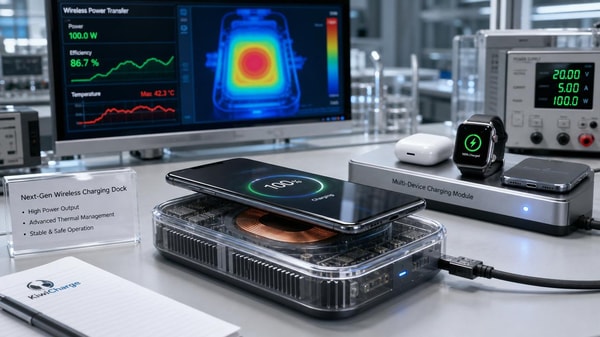
 Next-gen wireless charging still faces a heat management problemNext-gen wireless charging promises faster, more flexible power delivery, but heat remains the key barrier. Discover how thermal limits impact safety, efficiency, and market readiness.
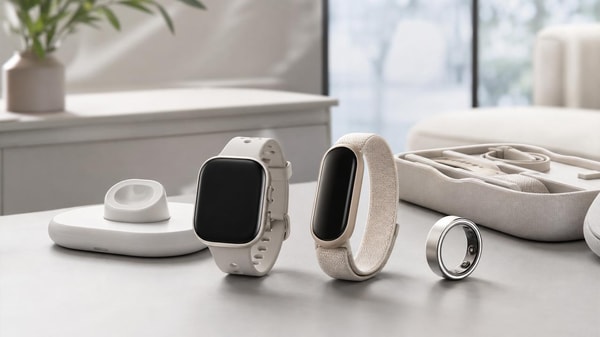
 Wearable technology adoption drops when comfort gets overlookedWearable technology adoption falls fast when comfort is ignored. Discover how fit, materials, weight, and battery life shape long-term use and smarter buying decisions.
 Smart home devices wholesale is no longer just about low pricingSmart home devices wholesale now goes beyond low pricing. Discover how reliability, compatibility, and supply chain confidence help distributors choose profitable, trusted partners.
 Agri-PV systems make sense only when land use is planned wellAgri-PV systems deliver real value only when land use is planned well. Discover how smart site, crop, grid, and compliance decisions turn dual-use solar into a bankable, sustainable project.
 Organic fertilizers may improve soil slower, but results last longerOrganic fertilizers improve soil slowly but deliver longer-lasting results. Learn how they boost soil health, support safer growing, and help you choose the right option for sustainable planting success.
 Smart classroom solutions fail when teachers need too many appsSmart classroom solutions fail when teachers juggle too many apps. Discover why integrated, easy-to-use platforms drive adoption, ROI, and scalable learning success.














Popular Tags
Global Trade Insights & Industry
Our mission is to empower global exporters and importers with data-driven insights that foster strategic growth.
Search News
Popular Tags
Industry Overview
The global commercial kitchen equipment market is projected to reach $112 billion by 2027. Driven by urbanization, the rise of e-commerce food delivery, and strict hygiene regulations.