

What really changes MRI scanners cost from one model to another
Why do MRI scanners cost vary so widely from one model to another? For buyers, distributors, and market researchers on an online trade platform, understanding MRI scanners price means looking beyond brand names to factors like field strength, software, imaging speed, installation, and lifecycle support. This guide breaks down the real cost drivers and helps procurement teams make smarter comparisons in a complex global market.
In cross-border procurement, MRI scanner pricing is rarely a simple equipment quote. A low listed price can exclude site preparation, helium management, software licenses, coils, training, or service coverage for the first 12 to 36 months. On the other hand, a higher-priced system may reduce scan time, improve patient throughput, and lower downtime risk over a 7 to 10 year ownership cycle.
For sourcing teams, distributors, and business evaluators, the real task is to compare total value instead of sticker price alone. MRI scanners cost is shaped by technical configuration, clinical positioning, logistics, market access, and after-sales support. Understanding these layers helps buyers make more accurate comparisons across suppliers, regions, and procurement models.
The biggest technical factors behind MRI scanners cost
The first driver of MRI scanners cost is magnetic field strength. In the market, 0.3T to 0.5T systems are often positioned for budget-sensitive or specialized use cases, 1.5T remains the mainstream choice for general diagnostic imaging, and 3.0T systems typically command a much higher price because of stronger signal, broader advanced applications, and higher infrastructure requirements.
Another major variable is gradient performance. Buyers often focus on Tesla, but gradient strength and slew rate directly affect image quality and exam speed. A system with stronger gradients can support diffusion, cardiac, functional, and other advanced studies more effectively. That means two 1.5T machines may sit in very different price bands if one is designed for routine scans and the other for multi-department, high-throughput use.
Coil packages also change the final quote. A base system may include only essential head or body coils, while a broader configuration can add spine, knee, breast, cardiac, pediatric, and flexible array coils. Each added coil expands clinical capability and revenue potential, but it also increases capital expenditure. In many tenders, coil count alone can move the total package by 10% to 25%.
Software is another hidden divider. Basic protocols may be standard, but advanced applications such as angiography, spectroscopy, cardiac imaging, AI-assisted reconstruction, motion correction, metal artifact reduction, or compressed sensing are frequently licensed separately. Procurement teams that compare only hardware specifications may overlook software bundles that significantly affect MRI scanners price.
The table below shows how common technical layers influence equipment positioning and commercial value in procurement discussions.
The key takeaway is simple: buyers should not compare MRI systems by field strength alone. A practical bid evaluation should review at least 4 technical layers together: magnet strength, gradients, coils, and software. Without that structure, two offers that look similar on paper can deliver very different clinical output and very different long-term value.
Why “same Tesla” does not mean same market value
A 1.5T MRI scanner aimed at routine musculoskeletal and neuro imaging may be configured for standard hospital use with moderate patient volume. Another 1.5T platform may target premium imaging centers with faster workflows, more channels, advanced reconstruction, and specialized applications. Both carry the same field strength label, but one may support 20 to 30 scans per day while the other is better suited to 35 to 50 scans.
That throughput difference matters in B2B evaluation. For distributors and commercial assessors, scanner pricing should be tied to addressable customer segment, reimbursement environment, and expected utilization. A cheaper model can become more expensive if it limits workflow or excludes future software upgrades demanded by end users.
Basic technical checklist for RFQ review
- Confirm whether the quotation includes full coil inventory or only the starter set.
- Ask which software applications are perpetual, subscription-based, or optional add-ons.
- Review exam speed metrics for common protocols, not just peak technical specifications.
- Check upgrade pathways for the next 3 to 5 years, especially if the buyer plans service-line expansion.
Installation, facility readiness, and logistics costs that buyers often miss
A significant share of MRI scanners cost sits outside the machine itself. Site planning can add a meaningful amount to project budget, especially for international buyers. Common expenses include RF shielding, magnetic shielding where required, HVAC upgrades, power conditioning, floor reinforcement, quench pipe installation, and room fit-out. These items can vary sharply by building age, local code, and scanner type.
For many projects, delivery and installation take 6 to 16 weeks after order confirmation, but civil preparation can start earlier and extend longer if the site is not ready. A procurement team comparing suppliers should ask whether the vendor quote covers pre-installation planning, layout drawings, rigging, customs coordination, and commissioning. If these are excluded, the final project cost may rise well beyond the equipment line item.
Helium-related design is another pricing factor. Some systems are built around more traditional helium-dependent architectures, while newer options may reduce refill frequency or use more efficient cryogenic management. Even when exact helium consumption varies by system design and service conditions, procurement teams should assess expected refill planning, local supply availability, and cost exposure over multiple years.
Freight and compliance can also reshape MRI scanners price for cross-border trade. Heavy equipment, sensitive electronics, and strict handling requirements mean shipping costs are not comparable to standard industrial machinery. Port handling, inland transport, lifting permits, import duties, and local registration procedures can each add time and cost, especially in markets with fragmented medical device approval processes.
The following table helps procurement teams identify where off-machine costs typically arise in an MRI project.
The commercial lesson is that MRI scanner procurement should be managed as a project, not only as an equipment purchase. A quote that appears 8% lower can become less competitive once buyers add site engineering, import handling, and delayed commissioning. For trade-focused decision makers, total landed cost is often the more reliable benchmark.
Common site-readiness mistakes
One common mistake is requesting equipment quotations before confirming room dimensions, ceiling height, access route, and power conditions. Another is assuming that older imaging rooms can be reused without modification. In practice, the difference between a prepared and unprepared site can shift timelines by 4 to 12 weeks and create avoidable installation disputes between buyer, contractor, and supplier.
For distributors or resellers, building a standard pre-sales checklist around room layout, compliance needs, and local logistics can reduce quotation errors and improve conversion quality. It also helps create more credible cost forecasts for hospital clients or private imaging operators.
Software, workflow efficiency, and lifecycle support shape long-term value
An MRI scanner is not a static asset. Over a typical service life of 7 to 10 years, software capability, uptime, and support responsiveness often matter as much as initial acquisition cost. Buyers who focus on entry price alone may understate the value of workflow automation, protocol optimization, remote diagnostics, and preventive maintenance coverage.
Workflow features can materially influence return on investment. If one model reduces average exam time from 30 minutes to 22 minutes, the gain in daily throughput can be substantial across 250 to 300 operating days per year. Even a 15% to 20% improvement in scheduling efficiency can change revenue potential for imaging centers and affect payback assumptions in procurement models.
Service contracts also vary widely. Some offers include only warranty repair, while others bundle preventive visits, software updates, coil coverage, helium support coordination, and guaranteed response windows such as 24 hours, 48 hours, or next business day. These differences have direct commercial value because downtime can disrupt patient scheduling and reduce trust in the provider network.
For global buyers, local service reach is especially important. A technically advanced scanner may look attractive, but if replacement parts require international shipment and field engineers are available only from another country, downtime risk can rise sharply. Procurement teams should evaluate support network maturity, spare-parts planning, and training depth before treating two systems as commercially equal.
Four lifecycle questions every buyer should ask
- What is included in the first 12 months, and what becomes chargeable in years 2 to 5?
- How long are software upgrades supported, and are advanced applications locked behind new license fees?
- What are the expected response times for parts, field service, and remote troubleshooting?
- What uptime commitments or maintenance schedules are documented in the service agreement?
How support differences change commercial risk
Two suppliers may offer similar machine pricing, but one may provide 2 preventive maintenance visits per year, remote diagnostics, and local application training, while the other provides only break-fix service. The first offer may cost more upfront, yet it can lower disruption risk and improve operator adoption. This is especially relevant for distributors building long-term market reputation rather than making a one-off sale.
In B2B negotiations, support quality should be translated into operational outcomes: faster restart after faults, lower scheduling losses, easier staff onboarding, and better protocol consistency. That creates a more realistic framework for comparing MRI scanners cost from a business perspective rather than a purely technical one.
How procurement teams should compare MRI scanner quotes side by side
The most effective way to compare MRI scanners price is to build a normalized procurement matrix. Instead of asking which machine is cheaper, ask which offer provides the best fit for target patient volume, clinical scope, installation conditions, and service expectations. This approach is especially useful on B2B platforms where offers may come from different regions with different quotation practices.
A structured evaluation usually includes at least 5 dimensions: technical performance, clinical applications, project delivery scope, lifecycle support, and commercial terms. Commercial terms should cover warranty length, training, spare parts, payment milestones, delivery schedule, and acceptance conditions. Without normalization, procurement teams risk comparing an all-inclusive package with a hardware-only quotation.
Buyers should also classify end-user need before reviewing offers. A private clinic doing routine neuro and spine cases has different requirements from a tertiary hospital, research institution, or specialty imaging chain. Over-specification can waste capital, but under-specification can create bottlenecks that are more expensive to correct later. Matching system capability to business model is one of the strongest controls on total cost.
The table below provides a practical side-by-side evaluation structure for RFQ review and supplier negotiation.
This type of matrix makes quote comparisons more defensible internally. It is also useful for distributors preparing proposals for hospitals or imaging chains because it frames pricing in terms of use case, risk, and support quality rather than only discount percentage.
A practical 5-step comparison workflow
- Define annual scan volume and target specialties before requesting quotations.
- Normalize each supplier quote into equipment, software, installation, logistics, and service sections.
- Score mandatory requirements first, then rank optional advantages separately.
- Calculate 3-year and 5-year ownership views, not only purchase price.
- Validate local service capability and parts access before final award.
Market positioning, buyer type, and sourcing strategy in global trade
MRI scanners cost also changes because buyers enter the market with different goals. A direct hospital buyer often prioritizes clinical continuity, compliance, and after-sales security. A distributor may focus more on resale margin, local registration feasibility, training burden, and service partnership terms. A market researcher or commercial evaluator may need pricing benchmarks across multiple product tiers and regions rather than a single purchase recommendation.
Regional supply dynamics can influence pricing as well. Currency shifts, freight volatility, semiconductor availability, and local tender rules may all affect quotation timing. In some periods, lead times for certain configurations can stretch from 8 weeks to over 20 weeks, especially when optional coils or specialized software packages depend on separate manufacturing or export documentation steps.
Used and refurbished systems create another layer of variation. These can reduce acquisition cost, but they should be evaluated carefully for magnet condition, software generation, coil compatibility, remaining service support, and upgrade limitations. For some buyers, refurbished MRI may offer a practical market entry path. For others, the shorter support horizon and legacy workflow can offset the lower purchase price.
For trade-focused platforms and sourcing teams, the strongest strategy is to segment the opportunity clearly: budget-driven entry imaging, mainstream hospital procurement, premium specialty imaging, or secondary-market distribution. Each segment has different expectations for configuration, certification documentation, and support depth. Price only becomes meaningful when matched to segment logic.
FAQ: questions buyers often ask before shortlisting suppliers
How should a buyer judge whether a lower MRI scanners price is truly competitive?
A lower quote is competitive only if the scope is equivalent. Buyers should compare at least 6 items: field strength, gradients, coil package, software licenses, installation scope, and service terms. If one quote excludes shielding, training, or upgrades, the headline price may not represent the real project cost.
When does a 3.0T system make economic sense over a 1.5T system?
A 3.0T platform usually makes more sense when the end user needs advanced neuro, musculoskeletal detail, research-oriented workflows, or premium specialty imaging. If the site mainly handles routine spine, brain, and joint studies with moderate daily volume, a strong 1.5T system may provide better capital efficiency.
What delivery timeline should importers and distributors plan for?
A common planning range is 6 to 16 weeks for equipment delivery and installation preparation, but total project time can be longer if site readiness, import documentation, or local registration are incomplete. For tenders, building a buffer of 2 to 4 extra weeks is often prudent.
Is refurbished MRI a cost-saving option for every market?
Not always. Refurbished systems can lower entry cost, but buyers should verify software generation, coil availability, serviceability, and local acceptance standards. In some markets, the lower acquisition cost is attractive; in others, older platform support and compliance complexity can reduce commercial viability.
MRI scanner pricing changes from one model to another because the product is really a combination of hardware, software, installation engineering, service infrastructure, and market-access conditions. For procurement teams, the smartest comparison is not the lowest visible figure, but the most suitable package for intended clinical use, project constraints, and long-term operating goals.
For buyers, distributors, and business evaluators using a global B2B information platform, a disciplined quote review process can reduce hidden costs, improve supplier screening, and support stronger negotiations. If you need help assessing MRI scanners cost, comparing supplier offers, or identifying the right sourcing strategy for your market, contact us to get tailored insights, product details, and more solution options.
Recommended News
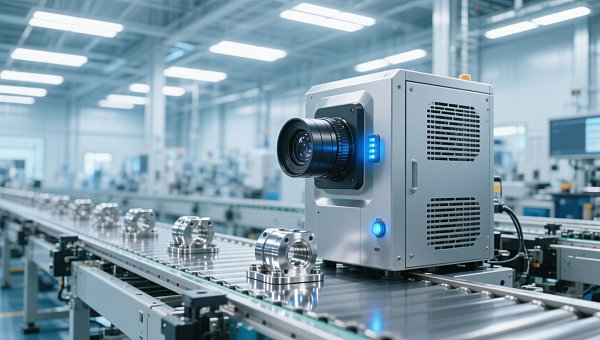
 China’s 10-Dept AI Export Ethics Review Rule Takes EffectChina’s new 10-dept AI export ethics rule mandates algorithmic bias review for AI hardware bound for the EU, US, Canada, Japan & SK—key for smart cameras, voice assistants & industrial vision exporters.
 Red Sea Detour Now Standard: $1,850 TEU Premium on Asia-Europe RoutesRed Sea detour premium now standard: $1,850/TEU surcharge embedded in Asia-Europe freight rates — vital intel for exporters, importers & logistics teams.
 RCEP Green Packaging Mutual Recognition Takes EffectRCEP Green Packaging Mutual Recognition takes effect Apr 22, 2026—streamline exports to AU, NZ, JP, KR with GB/T 37629–2019 certified molded fiber & PLA packaging.
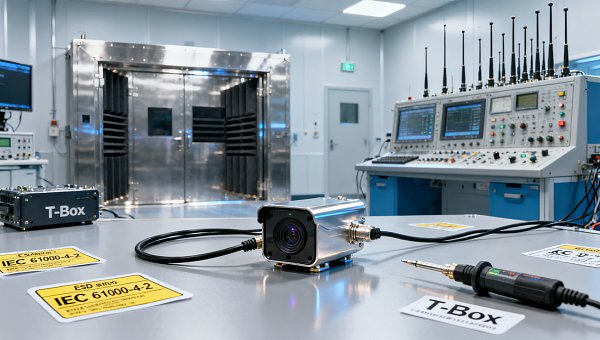
 Mexico NOM-019-SCFI-2026 Effective: EMC Certification Required for Auto Electronics ExportsEMC certification is now mandatory for auto electronics exports to Mexico under NOM-019-SCFI-2026. Ensure compliance for rearview mirrors, radar sensors & T-Box units—avoid shipment delays and order cancellations.
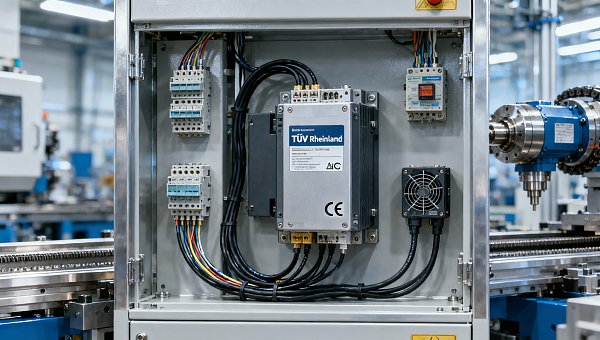
") TÜV Rheinland Updates CE Requirements for Servo Drives (PLd + EMC Joint Validation)TÜV Rheinland now mandates joint PLd + EMC validation for servo drives under CE marking—learn how this impacts certification timelines, lab selection, and EU market access.
TÜV Rheinland Updates CE Requirements for Servo Drives (PLd + EMC Joint Validation)TÜV Rheinland now mandates joint PLd + EMC validation for servo drives under CE marking—learn how this impacts certification timelines, lab selection, and EU market access. Vietnam Suspends SASO Mutual Recognition for Chinese Irrigation EquipmentVietnam suspends SASO mutual recognition for Chinese irrigation equipment—urgent compliance updates for drip tapes & PE pipes (HS 8424.89/3917.39). Act now to avoid delays.
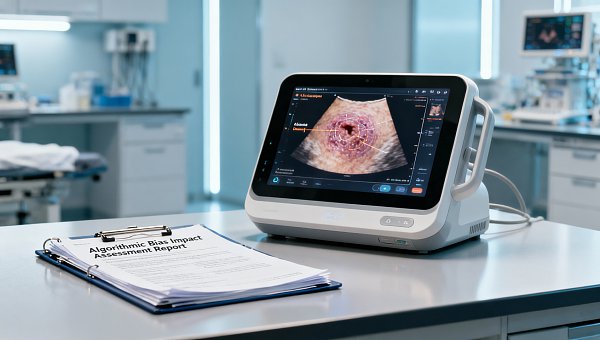
 FDA Finalizes AI Diagnostic Device Rules for ImportersFDA finalizes AI diagnostic device rules for importers: New bias assessment mandate impacts ultrasound, glucose analyzers & dermatoscopes. Act now to ensure U.S. market access.
 SABER Phase II Live: Saudi Building Hardware Requires Digital Type Test Reports & PIDSABER Phase II is live: Building hardware exports to Saudi Arabia now require digital type test reports & a mandatory, immutable Product ID (PID). Act now to avoid customs delays!
 IMDG Code 41-24 Enforced: UN3480 Lithium Battery Labeling Mandatory from Apr 2026IMDG Code 41-24 enforcement starts Apr 2026: UN3480 lithium battery labeling & ISO 17363 docs are now mandatory—avoid port rejections!
 CBAM Carbon Tax Launch: Low CBAM Reporting Rate Among Chinese ExportersCBAM Carbon Tax is live—only 36.8% of Chinese exporters reported. Discover why, which industries are at risk, and how to secure EU market access now.
 China’s 10 Agencies Issue AI Export Ethics Review RulesChina’s 10 agencies launch AI export ethics rules—mandating bias reviews for visual inspection, warehouse AI & defect detection systems. Stay compliant & competitive.
 RCEP Green Packaging Mutual Recognition Takes EffectRCEP Green Packaging Mutual Recognition is now in effect—unlock faster customs clearance in Australia, NZ, Japan & Korea for GB/T 37659–2019-certified eco-packaging.
 Mexico NOM-019-SCFI-2026 Effective Apr 10, 2026: EMC Certification Required for Automotive ElectronicsNOM-019-SCFI-2026 EMC certification is now mandatory for automotive electronics entering Mexico — act before the July 1, 2026 customs ban.
 Red Sea Rerouting Normalized, EBA at $1,850/TEURed Sea rerouting normalized with EBA fixed at $1,850/TEU—learn how this structural shift impacts Asia-Europe freight costs, lead times & supply chain strategy.
 FDA AI Diagnostic Device Draft Rules: Bias Assessment for ImportsFDA AI diagnostic device draft rules require bias assessment for imports—learn how portable ultrasound, glucose, and dermatoscopic AI devices are affected & what to do next.
") TÜV Rheinland Updates CE Requirements for Servo Drives (PLd + EMC)TÜV Rheinland updates CE requirements for servo drives: PLd (ISO 13849-1) + EMC immunity (IEC 61000-6-2 Ed.4) now mandatory together — act now to avoid EU market delays!
TÜV Rheinland Updates CE Requirements for Servo Drives (PLd + EMC)TÜV Rheinland updates CE requirements for servo drives: PLd (ISO 13849-1) + EMC immunity (IEC 61000-6-2 Ed.4) now mandatory together — act now to avoid EU market delays! SABER Phase II Launch: Building Hardware Must Submit Digital Type Test Reports & Unique Product IDSABER Phase II now mandates digital type test reports & unique product IDs for building hardware—fasteners, scaffolding, door/window components. Ensure compliance to avoid customs rejection & SCOC delays.
 Vietnam Suspends SASO Mutual Recognition for Chinese Irrigation EquipmentVietnam suspends SASO mutual recognition for Chinese irrigation equipment—TCVN testing now mandatory. Act now to avoid 8–12 week delays and customs holdups.
 IMDG Code 41-24 Enforced: UN3480 Lithium Battery Labeling UpdateIMDG Code 41-24 enforcement starts April 2026: UN3480 lithium battery labeling updates are mandatory for global maritime shipments — avoid port delays, detention & penalties.
 EU CBAM Enters Full Enforcement on Jan 1, 2026EU CBAM full enforcement starts Jan 1, 2026 — mandatory quarterly reporting & certificate purchases for batteries, steel, cement, aluminum, fertilizers & chemicals. Act now to ensure EU market access.
 EU CBAM Carbon Tariff Starts Oct 2026 for Chinese Battery, Cement, Chemical ExportsEU CBAM carbon tariff hits Chinese battery, cement & chemical exports from Oct 2026 — mandatory emissions reporting starts now. Avoid €98/t default fees.












Popular Tags
Global Trade Insights & Industry
Our mission is to empower global exporters and importers with data-driven insights that foster strategic growth.
Search News
Popular Tags
Industry Overview
The global commercial kitchen equipment market is projected to reach $112 billion by 2027. Driven by urbanization, the rise of e-commerce food delivery, and strict hygiene regulations.