

Patios and decks construction mistakes that raise total cost
Cost overruns in patios and decks construction often start with avoidable planning, design, and material selection errors. For buyers, distributors, and market researchers tracking patios and decks materials, pool equipment installation, and broader production line optimization trends, understanding these mistakes can reduce risk, improve procurement decisions, and reveal practical cost-saving opportunities across residential and commercial outdoor projects.
In B2B outdoor construction supply chains, a deck or patio is not just a small landscaping item. It connects lumber, composite boards, fasteners, drainage systems, coatings, lighting, poolside integration, labor scheduling, and after-sales maintenance. A single early mistake can trigger 3 downstream effects: higher material waste, longer installation time, and more site rework.
For procurement teams, commercial evaluators, and channel partners, the real question is not only how to build a patio or deck, but how to avoid hidden cost escalation across the full project cycle. From substrate preparation to supplier selection, the lowest initial quote can easily become the highest total installed cost within 6 to 18 months.
The sections below break down the most common patios and decks construction mistakes that raise total cost, with a focus on material sourcing, design specification, installation workflow, and lifecycle management. The goal is to support more reliable sourcing decisions and stronger cost control across residential, hospitality, retail, and mixed-use outdoor projects.
Poor planning and incomplete site assessment create the first layer of cost overruns
Many patios and decks construction budgets fail before materials arrive on site. In practice, incomplete measurement, weak soil evaluation, unverified drainage conditions, and unclear load requirements are among the most expensive early-stage mistakes. These issues often appear minor during estimating, yet they can add 8% to 20% to the final installed cost once excavation, leveling, or support redesign becomes necessary.
For example, a patio installed without checking slope direction may trap stormwater around the foundation or pool edge. A deck built without accurate span and joist calculations may later require reinforcement, extra posts, or partial demolition. In commercial settings such as cafés, hotels, and showrooms, underestimating traffic loads can also create compliance and warranty disputes.
A reliable pre-construction process usually includes at least 5 checkpoints: site dimensions, drainage path, substrate condition, utility conflict review, and climate exposure. In freeze-thaw regions, base depth, moisture movement, and expansion allowance become even more important. Ignoring one of these variables may not affect the first 30 days, but it often affects the first 2 to 3 seasonal cycles.
Common planning mistakes buyers should flag early
- Relying on conceptual drawings without verifying actual site tolerances, elevation changes, and access restrictions.
- Skipping drainage analysis for poolside decks, rooftop patios, or ground-level paving areas with heavy rain exposure.
- Using generic support spacing that does not match board type, span requirement, or local weather conditions.
- Failing to account for add-ons such as lighting, pergolas, railing systems, outdoor kitchens, or equipment pads.
- Approving procurement before confirming wastage allowance, which typically ranges from 5% to 12% depending on layout complexity.
These problems are especially relevant for distributors and sourcing managers who compare supplier offers from different regions. Two quotations may look similar on a per-square-meter basis, but one may exclude understructure corrections, edge detailing, or moisture barriers. That difference often shifts the apparent savings into a change-order burden later in the project.
The table below highlights how overlooked site conditions turn into direct cost drivers in patios and decks construction.
The key takeaway is simple: the first savings opportunity in patios and decks construction starts before procurement. Buyers that insist on verified site data, basic engineering checks, and complete scope mapping generally reduce rework exposure and protect margin across installation partners and downstream resellers.
Choosing materials by price alone often increases total installed cost
One of the most common patios and decks construction mistakes is comparing materials only by purchase price per board, tile, or square meter. This approach ignores hidden variables such as subframe compatibility, fastening system cost, cutting waste, maintenance frequency, coating cycles, slip resistance, UV stability, and replacement complexity. In many projects, the cheapest visible material raises total ownership cost over a 3-year to 10-year period.
Natural wood, pressure-treated lumber, WPC composite decking, porcelain pavers, and stone systems all serve valid market segments. However, each option has a different cost profile. Wood may have a lower entry cost but needs periodic sealing or staining every 12 to 24 months in exposed climates. Composite boards may cost more initially but can reduce maintenance labor and surface refinishing expenses over time.
Material mismatch becomes even more expensive in poolside or commercial traffic applications. Surfaces that become slippery when wet, absorb heat excessively, or discolor under direct sun can trigger customer complaints, early replacement, or added spending on coatings and anti-slip treatments. For hospitality buyers and dealers, those secondary costs can be more damaging than the original invoice difference.
What procurement teams should compare beyond unit price
- Expected service life in the target climate, such as 5–8 years for lower-grade exposed materials versus 10–25 years for more durable systems.
- Maintenance cycle, including cleaning, sealing, repainting, sanding, or board replacement frequency.
- Installation accessory requirements such as clips, hidden fasteners, membrane layers, pedestals, edge trims, and drainage components.
- Cutting waste and layout efficiency for straight runs versus curved, diagonal, or multi-level designs.
- Lead time consistency across repeat orders, especially where color matching and profile continuity matter.
The comparison table below can help sourcing teams frame a more practical material evaluation model for patios and decks construction projects.
In sourcing terms, a better decision model is total installed cost plus maintenance burden, not landed price alone. This is especially important for distributors and importers supplying contractors, because callbacks, product disputes, and replacement claims quickly erode the apparent savings of low-cost materials.
Where project scope is uncertain, buyers should request at least 2 material scenarios: a lower-entry-cost option and a lifecycle-optimized option. This makes commercial evaluation more transparent and reduces the risk of underbudgeting the full outdoor package.
Design complexity and specification gaps can multiply labor and waste
A visually attractive concept does not always translate into a cost-efficient build. In patios and decks construction, complex shapes, mixed board directions, curved perimeters, multiple elevation changes, and integrated lighting or pool equipment zones can sharply increase cutting waste and labor hours. A design that looks only 15% more complex on paper may require 30% to 50% more site labor depending on the installation method.
Specification gaps make this worse. If drawings do not define expansion spacing, fastening method, board orientation, edge finishing, base thickness, or drainage layers, installers often improvise on site. Improvisation is expensive. It causes inconsistent workmanship, delayed approvals, material shortages, and disputes over who should cover added labor.
This issue affects both residential and commercial jobs, but commercial developments face greater consequences because interfaces with railings, façade thresholds, planter boxes, pool equipment housings, and accessibility routes must be coordinated. Even a 5 mm to 10 mm tolerance conflict at the door threshold can require material re-cutting across multiple runs.
Design details that frequently drive hidden cost
- Diagonal board layout, which increases cutting waste and may raise waste allowance above 10%.
- Curved borders or custom inlays that require more skilled labor and slower installation speed.
- Unplanned transitions between deck surfaces, coping, pavers, and pool equipment access panels.
- Decorative lighting channels or concealed fixings without a clear service-access strategy.
- Insufficient movement joints for regions with high sun exposure or strong seasonal expansion cycles.
A more procurement-friendly specification method
For buyers and commercial reviewers, the best approach is to request a specification package with 4 layers: surface material, substructure requirement, fastening system, and edge/drainage detail. This reduces ambiguity when comparing vendors. It also helps importers and distributors build more accurate channel quotations, because accessories and installation constraints are not left out of the conversation.
Another practical step is asking the supplier or contractor to separate labor assumptions from material assumptions. When labor productivity is clearly stated, such as square meters installed per crew per day, evaluators can identify whether a design choice is increasing labor burden unnecessarily. That level of visibility is often more useful than negotiating a small discount on board price.
In market terms, simplified modular layouts are becoming more attractive because they improve installation speed, reduce training needs, and support easier replacement. This trend matters for B2B decision-makers who manage multiple projects and value repeatable, scalable construction logic over one-off design complexity.
Installation shortcuts lead to expensive rework, claims, and maintenance burdens
Even well-selected materials can fail if the installation process is rushed or under-supervised. In patios and decks construction, common shortcuts include poor base compaction, skipped moisture barriers, incorrect fastener selection, insufficient ventilation below deck boards, and unsealed cut ends where required. These are not cosmetic issues. They affect structural stability, appearance retention, and warranty performance.
For patios, the most frequent cost driver is substrate failure. If the base is uneven or under-compacted, pavers or slabs may settle, tilt, or crack. For decks, installers sometimes reduce the number of supports or use incompatible hardware to save time. That may cut 1 day from installation, but it can create movement, noise, or board separation within the first 6 to 12 months.
Outdoor projects tied to pools, spas, or equipment pads need even tighter coordination. Moisture, chemical exposure, and maintenance access should be considered from the start. If service panels or plumbing routes are blocked by the deck frame, later maintenance becomes disruptive and expensive. In commercial hospitality environments, downtime can be a larger cost than the repair itself.
Site execution controls that reduce rework risk
- Verify base preparation before surface installation, including compaction, level, and slope direction.
- Check that fastening systems match the supplied board profile and environmental exposure.
- Confirm ventilation and drainage clearance in raised deck assemblies.
- Inspect access routes for pool pumps, filters, junction boxes, or concealed utilities before closing the structure.
- Document 3 acceptance stages: substrate, framing, and final surface finish.
The table below outlines typical installation mistakes and the operational consequences that matter most to buyers, dealers, and project supervisors.
For channel partners, the lesson is clear: installation quality should be part of the supply discussion, not treated as a separate afterthought. Clear manuals, accessory matching, and checkpoint-based acceptance can reduce claims and improve long-term customer satisfaction.
In broader trade terms, products that are easier to install correctly often outperform cheaper products that are difficult to execute consistently. This is an important consideration for importers evaluating not only product margin, but also claim rate, reseller confidence, and repeat-order stability.
Weak supplier evaluation and lifecycle planning undermine procurement performance
Many cost problems in patios and decks construction are not caused by the product itself, but by weak procurement controls. Buyers sometimes focus on sample appearance and headline price while overlooking batch consistency, packaging protection, lead-time reliability, accessory completeness, and technical support responsiveness. These factors are critical when projects involve phased delivery or repeated installations across multiple sites.
A patio or deck package usually includes more than the visible surface. It may require joists, clips, screws, trims, pedestals, sealants, membranes, lighting channels, access covers, or pool equipment interface parts. If these items come from separate sources without compatibility review, field adjustments become inevitable. That means more labor, longer installation, and greater dispute risk.
Lifecycle planning is equally important. A buyer should ask what maintenance will be needed at 6 months, 12 months, and 24 months. If cleaning chemistry, spare boards, finish touch-up procedures, or replacement parts are not available locally, after-sales cost rises quickly. This is especially important for hospitality, property management, and dealership networks that must protect long-term presentation quality.
Practical supplier screening criteria
- Can the supplier provide consistent batches for repeat orders within a lead time window such as 2–6 weeks?
- Are matching accessories supplied as a coordinated system rather than left to local improvisation?
- Is technical guidance available for span tables, drainage details, and installation tolerances?
- How are damage claims, replacement requests, and defect reviews handled across export channels?
- Is there enough packaging protection for long-distance shipping and multiple handling stages?
How market researchers and distributors can use this insight
For information researchers and business evaluators, these questions help distinguish between commodity offers and scalable supply programs. The strongest suppliers are not always the lowest-cost producers. They are often the ones that reduce uncertainty across logistics, installation, and maintenance. In a global B2B context, that reliability becomes a meaningful commercial advantage.
For distributors and agents, better lifecycle planning also strengthens sales positioning. Instead of selling only surface boards or patio slabs, they can sell a complete outdoor system with clearer cost forecasting, better serviceability, and fewer claims. That supports higher trust and better repeat business in a competitive market.
FAQ: procurement and cost-control questions in patios and decks construction
How much extra budget should be reserved for waste and site adjustments?
A practical planning range is 5% to 8% for straightforward layouts and 10% to 12% for complex patterns, diagonal runs, or irregular edges. Projects with integrated stairs, lighting, or poolside equipment access may require additional contingency for detailing and coordination.
Which projects are most vulnerable to hidden cost increases?
Poolside decks, rooftop patios, hospitality terraces, and multi-level residential outdoor spaces usually carry higher risk because drainage, service access, slip resistance, and structural coordination are more demanding. Any project involving more than 3 connected systems should receive a more detailed specification review.
What is the most overlooked cost factor when comparing suppliers?
Accessory and compatibility cost is often overlooked. A low board price may exclude clips, trims, supports, edge finishing, or replacement logistics. Once those items are added, the total system cost can change significantly, especially for imported products or projects requiring phased delivery.
How long should buyers evaluate maintenance implications before purchasing?
At minimum, buyers should model expected maintenance over 24 months. That covers the most common early issues such as finish wear, board movement, staining, water drainage behavior, and access-related repairs. For commercial use, a 3-year maintenance forecast offers a stronger basis for supplier comparison.
Cost control in patios and decks construction depends on decisions made long before installation begins. Site assessment, realistic material comparison, specification clarity, disciplined installation, and stronger supplier evaluation all help reduce waste, rework, and lifecycle expense. For buyers, distributors, and market researchers, the most valuable strategy is to assess the outdoor system as a whole rather than treating boards or pavers as isolated products.
TradeVantage supports this decision-making process by connecting global B2B audiences with practical market intelligence, sourcing insight, and industry-focused content that improves visibility and trust across international trade channels. If you are evaluating patio and deck materials, outdoor installation solutions, or supplier positioning strategies, contact us today to get tailored insights, explore partnership opportunities, and learn more solutions for smarter procurement.
Recommended News
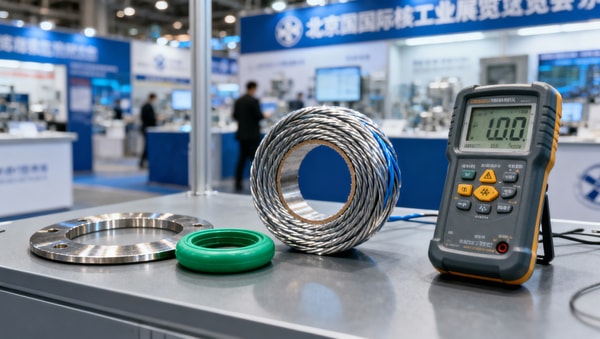
 China-France Nuclear Cooperation Advances at Beijing ExpoChina-France nuclear cooperation advances: mutual recognition for nuclear-grade seals, cables & radiation monitors boosts export readiness for suppliers targeting EU and BRI projects.
 Vietnam’s 4 Provinces Seek AI Tourism Tech in NanningAI tourism tech in demand: Vietnam’s 4 provinces seek AI-guided terminals, multilingual interpretation, AI-CCTV & smart ticketing in Nanning—key opportunity for B2G exporters.
 Q1 2026 China Power Market Trading Up 25.6%: Smart Meters, Storage Export Demand RisesSmart meters, energy storage exports surge as China’s Q1 2026 power market trading jumps 25.6% — key signal for global manufacturers & channel partners.
 China First Country with 5M+ Active Invention PatentsChina first country with 5M+ active invention patents—key for buyers in AI, solar, lithium battery & energy storage. Discover IP implications for sourcing, compliance & supplier vetting.
 Shenneng Etorkeqi Green Ammonia Project: Deionized Water Station OperationalShenneng Etorkeqi Green Ammonia Project’s deionized water station is now operational—ISO 8502-3 compliant, fully integrated, and a key milestone for global green hydrogen developers and exporters.
 China Launches 'Model-Data Resonance' Initiative for AI+Manufacturing InteroperabilityModel-Data Resonance initiative boosts AI+manufacturing interoperability—learn how GB/T XXXX–2026 aligns with VDI 2182 & ISA-95 for smoother global factory deployments.
 China’s First Embodied AI Robot Insurance Launched in GuangxiChina’s first embodied AI robot insurance launched in Guangxi—key for robotics exporters, AI hardware makers & global compliance teams. CE-recognized, EU/UK/AU-ready.
 IMDG Code 41-24 Enforced: UN3480 Lithium Battery Labeling Now MandatoryIMDG Code 41-24 is now mandatory: UN3480 lithium battery labeling, documentation & packaging rules are enforced globally as of 28 April 2026 — avoid port rejections!
 State Grid’s $680M Embodied AI Procurement Signals Export OpportunityEmbodied AI, IEC 61850 & IEC 62443: State Grid’s $680M procurement unlocks export opportunities for compliant industrial robots and smart vision systems in emerging markets.
 IMDG Code 41-24 Enforces UN3480 Class 9 Labeling for Lithium Battery Sea FreightIMDG Code 41-24 mandates UN3480 lithium battery sea freight to display durable Class 9 labels from April 27, 2026—avoid delays & port rejections.
 ESS Key Component Prices Drop ~80%: Quality & Compliance RiseESS key component prices dropped ~80%—but quality & compliance demands surged. Discover how UL 9540A, AS/NZS 5139, and certified BMS/inverters now define market access.
 Mexico NOM-019-SCFI-2026 Effective July 2026: EMC Certification Mandatory for Auto ElectronicsMexico NOM-019-SCFI-2026 mandates EMC certification for auto electronics from July 2026 — ensure compliance now to avoid supply chain disruption & customs delays.
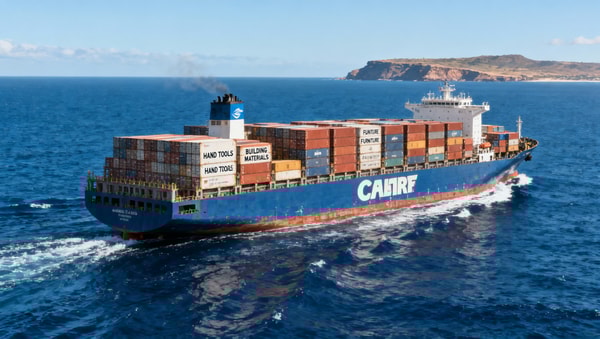
 Red Sea Rerouting Normalized, ECA Surcharge Hits $1,850/TEURed Sea rerouting normalized: ECA surcharge hits $1,850/TEU — 47% of total freight cost. Impacting hand tools, building materials & furniture exporters to Europe. Act now.
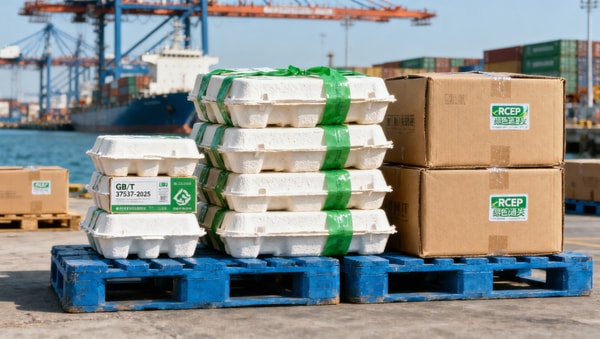
 RCEP Green Packaging Mutual Recognition Takes EffectRCEP Green Packaging Mutual Recognition is live—GB/T 37537-2025–certified packaging now enjoys fast-track clearance in Australia, NZ, Japan & Korea. Save time, cut costs, and boost export efficiency.
 Vietnam Suspends SASO Mutual Recognition for Chinese Irrigation EquipmentVietnam suspends SASO mutual recognition for Chinese irrigation equipment—drip tapes, PE fittings, auto valves now require VINAQ-IR certification. Act now to avoid delays & customs hold.
 Pool equipment maintenance warning signs before a breakdownPool equipment maintenance warning signs before a breakdown: spot early pump, filter, and control issues, improve pool equipment installation decisions, and reduce downtime with smarter sourcing insights.
 Patios and decks materials that age badly in humid climatesPatios and decks materials that age badly in humid climates: learn which patios and decks materials fail fast, how patios and decks construction choices affect durability, and how to source smarter.
 Textile home fabrics buyers now ask more about wash durabilityTextile home fabrics buyers now prioritize wash durability, consistency, and long-term value. Explore sourcing insights, production line optimization, and smarter textile home accessories decisions.
 What recurring waste says about production line efficiencyProduction line efficiency starts with recurring waste. Discover how production line optimization and production line automation reveal supplier risk, cut hidden costs, and improve sourcing decisions across textiles, jewelry, and agrochemicals.
 Agrochemicals export rules causing delays in new marketsAgrochemicals export delays explained with agrochemicals industry analysis and agrochemicals market trends—learn compliance risks, supplier selection tips, and smarter market entry strategies.
 Fashion tech applications brands are testing in physical storesFashion tech applications and fashion tech startups are transforming physical stores with smarter fitting, data-led production line optimization, and scalable retail innovation—explore key trends now.


















Popular Tags
Global Trade Insights & Industry
Our mission is to empower global exporters and importers with data-driven insights that foster strategic growth.
Search News
Popular Tags
Industry Overview
The global commercial kitchen equipment market is projected to reach $112 billion by 2027. Driven by urbanization, the rise of e-commerce food delivery, and strict hygiene regulations.