

Patios and decks construction plans often overlook drainage
Patios and decks construction plans often focus on appearance, traffic flow, and material selection first. But for buyers, specifiers, and commercial decision-makers, the bigger issue is simpler: if drainage is wrong, the entire project can fail early. Water that is not directed away properly can shorten service life, increase slip risk, damage framing or sub-bases, and create recurring maintenance claims. In practical sourcing and evaluation terms, drainage is not a minor design detail. It is a performance requirement that directly affects lifecycle cost, warranty exposure, and customer satisfaction.
For companies comparing patio systems, deck components, poolside installations, or related building-product lines, understanding drainage helps answer the questions that matter most: Which systems are lower risk? What specifications actually protect durability? Where are hidden costs likely to appear? And how should products, suppliers, or installation methods be assessed before purchase or distribution?
Why drainage is the first performance issue buyers should evaluate
When patios and decks are reviewed only for finish, color, dimensions, or installation speed, an important commercial risk is missed. Water is one of the main causes of premature exterior system failure. Whether the surface is natural stone, concrete pavers, composite decking, treated timber, porcelain pavers, or elevated deck assemblies, drainage determines how well the system performs over time.
Poor drainage can lead to:
- Surface ponding and slip hazards
- Substrate erosion or settlement
- Freeze-thaw damage in cold climates
- Mold, algae, and staining
- Fastener corrosion and hidden structural deterioration
- Water migration toward adjacent walls, doors, and foundations
- Higher maintenance frequency and customer complaints
For procurement teams and distributors, these are not merely technical defects. They are indicators of downstream cost. A lower upfront product price can become irrelevant if poor drainage increases callbacks, damages brand reputation, or triggers replacement work.
What decision-makers are really asking when they research patio and deck drainage
Most target readers searching this topic are not looking for a generic explanation of water runoff. They are usually trying to make a practical judgment in one of four areas:
- Product evaluation: Does this deck or patio system support reliable drainage in real-world conditions?
- Supplier comparison: Which manufacturers understand drainage details and provide usable specifications?
- Project risk control: What signs suggest a design may create future claims or performance failure?
- Commercial suitability: Is the system appropriate for pool surrounds, hospitality projects, residential export markets, or heavy-weather regions?
That means the most useful content is not broad landscaping advice. It is specific guidance on what to inspect, what to ask suppliers, and how drainage relates to structural durability and long-term value.
Where patio and deck construction plans most often overlook drainage
Drainage problems usually begin at the planning stage, not after installation. Several recurring oversights appear across markets and product categories.
1. Surface slope is insufficient or inconsistent
Many patio plans specify attractive layouts but fail to define proper slope away from structures. Even where a slope is included, transitions between zones may create low points that trap water. A beautiful large-format surface can still perform poorly if runoff has no clear direction.
2. The base or substructure is not designed for water movement
For patios, the issue may be an inadequate crushed-stone base, poor compaction, or lack of permeable drainage layers. For decks, it may be trapped moisture around joists, poor ventilation under the surface, or no water-management system beneath boards in elevated applications.
3. Edge conditions and discharge points are ignored
Water must go somewhere. Plans often show the main surface area but not how runoff exits at edges, drains near steps, or transitions into surrounding landscape, channel drains, or stormwater systems. Without a discharge path, water simply relocates the problem.
4. Material behavior is treated as secondary
Different materials react differently to wet conditions. Timber may absorb moisture and distort. Composite boards may shed water but still trap debris in low-ventilation assemblies. Porcelain pavers can manage surface water well but depend heavily on pedestal spacing or substrate design. Drainage planning must match the material system, not just the visual design.
5. Poolside or wet-zone conditions are underestimated
In areas near pools, spas, or outdoor wash zones, drainage demand is significantly higher. Splash-out, chemical exposure, and frequent wetting create conditions that quickly expose weak planning. Buyers evaluating pool-related deck and patio products should treat drainage as a primary selection criterion, not an accessory issue.
How poor drainage affects lifecycle cost, not just installation quality
From a business perspective, drainage should be analyzed through lifecycle economics. This is especially important for procurement specialists, developers, and channel partners who need to compare systems beyond initial pricing.
Key cost impacts include:
- Maintenance burden: More cleaning, mold treatment, leveling correction, and joint repair
- Material degradation: Faster wear in boards, coatings, sealants, adhesives, and support components
- Labor rework: Corrective site visits and difficult retrofit drainage solutions
- Liability exposure: Slip hazards and water-related property damage
- Reduced asset value: Visibly failing exterior surfaces lower perceived quality of the overall property
For importers and distributors, there is also a hidden commercial layer: products associated with drainage failures can generate reputational loss in dealer networks. Even if the root problem is design or installation, the product line itself may be blamed.
What to ask suppliers before selecting patio or deck systems
Buyers and specifiers can reduce risk significantly by asking more targeted technical and commercial questions. A capable supplier should be able to answer these clearly, with documentation rather than general assurances.
Core technical questions
- What slope range is recommended for the system?
- How is water expected to move across, through, or beneath the assembly?
- What base, underlayment, or subframe conditions are required?
- Are drainage accessories such as channels, pedestals, edge trims, or membrane systems available?
- How does the system perform in freeze-thaw, high rainfall, or poolside environments?
- What ventilation clearance is required under decking?
- Are there tested installation details for transitions near doors, walls, and steps?
Commercial and risk-control questions
- What failures are excluded from warranty if drainage is incorrect?
- Does the supplier provide installation drawings that include water management details?
- Are there reference projects in climates similar to the target market?
- What after-sales technical support is available for distributors or installers?
- Can the supplier help local partners train installers on drainage-critical details?
If a supplier can explain color options in depth but cannot explain runoff management, base drainage, or moisture exposure limits, that is a warning sign.
How drainage requirements differ between patios and decks
Although the terms are often grouped together, patios and decks handle water differently, and sourcing decisions should reflect that distinction.
Patios
Patios are generally ground-supported systems. Drainage performance depends on grading, permeability, compaction, bedding layers, joints, and edge restraint. The biggest risks are settlement, puddling, washout, and surface deterioration caused by standing water or poorly managed runoff.
Decks
Decks are elevated or framed assemblies. Their drainage risks often involve moisture retention in framing, poor under-deck ventilation, trapped debris, fastener corrosion, membrane failure, and water reaching the building envelope. Surface shedding alone is not enough; hidden drainage and airflow matter just as much.
This difference is important for purchasers comparing product lines across categories. A material that appears low maintenance on top may still depend on a well-designed substructure underneath.
Special consideration for poolside installations and hospitality projects
Drainage oversight becomes more costly in high-traffic commercial settings. Pool decks, resorts, spas, multifamily amenities, and hospitality terraces face a combination of continuous wetting, chemical exposure, aesthetic expectations, and safety liability.
In these settings, buyers should prioritize:
- Slip resistance under wet conditions
- Rapid water evacuation from walking surfaces
- Resistance to mold, staining, and discoloration
- Corrosion resistance in connectors and support hardware
- Ease of inspection and maintenance in concealed areas
- Compatibility with drains, grates, and service access zones
For commercial procurement, drainage should be part of the specification package from the beginning. Retrofitting after opening is expensive and operationally disruptive.
How market researchers and sourcing teams can evaluate product lines more effectively
For industry analysts, traders, and sourcing professionals, drainage can also be used as a lens for judging product maturity. Stronger manufacturers typically show several signs:
- Detailed installation manuals with drainage diagrams
- Climate-specific recommendations
- Integrated accessory ecosystems
- Clear warranty language linked to moisture management
- Case studies from demanding applications
- Technical support that extends beyond basic sales literature
By contrast, lower-maturity suppliers often market appearance and pricing heavily while offering limited documentation on slope, sub-base requirements, ventilation, or runoff control. For B2B buyers, that gap often signals higher project risk.
A practical checklist for screening patio and deck plans before approval
Before approving a product, supplier, or construction plan, use a simple drainage-focused review:
- Is there a defined slope away from buildings and occupied areas?
- Are low points, corners, and transitions clearly resolved?
- Does the sub-base or framing system support drainage rather than trap water?
- Is there a documented discharge path for runoff?
- Are climate and freeze-thaw conditions accounted for?
- Do wet-use applications such as pools have enhanced drainage provisions?
- Are maintenance access and inspection points considered?
- Do warranty terms align with the proposed drainage design?
If several of these answers are unclear, the specification is not ready, regardless of how advanced the visible materials may seem.
Final takeaway for buyers, specifiers, and channel partners
Patios and decks construction plans often overlook drainage because it is less visible than surface design. But in commercial reality, drainage is one of the clearest predictors of long-term performance. For purchasers, distributors, and evaluation teams, the right question is not simply which product looks best or installs fastest. It is which system manages water reliably in its actual operating environment.
Better drainage planning leads to longer service life, lower maintenance cost, fewer claims, and stronger end-user confidence. In sourcing and market assessment, that makes drainage not just a technical checkpoint, but a strategic decision factor. When comparing patio and deck systems, treat water management as a core selection standard from the start, not a detail to solve later.
Recommended News
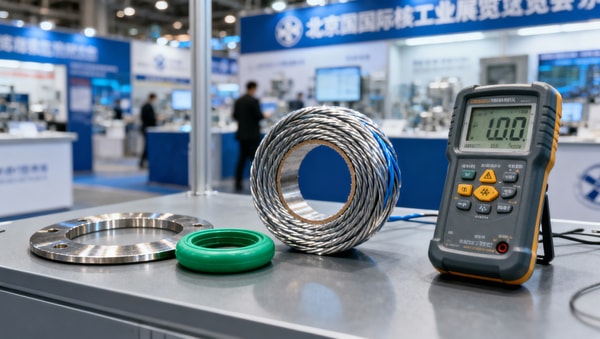
 China-France Nuclear Cooperation Advances at Beijing ExpoChina-France nuclear cooperation advances: mutual recognition for nuclear-grade seals, cables & radiation monitors boosts export readiness for suppliers targeting EU and BRI projects.
 Vietnam’s 4 Provinces Seek AI Tourism Tech in NanningAI tourism tech in demand: Vietnam’s 4 provinces seek AI-guided terminals, multilingual interpretation, AI-CCTV & smart ticketing in Nanning—key opportunity for B2G exporters.
 Q1 2026 China Power Market Trading Up 25.6%: Smart Meters, Storage Export Demand RisesSmart meters, energy storage exports surge as China’s Q1 2026 power market trading jumps 25.6% — key signal for global manufacturers & channel partners.
 China First Country with 5M+ Active Invention PatentsChina first country with 5M+ active invention patents—key for buyers in AI, solar, lithium battery & energy storage. Discover IP implications for sourcing, compliance & supplier vetting.
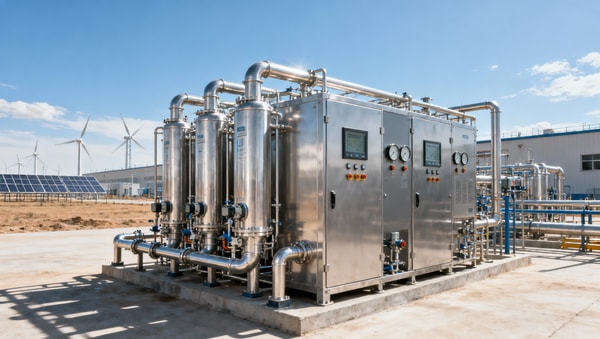
 Shenneng Etorkeqi Green Ammonia Project: Deionized Water Station OperationalShenneng Etorkeqi Green Ammonia Project’s deionized water station is now operational—ISO 8502-3 compliant, fully integrated, and a key milestone for global green hydrogen developers and exporters.
 China Launches 'Model-Data Resonance' Initiative for AI+Manufacturing InteroperabilityModel-Data Resonance initiative boosts AI+manufacturing interoperability—learn how GB/T XXXX–2026 aligns with VDI 2182 & ISA-95 for smoother global factory deployments.
 China’s First Embodied AI Robot Insurance Launched in GuangxiChina’s first embodied AI robot insurance launched in Guangxi—key for robotics exporters, AI hardware makers & global compliance teams. CE-recognized, EU/UK/AU-ready.
 IMDG Code 41-24 Enforced: UN3480 Lithium Battery Labeling Now MandatoryIMDG Code 41-24 is now mandatory: UN3480 lithium battery labeling, documentation & packaging rules are enforced globally as of 28 April 2026 — avoid port rejections!
 State Grid’s $680M Embodied AI Procurement Signals Export OpportunityEmbodied AI, IEC 61850 & IEC 62443: State Grid’s $680M procurement unlocks export opportunities for compliant industrial robots and smart vision systems in emerging markets.
 IMDG Code 41-24 Enforces UN3480 Class 9 Labeling for Lithium Battery Sea FreightIMDG Code 41-24 mandates UN3480 lithium battery sea freight to display durable Class 9 labels from April 27, 2026—avoid delays & port rejections.
 ESS Key Component Prices Drop ~80%: Quality & Compliance RiseESS key component prices dropped ~80%—but quality & compliance demands surged. Discover how UL 9540A, AS/NZS 5139, and certified BMS/inverters now define market access.
 Mexico NOM-019-SCFI-2026 Effective July 2026: EMC Certification Mandatory for Auto ElectronicsMexico NOM-019-SCFI-2026 mandates EMC certification for auto electronics from July 2026 — ensure compliance now to avoid supply chain disruption & customs delays.
 Red Sea Rerouting Normalized, ECA Surcharge Hits $1,850/TEURed Sea rerouting normalized: ECA surcharge hits $1,850/TEU — 47% of total freight cost. Impacting hand tools, building materials & furniture exporters to Europe. Act now.
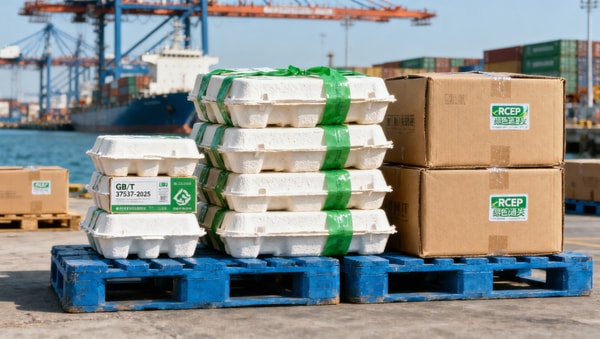
 RCEP Green Packaging Mutual Recognition Takes EffectRCEP Green Packaging Mutual Recognition is live—GB/T 37537-2025–certified packaging now enjoys fast-track clearance in Australia, NZ, Japan & Korea. Save time, cut costs, and boost export efficiency.
 Vietnam Suspends SASO Mutual Recognition for Chinese Irrigation EquipmentVietnam suspends SASO mutual recognition for Chinese irrigation equipment—drip tapes, PE fittings, auto valves now require VINAQ-IR certification. Act now to avoid delays & customs hold.
 Pool equipment maintenance warning signs before a breakdownPool equipment maintenance warning signs before a breakdown: spot early pump, filter, and control issues, improve pool equipment installation decisions, and reduce downtime with smarter sourcing insights.
 Patios and decks materials that age badly in humid climatesPatios and decks materials that age badly in humid climates: learn which patios and decks materials fail fast, how patios and decks construction choices affect durability, and how to source smarter.
 Textile home fabrics buyers now ask more about wash durabilityTextile home fabrics buyers now prioritize wash durability, consistency, and long-term value. Explore sourcing insights, production line optimization, and smarter textile home accessories decisions.
 What recurring waste says about production line efficiencyProduction line efficiency starts with recurring waste. Discover how production line optimization and production line automation reveal supplier risk, cut hidden costs, and improve sourcing decisions across textiles, jewelry, and agrochemicals.
 Agrochemicals export rules causing delays in new marketsAgrochemicals export delays explained with agrochemicals industry analysis and agrochemicals market trends—learn compliance risks, supplier selection tips, and smarter market entry strategies.
 Fashion tech applications brands are testing in physical storesFashion tech applications and fashion tech startups are transforming physical stores with smarter fitting, data-led production line optimization, and scalable retail innovation—explore key trends now.















Popular Tags
Global Trade Insights & Industry
Our mission is to empower global exporters and importers with data-driven insights that foster strategic growth.
Search News
Popular Tags
Industry Overview
The global commercial kitchen equipment market is projected to reach $112 billion by 2027. Driven by urbanization, the rise of e-commerce food delivery, and strict hygiene regulations.