

Sheet Metal Ductwork Buying Guide for Projects That Need Clean Airflow
For projects where clean airflow is non-negotiable, the right sheet metal ductwork is not just a fabrication choice—it directly affects pressure stability, contamination control, maintenance frequency, and lifetime operating cost. For most buyers, the best purchasing decision comes down to four practical checks: selecting the right sheet metal gauge for the pressure and environment, verifying sheet metal bending quality and sealing consistency, confirming corrosion resistance and compliance needs, and comparing suppliers on total value rather than unit price alone. This guide is built for researchers, procurement teams, business evaluators, and distributors who need a clear framework for sourcing ductwork that performs reliably in real project conditions.
What is the real buying intent behind sheet metal ductwork for clean airflow projects?
When buyers search for a sheet metal ductwork buying guide, they are usually not looking for a basic definition of ducts. Their real intent is commercial and technical at the same time: they want to know how to choose ductwork that protects airflow cleanliness, meets project specifications, avoids installation problems, and delivers acceptable lifecycle cost.
In practical terms, this audience is trying to answer questions such as:
- Which duct material and thickness are suitable for the project?
- How can we tell whether fabrication quality is good enough?
- What specifications influence leakage, noise, hygiene, and system efficiency?
- How should we compare suppliers beyond quoted price?
- What risks appear later if we choose cheaper but lower-quality ductwork?
That means the most valuable content is not generic HVAC theory. It is a decision-making guide that helps buyers compare technical options, identify quality signals, and reduce sourcing risk.
What matters most to procurement teams, evaluators, and distributors?
For this target audience, the priority is usually not a single feature but a combination of performance, compliance, and purchasing confidence. The most common concerns include the following:
- Air cleanliness: Can the ductwork support clean airflow without excessive leakage, dust retention, or internal contamination risk?
- Structural reliability: Will the duct deform, vibrate, or fail under pressure, temperature change, or long-term use?
- Fabrication precision: Are the bends, seams, flanges, and joints accurate enough for efficient installation and proper sealing?
- Material suitability: Is galvanized steel enough, or is stainless steel or aluminum more suitable for the environment?
- Total cost: Does a lower purchase price create higher costs later through leakage, rework, maintenance, or early replacement?
- Supplier dependability: Can the supplier provide stable quality, documentation, lead-time control, and export support?
This is similar to how industrial buyers compare adjacent equipment categories. Just as purchasers often look beyond radiators price or lawn mowers cost to evaluate durability, efficiency, and supplier credibility, ductwork buyers also need to benchmark full project value rather than just initial quotation.
Start with application: clean airflow requirements should define the ductwork specification
The first mistake many buyers make is treating all ductwork as interchangeable. In reality, clean airflow projects vary widely. Ductwork for a standard commercial ventilation line is different from ducting used in food processing, pharmaceutical support areas, electronics manufacturing, laboratories, hospitals, or dust-sensitive industrial spaces.
Before requesting quotations, define these points clearly:
- Air cleanliness target and contamination sensitivity
- Supply air, return air, exhaust air, or process air application
- Operating pressure and air velocity
- Indoor or outdoor installation
- Humidity, chemical exposure, and corrosion risk
- Temperature range and insulation needs
- Cleaning and maintenance frequency
- Any project-specific standards, testing, or hygiene requirements
These factors determine material selection, sheet metal gauge, joint design, reinforcement, and finish quality. Without this clarity, buyers often receive quotes that are not directly comparable.
How to choose the right sheet metal gauge
Sheet metal gauge has a direct effect on rigidity, leakage control, noise behavior, and service life. In simple terms, thinner sheet may reduce initial cost, but it may also increase the risk of vibration, deformation, or poor sealing if the duct size and pressure class require stronger construction.
When evaluating gauge, buyers should consider:
- Duct dimensions: Larger ducts generally need heavier gauge or stronger reinforcement.
- Static pressure: Higher pressure systems place more stress on duct walls and joints.
- Support spacing: Installation conditions affect whether thinner material remains stable.
- Vibration and noise control: Weak panels may oil-can or resonate.
- Service environment: High humidity or demanding maintenance may justify a more robust build.
For buyers, the key question is not “What is the cheapest acceptable gauge?” but “What gauge provides stable performance for this pressure class and operating environment?” If the supplier quotes a lighter gauge than competing offers, ask whether the design includes additional reinforcement, pressure-class justification, or leakage testing support.
Why sheet metal bending quality deserves close attention
Sheet metal bending quality is one of the clearest indicators of manufacturing competence. Buyers often focus on material grade and dimensions, but poor bending can create misalignment, weak corners, inconsistent joints, and installation delays even when the metal itself is acceptable.
Good bending quality typically results in:
- Accurate flange geometry
- Consistent corner fit-up
- Reduced gap formation at joints
- Better sealing performance
- Faster assembly on site
- Cleaner internal airflow path with fewer protrusions or distortions
Ask suppliers about their bending equipment, tolerance control, and quality inspection process. If possible, request photos, videos, sample sections, or dimensional reports. A supplier that can explain bend radius control, repeatability, and fit-up consistency is usually more trustworthy than one that only offers a low price with little technical detail.
Material options: galvanized steel, stainless steel, or aluminum?
Material choice should match both cleanliness expectations and environmental exposure.
- Galvanized steel: Common for general HVAC use and cost-effective for many indoor applications. Suitable where corrosion risk and hygiene demands are moderate.
- Stainless steel: Better for corrosion resistance, washdown environments, food-related areas, certain medical or pharmaceutical settings, and projects where durability and cleanability justify higher cost.
- Aluminum: Lightweight and corrosion resistant in some conditions, useful where weight matters, though structural and fabrication requirements must still be checked carefully.
Buyers should not assume the highest-grade material is always the best commercial decision. Instead, assess whether the application truly requires it. Over-specification raises upfront cost, while under-specification creates premature failure and operational risk.
Which ductwork details have the biggest impact on clean airflow?
For clean airflow performance, several design and fabrication details matter more than many first-time buyers expect:
- Leakage control: Better joints, sealants, and fabrication precision reduce unplanned air loss and contaminant ingress.
- Smooth internal surfaces: Rough finishes, burrs, or poor seam treatment can trap dust and complicate cleaning.
- Proper reinforcement: Prevents wall movement that may weaken seals over time.
- Access provisions: Maintenance and inspection access matter for hygiene management.
- Compatible sealing materials: Sealants and gaskets should suit the operating environment and cleanliness requirement.
- Protective packaging and transport handling: Clean ductwork can lose value quickly if contaminated before installation.
If clean airflow is a core requirement, ask suppliers not only how they fabricate the duct but also how they protect it after fabrication, during packing, and through shipment.
How to compare suppliers beyond quoted price
In B2B procurement, price comparison is necessary, but incomplete. A lower quotation may reflect lighter gauge, lower coating quality, weaker reinforcement, looser tolerances, or missing accessories. To compare suppliers fairly, build a simple evaluation matrix covering:
- Material grade and coating specification
- Sheet metal gauge by duct size and pressure class
- Fabrication method and tolerance control
- Joint and flange system
- Leakage performance expectations or testing capability
- Surface finish and internal cleanliness
- Documentation, drawings, and traceability
- Packing method for export and site protection
- Lead time and production capacity
- After-sales response and claim handling
This is where experienced sourcing teams gain an advantage. They know that evaluating only the line-item price can create hidden costs through installation labor, system inefficiency, field correction, and reputational risk.
Questions buyers should ask before placing an order
To reduce commercial and technical uncertainty, ask suppliers these practical questions:
- What sheet metal gauge do you recommend for each duct size and pressure class?
- What material options are available, and why do you recommend one over another?
- How do you control sheet metal bending accuracy and joint fit?
- What leakage class or sealing method can you support?
- Can you provide fabrication drawings, sample photos, or inspection reports?
- How do you package duct sections to prevent deformation or contamination during shipping?
- What standards or project specifications have you supplied for similar jobs?
- How do you manage dimensional consistency across large-volume orders?
- What is your process if delivered parts do not fit or meet specification?
These questions quickly reveal whether a supplier is merely a low-cost fabricator or a reliable project partner.
Common buying mistakes that increase project risk
Several recurring errors can undermine a clean-airflow ductwork purchase:
- Choosing based on lowest price without checking thickness, joint design, or fabrication quality
- Ignoring application-specific corrosion or hygiene needs
- Failing to verify dimensional tolerance and installation compatibility
- Not defining pressure class and leakage expectations in the RFQ
- Assuming all suppliers interpret drawings and specifications the same way
- Overlooking packaging, logistics damage risk, and site handling conditions
Most of these problems are avoidable if the procurement process starts with a clear performance brief and a structured supplier comparison.
A practical sourcing checklist for better purchasing decisions
If you need a fast internal framework, use this shortlist before approval:
- Confirm the airflow cleanliness requirement and operating environment.
- Match material type to corrosion, hygiene, and budget needs.
- Review recommended sheet metal gauge by duct size and pressure class.
- Check sheet metal bending quality, fit-up precision, and reinforcement logic.
- Verify leakage control method, joints, and sealing details.
- Request documentation, samples, or visual quality evidence.
- Compare suppliers on total delivered value, not only ex-factory price.
- Confirm export packaging, lead time, and response process for claims.
This type of checklist is especially useful for information researchers, procurement officers, and channel partners who need to justify vendor selection internally.
Conclusion: buy ductwork for performance, not just for specification compliance
For projects that need clean airflow, the best sheet metal ductwork decision balances technical suitability, fabrication quality, and supplier reliability. Buyers should focus first on application demands, then on the right sheet metal gauge, then on manufacturing signals such as sheet metal bending precision, sealing quality, and consistency across the order.
The main takeaway is simple: ductwork that looks similar on paper can perform very differently in the field. The right buying approach is to compare full project value—airflow integrity, installation efficiency, durability, maintenance burden, and supplier trustworthiness—not just quoted price. For procurement teams and market evaluators, that is the difference between a compliant purchase and a truly successful one.
Recommended News
 China’s 10-Dept AI Export Ethics Review Rule Takes EffectChina’s new 10-dept AI export ethics rule mandates algorithmic bias review for AI hardware bound for the EU, US, Canada, Japan & SK—key for smart cameras, voice assistants & industrial vision exporters.
 Red Sea Detour Now Standard: $1,850 TEU Premium on Asia-Europe RoutesRed Sea detour premium now standard: $1,850/TEU surcharge embedded in Asia-Europe freight rates — vital intel for exporters, importers & logistics teams.
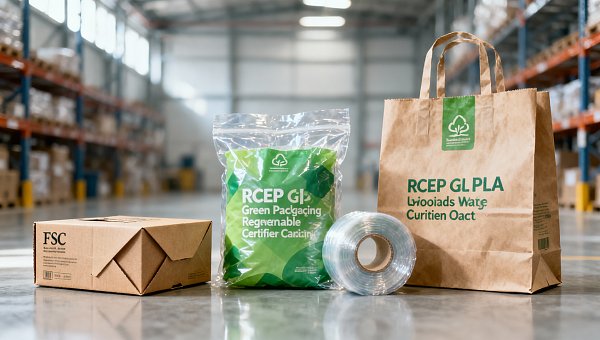
 RCEP Green Packaging Mutual Recognition Takes EffectRCEP Green Packaging Mutual Recognition takes effect Apr 22, 2026—streamline exports to AU, NZ, JP, KR with GB/T 37629–2019 certified molded fiber & PLA packaging.
 Mexico NOM-019-SCFI-2026 Effective: EMC Certification Required for Auto Electronics ExportsEMC certification is now mandatory for auto electronics exports to Mexico under NOM-019-SCFI-2026. Ensure compliance for rearview mirrors, radar sensors & T-Box units—avoid shipment delays and order cancellations.
") TÜV Rheinland Updates CE Requirements for Servo Drives (PLd + EMC Joint Validation)TÜV Rheinland now mandates joint PLd + EMC validation for servo drives under CE marking—learn how this impacts certification timelines, lab selection, and EU market access.
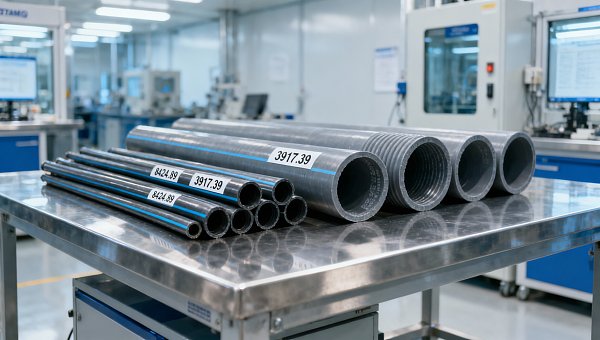
TÜV Rheinland Updates CE Requirements for Servo Drives (PLd + EMC Joint Validation)TÜV Rheinland now mandates joint PLd + EMC validation for servo drives under CE marking—learn how this impacts certification timelines, lab selection, and EU market access. Vietnam Suspends SASO Mutual Recognition for Chinese Irrigation EquipmentVietnam suspends SASO mutual recognition for Chinese irrigation equipment—urgent compliance updates for drip tapes & PE pipes (HS 8424.89/3917.39). Act now to avoid delays.
 FDA Finalizes AI Diagnostic Device Rules for ImportersFDA finalizes AI diagnostic device rules for importers: New bias assessment mandate impacts ultrasound, glucose analyzers & dermatoscopes. Act now to ensure U.S. market access.
 SABER Phase II Live: Saudi Building Hardware Requires Digital Type Test Reports & PIDSABER Phase II is live: Building hardware exports to Saudi Arabia now require digital type test reports & a mandatory, immutable Product ID (PID). Act now to avoid customs delays!
 IMDG Code 41-24 Enforced: UN3480 Lithium Battery Labeling Mandatory from Apr 2026IMDG Code 41-24 enforcement starts Apr 2026: UN3480 lithium battery labeling & ISO 17363 docs are now mandatory—avoid port rejections!
 CBAM Carbon Tax Launch: Low CBAM Reporting Rate Among Chinese ExportersCBAM Carbon Tax is live—only 36.8% of Chinese exporters reported. Discover why, which industries are at risk, and how to secure EU market access now.
 China’s 10 Agencies Issue AI Export Ethics Review RulesChina’s 10 agencies launch AI export ethics rules—mandating bias reviews for visual inspection, warehouse AI & defect detection systems. Stay compliant & competitive.
 RCEP Green Packaging Mutual Recognition Takes EffectRCEP Green Packaging Mutual Recognition is now in effect—unlock faster customs clearance in Australia, NZ, Japan & Korea for GB/T 37659–2019-certified eco-packaging.
 Mexico NOM-019-SCFI-2026 Effective Apr 10, 2026: EMC Certification Required for Automotive ElectronicsNOM-019-SCFI-2026 EMC certification is now mandatory for automotive electronics entering Mexico — act before the July 1, 2026 customs ban.
 Red Sea Rerouting Normalized, EBA at $1,850/TEURed Sea rerouting normalized with EBA fixed at $1,850/TEU—learn how this structural shift impacts Asia-Europe freight costs, lead times & supply chain strategy.
 FDA AI Diagnostic Device Draft Rules: Bias Assessment for ImportsFDA AI diagnostic device draft rules require bias assessment for imports—learn how portable ultrasound, glucose, and dermatoscopic AI devices are affected & what to do next.
") TÜV Rheinland Updates CE Requirements for Servo Drives (PLd + EMC)TÜV Rheinland updates CE requirements for servo drives: PLd (ISO 13849-1) + EMC immunity (IEC 61000-6-2 Ed.4) now mandatory together — act now to avoid EU market delays!
TÜV Rheinland Updates CE Requirements for Servo Drives (PLd + EMC)TÜV Rheinland updates CE requirements for servo drives: PLd (ISO 13849-1) + EMC immunity (IEC 61000-6-2 Ed.4) now mandatory together — act now to avoid EU market delays! SABER Phase II Launch: Building Hardware Must Submit Digital Type Test Reports & Unique Product IDSABER Phase II now mandates digital type test reports & unique product IDs for building hardware—fasteners, scaffolding, door/window components. Ensure compliance to avoid customs rejection & SCOC delays.
 Vietnam Suspends SASO Mutual Recognition for Chinese Irrigation EquipmentVietnam suspends SASO mutual recognition for Chinese irrigation equipment—TCVN testing now mandatory. Act now to avoid 8–12 week delays and customs holdups.
 IMDG Code 41-24 Enforced: UN3480 Lithium Battery Labeling UpdateIMDG Code 41-24 enforcement starts April 2026: UN3480 lithium battery labeling updates are mandatory for global maritime shipments — avoid port delays, detention & penalties.
 EU CBAM Enters Full Enforcement on Jan 1, 2026EU CBAM full enforcement starts Jan 1, 2026 — mandatory quarterly reporting & certificate purchases for batteries, steel, cement, aluminum, fertilizers & chemicals. Act now to ensure EU market access.
 EU CBAM Carbon Tariff Starts Oct 2026 for Chinese Battery, Cement, Chemical ExportsEU CBAM carbon tariff hits Chinese battery, cement & chemical exports from Oct 2026 — mandatory emissions reporting starts now. Avoid €98/t default fees.



















Popular Tags
Global Trade Insights & Industry
Our mission is to empower global exporters and importers with data-driven insights that foster strategic growth.
Search News
Popular Tags
Industry Overview
The global commercial kitchen equipment market is projected to reach $112 billion by 2027. Driven by urbanization, the rise of e-commerce food delivery, and strict hygiene regulations.