

What to Know Before Buying Sheet Metal Roofing in Bulk
Before buying sheet metal roofing in bulk, buyers need more than a quick look at sheet metal fabrication specs and supplier quotes. From price trends that can fluctuate like other industrial categories to supplier reliability on a trusted online trade platform, the real decision comes down to whether the product can deliver consistent quality, manageable logistics, and acceptable lifetime value at scale. For procurement teams, distributors, and market researchers, the smartest bulk purchase is rarely the one with the lowest unit price—it is the one with the lowest total risk.
For most B2B buyers, the core question is straightforward: how do you avoid overpaying for roofing sheets that later create problems in installation, transport, corrosion resistance, or warranty claims? The answer is to evaluate bulk sheet metal roofing through five lenses at the same time: material specification, coating performance, supplier capability, logistics efficiency, and total cost of ownership.
What bulk buyers should verify before comparing price quotes
Many bulk purchases go wrong because buyers compare quotations before standardizing specifications. A lower quote may reflect thinner base metal, weaker coating systems, shorter panel lengths, looser tolerances, or different packaging methods. Before requesting final pricing, make sure every supplier is quoting on the same basis.
The most important specification checkpoints include:
- Base material: galvanized steel, galvalume steel, aluminum, or other metal substrate
- Metal thickness: confirm actual base metal thickness or gauge, not just nominal market language
- Coating type: polyester, SMP, PVDF, or other finish systems depending on climate and project life
- Coating mass: zinc or aluminum-zinc coating levels directly affect corrosion performance
- Panel profile: corrugated, standing seam, trapezoidal, ribbed, or custom industrial profile
- Width and length tolerances: critical for installation efficiency and waste reduction
- Surface finish and color consistency: especially important for distributors and visible commercial projects
If procurement teams fail to lock these details early, they may end up comparing products that look similar in catalogs but perform very differently in the field. This is particularly important for importers and resellers, because product inconsistency can damage downstream trust and increase return rates.
How to judge sheet metal roofing quality beyond the sample
A sample panel can confirm appearance, but it does not always prove production consistency. Bulk buyers should assess whether a supplier can reproduce the same quality across a full order, multiple containers, or repeated purchase cycles.
Key quality indicators include:
- Coating adhesion and finish uniformity: poor coating quality can lead to premature fading, peeling, or corrosion
- Flatness and profile accuracy: inconsistent forming causes installation problems and customer complaints
- Edge treatment: rough or poorly cut edges may accelerate rusting during storage or use
- Mechanical strength: roofing panels must match local load requirements for wind, rain, and snow
- Batch consistency: color deviation and thickness variation are major risks in large-volume orders
Ask suppliers for mill certificates, coating test reports, thickness inspection records, and quality control documentation. If the order value is significant, a pre-shipment inspection or third-party factory audit is often more useful than negotiating another small discount. For business evaluators, this is a classic case where verification reduces hidden cost.
Which material and coating choices make sense for your market
Not every roofing sheet is suitable for every region or sales channel. Buyers should align product choice with end-use conditions rather than buying the most common specification available.
Galvanized steel roofing is often chosen for cost-sensitive markets, but corrosion resistance depends heavily on coating mass and environmental exposure.
Galvalume roofing sheets are widely preferred where buyers want better corrosion performance and longer service life, especially for industrial or commercial applications.
Aluminum roofing sheets may be more suitable in coastal or highly corrosive environments, although pricing is often higher.
Coating systems also matter:
- Polyester coatings are common for general applications and budget-focused distribution
- SMP coatings offer stronger weather performance in some demanding climates
- PVDF coatings are typically selected for premium projects requiring superior color retention and long-term durability
Distributors and agents should think in portfolio terms. If your customer base includes both price-sensitive contractors and higher-end commercial buyers, it may be smarter to stock multiple specifications rather than rely on one universal product line.
How logistics, packaging, and order planning affect real procurement cost
In bulk roofing purchases, logistics mistakes can erase the value of a good factory price. Sheet metal roofing is vulnerable to transit damage, moisture exposure, edge deformation, and handling-related defects. Buyers should evaluate packaging and shipment planning as seriously as the material itself.
Important logistics questions include:
- How are panels packed? Waterproof wrapping, steel strapping, pallet support, and corner protection matter
- What is the maximum efficient panel length for transport and installation? Longer panels can reduce overlaps but complicate shipping and unloading
- How much container space is actually utilized? Freight efficiency influences true landed cost
- How is moisture risk controlled? Condensation inside containers can create storage stains or early corrosion
- What is the lead time stability? A supplier with unstable production schedules can disrupt project delivery or distributor inventory planning
For importers, the best bulk strategy is often to balance freight efficiency with manageable handling risk. Extremely long sheets may look attractive on paper, but if local unloading infrastructure is weak, damage rates can rise quickly. Procurement decisions should reflect the realities of the destination market, not just factory convenience.
How to evaluate suppliers on a trade platform without relying only on marketing claims
Online trade platforms are useful for identifying sheet metal roofing suppliers, but platform visibility alone should not be treated as proof of manufacturing strength. A supplier may have strong marketing but limited process control, weak export documentation, or inconsistent delivery discipline.
To screen suppliers effectively, buyers should check:
- Factory capability: whether the company is a manufacturer, trader, or mixed model
- Production line range: can they handle your required profiles, thicknesses, coatings, and custom lengths?
- Export experience: familiarity with destination market standards, packaging norms, and documentation
- Order history and business stability: repeat export behavior is often a better signal than promotional claims
- Responsiveness and technical clarity: good suppliers answer specification questions precisely and quickly
- After-sales support: especially important for claims handling and replacement policy
Information researchers and sourcing teams can gain an advantage by combining supplier outreach with broader market intelligence. Industrial trend tracking, pricing movement observation, and regional trade analysis all help buyers understand whether a quote reflects temporary market conditions or long-term positioning.
What the total cost of ownership really looks like in bulk roofing procurement
Unit price is only one part of the buying decision. In bulk procurement, the better metric is total cost of ownership. This includes not just purchase price, but also freight, customs, storage, installation efficiency, breakage, warranty risk, and expected service life.
A lower-cost roofing sheet may become more expensive if it creates:
- Higher installation labor due to poor dimensional consistency
- More waste because of inaccurate lengths or damaged edges
- More customer complaints from coating defects or color mismatch
- Faster corrosion in local climate conditions
- Replacement costs that reduce distributor margin
For commercial buyers and resellers, the practical question is not “What is the cheapest sheet metal roofing?” but “Which option protects margin and reputation over time?” In many cases, paying slightly more for better coating performance, better packaging, or a more reliable supplier results in stronger profitability across the full transaction cycle.
A practical checklist before placing a bulk order
Before signing a contract, buyers should be able to answer the following clearly:
- Have all suppliers quoted the exact same material and coating specification?
- Do you have test reports or certificates supporting the product claims?
- Is the roofing type suitable for the climate and application in your market?
- Have you evaluated landed cost, not just ex-factory price?
- Is the packaging adequate for long-distance shipping and storage?
- Can the supplier maintain quality consistency across the full bulk order?
- Have lead times, claim procedures, and replacement responsibilities been defined in writing?
- Does this purchase improve long-term customer satisfaction and resale confidence?
If several of these questions remain unanswered, the purchase is probably not ready, regardless of how attractive the quotation looks.
Final takeaway for importers, distributors, and procurement teams
Buying sheet metal roofing in bulk is not just a price exercise. It is a supply-chain decision that affects product performance, installation outcomes, customer trust, and total commercial return. The most successful buyers are the ones who define specifications clearly, validate supplier capability, match materials to market conditions, and calculate real landed value instead of chasing the lowest offer.
For sourcing professionals using global B2B intelligence and trade platforms, the opportunity is not only to find more suppliers, but to make better-informed decisions with fewer downstream surprises. In bulk sheet metal roofing procurement, disciplined evaluation is what turns a competitive quote into a reliable business advantage.
Recommended News
 China’s 10-Dept AI Export Ethics Review Rule Takes EffectChina’s new 10-dept AI export ethics rule mandates algorithmic bias review for AI hardware bound for the EU, US, Canada, Japan & SK—key for smart cameras, voice assistants & industrial vision exporters.
 Red Sea Detour Now Standard: $1,850 TEU Premium on Asia-Europe RoutesRed Sea detour premium now standard: $1,850/TEU surcharge embedded in Asia-Europe freight rates — vital intel for exporters, importers & logistics teams.
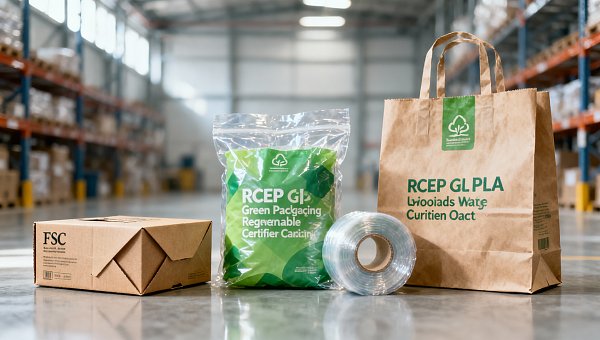
 RCEP Green Packaging Mutual Recognition Takes EffectRCEP Green Packaging Mutual Recognition takes effect Apr 22, 2026—streamline exports to AU, NZ, JP, KR with GB/T 37629–2019 certified molded fiber & PLA packaging.
 Mexico NOM-019-SCFI-2026 Effective: EMC Certification Required for Auto Electronics ExportsEMC certification is now mandatory for auto electronics exports to Mexico under NOM-019-SCFI-2026. Ensure compliance for rearview mirrors, radar sensors & T-Box units—avoid shipment delays and order cancellations.
") TÜV Rheinland Updates CE Requirements for Servo Drives (PLd + EMC Joint Validation)TÜV Rheinland now mandates joint PLd + EMC validation for servo drives under CE marking—learn how this impacts certification timelines, lab selection, and EU market access.
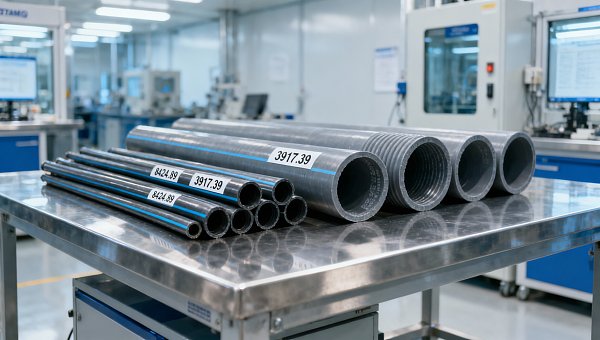
TÜV Rheinland Updates CE Requirements for Servo Drives (PLd + EMC Joint Validation)TÜV Rheinland now mandates joint PLd + EMC validation for servo drives under CE marking—learn how this impacts certification timelines, lab selection, and EU market access. Vietnam Suspends SASO Mutual Recognition for Chinese Irrigation EquipmentVietnam suspends SASO mutual recognition for Chinese irrigation equipment—urgent compliance updates for drip tapes & PE pipes (HS 8424.89/3917.39). Act now to avoid delays.
 FDA Finalizes AI Diagnostic Device Rules for ImportersFDA finalizes AI diagnostic device rules for importers: New bias assessment mandate impacts ultrasound, glucose analyzers & dermatoscopes. Act now to ensure U.S. market access.
 SABER Phase II Live: Saudi Building Hardware Requires Digital Type Test Reports & PIDSABER Phase II is live: Building hardware exports to Saudi Arabia now require digital type test reports & a mandatory, immutable Product ID (PID). Act now to avoid customs delays!
 IMDG Code 41-24 Enforced: UN3480 Lithium Battery Labeling Mandatory from Apr 2026IMDG Code 41-24 enforcement starts Apr 2026: UN3480 lithium battery labeling & ISO 17363 docs are now mandatory—avoid port rejections!
 CBAM Carbon Tax Launch: Low CBAM Reporting Rate Among Chinese ExportersCBAM Carbon Tax is live—only 36.8% of Chinese exporters reported. Discover why, which industries are at risk, and how to secure EU market access now.
 China’s 10 Agencies Issue AI Export Ethics Review RulesChina’s 10 agencies launch AI export ethics rules—mandating bias reviews for visual inspection, warehouse AI & defect detection systems. Stay compliant & competitive.
 RCEP Green Packaging Mutual Recognition Takes EffectRCEP Green Packaging Mutual Recognition is now in effect—unlock faster customs clearance in Australia, NZ, Japan & Korea for GB/T 37659–2019-certified eco-packaging.
 Mexico NOM-019-SCFI-2026 Effective Apr 10, 2026: EMC Certification Required for Automotive ElectronicsNOM-019-SCFI-2026 EMC certification is now mandatory for automotive electronics entering Mexico — act before the July 1, 2026 customs ban.
 Red Sea Rerouting Normalized, EBA at $1,850/TEURed Sea rerouting normalized with EBA fixed at $1,850/TEU—learn how this structural shift impacts Asia-Europe freight costs, lead times & supply chain strategy.
 FDA AI Diagnostic Device Draft Rules: Bias Assessment for ImportsFDA AI diagnostic device draft rules require bias assessment for imports—learn how portable ultrasound, glucose, and dermatoscopic AI devices are affected & what to do next.
") TÜV Rheinland Updates CE Requirements for Servo Drives (PLd + EMC)TÜV Rheinland updates CE requirements for servo drives: PLd (ISO 13849-1) + EMC immunity (IEC 61000-6-2 Ed.4) now mandatory together — act now to avoid EU market delays!
TÜV Rheinland Updates CE Requirements for Servo Drives (PLd + EMC)TÜV Rheinland updates CE requirements for servo drives: PLd (ISO 13849-1) + EMC immunity (IEC 61000-6-2 Ed.4) now mandatory together — act now to avoid EU market delays! SABER Phase II Launch: Building Hardware Must Submit Digital Type Test Reports & Unique Product IDSABER Phase II now mandates digital type test reports & unique product IDs for building hardware—fasteners, scaffolding, door/window components. Ensure compliance to avoid customs rejection & SCOC delays.
 Vietnam Suspends SASO Mutual Recognition for Chinese Irrigation EquipmentVietnam suspends SASO mutual recognition for Chinese irrigation equipment—TCVN testing now mandatory. Act now to avoid 8–12 week delays and customs holdups.
 IMDG Code 41-24 Enforced: UN3480 Lithium Battery Labeling UpdateIMDG Code 41-24 enforcement starts April 2026: UN3480 lithium battery labeling updates are mandatory for global maritime shipments — avoid port delays, detention & penalties.
 EU CBAM Enters Full Enforcement on Jan 1, 2026EU CBAM full enforcement starts Jan 1, 2026 — mandatory quarterly reporting & certificate purchases for batteries, steel, cement, aluminum, fertilizers & chemicals. Act now to ensure EU market access.
 EU CBAM Carbon Tariff Starts Oct 2026 for Chinese Battery, Cement, Chemical ExportsEU CBAM carbon tariff hits Chinese battery, cement & chemical exports from Oct 2026 — mandatory emissions reporting starts now. Avoid €98/t default fees.



















Popular Tags
Global Trade Insights & Industry
Our mission is to empower global exporters and importers with data-driven insights that foster strategic growth.
Search News
Popular Tags
Industry Overview
The global commercial kitchen equipment market is projected to reach $112 billion by 2027. Driven by urbanization, the rise of e-commerce food delivery, and strict hygiene regulations.