

How to Read an Interior Design Quotation Without Missing Hidden Costs
An interior design quotation may seem simple at first glance, but many buyers only discover the real cost after work begins. Hidden charges often show up in material upgrades, demolition, delivery, site supervision, revisions, and vague “provisional” items. For procurement teams, distributors, and business evaluators comparing supplier offers, the key is not just finding the lowest quote—it is identifying what is included, what is excluded, and what can later become a cost escalation point. This guide explains how to read an interior design quotation carefully, spot hidden costs early, and assess whether a supplier is transparent enough to support a reliable commercial decision.
Why an Interior Design Quotation Often Looks Cheaper Than It Really Is
The biggest mistake buyers make is treating a quotation as a fixed final price when it may only be a partial estimate. In many projects, the initial number is designed to be commercially attractive, while several necessary costs are either loosely described or excluded entirely. That does not always mean the supplier is acting in bad faith, but it does mean the buyer must read every line item with a procurement mindset.
A quotation can appear competitive because it leaves out items such as site preparation, disposal fees, fixture installation, design revisions, permit handling, or after-hours work. In some cases, material categories are listed without exact brands, thickness, finish standards, or dimensions. This is similar to comparing radiators price, lawn mowers cost, or sheet metal gauge specifications without checking whether the technical details match. If the scope is unclear, the price comparison is weak.
For business buyers, the true question is not “Which quote is lowest?” but “Which quote is complete, comparable, and controllable?”
Start With Scope: What Exactly Is Included and Excluded?
The first section to review is the project scope. A reliable interior design quotation should clearly define what the supplier will deliver. This includes design work, materials, labor, installation, supervision, logistics, cleanup, and completion standards.
Look for specific answers to these questions:
- Does the quotation cover design only, or design plus execution?
- Are furniture, fixtures, and equipment included?
- Are demolition, electrical modifications, plumbing changes, or ceiling work included?
- Does the quoted amount include delivery, assembly, and waste removal?
- Are taxes, duties, or permit-related fees included?
Exclusions matter as much as inclusions. If an item is not clearly listed, assume it may become a variation later. Procurement teams should ask suppliers to state exclusions explicitly. A short exclusion list is not always better than a long one; what matters is transparency.
Watch for Vague Cost Labels That Hide Future Charges
One of the clearest warning signs in an interior design quotation is vague wording. Terms like “as required,” “subject to site condition,” “standard quality,” or “to be confirmed” may indicate unresolved cost risk. These phrases can be valid in early-stage proposals, but they should not remain undefined in a quote used for final commercial approval.
Pay close attention to line items such as:
- Provisional sum
- Prime cost item
- Estimated quantity
- Standard finish
- Miscellaneous works
- Coordination fee
- Site management charge
These terms are not necessarily problematic, but each one requires clarification. A provisional sum means the final charge may change. A prime cost item usually covers a supply allowance only, not the full installed cost. “Miscellaneous” is especially risky because it bundles unclear work under a convenient label.
If a supplier cannot break these items into measurable components, your cost control will be weak once the project starts.
Check Material Specifications, Not Just Material Names
Material descriptions are one of the most common sources of hidden cost. A quote may mention wood flooring, stone countertop, decorative panels, lighting, or custom joinery without defining the exact specification. That leaves room for substitution, upgrades, or disputes.
For each material category, verify:
- Brand or approved equivalent
- Model or product series
- Dimensions and thickness
- Finish type and color
- Grade, durability, or fire-rating standard
- Installation method
- Warranty terms
This level of review is essential for commercial buyers used to comparing industrial products. Just as sheet metal gauge affects performance and cost, small specification differences in interior materials can significantly change pricing. Two quotations may mention the same item category while referring to very different quality levels.
If materials are not specified clearly, the quote is incomplete no matter how polished it looks.
Labor and Installation Charges Deserve Separate Review
Many hidden costs do not come from materials at all. They come from labor assumptions. Some quotations combine supply and installation into one lump sum, which makes it difficult to understand whether the labor component is realistic.
Ask suppliers to clarify:
- Whether installation is included for every listed item
- Whether specialist labor is charged separately
- Whether night work, weekend work, or phased installation costs extra
- Whether access restrictions increase labor pricing
- Whether rework due to site issues is billable
This is especially important in commercial interiors, hospitality projects, showrooms, and office fit-outs where installation conditions can shift quickly. A quote that seems economical may exclude labor-intensive finishing, on-site adjustment, protection of completed surfaces, or testing and commissioning.
When labor is unclear, the final invoice often grows.
Review Site Conditions and Project Management Fees Carefully
Site-related charges are often underestimated in early quotations. Yet these can materially affect the final cost, especially in urban, occupied, or multi-contractor environments.
Check whether the quotation addresses:
- Site inspection and measurement
- Temporary protection and safety measures
- Access permits or building management coordination
- Storage limitations and staged delivery
- Debris removal and final cleaning
- Site supervision and project management
Some suppliers include a management fee as a percentage of the contract value, while others bill coordination separately later. Neither model is automatically wrong, but buyers should know how these charges are calculated and when they apply.
If the work takes place in an operating office, retail unit, hotel, or residential tower, logistics complexity may justify extra cost. The issue is not whether the fee exists, but whether it is disclosed and documented from the beginning.
Understand How Change Orders Can Turn a Fair Quote Into an Expensive Project
Even a well-prepared interior design quotation can lead to cost overruns if the change order process is poorly controlled. Variations are common in design projects, but some suppliers rely heavily on them to recover margin after offering a low starting quote.
Before approval, confirm:
- How scope changes are priced
- Whether unit rates are predefined
- Who has authority to approve variations
- How design revisions affect timelines and fees
- Whether material lead-time changes create extra logistics cost
A transparent supplier should explain how changes are documented and charged. If there is no variation mechanism, the buyer is exposed to disputes. If the mechanism exists but is too open-ended, the project may drift beyond budget quickly.
For procurement teams, this is not just a project issue—it is a contract risk issue.
Compare Quotations Side by Side Using a Standard Evaluation Sheet
When reviewing multiple suppliers, do not compare quotations in their original formats alone. Different suppliers structure quotes differently, making direct comparison unreliable. Instead, use a standardized comparison sheet.
Your evaluation sheet should include:
- Design scope
- Material specification completeness
- Labor inclusion
- Delivery and installation terms
- Project management and supervision fees
- Taxes and regulatory costs
- Warranty and after-sales support
- Lead time and payment terms
- Exclusions and provisional sums
This approach helps business evaluators separate a truly competitive quote from one that only appears cheaper because it contains more assumptions. It also supports internal reporting when procurement must justify supplier selection to management or finance teams.
Questions Buyers Should Ask Before Accepting the Quote
If the quotation is not fully clear, ask targeted questions rather than generic ones. Specific questions produce better commercial answers.
Useful questions include:
- Which items in this quotation are allowances rather than fixed prices?
- What exact material specifications are assumed in each major category?
- Which parts of installation are excluded?
- Are delivery, waste disposal, and site protection included?
- What could reasonably cause the final invoice to exceed this quote?
- How are design revisions and client-requested changes charged?
- Can you provide a revised quote with all exclusions listed separately?
The quality of the supplier’s response often reveals more than the quote itself. Clear, structured answers usually indicate stronger project discipline and lower execution risk.
How to Tell Whether a Supplier Is Transparent Enough for Commercial Cooperation
For distributors, sourcing teams, and market researchers, the quotation is not only a price document—it is a signal of supplier maturity. A transparent supplier typically shows the following characteristics:
- Clear cost breakdowns
- Defined specifications and assumptions
- Written exclusion lists
- Reasonable payment milestones
- A formal process for variations
- Consistent commercial and technical language
By contrast, a supplier that avoids detail, uses excessive lump sums, or frequently says items will be “handled later” may create budget uncertainty. That does not automatically disqualify them, but it should lower their evaluation score in any serious procurement process.
In B2B decision-making, supplier transparency is part of risk assessment, not just customer service.
Conclusion: Read Beyond the Price Line
To read an interior design quotation properly, focus less on the headline total and more on structure, clarity, and assumptions. Hidden costs usually come from unclear scope, vague materials, incomplete labor coverage, site-related omissions, and uncontrolled change orders. The safest quotation is rarely the shortest one or the cheapest one—it is the one that makes cost responsibilities visible from the start.
For procurement professionals, business evaluators, and sourcing researchers, the practical goal is simple: make every quote comparable, measurable, and contract-ready before approval. When you do that, you reduce surprise charges, strengthen supplier selection, and make better commercial decisions with confidence.
Recommended News
 China’s 10-Dept AI Export Ethics Review Rule Takes EffectChina’s new 10-dept AI export ethics rule mandates algorithmic bias review for AI hardware bound for the EU, US, Canada, Japan & SK—key for smart cameras, voice assistants & industrial vision exporters.
 Red Sea Detour Now Standard: $1,850 TEU Premium on Asia-Europe RoutesRed Sea detour premium now standard: $1,850/TEU surcharge embedded in Asia-Europe freight rates — vital intel for exporters, importers & logistics teams.
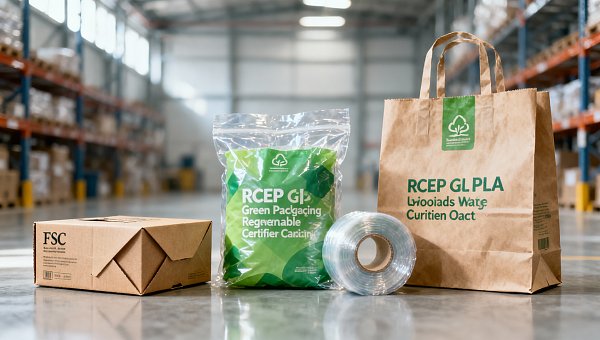
 RCEP Green Packaging Mutual Recognition Takes EffectRCEP Green Packaging Mutual Recognition takes effect Apr 22, 2026—streamline exports to AU, NZ, JP, KR with GB/T 37629–2019 certified molded fiber & PLA packaging.
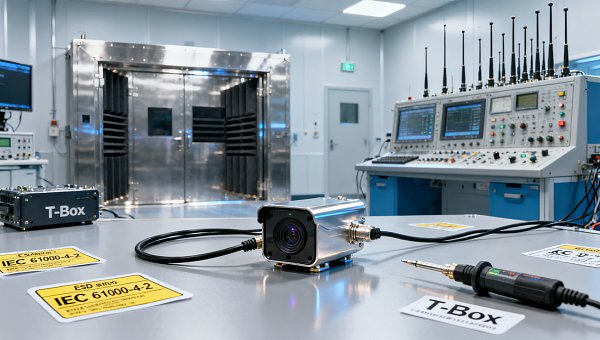
 Mexico NOM-019-SCFI-2026 Effective: EMC Certification Required for Auto Electronics ExportsEMC certification is now mandatory for auto electronics exports to Mexico under NOM-019-SCFI-2026. Ensure compliance for rearview mirrors, radar sensors & T-Box units—avoid shipment delays and order cancellations.
") TÜV Rheinland Updates CE Requirements for Servo Drives (PLd + EMC Joint Validation)TÜV Rheinland now mandates joint PLd + EMC validation for servo drives under CE marking—learn how this impacts certification timelines, lab selection, and EU market access.
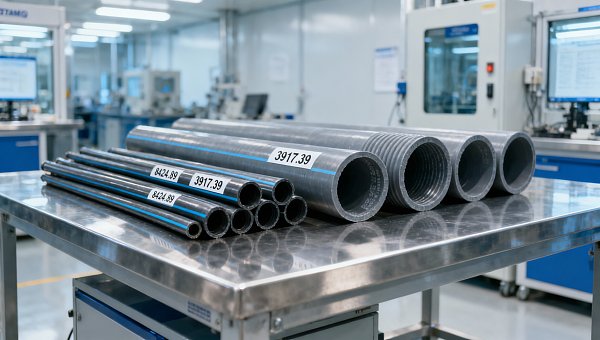
TÜV Rheinland Updates CE Requirements for Servo Drives (PLd + EMC Joint Validation)TÜV Rheinland now mandates joint PLd + EMC validation for servo drives under CE marking—learn how this impacts certification timelines, lab selection, and EU market access. Vietnam Suspends SASO Mutual Recognition for Chinese Irrigation EquipmentVietnam suspends SASO mutual recognition for Chinese irrigation equipment—urgent compliance updates for drip tapes & PE pipes (HS 8424.89/3917.39). Act now to avoid delays.
 FDA Finalizes AI Diagnostic Device Rules for ImportersFDA finalizes AI diagnostic device rules for importers: New bias assessment mandate impacts ultrasound, glucose analyzers & dermatoscopes. Act now to ensure U.S. market access.
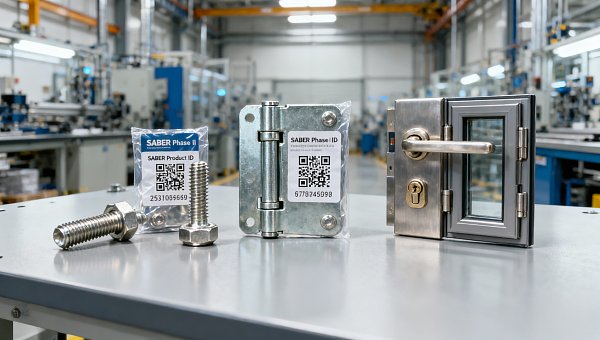
 SABER Phase II Live: Saudi Building Hardware Requires Digital Type Test Reports & PIDSABER Phase II is live: Building hardware exports to Saudi Arabia now require digital type test reports & a mandatory, immutable Product ID (PID). Act now to avoid customs delays!
 IMDG Code 41-24 Enforced: UN3480 Lithium Battery Labeling Mandatory from Apr 2026IMDG Code 41-24 enforcement starts Apr 2026: UN3480 lithium battery labeling & ISO 17363 docs are now mandatory—avoid port rejections!
 CBAM Carbon Tax Launch: Low CBAM Reporting Rate Among Chinese ExportersCBAM Carbon Tax is live—only 36.8% of Chinese exporters reported. Discover why, which industries are at risk, and how to secure EU market access now.
 China’s 10 Agencies Issue AI Export Ethics Review RulesChina’s 10 agencies launch AI export ethics rules—mandating bias reviews for visual inspection, warehouse AI & defect detection systems. Stay compliant & competitive.
 RCEP Green Packaging Mutual Recognition Takes EffectRCEP Green Packaging Mutual Recognition is now in effect—unlock faster customs clearance in Australia, NZ, Japan & Korea for GB/T 37659–2019-certified eco-packaging.
 Mexico NOM-019-SCFI-2026 Effective Apr 10, 2026: EMC Certification Required for Automotive ElectronicsNOM-019-SCFI-2026 EMC certification is now mandatory for automotive electronics entering Mexico — act before the July 1, 2026 customs ban.
 Red Sea Rerouting Normalized, EBA at $1,850/TEURed Sea rerouting normalized with EBA fixed at $1,850/TEU—learn how this structural shift impacts Asia-Europe freight costs, lead times & supply chain strategy.
 FDA AI Diagnostic Device Draft Rules: Bias Assessment for ImportsFDA AI diagnostic device draft rules require bias assessment for imports—learn how portable ultrasound, glucose, and dermatoscopic AI devices are affected & what to do next.
") TÜV Rheinland Updates CE Requirements for Servo Drives (PLd + EMC)TÜV Rheinland updates CE requirements for servo drives: PLd (ISO 13849-1) + EMC immunity (IEC 61000-6-2 Ed.4) now mandatory together — act now to avoid EU market delays!
TÜV Rheinland Updates CE Requirements for Servo Drives (PLd + EMC)TÜV Rheinland updates CE requirements for servo drives: PLd (ISO 13849-1) + EMC immunity (IEC 61000-6-2 Ed.4) now mandatory together — act now to avoid EU market delays! SABER Phase II Launch: Building Hardware Must Submit Digital Type Test Reports & Unique Product IDSABER Phase II now mandates digital type test reports & unique product IDs for building hardware—fasteners, scaffolding, door/window components. Ensure compliance to avoid customs rejection & SCOC delays.
 Vietnam Suspends SASO Mutual Recognition for Chinese Irrigation EquipmentVietnam suspends SASO mutual recognition for Chinese irrigation equipment—TCVN testing now mandatory. Act now to avoid 8–12 week delays and customs holdups.
 IMDG Code 41-24 Enforced: UN3480 Lithium Battery Labeling UpdateIMDG Code 41-24 enforcement starts April 2026: UN3480 lithium battery labeling updates are mandatory for global maritime shipments — avoid port delays, detention & penalties.
 EU CBAM Enters Full Enforcement on Jan 1, 2026EU CBAM full enforcement starts Jan 1, 2026 — mandatory quarterly reporting & certificate purchases for batteries, steel, cement, aluminum, fertilizers & chemicals. Act now to ensure EU market access.
 EU CBAM Carbon Tariff Starts Oct 2026 for Chinese Battery, Cement, Chemical ExportsEU CBAM carbon tariff hits Chinese battery, cement & chemical exports from Oct 2026 — mandatory emissions reporting starts now. Avoid €98/t default fees.

















Popular Tags
Global Trade Insights & Industry
Our mission is to empower global exporters and importers with data-driven insights that foster strategic growth.
Search News
Popular Tags
Industry Overview
The global commercial kitchen equipment market is projected to reach $112 billion by 2027. Driven by urbanization, the rise of e-commerce food delivery, and strict hygiene regulations.