

How to judge an outdoor furniture manufacturer beyond MOQ
Choosing an outdoor furniture manufacturer should go far beyond MOQ. For procurement teams, distributors, and business evaluators, the real question is whether an outdoor furniture supplier can deliver consistent quality, reliable lead times, and transparent procurement cost control. In practice, MOQ is only one commercial term. It does not tell you whether a factory can maintain finish consistency across repeat orders, manage seasonal demand spikes, support compliance requirements, or protect your margin over time. The most reliable sourcing decisions come from evaluating manufacturing capability, quality systems, supply chain coordination, communication discipline, and long-term partnership value together.
What buyers are really trying to judge beyond MOQ
When someone searches for how to judge an outdoor furniture manufacturer beyond MOQ, the intent is usually practical rather than academic. The buyer already knows minimum order quantity matters, but they also know a low MOQ can hide bigger risks. A supplier may accept small trial orders yet fail on packaging, delivery stability, material durability, or after-sales responsiveness.
For sourcing teams, distributors, and commercial evaluators, the real concern is simple: can this manufacturer support a profitable, low-risk business relationship over multiple order cycles? That means judging whether the factory is suitable not just for one shipment, but for ongoing procurement, brand reputation protection, and market expansion.
The strongest evaluation framework usually focuses on five questions:
- Can the manufacturer produce consistent quality at scale?
- Can they deliver on time during peak season?
- Are their material sourcing and cost structures transparent enough for planning?
- Can they support customization, compliance, and packaging requirements for your market?
- Will they behave like a stable long-term partner when problems happen?
Why MOQ is a weak standalone signal
MOQ is often treated as a shortcut for supplier flexibility, but by itself it is not a reliable indicator of manufacturing strength. A low MOQ may simply mean the factory is hungry for orders, running excess capacity, or acting more like a trader than a true producer. A high MOQ, on the other hand, may come from production logic, material batching, or packaging efficiency rather than poor customer service.
In outdoor furniture sourcing, MOQ should be interpreted in context. For example, aluminum frame sets, teak collections, rope-woven seating, and upholstered outdoor pieces all involve different production processes, labor intensity, and component dependencies. The right question is not “Is the MOQ low?” but “Does the MOQ align with the manufacturer’s real production model, material planning, and quality control process?”
Buyers who focus too heavily on MOQ can miss more expensive issues such as:
- Inconsistent powder coating or paint finish between batches
- Weak welding, unstable frames, or poor structural durability
- Long material replenishment cycles for fabric, foam, or wood components
- Packaging damage during international shipment
- Unexpected cost changes caused by raw material volatility
- Slow resolution of defects and replacement claims
In other words, MOQ affects entry cost, but operational reliability affects total cost.
How to assess real manufacturing capability
If you want to judge an outdoor furniture manufacturer properly, start with evidence of production capability. A credible supplier should be able to explain how products move from raw materials to finished shipment, not just show polished catalog photos.
Key areas to evaluate include:
Factory ownership and production role
Confirm whether you are dealing with a direct manufacturer, a hybrid supplier, or a trading company. This matters because control over production scheduling, technical changes, and quality accountability is very different in each case. A real factory should be able to show workshop functions, machinery types, production lines, sample development ability, and capacity allocation.
Material processing competence
Outdoor furniture performance depends heavily on how materials are selected and processed. Ask how the manufacturer handles:
- Aluminum cutting, bending, welding, and surface treatment
- Steel anti-rust treatment and weather resistance protection
- Teak or hardwood moisture control and grading
- Synthetic rattan UV resistance and weaving consistency
- Outdoor fabric performance, foam density, and water resistance
A manufacturer with true production expertise will discuss process control in detail. A weak supplier will often stay at the catalog-feature level.
Sample-to-bulk consistency
Many sourcing problems appear only after approval samples. Ask how the factory ensures that the bulk order matches the approved version in dimensions, color tone, finish, comfort, and packaging. Strong factories use approved sample retention, process sheets, inline checks, and final inspection standards. If they cannot explain this clearly, repeat-order consistency may be a risk.
Production planning and peak-season handling
Outdoor furniture is seasonal in many markets. A manufacturer should be able to describe capacity by month, lead time by product type, bottlenecks during peak periods, and whether they rely on subcontracting. This is especially important for distributors and importers who must launch spring and summer programs on time.
Quality control matters more than attractive pricing
Quality consistency is one of the biggest decision factors for professional buyers. Outdoor furniture is exposed to sunlight, moisture, corrosion, and repeated use. Product failure is not just a return issue; it can damage brand trust, create channel disputes, and reduce future sales.
When evaluating an outdoor furniture supplier, look for a working quality system rather than generic claims. Useful questions include:
- What incoming inspections are done on metal, wood, fabric, foam, and hardware?
- What are the key in-process checkpoints during welding, weaving, sewing, finishing, and assembly?
- How is color consistency controlled across production lots?
- What durability, load-bearing, weathering, or salt-spray tests are performed?
- How are defects classified and documented?
- What is the corrective action process when issues are found?
Ask for inspection records, test reports, or quality manuals when relevant. Even if the supplier is not a large enterprise, a disciplined manufacturer should have some structured quality documentation. The goal is to judge whether quality depends on individual experience alone or on a repeatable management system.
For commercial buyers, this is critical because lower initial pricing can quickly become more expensive if claims, replacements, or delayed launches occur.
Lead time reliability and supply chain management are major decision factors
For many buyers, delayed delivery is more damaging than a slightly higher unit price. Missed retail windows, container consolidation issues, and incomplete shipments can disrupt entire selling seasons. That is why lead time reliability should be treated as a core supplier evaluation metric.
To judge this properly, look beyond quoted lead times and examine the supply chain management behind them.
Material sourcing stability
Outdoor furniture depends on multiple inputs from different upstream suppliers. Frames, finishes, cushions, fabrics, wicker, hardware, glass, and packaging may all come from separate sources. A capable manufacturer should know which materials are standard, which are long lead-time items, and which are vulnerable to seasonal shortages or price fluctuations.
Production scheduling discipline
Ask how orders are scheduled after deposit confirmation. Does the factory lock in materials early? How do they prioritize urgent orders? What happens if one component is delayed? Manufacturers with mature planning systems can usually provide realistic milestone visibility instead of only repeating an estimated ship date.
Subsupplier coordination
Some outdoor furniture manufacturers assemble products but depend heavily on external partners for cushions, glass tops, special coatings, or packaging. This is not necessarily a problem, but the supplier should have clear coordination and accountability. If they cannot manage subsuppliers well, your order risk increases.
Shipment readiness and export execution
Reliable production is only part of the equation. Ask whether the supplier has export experience with labeling, carton marks, loading plans, palletization if needed, and documentation support. For importers and distributors, shipment execution quality directly affects warehouse handling and downstream fulfillment.
How to evaluate total procurement cost instead of unit price alone
Professional sourcing decisions should be based on total procurement cost control, not just ex-works or FOB price comparison. Two suppliers may quote similar products at different prices, but the lower quote is not automatically the better value.
To compare manufacturers fairly, include these cost variables:
- Expected defect and replacement risk
- Packaging protection and damage rate in transit
- Lead time reliability and stockout risk
- Container optimization and loading efficiency
- Customization charges for materials, labels, manuals, or cartons
- Tooling or sampling costs
- Communication efficiency and issue resolution speed
- Warranty exposure and after-sales support burden
This is especially important in outdoor furniture because perceived product similarity often hides big performance differences. A cheaper chair may use thinner tubing, weaker coating prep, lower-density foam, or less UV-stable wicker. These differences may not be obvious at quotation stage but can significantly affect sell-through and claim rates later.
A good manufacturer helps buyers understand cost drivers transparently. That kind of supplier is often easier to plan with and safer to scale with.
Questions distributors and brand buyers should ask before approval
For distributors, agents, and private-label buyers, manufacturer evaluation should also include commercial fit. Even if a factory can produce well, it may not be the right partner for your market model.
Useful questions include:
- Can they support custom packaging and brand labeling?
- Do they offer product development support for exclusive collections?
- Can they protect design confidentiality?
- What is their experience with your destination market’s quality expectations?
- Can they provide stable replenishment for successful SKUs?
- How do they handle spare parts or component replacement requests?
- Will they support both launch orders and repeat orders efficiently?
If your business depends on repeatability and channel trust, these questions may matter more than negotiating a lower MOQ. A supplier that supports your brand operations well can create much stronger long-term margin protection.
Red flags that suggest caution
During supplier screening, certain patterns often indicate elevated sourcing risk. One red flag alone may not disqualify a manufacturer, but several together should trigger deeper review.
- They cannot clearly explain production flow or material sourcing
- They avoid video audits, factory evidence, or process-level discussion
- They quote very fast lead times without operational detail
- They push aggressively on deposit but answer weakly on quality standards
- They frequently change contact persons or quote terms
- They are vague about testing, inspection, or warranty handling
- They offer unusually low pricing with little explanation of specification differences
- They cannot define how they manage repeat-order consistency
In B2B sourcing, unclear answers are often as revealing as negative answers. Strong suppliers do not need to be perfect, but they should be concrete, transparent, and operationally credible.
A practical evaluation framework for shortlisting an outdoor furniture manufacturer
To move from opinion to decision, buyers can use a simple weighted scorecard. This helps procurement teams compare suppliers using business priorities rather than sales impressions.
A practical framework may include:
- Manufacturing capability: workshop strength, material processing, product complexity handling
- Quality system: inspection process, testing discipline, defect management
- Lead time reliability: planning ability, seasonal capacity, shipment execution
- Commercial transparency: quotation clarity, cost explanation, MOQ logic
- Customization support: packaging, labeling, specification flexibility, product development
- Communication quality: responsiveness, problem solving, accuracy of information
- Partnership potential: repeat-order support, dispute handling, long-term fit
Where possible, validate these areas through multiple methods: quotation review, document checks, video meetings, sample assessment, third-party inspection, and reference order analysis. This creates a more reliable sourcing picture than depending on price sheets alone.
Final takeaway: judge long-term operating value, not just entry terms
The best way to judge an outdoor furniture manufacturer beyond MOQ is to treat MOQ as only one data point. Serious buyers should focus on the supplier’s ability to deliver stable quality, predictable lead times, transparent cost control, and responsive partnership support over time.
For information researchers, procurement teams, commercial evaluators, and distributors, the most valuable supplier is rarely the one with the most attractive entry term on paper. It is the one that reduces operational uncertainty, protects product reputation, and supports scalable business growth.
In outdoor furniture sourcing, long-term value comes from manufacturing discipline, supply chain coordination, and trustworthiness under real commercial pressure. If a manufacturer performs well in those areas, MOQ becomes easier to negotiate and far less risky to work around.
Recommended News
 China’s 10-Dept AI Export Ethics Review Rule Takes EffectChina’s new 10-dept AI export ethics rule mandates algorithmic bias review for AI hardware bound for the EU, US, Canada, Japan & SK—key for smart cameras, voice assistants & industrial vision exporters.
 Red Sea Detour Now Standard: $1,850 TEU Premium on Asia-Europe RoutesRed Sea detour premium now standard: $1,850/TEU surcharge embedded in Asia-Europe freight rates — vital intel for exporters, importers & logistics teams.
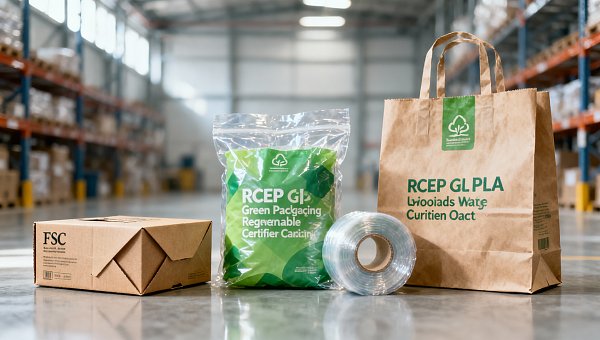
 RCEP Green Packaging Mutual Recognition Takes EffectRCEP Green Packaging Mutual Recognition takes effect Apr 22, 2026—streamline exports to AU, NZ, JP, KR with GB/T 37629–2019 certified molded fiber & PLA packaging.
 Mexico NOM-019-SCFI-2026 Effective: EMC Certification Required for Auto Electronics ExportsEMC certification is now mandatory for auto electronics exports to Mexico under NOM-019-SCFI-2026. Ensure compliance for rearview mirrors, radar sensors & T-Box units—avoid shipment delays and order cancellations.
") TÜV Rheinland Updates CE Requirements for Servo Drives (PLd + EMC Joint Validation)TÜV Rheinland now mandates joint PLd + EMC validation for servo drives under CE marking—learn how this impacts certification timelines, lab selection, and EU market access.
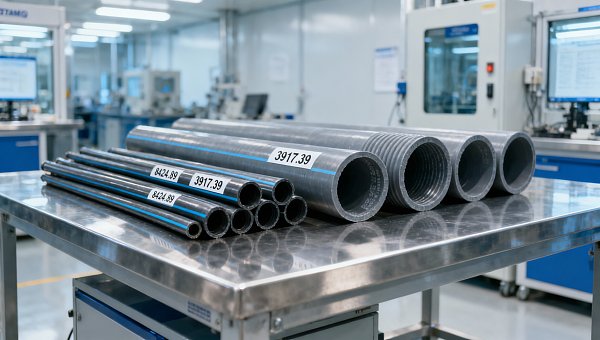
TÜV Rheinland Updates CE Requirements for Servo Drives (PLd + EMC Joint Validation)TÜV Rheinland now mandates joint PLd + EMC validation for servo drives under CE marking—learn how this impacts certification timelines, lab selection, and EU market access. Vietnam Suspends SASO Mutual Recognition for Chinese Irrigation EquipmentVietnam suspends SASO mutual recognition for Chinese irrigation equipment—urgent compliance updates for drip tapes & PE pipes (HS 8424.89/3917.39). Act now to avoid delays.
 FDA Finalizes AI Diagnostic Device Rules for ImportersFDA finalizes AI diagnostic device rules for importers: New bias assessment mandate impacts ultrasound, glucose analyzers & dermatoscopes. Act now to ensure U.S. market access.
 SABER Phase II Live: Saudi Building Hardware Requires Digital Type Test Reports & PIDSABER Phase II is live: Building hardware exports to Saudi Arabia now require digital type test reports & a mandatory, immutable Product ID (PID). Act now to avoid customs delays!
 IMDG Code 41-24 Enforced: UN3480 Lithium Battery Labeling Mandatory from Apr 2026IMDG Code 41-24 enforcement starts Apr 2026: UN3480 lithium battery labeling & ISO 17363 docs are now mandatory—avoid port rejections!
 CBAM Carbon Tax Launch: Low CBAM Reporting Rate Among Chinese ExportersCBAM Carbon Tax is live—only 36.8% of Chinese exporters reported. Discover why, which industries are at risk, and how to secure EU market access now.
 China’s 10 Agencies Issue AI Export Ethics Review RulesChina’s 10 agencies launch AI export ethics rules—mandating bias reviews for visual inspection, warehouse AI & defect detection systems. Stay compliant & competitive.
 RCEP Green Packaging Mutual Recognition Takes EffectRCEP Green Packaging Mutual Recognition is now in effect—unlock faster customs clearance in Australia, NZ, Japan & Korea for GB/T 37659–2019-certified eco-packaging.
 Mexico NOM-019-SCFI-2026 Effective Apr 10, 2026: EMC Certification Required for Automotive ElectronicsNOM-019-SCFI-2026 EMC certification is now mandatory for automotive electronics entering Mexico — act before the July 1, 2026 customs ban.
 Red Sea Rerouting Normalized, EBA at $1,850/TEURed Sea rerouting normalized with EBA fixed at $1,850/TEU—learn how this structural shift impacts Asia-Europe freight costs, lead times & supply chain strategy.
 FDA AI Diagnostic Device Draft Rules: Bias Assessment for ImportsFDA AI diagnostic device draft rules require bias assessment for imports—learn how portable ultrasound, glucose, and dermatoscopic AI devices are affected & what to do next.
") TÜV Rheinland Updates CE Requirements for Servo Drives (PLd + EMC)TÜV Rheinland updates CE requirements for servo drives: PLd (ISO 13849-1) + EMC immunity (IEC 61000-6-2 Ed.4) now mandatory together — act now to avoid EU market delays!
TÜV Rheinland Updates CE Requirements for Servo Drives (PLd + EMC)TÜV Rheinland updates CE requirements for servo drives: PLd (ISO 13849-1) + EMC immunity (IEC 61000-6-2 Ed.4) now mandatory together — act now to avoid EU market delays! SABER Phase II Launch: Building Hardware Must Submit Digital Type Test Reports & Unique Product IDSABER Phase II now mandates digital type test reports & unique product IDs for building hardware—fasteners, scaffolding, door/window components. Ensure compliance to avoid customs rejection & SCOC delays.
 Vietnam Suspends SASO Mutual Recognition for Chinese Irrigation EquipmentVietnam suspends SASO mutual recognition for Chinese irrigation equipment—TCVN testing now mandatory. Act now to avoid 8–12 week delays and customs holdups.
 IMDG Code 41-24 Enforced: UN3480 Lithium Battery Labeling UpdateIMDG Code 41-24 enforcement starts April 2026: UN3480 lithium battery labeling updates are mandatory for global maritime shipments — avoid port delays, detention & penalties.
 EU CBAM Enters Full Enforcement on Jan 1, 2026EU CBAM full enforcement starts Jan 1, 2026 — mandatory quarterly reporting & certificate purchases for batteries, steel, cement, aluminum, fertilizers & chemicals. Act now to ensure EU market access.
 EU CBAM Carbon Tariff Starts Oct 2026 for Chinese Battery, Cement, Chemical ExportsEU CBAM carbon tariff hits Chinese battery, cement & chemical exports from Oct 2026 — mandatory emissions reporting starts now. Avoid €98/t default fees.



















Popular Tags
Global Trade Insights & Industry
Our mission is to empower global exporters and importers with data-driven insights that foster strategic growth.
Search News
Popular Tags
Industry Overview
The global commercial kitchen equipment market is projected to reach $112 billion by 2027. Driven by urbanization, the rise of e-commerce food delivery, and strict hygiene regulations.