

Garden Tools Rust Faster Than Expected? Check These Material Gaps
Garden tools that rust faster than expected are rarely failing by accident. In most cases, early corrosion points to a mismatch between material grade, coating quality, manufacturing control, and storage or logistics conditions. For procurement teams, distributors, and business evaluators, the issue is not just product lifespan—it is a signal of supplier consistency, warranty risk, customer complaints, and long-term margin pressure. When a shovel, pruner, rake, or hoe shows rust too soon, the real question is whether the supplier selected the right steel, applied the right protective treatment, and documented quality standards well enough for commercial-scale buying.
This matters beyond the garden tools segment. Material shortcuts and surface-treatment gaps appear across many industrial categories, including power tools, metal components, solvents, specialty chemicals, and composite-linked manufacturing chains. For B2B buyers and market researchers, premature rust is a practical clue: it reveals where product specification sheets may look acceptable on paper, but actual performance under transport, humidity, and end-use conditions tells a different story.
What Does Early Rust Usually Mean for Buyers and Sourcing Teams?
For target readers such as procurement professionals, business evaluators, and distributors, early rust typically means one of four things: the base material is too low-grade for the intended environment, the protective coating is too thin or inconsistent, production quality control is unstable, or packaging and storage standards are inadequate. In many supplier comparisons, these issues do not become visible until after shipment, retail display, or first-use exposure.
That is why premature corrosion should be treated as a sourcing intelligence issue rather than only a product defect issue. If rust appears earlier than expected, buyers should examine whether the supplier is competing mainly on visible price while quietly reducing durability through lower carbon steel grades, weaker plating processes, poor powder coating adhesion, or insufficient anti-moisture packaging. These decisions may reduce unit cost in the short term, but they often increase replacement rates, after-sales handling, and distributor dissatisfaction.
In practical terms, early rust can signal:
- Higher warranty and return exposure
- Reduced shelf appeal for retail and wholesale channels
- Brand damage for importers and private-label buyers
- Inconsistent quality between batches
- Supplier overreliance on cosmetic finishing instead of material integrity
Which Material Gaps Cause Garden Tools to Rust Faster Than Expected?
The most common material gap is the wrong steel choice for the application. Many garden tools use carbon steel because it offers strength and cost efficiency, but not all carbon steel performs equally under moisture exposure. If the grade is selected mainly for low price rather than corrosion resistance, tools may begin oxidizing quickly once the coating is scratched or worn.
Another common issue is insufficient stainless content in products marketed as “stainless” or “rust-resistant.” Some suppliers use lower-grade stainless alloys that provide limited resistance in wet or fertilizer-rich environments. In addition, welded joints, cut edges, rivet points, and sharpened surfaces often become the first corrosion sites if post-processing is inconsistent.
Typical material-related gaps include:
- Low-grade carbon steel: Cost-effective but highly vulnerable if protective treatment fails
- Thin or uneven galvanization: Zinc coverage may not be sufficient for repeated outdoor exposure
- Poor powder coating adhesion: Surface prep failures cause peeling, chipping, and rapid rust spread
- Inadequate passivation on stainless components: Weakens expected corrosion resistance
- Mixed-material assemblies: Different metals in one tool can accelerate galvanic corrosion in wet conditions
For buyers, the key point is that corrosion resistance is not determined by one specification alone. It depends on how the base metal, coating, forming process, and assembly design work together.
Why Do Some Tools Look Fine at Delivery but Rust Soon After?
This is one of the most important questions for distributors and importers. A tool can pass visual inspection at arrival and still fail quickly in the market because rust often starts from hidden weaknesses. Surface appearance does not always reveal coating thickness, pretreatment quality, or moisture exposure during transit.
In many cases, the supplier has applied a finish that performs acceptably in dry factory storage but not in real-world logistics. Ocean freight, warehouse humidity, temperature swings, and condensed moisture inside packaging can all accelerate corrosion before the product even reaches the end user. If the packaging lacks vapor barriers, desiccants, or proper carton sealing, tools may begin degrading during shipment.
Buyers should pay special attention to these hidden triggers:
- Condensation inside export packaging
- Salt-rich air exposure during port handling
- Micro-cracks in coating after stacking or transport vibration
- Improper curing of painted or powder-coated surfaces
- Wet storage conditions in destination warehouses
This is why pre-shipment appearance alone is not a reliable durability indicator. Procurement decisions should include environmental simulation, packaging review, and corrosion testing where possible.
How Can Procurement Teams Evaluate Rust Risk Before Placing Large Orders?
For business buyers, the most useful approach is to move beyond catalog claims and ask for proof tied to process and performance. Suppliers that can clearly document steel grade, coating method, pretreatment steps, salt spray testing, and packaging controls are generally easier to evaluate than those relying on broad marketing terms such as “weatherproof” or “heavy duty.”
A practical evaluation framework includes the following checkpoints:
- Base material specification: What exact steel or alloy grade is used?
- Surface treatment details: Is the tool powder coated, plated, galvanized, blackened, painted, or passivated?
- Coating thickness: Is there measurable consistency across batches?
- Corrosion test data: Are there salt spray, humidity, or outdoor exposure test records?
- Edge and joint protection: How are welds, cut ends, screws, and riveted points treated?
- Packaging controls: Does export packaging protect against moisture during long transit?
- Batch traceability: Can the supplier link complaints to production lots?
Requesting samples is useful, but samples alone are not enough. Buyers should compare samples against production-process documentation and consistency records. A supplier may produce a good sample while regular mass production uses lower control standards.
What Questions Should Distributors and Importers Ask Suppliers?
Suppliers with strong material control should be able to answer technical questions clearly and without vague substitutions. This is especially important for private-label buyers, distributors, and regional agents who carry reputational risk if products corrode too quickly in the field.
Useful supplier questions include:
- What steel grade or metal composition is used for each component?
- What is the exact anti-rust treatment process?
- What pretreatment is done before coating?
- What coating thickness tolerance is maintained?
- How do you protect tools during ocean shipment and humid storage?
- What are the most common corrosion-related complaints, and how were they corrected?
- Can you provide third-party or in-house corrosion test reports?
- Do you use the same material standard across all price tiers?
The final question is particularly important. In some product lines, the same tool design is sold at different price levels with different steel thicknesses or coating quality. If this is not clearly disclosed, buyers may assume equivalent durability where none exists.
How Does This Affect Commercial Value, Not Just Product Performance?
For B2B decision-makers, rust is not merely a technical failure. It directly affects marketability, channel trust, and total procurement cost. A cheaper tool with weak material protection may appear attractive in cost negotiations, but the hidden expenses can be much higher once complaint handling, replacement shipments, and damaged customer relationships are factored in.
From a business perspective, premature rust can lead to:
- Lower repeat orders from dealers and retail partners
- Pressure to discount aging inventory
- Higher inspection costs on incoming shipments
- Brand weakening in export markets
- Reduced competitiveness against better-specified alternatives
For market researchers and sourcing analysts, rust issues can also indicate wider supplier patterns. A manufacturer that cuts corners on metal treatment may also take similar shortcuts in handles, fasteners, packaging, adhesives, or accessory parts. In that sense, corrosion problems can serve as a broader risk signal across the supplier’s manufacturing discipline.
What Should Buyers Prioritize When Comparing Suppliers?
Buyers should prioritize verifiable durability over attractive but generic claims. The most reliable supplier comparisons are based on measurable standards, process transparency, and consistency over time. If two suppliers offer similar pricing, the one that provides clearer evidence of material integrity, pretreatment quality, and packaging reliability is usually the safer long-term choice.
In supplier benchmarking, priority should generally follow this order:
- Material grade suitability for real use conditions
- Coating and pretreatment quality
- Production consistency and batch control
- Transit and storage protection
- Complaint response and traceability system
- Unit price
This order may seem stricter than basic price-based sourcing, but for distributors and commercial buyers, it better reflects total landed value. Tools that maintain appearance and function longer are easier to sell, easier to defend commercially, and less costly to support after delivery.
Conclusion: Early Rust Is a Useful Warning Signal, Not a Minor Surface Issue
When garden tools rust faster than expected, the root cause is often a deeper material and sourcing gap rather than simple wear. For procurement teams, distributors, business evaluators, and industry researchers, that makes corrosion an important decision signal. It can reveal low-grade steel selection, weak coating systems, unstable production standards, or poor logistics protection long before more serious quality issues emerge.
The smartest response is not to focus only on visible rust spots, but to investigate the full chain behind them: material specification, surface treatment, process control, packaging, and supplier transparency. Buyers who evaluate these factors carefully are better positioned to reduce risk, improve supplier comparisons, and protect long-term commercial value. In competitive international sourcing, durability is not just a product feature—it is a trust indicator.
Recommended News
 China’s 10-Dept AI Export Ethics Review Rule Takes EffectChina’s new 10-dept AI export ethics rule mandates algorithmic bias review for AI hardware bound for the EU, US, Canada, Japan & SK—key for smart cameras, voice assistants & industrial vision exporters.
 Red Sea Detour Now Standard: $1,850 TEU Premium on Asia-Europe RoutesRed Sea detour premium now standard: $1,850/TEU surcharge embedded in Asia-Europe freight rates — vital intel for exporters, importers & logistics teams.
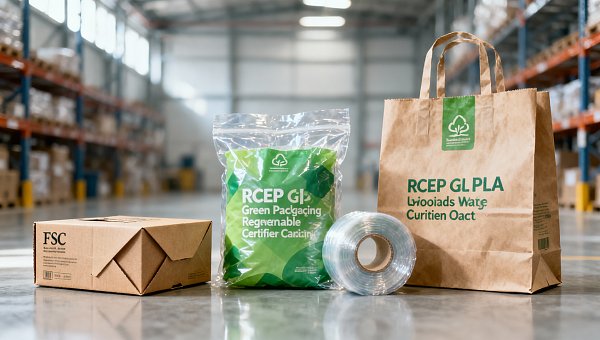
 RCEP Green Packaging Mutual Recognition Takes EffectRCEP Green Packaging Mutual Recognition takes effect Apr 22, 2026—streamline exports to AU, NZ, JP, KR with GB/T 37629–2019 certified molded fiber & PLA packaging.
 Mexico NOM-019-SCFI-2026 Effective: EMC Certification Required for Auto Electronics ExportsEMC certification is now mandatory for auto electronics exports to Mexico under NOM-019-SCFI-2026. Ensure compliance for rearview mirrors, radar sensors & T-Box units—avoid shipment delays and order cancellations.
") TÜV Rheinland Updates CE Requirements for Servo Drives (PLd + EMC Joint Validation)TÜV Rheinland now mandates joint PLd + EMC validation for servo drives under CE marking—learn how this impacts certification timelines, lab selection, and EU market access.
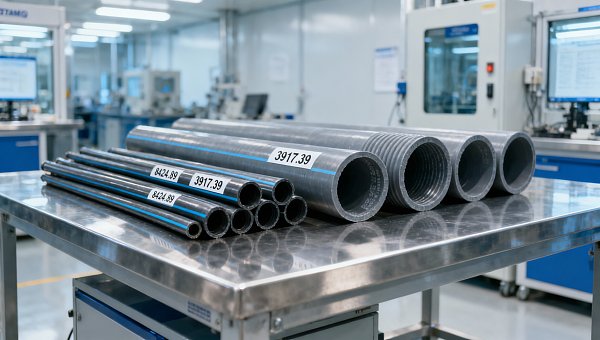
TÜV Rheinland Updates CE Requirements for Servo Drives (PLd + EMC Joint Validation)TÜV Rheinland now mandates joint PLd + EMC validation for servo drives under CE marking—learn how this impacts certification timelines, lab selection, and EU market access. Vietnam Suspends SASO Mutual Recognition for Chinese Irrigation EquipmentVietnam suspends SASO mutual recognition for Chinese irrigation equipment—urgent compliance updates for drip tapes & PE pipes (HS 8424.89/3917.39). Act now to avoid delays.
 FDA Finalizes AI Diagnostic Device Rules for ImportersFDA finalizes AI diagnostic device rules for importers: New bias assessment mandate impacts ultrasound, glucose analyzers & dermatoscopes. Act now to ensure U.S. market access.
 SABER Phase II Live: Saudi Building Hardware Requires Digital Type Test Reports & PIDSABER Phase II is live: Building hardware exports to Saudi Arabia now require digital type test reports & a mandatory, immutable Product ID (PID). Act now to avoid customs delays!
 IMDG Code 41-24 Enforced: UN3480 Lithium Battery Labeling Mandatory from Apr 2026IMDG Code 41-24 enforcement starts Apr 2026: UN3480 lithium battery labeling & ISO 17363 docs are now mandatory—avoid port rejections!
 CBAM Carbon Tax Launch: Low CBAM Reporting Rate Among Chinese ExportersCBAM Carbon Tax is live—only 36.8% of Chinese exporters reported. Discover why, which industries are at risk, and how to secure EU market access now.
 China’s 10 Agencies Issue AI Export Ethics Review RulesChina’s 10 agencies launch AI export ethics rules—mandating bias reviews for visual inspection, warehouse AI & defect detection systems. Stay compliant & competitive.
 RCEP Green Packaging Mutual Recognition Takes EffectRCEP Green Packaging Mutual Recognition is now in effect—unlock faster customs clearance in Australia, NZ, Japan & Korea for GB/T 37659–2019-certified eco-packaging.
 Mexico NOM-019-SCFI-2026 Effective Apr 10, 2026: EMC Certification Required for Automotive ElectronicsNOM-019-SCFI-2026 EMC certification is now mandatory for automotive electronics entering Mexico — act before the July 1, 2026 customs ban.
 Red Sea Rerouting Normalized, EBA at $1,850/TEURed Sea rerouting normalized with EBA fixed at $1,850/TEU—learn how this structural shift impacts Asia-Europe freight costs, lead times & supply chain strategy.
 FDA AI Diagnostic Device Draft Rules: Bias Assessment for ImportsFDA AI diagnostic device draft rules require bias assessment for imports—learn how portable ultrasound, glucose, and dermatoscopic AI devices are affected & what to do next.
") TÜV Rheinland Updates CE Requirements for Servo Drives (PLd + EMC)TÜV Rheinland updates CE requirements for servo drives: PLd (ISO 13849-1) + EMC immunity (IEC 61000-6-2 Ed.4) now mandatory together — act now to avoid EU market delays!
TÜV Rheinland Updates CE Requirements for Servo Drives (PLd + EMC)TÜV Rheinland updates CE requirements for servo drives: PLd (ISO 13849-1) + EMC immunity (IEC 61000-6-2 Ed.4) now mandatory together — act now to avoid EU market delays! SABER Phase II Launch: Building Hardware Must Submit Digital Type Test Reports & Unique Product IDSABER Phase II now mandates digital type test reports & unique product IDs for building hardware—fasteners, scaffolding, door/window components. Ensure compliance to avoid customs rejection & SCOC delays.
 Vietnam Suspends SASO Mutual Recognition for Chinese Irrigation EquipmentVietnam suspends SASO mutual recognition for Chinese irrigation equipment—TCVN testing now mandatory. Act now to avoid 8–12 week delays and customs holdups.
 IMDG Code 41-24 Enforced: UN3480 Lithium Battery Labeling UpdateIMDG Code 41-24 enforcement starts April 2026: UN3480 lithium battery labeling updates are mandatory for global maritime shipments — avoid port delays, detention & penalties.
 EU CBAM Enters Full Enforcement on Jan 1, 2026EU CBAM full enforcement starts Jan 1, 2026 — mandatory quarterly reporting & certificate purchases for batteries, steel, cement, aluminum, fertilizers & chemicals. Act now to ensure EU market access.
 EU CBAM Carbon Tariff Starts Oct 2026 for Chinese Battery, Cement, Chemical ExportsEU CBAM carbon tariff hits Chinese battery, cement & chemical exports from Oct 2026 — mandatory emissions reporting starts now. Avoid €98/t default fees.



















Popular Tags
Global Trade Insights & Industry
Our mission is to empower global exporters and importers with data-driven insights that foster strategic growth.
Search News
Popular Tags
Industry Overview
The global commercial kitchen equipment market is projected to reach $112 billion by 2027. Driven by urbanization, the rise of e-commerce food delivery, and strict hygiene regulations.