

Food Processing Equipment: What Affects ROI Most
In food processing, ROI depends on far more than the upfront price of equipment. From assembly line efficiency and cutting tools performance to automation with industrial robots, every investment decision affects output, labor costs, compliance, and long-term competitiveness. For buyers, industrial suppliers, and market evaluators, understanding what truly drives returns in food processing equipment is essential to making smarter, data-backed purchasing decisions.
For procurement teams, distributors, and commercial evaluators, the challenge is rarely limited to comparing machine prices. A lower-cost slicer, mixer, filler, or conveyor may look attractive in a quotation sheet, yet underperform in throughput, sanitation, changeover speed, or maintenance demand. Over a 3–7 year ownership cycle, these factors often have a greater impact on ROI than the initial capital expense.
This is especially relevant in a global B2B environment, where food processors must balance output targets, food safety requirements, labor shortages, energy costs, and export-market compliance. The most profitable equipment decisions usually come from a broader evaluation model: capacity utilization, downtime risk, automation potential, spare parts access, and the supplier’s ability to support long-term production continuity.
Why Equipment ROI Is More Than a Purchase Price Calculation
In food processing, return on investment is best understood as the relationship between total lifecycle cost and production value created. A machine that costs 15% more upfront may still produce a faster payback if it reduces labor by 2 operators per shift, cuts waste by 3%–5%, or increases line availability from 88% to 95%.
Many buyers focus first on quoted unit price because it is visible and easy to compare. However, the hidden cost structure includes installation, utilities, tooling replacement, sanitation time, preventive maintenance, calibration, operator training, and the cost of unplanned stoppages. In high-volume environments, even 30 minutes of downtime per day can materially change annual output.
ROI also varies by product category. Equipment used for meat, dairy, bakery, ready meals, frozen products, or beverage filling faces different cleaning protocols, viscosity ranges, contamination risks, and throughput demands. A processor running 2 SKUs with long production runs will value efficiency differently from a plant running 20 SKUs with frequent changeovers.
The four cost layers that shape real returns
A practical ROI model should include at least four cost layers: capital expenditure, operating cost, performance loss, and compliance risk. Capital expenditure covers the machine and commissioning. Operating cost includes labor, energy, water, compressed air, and wear parts. Performance loss captures reduced speed, waste, and downtime. Compliance risk reflects sanitation failures, traceability issues, and audit-related disruptions.
- Capital cost: machine price, freight, installation, validation, and line integration.
- Operating cost: power consumption, cleaning media, labor hours, and consumables.
- Performance cost: rejects, giveaway, speed loss, and changeover downtime.
- Risk cost: safety incidents, hygiene non-conformance, delayed maintenance, and missed delivery windows.
The table below shows how common decision factors influence ROI across a typical food processing line.
The key takeaway is simple: a food processing equipment purchase should be evaluated as a profit engine, not just an asset cost. When buyers shift from price comparison to lifecycle comparison, ROI becomes far easier to improve and defend internally.
The Biggest Performance Factors That Influence Food Processing Equipment ROI
The strongest ROI drivers usually come from operational performance. Throughput, precision, changeover speed, sanitation efficiency, and integration quality all determine whether a machine contributes to margin growth or becomes a recurring bottleneck. In many plants, line balance matters more than the speed of any single machine.
For example, a high-capacity cutter rated at 2,000 kg per hour may not improve returns if the downstream packaging unit handles only 1,400 kg per hour. In this case, the buyer pays for unused capacity. Conversely, a well-matched line with synchronized conveyors, sensors, and packaging stations can raise overall equipment effectiveness without increasing floor-space pressure.
Throughput, yield, and line balance
Output volume is one of the clearest ROI factors, but yield is often even more valuable. On protein, produce, and bakery lines, a 2% gain in yield can generate greater annual return than a 10% increase in nominal speed. Cutting precision, dosing accuracy, temperature stability, and gentle handling all contribute to better usable output.
Why changeover time matters
In facilities with multiple product sizes or recipes, changeover time is a major hidden cost. Reducing format change from 45 minutes to 15 minutes saves 30 minutes each cycle. If changeovers happen 2 times per day, 5 days per week, that equals 5 hours recovered weekly, or roughly 260 hours per year before seasonal peaks are considered.
Sanitary design also has a direct return effect. Equipment with accessible surfaces, fewer dead zones, and faster washdown routines can reduce cleaning time by 20%–40%. That translates into more available production time, lower water and chemical use, and lower contamination risk.
The table below compares key performance variables buyers should benchmark before approving a capital purchase.
A good procurement review should always ask whether the equipment improves the full process, not just one workstation. When performance gains are measured line by line, buyers can forecast payback with far more confidence.
Automation, Robotics, and Digital Visibility: When Higher Capex Pays Back Faster
Automation is one of the most debated ROI topics in food processing equipment. While automated systems often require higher capital outlay, they can deliver faster returns where labor costs, labor turnover, safety exposure, or consistency requirements are high. Robotic pick-and-place systems, automated feeding, vision inspection, and smart conveyors are especially relevant in labor-constrained operations.
The real question is not whether automation is expensive, but whether manual processes are more expensive over time. If an automated cell removes 2 repetitive positions per shift across 2 shifts, that can offset higher capex within 18–36 months depending on local wage levels, uptime, and maintenance intensity.
Where automation creates the strongest ROI
The best returns usually appear in applications with repetitive movement, quality variability, or ergonomic strain. Typical examples include carton loading, product sorting, portioning support, end-of-line palletizing, and in-line inspection. These areas often have measurable before-and-after metrics, making investment approval easier for finance and operations teams.
- Reduce manual handling errors and product damage.
- Improve traceability through sensor and software integration.
- Maintain more stable output during labor shortages or seasonal peaks.
- Support 24/7 production models with fewer bottlenecks.
Digital monitoring changes ROI calculations
Digital visibility tools can be as valuable as mechanical upgrades. Equipment that provides alarm history, throughput dashboards, downtime coding, and maintenance alerts allows managers to detect chronic inefficiencies. A recurring 8-minute stoppage that happens 4 times per shift may look minor, yet over 250 production days it becomes a major lost-capacity source.
For distributors and evaluators, the strongest equipment proposals often combine machinery with usable data outputs. Buyers increasingly want more than stainless-steel hardware; they want systems that connect maintenance planning, production control, and quality reporting into one decision framework.
Automation does not need to happen all at once. A phased plan often works better, starting with one bottleneck cell, validating savings over 6–12 months, then expanding to upstream or downstream stations. This lowers implementation risk while preserving a clear ROI story for decision-makers.
Procurement Criteria That Most Directly Protect ROI
Strong returns depend as much on procurement discipline as on machine design. Buyers who define technical specifications clearly, verify support capacity, and test application fit generally avoid the costliest mistakes. In food processing, the wrong configuration can trigger underperformance for years, especially when line integration is complex or spare parts supply is slow.
A useful procurement process should compare equipment across at least 6 dimensions: throughput, hygiene design, utility demand, maintenance complexity, integration compatibility, and supplier responsiveness. If one of these is ignored, the investment case becomes incomplete.
A practical buyer checklist
Before issuing a purchase order, teams should validate application conditions instead of relying only on brochure specifications. Product density, temperature, particle size, packaging format, and washdown routines all affect real operating results. A machine tested on dry product may behave differently on sticky, oily, or fragile material.
- Confirm actual required capacity in units per hour or kg per hour, not just peak demand.
- Map utility availability such as power load, compressed air, steam, and water access.
- Check sanitation design against the plant’s cleaning regime and allergen controls.
- Review wear parts lead time, service response expectations, and local technical support.
- Request line-integration details including sensors, controls, and packaging interfaces.
The table below summarizes procurement factors that often make the difference between a successful investment and a disappointing one.
The most effective procurement teams treat vendor evaluation as a long-term operational decision, not a transactional purchase. This approach is particularly important for international sourcing, where lead times, technical support access, and documentation quality can vary significantly.
Common ROI Mistakes in Food Processing Equipment Selection
Several recurring mistakes reduce ROI even when the equipment itself is technically sound. The first is oversizing. Buyers sometimes specify extra capacity for future growth, but if the machine runs at 45%–55% of designed output for most of the year, efficiency, cleaning time, and operating cost may all suffer. A modular upgrade path is often better than a large unused capacity buffer.
The second mistake is underestimating maintenance and wear. Cutting tools, seals, belts, pumps, and sensors all have replacement cycles. If the business case assumes ideal uptime without realistic maintenance intervals, projected payback becomes misleading. For many systems, preventive service every 3 months or 6 months is essential to sustain output and hygiene performance.
Risk areas buyers often miss
Another common error is ignoring product variability. A machine may perform well on one recipe but struggle when moisture, particle size, fat content, or packaging material changes. Pilot testing, sample runs, or detailed application reviews can reduce this risk significantly before contract signing.
Some companies also overlook training. Even a well-designed system can lose 10%–15% of expected efficiency when operators are not fully trained in setup, cleaning, alarm response, and minor adjustments. Training should cover multiple shifts, not just the launch team.
FAQ for evaluators and procurement managers
How long is a reasonable payback period for food processing equipment?
A common target is 12–36 months, depending on labor savings, production volume, and margin per unit. High-automation projects may extend beyond 36 months, while bottleneck-removal investments can sometimes pay back in under 12 months if they unlock existing downstream capacity.
Which KPI should be reviewed first?
Start with actual throughput at production conditions, then review yield, downtime frequency, sanitation time, and labor per shift. A machine with excellent nominal speed but poor cleaning efficiency may still deliver weaker annual returns.
Is lower energy use always a top ROI factor?
Not always. Energy matters, especially in thermal processing, freezing, and compressed-air-heavy systems, but labor, waste, and downtime usually create larger financial swings. Energy should be evaluated as one of several operating-cost variables, not the only one.
The safest selection process combines technical validation, operational modeling, and supplier support review. When these three areas align, the odds of hitting ROI targets improve substantially.
How Market Intelligence Supports Better Equipment Investment Decisions
Food processing equipment ROI is no longer evaluated only inside the plant. Buyers, distributors, and market researchers increasingly rely on industry intelligence to compare technology adoption, sourcing patterns, regional manufacturing shifts, and demand changes across categories. This wider view helps companies avoid investing in equipment that matches today’s operation but not tomorrow’s market direction.
For example, if a processor expects higher demand for convenience foods, export-ready packaged products, or shorter production runs with more SKU variation, then flexibility and digital traceability become stronger ROI factors. Equipment choices should reflect where the category is moving over the next 24–48 months, not only the current quarter’s demand profile.
Why B2B intelligence matters in cross-border procurement
Global sourcing expands equipment options, but it also increases complexity. Lead time, after-sales response, parts logistics, and documentation quality can vary widely across regions. For importers and sourcing teams, access to timely industrial intelligence helps compare supplier readiness, market activity, and sector trends before entering commercial negotiation.
This is where platforms focused on global B2B information and industrial visibility create practical value. By tracking real-time developments across manufacturing, trade flows, and sector-specific shifts, decision-makers can benchmark not just machines, but the broader business environment around those machines. That supports smarter timing, stronger supplier screening, and more credible investment planning.
What decision-makers should monitor
- Regional equipment supply conditions and typical delivery cycles, often ranging from 6–20 weeks by complexity.
- Shifts in labor cost and automation demand by market.
- Changes in export compliance expectations, packaging formats, and food safety controls.
- Supplier visibility, technical credibility, and availability of long-term service support.
The best-performing buyers combine plant-level data with market-level intelligence. That combination leads to equipment investments that are operationally sound, commercially defensible, and better aligned with future growth.
The strongest ROI in food processing equipment comes from balancing performance, reliability, sanitation, automation potential, and supplier support instead of focusing on purchase price alone. Buyers who assess throughput, yield, downtime, changeover time, maintenance demand, and market direction are far more likely to select equipment that protects margins over the full ownership cycle.
For researchers, procurement teams, distributors, and commercial evaluators, better decisions start with better information. GTIIN and TradeVantage support that process by connecting global industrial intelligence, sector trends, and B2B visibility in ways that strengthen sourcing decisions and long-term business positioning.
If you want to evaluate food processing equipment investments with more clarity, compare supplier options across markets, or build a stronger data-backed sourcing strategy, contact us today to get tailored insights, explore more solutions, and discuss your next procurement move.
Recommended News
 China’s 10-Dept AI Export Ethics Review Rule Takes EffectChina’s new 10-dept AI export ethics rule mandates algorithmic bias review for AI hardware bound for the EU, US, Canada, Japan & SK—key for smart cameras, voice assistants & industrial vision exporters.
 Red Sea Detour Now Standard: $1,850 TEU Premium on Asia-Europe RoutesRed Sea detour premium now standard: $1,850/TEU surcharge embedded in Asia-Europe freight rates — vital intel for exporters, importers & logistics teams.
 RCEP Green Packaging Mutual Recognition Takes EffectRCEP Green Packaging Mutual Recognition takes effect Apr 22, 2026—streamline exports to AU, NZ, JP, KR with GB/T 37629–2019 certified molded fiber & PLA packaging.
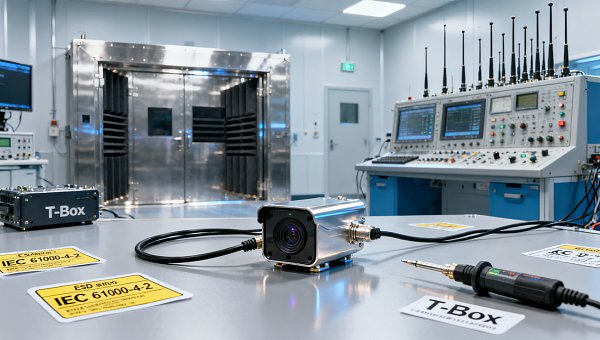
 Mexico NOM-019-SCFI-2026 Effective: EMC Certification Required for Auto Electronics ExportsEMC certification is now mandatory for auto electronics exports to Mexico under NOM-019-SCFI-2026. Ensure compliance for rearview mirrors, radar sensors & T-Box units—avoid shipment delays and order cancellations.
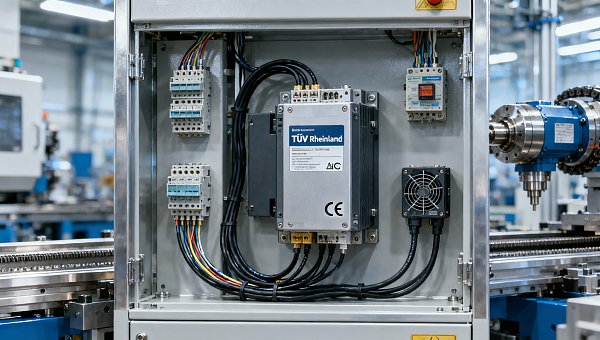
") TÜV Rheinland Updates CE Requirements for Servo Drives (PLd + EMC Joint Validation)TÜV Rheinland now mandates joint PLd + EMC validation for servo drives under CE marking—learn how this impacts certification timelines, lab selection, and EU market access.
TÜV Rheinland Updates CE Requirements for Servo Drives (PLd + EMC Joint Validation)TÜV Rheinland now mandates joint PLd + EMC validation for servo drives under CE marking—learn how this impacts certification timelines, lab selection, and EU market access. Vietnam Suspends SASO Mutual Recognition for Chinese Irrigation EquipmentVietnam suspends SASO mutual recognition for Chinese irrigation equipment—urgent compliance updates for drip tapes & PE pipes (HS 8424.89/3917.39). Act now to avoid delays.
 FDA Finalizes AI Diagnostic Device Rules for ImportersFDA finalizes AI diagnostic device rules for importers: New bias assessment mandate impacts ultrasound, glucose analyzers & dermatoscopes. Act now to ensure U.S. market access.
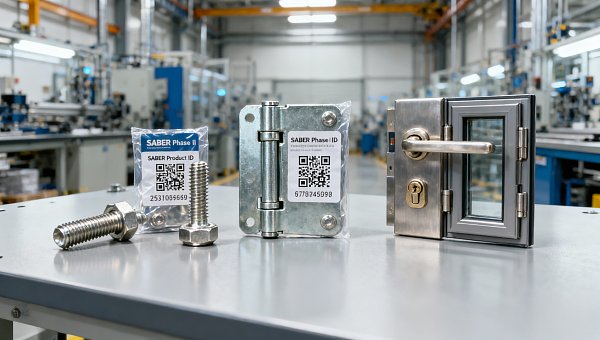
 SABER Phase II Live: Saudi Building Hardware Requires Digital Type Test Reports & PIDSABER Phase II is live: Building hardware exports to Saudi Arabia now require digital type test reports & a mandatory, immutable Product ID (PID). Act now to avoid customs delays!
 IMDG Code 41-24 Enforced: UN3480 Lithium Battery Labeling Mandatory from Apr 2026IMDG Code 41-24 enforcement starts Apr 2026: UN3480 lithium battery labeling & ISO 17363 docs are now mandatory—avoid port rejections!
 CBAM Carbon Tax Launch: Low CBAM Reporting Rate Among Chinese ExportersCBAM Carbon Tax is live—only 36.8% of Chinese exporters reported. Discover why, which industries are at risk, and how to secure EU market access now.
 China’s 10 Agencies Issue AI Export Ethics Review RulesChina’s 10 agencies launch AI export ethics rules—mandating bias reviews for visual inspection, warehouse AI & defect detection systems. Stay compliant & competitive.
 RCEP Green Packaging Mutual Recognition Takes EffectRCEP Green Packaging Mutual Recognition is now in effect—unlock faster customs clearance in Australia, NZ, Japan & Korea for GB/T 37659–2019-certified eco-packaging.
 Mexico NOM-019-SCFI-2026 Effective Apr 10, 2026: EMC Certification Required for Automotive ElectronicsNOM-019-SCFI-2026 EMC certification is now mandatory for automotive electronics entering Mexico — act before the July 1, 2026 customs ban.
 Red Sea Rerouting Normalized, EBA at $1,850/TEURed Sea rerouting normalized with EBA fixed at $1,850/TEU—learn how this structural shift impacts Asia-Europe freight costs, lead times & supply chain strategy.
 FDA AI Diagnostic Device Draft Rules: Bias Assessment for ImportsFDA AI diagnostic device draft rules require bias assessment for imports—learn how portable ultrasound, glucose, and dermatoscopic AI devices are affected & what to do next.
") TÜV Rheinland Updates CE Requirements for Servo Drives (PLd + EMC)TÜV Rheinland updates CE requirements for servo drives: PLd (ISO 13849-1) + EMC immunity (IEC 61000-6-2 Ed.4) now mandatory together — act now to avoid EU market delays!
TÜV Rheinland Updates CE Requirements for Servo Drives (PLd + EMC)TÜV Rheinland updates CE requirements for servo drives: PLd (ISO 13849-1) + EMC immunity (IEC 61000-6-2 Ed.4) now mandatory together — act now to avoid EU market delays! SABER Phase II Launch: Building Hardware Must Submit Digital Type Test Reports & Unique Product IDSABER Phase II now mandates digital type test reports & unique product IDs for building hardware—fasteners, scaffolding, door/window components. Ensure compliance to avoid customs rejection & SCOC delays.
 Vietnam Suspends SASO Mutual Recognition for Chinese Irrigation EquipmentVietnam suspends SASO mutual recognition for Chinese irrigation equipment—TCVN testing now mandatory. Act now to avoid 8–12 week delays and customs holdups.
 IMDG Code 41-24 Enforced: UN3480 Lithium Battery Labeling UpdateIMDG Code 41-24 enforcement starts April 2026: UN3480 lithium battery labeling updates are mandatory for global maritime shipments — avoid port delays, detention & penalties.
 EU CBAM Enters Full Enforcement on Jan 1, 2026EU CBAM full enforcement starts Jan 1, 2026 — mandatory quarterly reporting & certificate purchases for batteries, steel, cement, aluminum, fertilizers & chemicals. Act now to ensure EU market access.
 EU CBAM Carbon Tariff Starts Oct 2026 for Chinese Battery, Cement, Chemical ExportsEU CBAM carbon tariff hits Chinese battery, cement & chemical exports from Oct 2026 — mandatory emissions reporting starts now. Avoid €98/t default fees.










Popular Tags
Global Trade Insights & Industry
Our mission is to empower global exporters and importers with data-driven insights that foster strategic growth.
Search News
Popular Tags
Industry Overview
The global commercial kitchen equipment market is projected to reach $112 billion by 2027. Driven by urbanization, the rise of e-commerce food delivery, and strict hygiene regulations.