

TÜV Rheinland Updates PLd & EMC Requirements for Servo Drives
On April 25, 2026, TÜV Rheinland officially updated its CE certification technical requirements for servo drives—key execution units in CNC machining and smart factory systems—mandating combined validation of PLd-level functional safety (ISO 13849-1) and EMC immunity (IEC 61800-3 Ed.3). This change directly affects over 2,800 Chinese manufacturers exporting servo systems and associated drives to the EU, where incomplete documentation will be automatically blocked by the EU’s CE Monitoring System (EU-CEMS). Industrial automation exporters, system integrators, and procurement teams sourcing from China must now verify suppliers hold the updated joint test report before placing orders.
Event Overview
On April 25, 2026, TÜV Rheinland issued an official update to its CE certification framework for industrial servo drives. The update specifies that products falling under industrial automation—including those used in CNC machining and smart factory applications—must undergo concurrent verification against two standards: ISO 13849-1 (for PLd-level functional safety) and IEC 61800-3 Ed.3 (for EMC immunity). Certification reports covering only one requirement are no longer accepted for CE marking submission. The EU-CEMS platform will auto-reject submissions lacking both validated components. This requirement is now effective and enforceable for new CE applications submitted on or after this date.
Which Sub-Sectors Are Affected
Direct Exporters of Servo Drives
Manufacturers exporting servo drives from China to the EU face immediate compliance pressure. Because the new rule applies at the product certification level—not the company or factory level—each drive model intended for CE-marked deployment must carry a valid joint PLd + EMC test report. Affected companies include OEMs and ODMs supplying branded or white-label drives to European machinery builders.
Industrial Machinery Integrators & System Builders
Companies integrating servo drives into CNC machines, robotic cells, or automated production lines must now validate supplier documentation prior to procurement. A drive certified only to PLd—or only to IEC 61800-3 Ed.3—no longer qualifies as compliant for CE-marked end equipment. This introduces additional pre-qualification steps in BOM review and may delay time-to-market for new machine models.
Supply Chain Service Providers (Testing Labs, Certification Consultants)
Labs and consultants supporting Chinese exporters must align their test planning and reporting formats with the updated joint verification protocol. Reports issued before April 25, 2026—even if technically complete per older editions—do not satisfy the new requirement unless revalidated or reissued under the combined scope. This increases demand for coordinated testing cycles and cross-standard expertise.
What Relevant Enterprises or Practitioners Should Focus On—and How to Respond
Confirm whether existing certifications remain valid for pending shipments
Exporters should check with their notified body or TÜV Rheinland contact whether previously issued PLd-only or EMC-only reports can be extended or supplemented under transitional provisions—if any exist. As of the published update, no grace period is stated; therefore, assuming full applicability from April 25, 2026 is prudent unless official clarification states otherwise.
Review active product portfolios for CE-bound models
Manufacturers should identify all servo drive models currently marketed or scheduled for EU delivery in 2026–2027 and prioritize those requiring new joint testing. Focus should be placed on models with high export volume or embedded use in CE-marked machinery—where non-compliance carries cascading liability for both drive supplier and machine builder.
Coordinate with testing labs early to secure capacity
Combined PLd and EMC testing requires synchronized scheduling across functional safety and electromagnetic compatibility labs. Lead times for IEC 61800-3 Ed.3 immunity tests—particularly radiated and conducted disturbance testing under real operating conditions—can exceed eight weeks. Early engagement with accredited labs is critical to avoid shipment delays.
Update internal technical documentation and customer-facing materials
Product datasheets, declaration of conformity templates, and technical files should reflect the dual-certification status. Marketing claims referencing “CE compliant” must now be substantiated with evidence of both PLd and EMC validation—not just one. Procurement teams should also revise vendor evaluation checklists to require proof of joint reporting.
Editorial Perspective / Industry Observation
From an industry perspective, this update is better understood as a formalization of existing enforcement trends—not a sudden regulatory shift. Observations suggest EU market surveillance authorities have increasingly flagged standalone PLd certifications during post-market checks, especially when field failures involved electromagnetic interference. Analysis来看, TÜV Rheinland’s move codifies a de facto expectation into mandatory procedure, tightening alignment between functional safety and EMC disciplines. It signals growing recognition that safety integrity cannot be assured in isolation from environmental robustness. Current more relevant interpretation is that this reflects maturation of the EU’s risk-based conformity assessment approach—not merely a procedural hurdle, but a structural recalibration of how safety-critical motion control components are evaluated.
This development underscores that functional safety and EMC are no longer parallel compliance tracks but interdependent verification domains. For exporters, it reinforces the need for integrated test planning rather than sequential certification. For buyers, it elevates due diligence from checking for ‘a CE mark’ to verifying the composition and scope of underlying test evidence.
Conclusion
The April 2026 TÜV Rheinland update does not introduce new safety or EMC limits—but it does enforce a stricter evidentiary standard for CE marking of servo drives. Its primary significance lies in operational discipline: it requires manufacturers and integrators to treat PLd and EMC validation as a single, unified compliance objective. Rather than representing a new barrier, it clarifies an existing expectation now made explicit and enforceable. Currently, this is best understood as a procedural consolidation—not a technical escalation—with implications focused on documentation rigor, test coordination, and supply chain transparency.
Source Attribution
Main source: Official technical bulletin issued by TÜV Rheinland on April 25, 2026, titled “Updated Requirements for Functional Safety and EMC Immunity Verification of Servo Drives under CE Marking.”
Points requiring ongoing observation: Whether other Notified Bodies (e.g., SGS, UL Solutions, DEKRA) adopt identical timing and scope; whether the EU Commission issues complementary guidance via the Official Journal of the European Union.
Recommended News
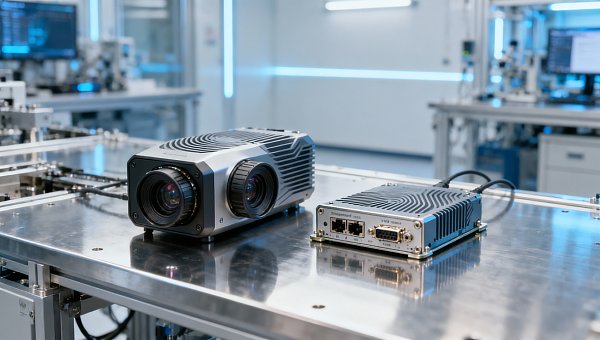
 China’s 10-Dept AI Export Ethics Review Rule Takes EffectChina’s new 10-dept AI export ethics rule mandates algorithmic bias review for AI hardware bound for the EU, US, Canada, Japan & SK—key for smart cameras, voice assistants & industrial vision exporters.
 Red Sea Detour Now Standard: $1,850 TEU Premium on Asia-Europe RoutesRed Sea detour premium now standard: $1,850/TEU surcharge embedded in Asia-Europe freight rates — vital intel for exporters, importers & logistics teams.
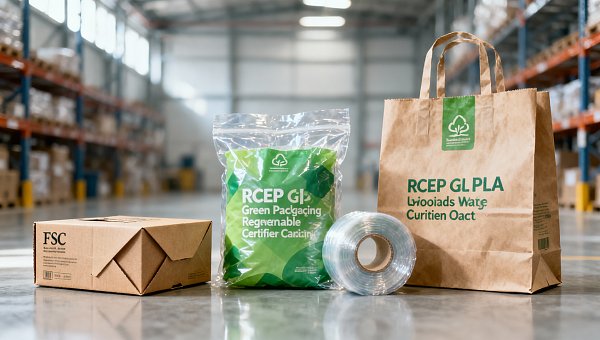
 RCEP Green Packaging Mutual Recognition Takes EffectRCEP Green Packaging Mutual Recognition takes effect Apr 22, 2026—streamline exports to AU, NZ, JP, KR with GB/T 37629–2019 certified molded fiber & PLA packaging.
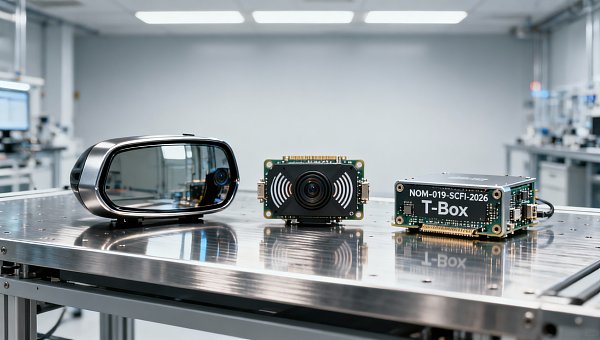
 Mexico NOM-019-SCFI-2026 Effective: EMC Certification Required for Auto Electronics ExportsEMC certification is now mandatory for auto electronics exports to Mexico under NOM-019-SCFI-2026. Ensure compliance for rearview mirrors, radar sensors & T-Box units—avoid shipment delays and order cancellations.
") TÜV Rheinland Updates CE Requirements for Servo Drives (PLd + EMC Joint Validation)TÜV Rheinland now mandates joint PLd + EMC validation for servo drives under CE marking—learn how this impacts certification timelines, lab selection, and EU market access.
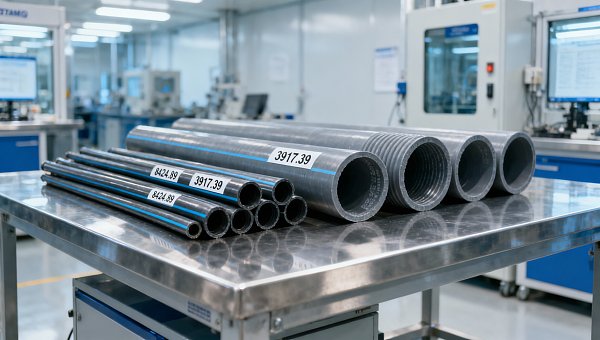
TÜV Rheinland Updates CE Requirements for Servo Drives (PLd + EMC Joint Validation)TÜV Rheinland now mandates joint PLd + EMC validation for servo drives under CE marking—learn how this impacts certification timelines, lab selection, and EU market access. Vietnam Suspends SASO Mutual Recognition for Chinese Irrigation EquipmentVietnam suspends SASO mutual recognition for Chinese irrigation equipment—urgent compliance updates for drip tapes & PE pipes (HS 8424.89/3917.39). Act now to avoid delays.
 FDA Finalizes AI Diagnostic Device Rules for ImportersFDA finalizes AI diagnostic device rules for importers: New bias assessment mandate impacts ultrasound, glucose analyzers & dermatoscopes. Act now to ensure U.S. market access.
 SABER Phase II Live: Saudi Building Hardware Requires Digital Type Test Reports & PIDSABER Phase II is live: Building hardware exports to Saudi Arabia now require digital type test reports & a mandatory, immutable Product ID (PID). Act now to avoid customs delays!
 IMDG Code 41-24 Enforced: UN3480 Lithium Battery Labeling Mandatory from Apr 2026IMDG Code 41-24 enforcement starts Apr 2026: UN3480 lithium battery labeling & ISO 17363 docs are now mandatory—avoid port rejections!
 CBAM Carbon Tax Launch: Low CBAM Reporting Rate Among Chinese ExportersCBAM Carbon Tax is live—only 36.8% of Chinese exporters reported. Discover why, which industries are at risk, and how to secure EU market access now.
 China’s 10 Agencies Issue AI Export Ethics Review RulesChina’s 10 agencies launch AI export ethics rules—mandating bias reviews for visual inspection, warehouse AI & defect detection systems. Stay compliant & competitive.
 RCEP Green Packaging Mutual Recognition Takes EffectRCEP Green Packaging Mutual Recognition is now in effect—unlock faster customs clearance in Australia, NZ, Japan & Korea for GB/T 37659–2019-certified eco-packaging.
 Mexico NOM-019-SCFI-2026 Effective Apr 10, 2026: EMC Certification Required for Automotive ElectronicsNOM-019-SCFI-2026 EMC certification is now mandatory for automotive electronics entering Mexico — act before the July 1, 2026 customs ban.
 Red Sea Rerouting Normalized, EBA at $1,850/TEURed Sea rerouting normalized with EBA fixed at $1,850/TEU—learn how this structural shift impacts Asia-Europe freight costs, lead times & supply chain strategy.
 FDA AI Diagnostic Device Draft Rules: Bias Assessment for ImportsFDA AI diagnostic device draft rules require bias assessment for imports—learn how portable ultrasound, glucose, and dermatoscopic AI devices are affected & what to do next.
") TÜV Rheinland Updates CE Requirements for Servo Drives (PLd + EMC)TÜV Rheinland updates CE requirements for servo drives: PLd (ISO 13849-1) + EMC immunity (IEC 61000-6-2 Ed.4) now mandatory together — act now to avoid EU market delays!
TÜV Rheinland Updates CE Requirements for Servo Drives (PLd + EMC)TÜV Rheinland updates CE requirements for servo drives: PLd (ISO 13849-1) + EMC immunity (IEC 61000-6-2 Ed.4) now mandatory together — act now to avoid EU market delays! SABER Phase II Launch: Building Hardware Must Submit Digital Type Test Reports & Unique Product IDSABER Phase II now mandates digital type test reports & unique product IDs for building hardware—fasteners, scaffolding, door/window components. Ensure compliance to avoid customs rejection & SCOC delays.
 Vietnam Suspends SASO Mutual Recognition for Chinese Irrigation EquipmentVietnam suspends SASO mutual recognition for Chinese irrigation equipment—TCVN testing now mandatory. Act now to avoid 8–12 week delays and customs holdups.
 IMDG Code 41-24 Enforced: UN3480 Lithium Battery Labeling UpdateIMDG Code 41-24 enforcement starts April 2026: UN3480 lithium battery labeling updates are mandatory for global maritime shipments — avoid port delays, detention & penalties.
 EU CBAM Enters Full Enforcement on Jan 1, 2026EU CBAM full enforcement starts Jan 1, 2026 — mandatory quarterly reporting & certificate purchases for batteries, steel, cement, aluminum, fertilizers & chemicals. Act now to ensure EU market access.
 EU CBAM Carbon Tariff Starts Oct 2026 for Chinese Battery, Cement, Chemical ExportsEU CBAM carbon tariff hits Chinese battery, cement & chemical exports from Oct 2026 — mandatory emissions reporting starts now. Avoid €98/t default fees.















Popular Tags
Global Trade Insights & Industry
Our mission is to empower global exporters and importers with data-driven insights that foster strategic growth.
Search News
Popular Tags
Industry Overview
The global commercial kitchen equipment market is projected to reach $112 billion by 2027. Driven by urbanization, the rise of e-commerce food delivery, and strict hygiene regulations.