

Red Sea Rerouting Normalized; Asia-Europe Freight Premium Hits $1,850/TEU
Global port congestion has eased significantly, but the Red Sea crisis has cemented Cape of Good Hope rerouting as the operational norm for Asia–Europe container services — driving freight premiums to $1,850/TEU on the Shanghai–Rotterdam 40HQ lane. Released in Drewry’s weekly shipping report dated 24 April 2026, this development directly impacts export-oriented manufacturers and traders in building materials, furniture, and home appliances — warranting close attention to cost pass-through dynamics and route-dependent lead time volatility.
Event Overview
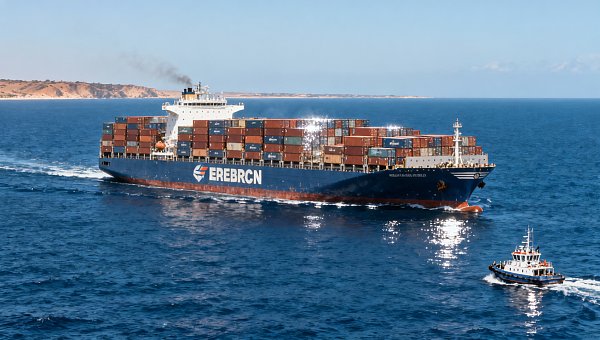
According to Drewry’s weekly shipping report published on 24 April 2026, the global average vessel anchorage waiting time at major ports has declined to 3.2 days — a 54% reduction from its February peak. However, 100% of Asia–Europe container services are now routing via the Cape of Good Hope due to the Red Sea crisis. Concurrently, Suez Canal transit fees have increased by 22%. As a result, the freight premium for a 40HQ container on the Shanghai–Rotterdam route stands at $1,850/TEU — 63% above the 2025 annual average. This cost increase is confirmed to be reflected in export quotations for bulk commodity categories including construction materials, furniture, and home appliances.
Impact on Specific Industry Segments
Direct Export Trading Firms
These firms face immediate margin pressure as the $1,850/TEU premium is being incorporated into final export pricing. Since the surcharge applies uniformly across all cargo types on the affected lane, price competitiveness in European markets — especially for mid-to-low-margin goods — may erode without corresponding adjustments in buyer negotiations or value-added service differentiation.
Raw Material Procurement Entities
Procurement teams sourcing inputs for export-bound finished goods (e.g., steel for furniture frames, laminates for cabinetry) must reassess landed cost models. The freight premium compounds landed cost volatility, particularly where raw material contracts are indexed to ex-works or FOB terms — meaning downstream freight cost exposure remains unmitigated by upstream pricing agreements.
Contract Manufacturing & OEM Producers
Manufacturers fulfilling export orders under fixed-price contracts bear disproportionate risk: the $1,850/TEU uplift is not offset by pre-agreed freight allowances. Delays from extended voyage duration (Cape routing adds ~10–12 days vs. Suez) may also trigger penalty clauses or inventory financing costs if delivery windows are missed — even when delays stem from external maritime conditions.
Distribution & Logistics Service Providers
Freight forwarders and NVOCCs operating on the Asia–Europe corridor must revise quoting templates and client advisories to reflect the structural shift: the $1,850/TEU premium is no longer a temporary surcharge but a baseline component of all rate sheets. Capacity planning must also account for persistent vessel repositioning imbalances caused by Cape-only rotations, potentially affecting equipment availability and inland drayage scheduling.
Key Considerations and Recommended Actions
Monitor official updates on Suez Canal accessibility and insurance classifications
The current 100% Cape rerouting reflects operational risk assessments, not formal canal closure. Any change in Joint War Committee (JWC) war risk designation or Egypt’s navigation safety protocols could alter carrier routing decisions — making real-time tracking of maritime advisories essential for procurement and sales planning.
Track premium application across specific trade lanes and container types
The $1,850/TEU figure applies specifically to Shanghai–Rotterdam 40HQ. Rates for alternative origin/destination pairs (e.g., Ningbo–Hamburg), smaller containers (20GP), or non-standard cargo (reefer, OOG) may differ materially. Firms should validate actual quotes per lane rather than extrapolating from headline figures.
Review contractual freight terms and incoterms alignment
Where contracts specify CIF or C&F terms, sellers absorb the full freight cost impact. Firms using FOB or EXW should confirm whether buyers are requesting revised incoterm allocations — and assess legal enforceability of such requests given prevailing market conditions and force majeure interpretations.
Update internal costing models and quotation cycles
Given that the premium is now embedded in standard rate structures (not ad hoc surcharges), finance and pricing teams should integrate the $1,850/TEU baseline into landed cost calculators, margin trackers, and quotation validity periods — especially for tenders with multi-month execution horizons.
Editorial Perspective / Industry Observation
This situation is better understood as a structural recalibration than a transient disruption. Analysis来看, the sustained 100% Cape rerouting — coupled with a permanent 22% Suez fee hike — signals that carriers and shippers have collectively adjusted to a new operational baseline, not an interim contingency. From industry角度, the $1,850/TEU premium is less a ‘surcharge’ and more a de facto tariff reflecting elevated distance, fuel, crew, and insurance costs over the extended route. Current more值得关注的是 how long this configuration persists — and whether it accelerates parallel shifts, such as nearshoring of European-bound production or modal diversification (e.g., rail freight via China–Europe corridors) — rather than whether it will ‘revert’.
It is not yet clear whether the current routing pattern represents a durable equilibrium or an intermediate phase before partial Suez resumption. That uncertainty remains a key variable requiring ongoing observation.
Conclusion
This development marks a transition from acute crisis response to sustained operational adaptation in Asia–Europe container logistics. The $1,850/TEU premium should be treated not as a temporary cost spike but as a benchmark reflecting a higher, route-determined floor for ocean freight expenses. For affected sectors, the priority is not anticipating reversal, but embedding route-specific cost and time assumptions into commercial, financial, and supply chain planning frameworks.
Source Attribution
Main source: Drewry Weekly Shipping Report, 24 April 2026.
Points requiring continued observation: Official updates on Suez Canal navigational status, Joint War Committee (JWC) war risk designations, and carrier announcements regarding potential partial Suez reintegration.
Recommended News
 China’s 10-Dept AI Export Ethics Review Rule Takes EffectChina’s new 10-dept AI export ethics rule mandates algorithmic bias review for AI hardware bound for the EU, US, Canada, Japan & SK—key for smart cameras, voice assistants & industrial vision exporters.
 Red Sea Detour Now Standard: $1,850 TEU Premium on Asia-Europe RoutesRed Sea detour premium now standard: $1,850/TEU surcharge embedded in Asia-Europe freight rates — vital intel for exporters, importers & logistics teams.
 RCEP Green Packaging Mutual Recognition Takes EffectRCEP Green Packaging Mutual Recognition takes effect Apr 22, 2026—streamline exports to AU, NZ, JP, KR with GB/T 37629–2019 certified molded fiber & PLA packaging.
 Mexico NOM-019-SCFI-2026 Effective: EMC Certification Required for Auto Electronics ExportsEMC certification is now mandatory for auto electronics exports to Mexico under NOM-019-SCFI-2026. Ensure compliance for rearview mirrors, radar sensors & T-Box units—avoid shipment delays and order cancellations.
") TÜV Rheinland Updates CE Requirements for Servo Drives (PLd + EMC Joint Validation)TÜV Rheinland now mandates joint PLd + EMC validation for servo drives under CE marking—learn how this impacts certification timelines, lab selection, and EU market access.
TÜV Rheinland Updates CE Requirements for Servo Drives (PLd + EMC Joint Validation)TÜV Rheinland now mandates joint PLd + EMC validation for servo drives under CE marking—learn how this impacts certification timelines, lab selection, and EU market access. Vietnam Suspends SASO Mutual Recognition for Chinese Irrigation EquipmentVietnam suspends SASO mutual recognition for Chinese irrigation equipment—urgent compliance updates for drip tapes & PE pipes (HS 8424.89/3917.39). Act now to avoid delays.
 FDA Finalizes AI Diagnostic Device Rules for ImportersFDA finalizes AI diagnostic device rules for importers: New bias assessment mandate impacts ultrasound, glucose analyzers & dermatoscopes. Act now to ensure U.S. market access.
 SABER Phase II Live: Saudi Building Hardware Requires Digital Type Test Reports & PIDSABER Phase II is live: Building hardware exports to Saudi Arabia now require digital type test reports & a mandatory, immutable Product ID (PID). Act now to avoid customs delays!
 IMDG Code 41-24 Enforced: UN3480 Lithium Battery Labeling Mandatory from Apr 2026IMDG Code 41-24 enforcement starts Apr 2026: UN3480 lithium battery labeling & ISO 17363 docs are now mandatory—avoid port rejections!
 CBAM Carbon Tax Launch: Low CBAM Reporting Rate Among Chinese ExportersCBAM Carbon Tax is live—only 36.8% of Chinese exporters reported. Discover why, which industries are at risk, and how to secure EU market access now.
 China’s 10 Agencies Issue AI Export Ethics Review RulesChina’s 10 agencies launch AI export ethics rules—mandating bias reviews for visual inspection, warehouse AI & defect detection systems. Stay compliant & competitive.
 RCEP Green Packaging Mutual Recognition Takes EffectRCEP Green Packaging Mutual Recognition is now in effect—unlock faster customs clearance in Australia, NZ, Japan & Korea for GB/T 37659–2019-certified eco-packaging.
 Mexico NOM-019-SCFI-2026 Effective Apr 10, 2026: EMC Certification Required for Automotive ElectronicsNOM-019-SCFI-2026 EMC certification is now mandatory for automotive electronics entering Mexico — act before the July 1, 2026 customs ban.
 Red Sea Rerouting Normalized, EBA at $1,850/TEURed Sea rerouting normalized with EBA fixed at $1,850/TEU—learn how this structural shift impacts Asia-Europe freight costs, lead times & supply chain strategy.
 FDA AI Diagnostic Device Draft Rules: Bias Assessment for ImportsFDA AI diagnostic device draft rules require bias assessment for imports—learn how portable ultrasound, glucose, and dermatoscopic AI devices are affected & what to do next.
") TÜV Rheinland Updates CE Requirements for Servo Drives (PLd + EMC)TÜV Rheinland updates CE requirements for servo drives: PLd (ISO 13849-1) + EMC immunity (IEC 61000-6-2 Ed.4) now mandatory together — act now to avoid EU market delays!
TÜV Rheinland Updates CE Requirements for Servo Drives (PLd + EMC)TÜV Rheinland updates CE requirements for servo drives: PLd (ISO 13849-1) + EMC immunity (IEC 61000-6-2 Ed.4) now mandatory together — act now to avoid EU market delays! SABER Phase II Launch: Building Hardware Must Submit Digital Type Test Reports & Unique Product IDSABER Phase II now mandates digital type test reports & unique product IDs for building hardware—fasteners, scaffolding, door/window components. Ensure compliance to avoid customs rejection & SCOC delays.
 Vietnam Suspends SASO Mutual Recognition for Chinese Irrigation EquipmentVietnam suspends SASO mutual recognition for Chinese irrigation equipment—TCVN testing now mandatory. Act now to avoid 8–12 week delays and customs holdups.
 IMDG Code 41-24 Enforced: UN3480 Lithium Battery Labeling UpdateIMDG Code 41-24 enforcement starts April 2026: UN3480 lithium battery labeling updates are mandatory for global maritime shipments — avoid port delays, detention & penalties.
 EU CBAM Enters Full Enforcement on Jan 1, 2026EU CBAM full enforcement starts Jan 1, 2026 — mandatory quarterly reporting & certificate purchases for batteries, steel, cement, aluminum, fertilizers & chemicals. Act now to ensure EU market access.
 EU CBAM Carbon Tariff Starts Oct 2026 for Chinese Battery, Cement, Chemical ExportsEU CBAM carbon tariff hits Chinese battery, cement & chemical exports from Oct 2026 — mandatory emissions reporting starts now. Avoid €98/t default fees.


















Popular Tags
Global Trade Insights & Industry
Our mission is to empower global exporters and importers with data-driven insights that foster strategic growth.
Search News
Popular Tags
Industry Overview
The global commercial kitchen equipment market is projected to reach $112 billion by 2027. Driven by urbanization, the rise of e-commerce food delivery, and strict hygiene regulations.