

Educational Robots in Classrooms: Engagement Tool or Maintenance Burden?
Educational robots are gaining traction in classrooms as schools seek smarter ways to boost engagement and digital literacy. Yet for decision-makers, the real question is whether these tools deliver measurable learning value or create hidden costs in upkeep, training, and integration. This article examines how Educational robots fit into modern education strategies and what institutions should evaluate before scaling adoption.
Why are Educational robots attracting so much attention now?
Interest in Educational robots is rising because schools, training centers, and public education systems are under pressure to modernize learning while preparing students for a technology-driven economy. Robotics combines coding, engineering, design thinking, and collaboration into one visible classroom experience. Unlike passive digital content, robots create interaction. Students can program movement, respond to sensors, solve real problems, and immediately see the outcome of their decisions.
For enterprise decision-makers, this growing demand matters beyond K-12 classrooms. It reflects a wider market shift toward applied STEM learning, digital literacy investment, and education technology procurement. Educational robots also align with workforce development goals, especially in regions where governments and private institutions want stronger pipelines in automation, AI awareness, and technical problem-solving.
The attention is not only about novelty. Schools increasingly need tools that support engagement, measurable participation, and differentiated learning. In many classrooms, teachers are looking for ways to keep learners active rather than passive. Educational robots promise hands-on learning, but the promise alone is not enough. Buyers need evidence that classroom excitement translates into durable learning outcomes and manageable operations.
Do Educational robots actually improve learning, or are they mainly an engagement tool?
The honest answer is that Educational robots can improve learning, but only when they are tied to curriculum goals, teacher capability, and realistic implementation plans. If schools use robotics only as a demonstration device or occasional enrichment activity, the impact often stays at the level of engagement. Students enjoy the experience, but the institution may struggle to prove gains in computational thinking, problem-solving, or subject mastery.
When integrated well, Educational robots support several learning dimensions at once. They can help students understand sequencing in coding, cause-and-effect in engineering, teamwork in project tasks, and persistence through iterative testing. They also create opportunities for cross-disciplinary instruction, such as combining math with movement, physics with sensors, or language tasks with storytelling robots in early education settings.
However, decision-makers should be careful not to confuse visible excitement with deep learning. A robotics session may look highly successful because students are active and enthusiastic. Yet if the lesson lacks defined objectives, assessment methods, or progression pathways, the educational value can remain shallow. The core question is not whether students like robots. It is whether the institution can map robotics use to learning standards, teacher workflows, and evidence-based outcomes.
In procurement discussions, one useful filter is this: if the robot disappeared tomorrow, what capability would also disappear? If the answer is only “fun,” the investment case is weak. If the answer includes coding fluency, project-based learning, collaborative design, and stronger student participation in difficult concepts, then Educational robots may justify broader deployment.
Which classroom and institutional scenarios are best suited for Educational robots?
Not every school environment benefits equally from Educational robots. Their value is usually highest where institutions have a clear reason to support active STEM learning, maker education, coding pathways, or technology-rich instruction. Primary schools may use simple programmable robots to build logic and sequencing. Secondary schools often use more advanced kits for coding, electronics, and team competitions. Vocational and technical institutions may deploy robotics for pre-industry skills and automation awareness.
Educational robots can also perform well in after-school programs, innovation labs, libraries, and demonstration classrooms where flexibility is high. These spaces often tolerate experimentation better than tightly structured classrooms. In inclusion settings, certain robot-assisted activities may help promote communication, motivation, and repeatable social interaction, though such use cases require careful pedagogical support and should not be treated as universal outcomes.
From a management perspective, the strongest scenarios usually share three features: trained staff, curriculum alignment, and technical support capacity. Without those conditions, even well-designed Educational robots can end up underused. Institutions with fragmented schedules, weak device management, or no ownership for maintenance may find that robotics programs start with strong publicity and fade within a year.
What should decision-makers evaluate before purchasing Educational robots at scale?
Before scaling adoption, leaders should assess Educational robots as a long-term instructional system rather than a one-time hardware purchase. The most common mistake is to compare robots only by unit price, features, or visual appeal. A stronger evaluation framework looks at total educational fit, total cost of ownership, and the institution’s readiness to sustain use.
Key evaluation points include:
- Curriculum compatibility: Can the platform support age-appropriate lessons and measurable learning goals?
- Teacher usability: How steep is the learning curve for non-technical instructors?
- Software ecosystem: Are updates, coding environments, and content libraries stable and well supported?
- Durability and repairability: Can devices withstand classroom handling, and are parts easy to replace?
- Integration requirements: Do the robots work with existing devices, networks, and classroom infrastructure?
- Assessment support: Can educators track progress beyond anecdotal engagement?
- Vendor reliability: Is there credible support, training, and roadmap transparency?
For B2B buyers, vendor stability matters as much as product performance. Educational robots rely on software, accessories, updates, and training resources. If the supplier lacks long-term support capability, schools may face compatibility issues, broken learning pathways, or expensive replacements. Procurement teams should evaluate service agreements, spare parts access, onboarding support, and regional responsiveness before making a commitment.
Quick decision table: what matters most in practice?
Are Educational robots a maintenance burden in real school operations?
They can be, especially when institutions underestimate ongoing support needs. Maintenance does not only mean fixing broken hardware. It also includes charging cycles, software updates, account setup, classroom storage, accessory loss, sensor calibration, network compatibility, and replacement planning. In many schools, these operational details become the real barrier to sustained use.
The burden is heavier when robot fleets are distributed across many classrooms without a central management process. Devices may be used inconsistently, parts can go missing, and troubleshooting often falls on teachers who already have limited time. If a robotics lesson fails because batteries are dead or the software no longer syncs properly, confidence drops quickly. Repeated friction can turn an innovative tool into a neglected cabinet asset.
That said, maintenance risk is not a reason to avoid Educational robots altogether. It is a reason to plan governance early. Schools that appoint a program owner, standardize storage and charging, train a lead teacher, and maintain spare components usually see better continuity. Some institutions also start with a small pilot in one lab or grade level before expanding, allowing them to test support requirements under real conditions.
Decision-makers should therefore ask a practical question: who will keep the program running after the launch event? If there is no operational answer, the maintenance burden may outweigh the educational promise.
What are the most common misconceptions about Educational robots?
One common misconception is that Educational robots automatically improve innovation skills. In reality, robots are tools, not outcomes. Innovation emerges from how teachers structure challenges, reflection, iteration, and collaboration. Another misconception is that younger students need only simple entertainment-oriented robots. While simplicity matters, even early learners benefit more when activities are purposeful and developmentally aligned rather than purely playful.
A third misunderstanding is that robotics programs mainly depend on the quality of the hardware. Hardware matters, but content, teacher confidence, and support systems often determine long-term success. A less advanced robot with stronger lesson design and easier maintenance may outperform a premium device that is difficult to integrate.
There is also a strategic misconception in procurement: treating Educational robots as a branding signal instead of a learning investment. Some institutions adopt robotics to appear forward-looking to parents, partners, or funding bodies. While external perception can be helpful, investments driven primarily by image often struggle to deliver sustainable value. The strongest programs are built around educational purpose first and promotional visibility second.
How can schools measure whether Educational robots are worth the investment?
A credible evaluation model should combine learning indicators, usage indicators, and operational indicators. Learning indicators may include student problem-solving performance, coding progression, project completion quality, or participation in STEM pathways. Usage indicators track how often Educational robots are actually used, by which teachers, and in which subjects. Operational indicators focus on downtime, breakage rates, training completion, and support costs.
This broader view prevents institutions from making decisions based on enthusiasm alone. For example, a school may find that student engagement is high, but teacher adoption is low because setup takes too long. Another school may discover strong use in pilot classrooms but weak transfer across the wider faculty. These findings do not necessarily mean the investment failed. They mean scaling conditions need adjustment.
A useful approach is to define success before procurement. Leaders should identify what Educational robots are expected to improve within 6 to 12 months. Is the goal stronger coding readiness, more project-based learning, higher STEM enrollment, or better classroom engagement in selected age groups? Once the target is clear, measurement becomes more disciplined and budget conversations become easier to justify.
What should buyers confirm before moving forward with a robotics program?
Before purchase or partnership, institutions should confirm whether Educational robots fit their instructional priorities, technical reality, and support capacity. A pilot-first strategy is often safer than a full rollout. During the pilot, schools should test lesson integration, teacher workload, student response, charging logistics, software stability, and vendor responsiveness. These are the details that determine whether a robotics initiative becomes scalable or stalled.
For enterprise buyers, especially those evaluating multiple suppliers, the most productive next step is not simply asking for price. It is asking sharper operational and strategic questions. What training is included? What is the replacement timeline for damaged units? Are software updates guaranteed? How does the platform support assessment? What is the expected lifecycle? Can the supplier support phased deployment across campuses or regions?
Educational robots can be a powerful engagement tool, but they become a maintenance burden when institutions buy vision without buying process. The best results come from matching the technology to a clear learning purpose, a realistic support model, and a vendor relationship built for continuity. If you need to confirm a specific solution, deployment direction, timeline, budget range, or cooperation model, start by clarifying curriculum goals, technical constraints, training expectations, service scope, and measurable success criteria before committing to scale.
Recommended News
 Portable oxygen concentrators are quieter now, but not always lighterPortable oxygen concentrators are getting quieter, but not always lighter. Explore the trade-offs in weight, battery life, comfort, and daily usability before you compare today’s top options.
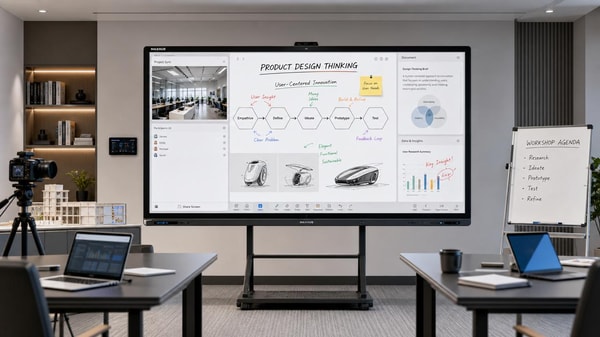
 Interactive whiteboards are improving, but software still decides valueInteractive whiteboards deliver real value when software matches the scenario. Explore how usability, integration, security, and updates shape smarter buying decisions.
 Medical diagnostic equipment downtime often starts with calibration neglectMedical diagnostic equipment downtime often starts with missed calibration. Learn the warning signs, checklist priorities, and practical steps to prevent failures and keep healthcare operations reliable.
 Eco-friendly building materials are easier to specify than to sourceEco-friendly building materials are easier to specify than source. Learn how procurement teams can verify claims, reduce risk, and find reliable suppliers faster.
 Ergonomic workspace design can fail if chair fit comes lastErgonomic workspace design starts with chair fit. Learn how the right seat improves posture, comfort, and focus—and why fixing it first can transform your workspace.
 Outdoor garden supplies demand shifts faster than many expectOutdoor garden supplies demand is shifting faster than expected. Discover key B2B trends, smarter sourcing insights, and practical strategies to stay competitive and capture growth.
 Sustainable home decor sells better when materials are clearly disclosedSustainable home decor sells better when brands clearly disclose materials, finishes, and sourcing. Discover why transparency builds trust, justifies price, and drives more confident buying.
 Modern office furniture trends now favor modular over fixed layoutsModern office furniture is shifting to modular layouts for flexibility, lower lifecycle costs, and better hybrid work performance. See why enterprises are moving away from fixed office design.
 Smart street lighting projects stall when controls are overcomplicatedSmart street lighting projects often stall when controls become too complex. Learn how to simplify deployment, reduce risk, and scale citywide with practical, maintainable systems.
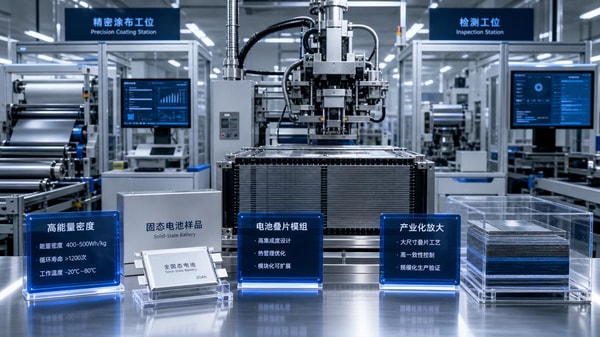
 Solid-state battery breakthroughs look promising, but scale is harderSolid-state battery breakthroughs promise safer, higher-density energy storage, but scaling remains the real challenge. Explore what this means for supply chains, investment, and market advantage.
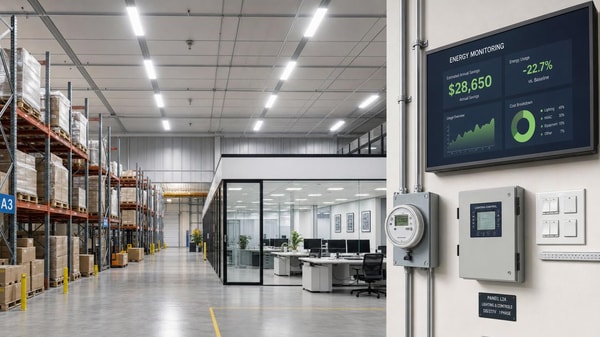
 Commercial LED lighting upgrades often save less than expectedCommercial LED lighting upgrades can underdeliver when baseline data, controls, and installation costs are misjudged. Learn how to assess real savings, reduce ROI risk, and make smarter investment decisions.
 Lithium battery storage payback can change with one policy updateLithium battery storage payback can shift fast after one policy update. See how tariffs, tax credits, grid pricing, and incentives change ROI—and how finance teams can approve smarter.
 Photovoltaic solar panels now compete on output in low lightPhotovoltaic solar panels now compete on low-light output. Discover how buyers can compare yield, risk, and supplier value to source smarter and boost project returns.
 Plant-based protein processing changes texture more than many expectPlant-based protein processing reshapes texture, stability, and safety more than expected. Explore key risks, QC checkpoints, and smarter sourcing insights for consistent results.
 Foldable screen technology is improving, but crease concerns remainFoldable screen technology is evolving fast with slimmer designs and stronger hinges, but crease concerns still shape buying decisions. Explore where it matters most.
 Next-gen wireless charging still faces a heat management problemNext-gen wireless charging promises faster, more flexible power delivery, but heat remains the key barrier. Discover how thermal limits impact safety, efficiency, and market readiness.
 Wearable technology adoption drops when comfort gets overlookedWearable technology adoption falls fast when comfort is ignored. Discover how fit, materials, weight, and battery life shape long-term use and smarter buying decisions.
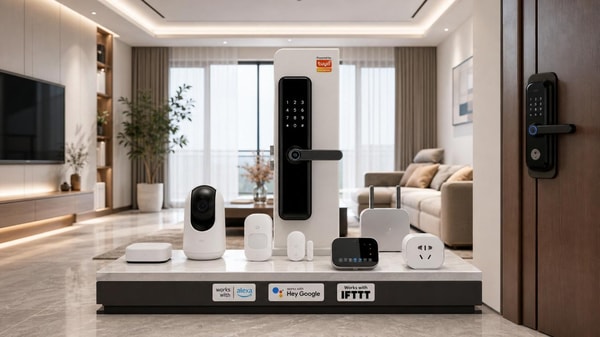
 Smart home devices wholesale is no longer just about low pricingSmart home devices wholesale now goes beyond low pricing. Discover how reliability, compatibility, and supply chain confidence help distributors choose profitable, trusted partners.
 Agri-PV systems make sense only when land use is planned wellAgri-PV systems deliver real value only when land use is planned well. Discover how smart site, crop, grid, and compliance decisions turn dual-use solar into a bankable, sustainable project.
 Organic fertilizers may improve soil slower, but results last longerOrganic fertilizers improve soil slowly but deliver longer-lasting results. Learn how they boost soil health, support safer growing, and help you choose the right option for sustainable planting success.
 Smart classroom solutions fail when teachers need too many appsSmart classroom solutions fail when teachers juggle too many apps. Discover why integrated, easy-to-use platforms drive adoption, ROI, and scalable learning success.
















Popular Tags
Global Trade Insights & Industry
Our mission is to empower global exporters and importers with data-driven insights that foster strategic growth.
Search News
Popular Tags
Industry Overview
The global commercial kitchen equipment market is projected to reach $112 billion by 2027. Driven by urbanization, the rise of e-commerce food delivery, and strict hygiene regulations.